
Home Blog
Nothing Else Is You

There are mountains high enough,
And oceans wide enough,
And armies can keep me from you,
For I am made of meagre bone and dust,
A weakling, a beggar, a coward and simpleton,
Who cannot contrive to make imaginings a reality.
But nothing is so deep as longing for you,
Nothing is so long as the passing of hours that await you,
Nothing is so triumphant as the certainty of you,
Nothing is so vast as my hope for you,
Nothing else is you,
Or could ever be you.
All My Dreams

Can a dream point like a finger?
I walked into the sea
My bare feet sinking into sand
And as the waves crashed into me
I imagined you across the world
So that the ocean between us
Was also a connection
I took the lyrics of a singer
Recomposed his best known works
Making them all about you
Replaced his doubts and fears
With my sure optimism
That we would come together
You told me you were sneezing
Trapped indoors upon your birthday
But I could not let you suffer alone
So I sent words in lieu of my presence
And joked that your germs
Would still get around
I spoke to you whilst walking
Across a solitary landscape
You were not there to hear
But I said it did not matter
And shared all my fantasies
With you anyway
Through miles we travelled
Through years that elapsed
Through memories forgotten
Through expectations new
Through everything that happens
All my dreams point to you
5 Reasons Why Climate Change Will Make Kids Less Annoying

Climate change is real, but that does not mean it can never be exaggerated. Only the absurdly naïve or irredeemably partisan will insist that opportunities to demand significant change are never exploited by people with ulterior motives. The same is true for climate change, which is a magnet for businesspeople pushing junk technology and impractical solutions because it will enrich them, for scientists whose pursuit of funding may have damaged their impartiality, and for celebrity propagandists who would exploit any excuse to hog the limelight. Unfortunately, the vast majority of children rank amongst the legions of the absurdly naïve. Kids believe what adults tell them because they lack the experience to assess how often adults mislead themselves and each other, and to understand the reasons why deceit will always persist in human society. This has led many children to join the climate change equivalent of the Hitler Youth.
Whilst societies may laud children, talking about them as future leaders whilst decrying the risk that they will have no future, it is also true that societies repeatedly manipulate youngsters for selfish purposes. That manipulation is no less evident if a child is indoctrinated into a religion, told how to shoot an assault rifle or encouraged to repeat mantras about climate change, some of which are true (the sea is hotter than it was) and some of which are false (wildfires are not being made worse by climate change). However, some good will come of the current middle class obsession with drumming the fear of imminent ecological collapse into impressionable minds. It will change the behaviour of children for the better, in lots of ways that children may otherwise resist. Here are five benefits of climate change hyperbole that should not be underestimated.
1. Eating Broccoli
Veganism is about as faddish a diet as it is possible to imagine, unless you believe there is something morally repugnant with an adult female animal feeding the milk her body has produced to her own child, or something perverse about that same nutritious liquid being ingested by a creature from a different species. The vegan diet is contrary to nature, because the human body evolved to digest far more than vegans will allow themselves. But the good thing about veganism is that it will force kids to eat their sprouts, and to pretend that they like them. No fish fingers, no hamburgers, no ice cream – kids will have none of the good things that children used to like and which drive up prices of tasty food for the rest of us. As a consequence, they will not be so fat, and will give up their right to whinge about being hungry all the time.
2. Walking to School
Nothing is more irritating than indulgent parents blocking the roads each day because their darlings need to be taxied around in SUVs. They will have to make the little buggers walk to school, no matter how short their legs are. Walking is good for their children’s health, as well as the environment. And if their little ones do not like walking for half an hour through the pouring rain, parents should point out how selfish their kids truly are, because the school run is contributing to climate change and hence making rain more likely.
3. No More Playgrounds
Concrete is an eyesore. Metal frames painted in bright colours are an eyesore. Playgrounds are an eyesore. Instead of chopping down woods to make space for playgrounds, we can grow some more trees and tell kids to play in them. Trees are nature’s equivalent of a playground. And if your littlest falls out of a tree and breaks his or her neck, then that is natural selection.
4. The End of Fashion
Kids may grow fast but that is no excuse to waste money on designer labels or endless piles of fast fashion. From now own, kids’ clothes should be worn out before they are thrown away, because clothes are generally bad for the environment. Their manufacture consumes resources, the dyes are polluting, and excessive washing also leads to increased use of water and detergents. Climate change means that instead of the constant race to be fashionable we will be able to force kids to stick to a limited wardrobe and to like it. Hand-me-downs are better for the environment than new clothes. Kids will have to wear clothes until they are threadbare, and if they make a hole in something they had better learn how to patch it up or else enjoy the increased exposure to the elements.
5. The Future Is the Past
The best thing about climate change is that it runs contrary to the modern obsession with ‘progress’. Kids are often pawns in a game where the objective is to demonstrate that the future must be better than what went before. As a result, children can be presented as leaders even when their strings are being pulled by their parents. It seems that some adults bring new life into the world because they want to own a lifelike puppet. They do this whilst ignoring the fact that there would be no climate crisis without the enormous population growth that has occurred in living memory. But the ironic beauty of environmental alarmism is that it makes the past look better than the future.
To prevent further climate change it is necessary for societies to abandon, curb or reverse many of the major improvements that made ordinary people freer, richer, and happier. This includes cars, a wider range of food, and foreign holidays. For children to be the ‘leaders’ of this change they will have to be like the children of the past: eating austere diets, walking or biking everywhere, wearing ugly but hard-wearing clothes, and making play with what is already available instead of demanding new forms of entertainment and new venues to occupy their time and interest.
Climate warrior kids should behave just like children did a hundred years ago, by being significantly less spoilt than is now the norm for modern brats. Their zealous fight against climate change will make them proud to reverse all the behaviours that children have sought for generation after generation. The childhood of our future leaders will look much like the childhood only remembered by the eldest members of our society. And if this proves not to be the case, and the kids want change without reverting to older ways of experiencing life and enjoying themselves, then they will still have taught society one important lesson: that children can be hypocrites just as much as adults.
What Does Tom Watson Think about Immigration?

Tom Watson is the Deputy Leader of the Labour Party, and has been since September 2015. On 14th June 2016 he told the BBC:
For the last decade, I would say that immigration has been the backdrop to every election we’ve had in Britain. And you know, woe betide politicians that don’t listen to what voters tell them.
You know, I think a future Europe will have to look at things like the free movement of labour rules.
He also stated that Labour needed to do more to explain its position to voters.
The referendum held on 23rd June 2016 voted to leave the European Union, which would have come as a disappointment to Watson as he had actively campaigned to remain.
On 30th March 2019 Watson wrote an article for The Guardian about Labour adopting “a position on Brexit that can unite our members, voters, MPs and, yes, the leadership too”. This was what he wrote about finding a common position on the divisive topic of immigration:
…
Labour voters should ask themselves a simple question about Tom Watson. Three years ago he said it was important to listen to what they wanted. But after the passing of three years, he cannot communicate what he believes about an issue that was so important before the referendum that he promised all politicians “will have to look at it”.
Is Watson’s philosophy that it is fine to look as much as you like, so long as you do not touch?
Why Inspiring Quotes Are All Crap

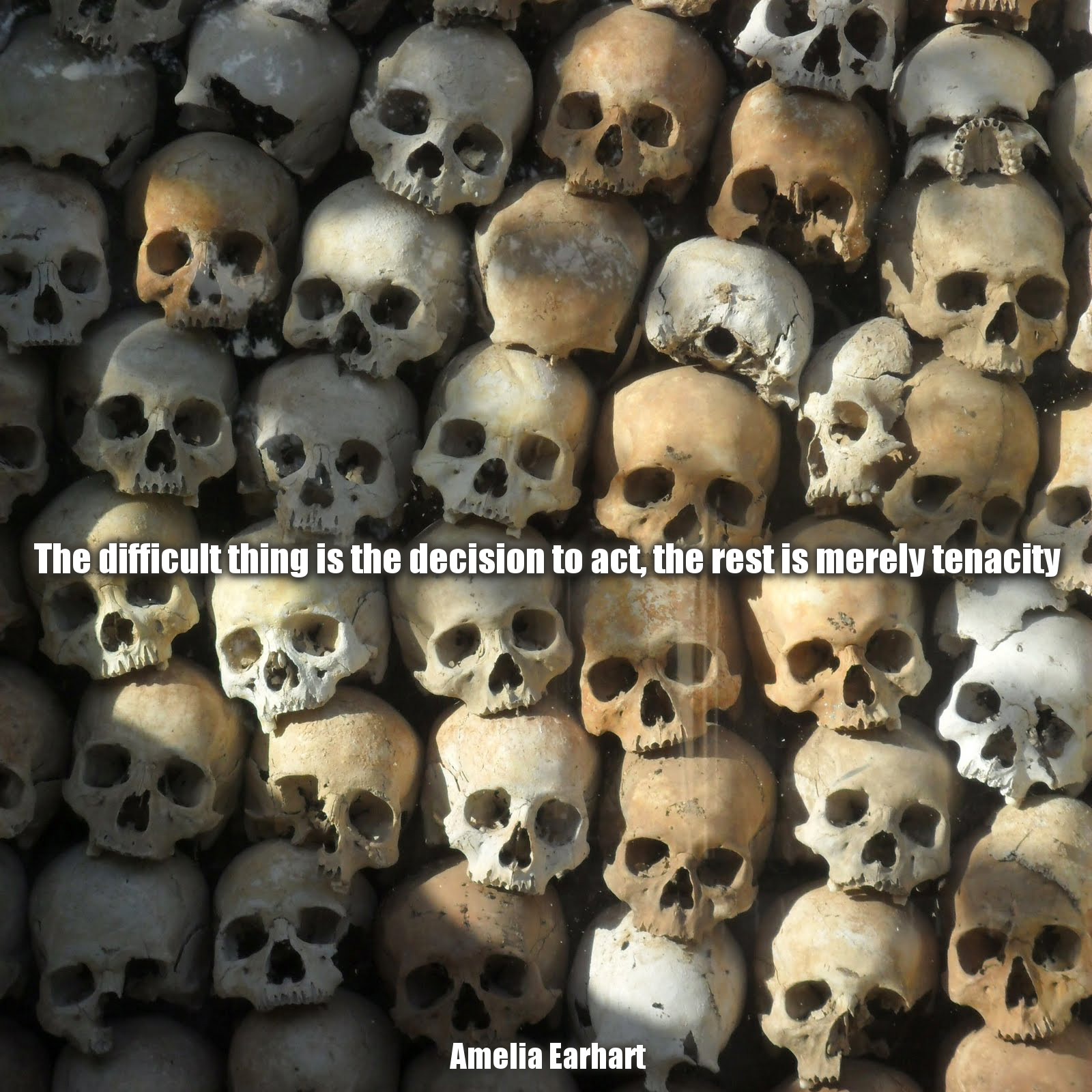
People love inspiring quotes, but they should not. They get shared widely because they seemingly resonate with millions, but this widespread regurgitation only works if the quotes have been stripped of all their original context. This gives the listener an opportunity to indulge their preferred emotions whenever they hear such a quote. All it takes is a deliberate change of the context and what was previously inspirational becomes foolish, wrongheaded, or menacing. Either you accept the truth of this observation, or you need to be smashed in the face by an actual example of what happens when a cynic changes the context of an inspirational quote. So here is a quote by famous aviator Amelia Earhart, which I took from one of the many sites that exists only to spread such flotsam. This time the quote is superimposed on a photograph of the skulls of some of the many victims of the Khmer Rouge.
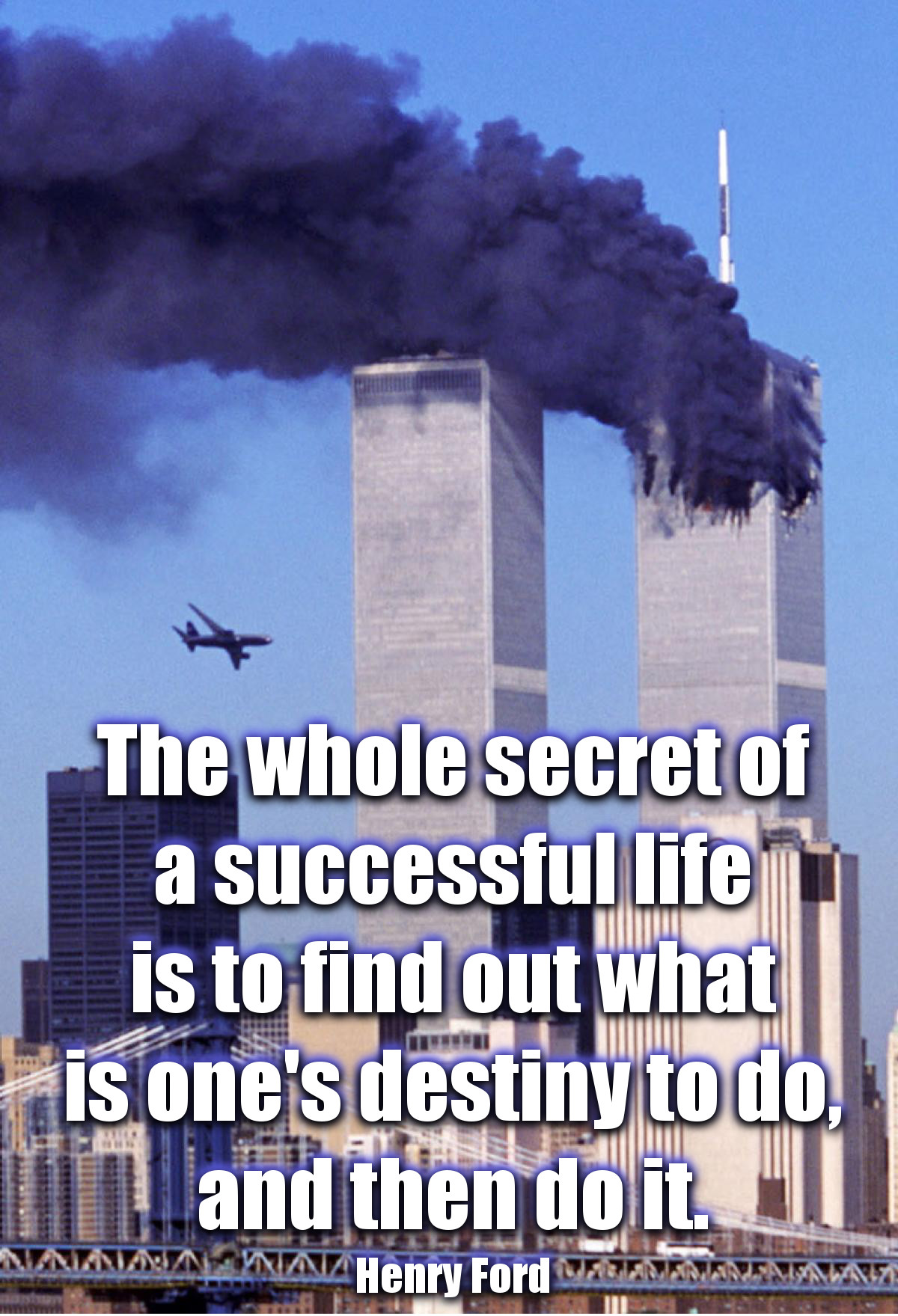
And if that was not a sufficient jolt to wake readers from their complacency, here are some words by Henry Ford, which were also being distributed by the purveyors of the supposedly inspirational.
If Brexit Was Reversed

Psychologists understand the importance of the framing effect, where somebody’s choice is heavily influenced by the way a question is framed. Pollsters also understand the framing effect, and that is why so much scrutiny must be applied to the wording of a question in a referendum. This decade has seen Brits gain more experience of referendums than they ever had before, with three national referendums being held since 2011, the last of which resulted in the surprise decision to leave the European Union. However, it seems large segments of the population refuse to learn from experience. There appears to be a contingent of Brits who genuinely believe that if the Brexit referendum was re-run as a so-called “people’s vote” then the decision would be reversed, and all would continue as before. This is a mistake, as evident from what has happened in Scotland since the nationalists were defeated in the independence referendum. The only seeming explanation of this mistake is that supporters of the people’s vote have adopted an exceptionally peculiar frame of reference, which asserts that events since 2016 have proved that the referendum decision was wrong, and that if Brexit is not averted then there will be further proof of how flawed it was. What this frame of reference lacks is any imagination about what would happen to Britain if the decision was reversed. That is the real choice: between Brexit and the reversal of the decision to Brexit, not between Brexit and the status quo before the vote was held. The British government either honours the 2016 referendum decision or the decision is reversed. The one option that does not exist, but which is seemingly cherished by supporters of the people’s vote, is that we return to a pre-2016 state of naivety, and that we collectively behave as if there is no alternative to membership of the European Union.
Events in Scotland have shown why a vote in favour of the status quo does not mean it is possible to maintain the status quo. Here is what would happen to Britain, in the unlikely event that there is a second referendum which votes to remain in the European Union.
- The UK will need to take part in the next election to the European Parliament. These elections have hitherto been won by the most Eurosceptic parties standing, whilst pro-European parties have fared poorly, partly because the turnout is so low, and partly because there are very few voters who can explain the relationship between their vote and the policies adopted by the EU, except for those voters who support parties that reject the EU altogether. A reversal of Brexit would lead to a massive surge in support amongst UK voters for the most Eurosceptic parties standing in those elections, just as there was a huge surge in support for the Scottish National Party after they lost indyref. Instead of stabilizing the UK’s relationship with Europe, the UK would soon send a very large and highly-motivated bloc of wreckers to the European Parliament, where they will proceed to do everything possible to prevent any rapprochement with other EU nations.
- There will be intense scrutiny of every instance where the EU previously spent money in the UK but stopped doing so because of Brexit. Either the money will flow as it did before, which will irk the other European countries that hoped to benefit in each case, or else Brexiteers will howl that the UK continues to be punished because it dared to contemplate departure from the EU. Once again, it will be very difficult to engineer a rapprochement when many of the supposed benefits of belonging to the EU will be denied to the UK for political reasons.
- The Franco-German commitment to a common EU military will prove to be a constant and recurring provocation to Brexiteers. It only became possible for these two nations to openly promote the concept of the combined command of the military because the UK, which is Europe’s greatest military power, had decided to leave the EU. Put simply, the Germans are laggards on military spending, whilst the French are inclined to be nationalistic in how they project military power, and neither quality is conducive to the British military putting their warships and jet fighters under the command of German or French military leaders. A uniquely Franco-German conception of how to maintain peace, not widely respected outside of those nations, would somehow have to gain popularity in a Britain that already pays its NATO dues, already subsidizes the defence of others, and has a long history of disdain for European attempts to use military force to override the interests of the UK.
- The European Union will increasingly need to pool economic sovereignty in order to limit the dysfunction of the Eurozone. Meanwhile, even Scottish Nationalists accede to the popular will to retain the pound. Either the UK’s remaining within the EU will force the EU to suspend further integration of the Eurozone, or more likely the chasm in the ‘two-speed’ Europe will widen at an accelerated pace. Each instance when the UK is asked to hand additional control of taxation or spending to the EU will be a flashpoint for those who wanted to leave. Supporters of the EU will most likely have no useful or positive response to such challenges, and will instead opt to ignore them in the hope they go away, much as they have typically done in the past.
- The UK will remain one of the EU’s most significant economic powers, and will thus need to be respected as an important leader in the European Council. But each time an individual Brit is put forward for a position of authority in the EU there will be rancour on all sides. Within Britain the question will be whether the appointee is sufficiently respectful of the section of the population that voted for Brexit. Within the EU, the question will be whether the appointee is willing to work with European partners or will only cause obstruction. And when the EU appoints German after German after German to key positions, it will become increasingly difficult for EU supporters to explain why pooling sovereignty consistently means accepting German leadership.
- From time to time the UK will need to take the rotating presidency of the Council of the EU. This position allows a country to set the agenda for the EU. But what agenda could possibly be set by the UK following a divisive pair of referendums? Either it will be hostile to the direction pursued by the Franco-German alliance, begging a question about the oft-claimed amplification of Britain’s power by belonging to the EU, or else UK leadership will accommodate the wishes of the French and Germans, upsetting those Brits who already felt that the British establishment is too keen to acquiesce to foreign objectives. Major summits will be seen as battlegrounds, and any false step will further enrage the section of the British population who believe their wishes are ignored by the national and international elites.
- The fear of Brexit has drawn attention to the extent to which Britain is dependent upon imported food. This favours the remainer argument in the short term, but goes against them in the longer term. Remaining in the EU will sharpen concerns that short-term thinking has consistently trumped Britain’s strategic interests. The UK produced almost 80 percent of the food it consumed during the 1980’s, but now only produces roughly 50 percent of what it needs. During that interval it has also become considered ‘normal’ for the UK population to grow by tens of thousands each year due to uncontrollable net migration from the EU. So the long-term strategic trend is that membership of the EU results in an ever-larger island population depending ever more on food imported by sea and air. Add to this the poor treatment of British fishermen and the seeming impossibility of pursuing useful reform of the Common Agricultural Policy and we have the conditions for Britain to suffer a massive and divisive ‘shock’ if any temporary issue – volcanic ash clouds, stormy seas, union strikes – leads to a sudden reduction of imports of food from the EU.
A large portion of the Scottish population remains very highly motivated to leave the United Kingdom. They may be in a numerical minority, but the strength of their feeling is far greater than that which is common amongst their opponents. They maintain the passion for their cause even though it suffers some tremendous flaws, most pointedly with the feeling they will find willing and gracious political partners elsewhere in Europe even as they curse an English people with whom they share far closer cultural and historical bonds. If the Scots can persist in truly hating the English, and fantasizing about the glories of independence after they lost a referendum, it follows that Brexiteers may feel even more strongly about being denied the victory that they won. Focusing narrowly on a people’s vote, and the downsides to Brexit, may permit some remainers to ignore the problems with negotiating peaceful coexistence with the millions of Brits who will resent them if the UK continues to be part of the EU.
When great military powers engage in foreign adventures they must consider how they will win the peace, as well as the war, or else the natives will turn against them because they feel occupied by a foreign power. This sentiment explains why some Scots resent the union with England, and why some Brits resent the union with the Europe. By focusing narrowly on what they dislike, and a vote designed to reinstate the status quo, the leaders of the remain faction have blinded themselves to the need to win the peace that would follow success in the battles they have chosen to fight. There seems to be no evidence that any of them have contemplated the enormity of that challenge, and they appear to take comfort in telling themselves that EU membership is good, just as some Vietnamese must have believed it was good for the USA to support the government of South Vietnam against the communist North, and some Afghans must have preferred foreign intervention to domination by the Taliban. Being liked by some is not a reason to believe the ‘hearts and minds’ of the people will ultimately be won over, and the Europhiles struggle to countenance why so many Brits can see the European Union as a form of invading force, taking control of British institutions with the help of an elite divorced from the realities of ordinary people.
Remainers may mock talk of ‘project fear’, but the criticism of remainer negativity works because it is based on observation. Supporters of the European Union find it easier to discuss the downsides of leaving the European Union than highlighting the advantages that have accrued from belonging to it. They struggle to make a positive argument for the benefits of the European Union. This may lead them to frame their point of view in a way that obscures the most obvious disadvantages of EU membership. However, these deficits will be seen readily enough by many other Brits. And when a section of the population pretends to ignore real problems that lie in plain sight the result can only be further division, alienation and resentment. Reversing Brexit might only be a temporary reprieve before an even more determined break between the UK and the EU. Unfortunately, the architects of a plan to reverse a referendum decision only a few years after it was taken lack the foresight to appreciate what would come next.
Good Reasons to Dump Bad Friends

Have you ever had a bad friend? The question is so inane as to be laughable. There are plenty of bad people in the world, and many other people who have the potential to be good but who will treat you poorly in actual practice. You would have to be incredibly lucky and an impossibly good judge of character to have never once extended your friendship to a person who did not deserve it. To err is human, and we all err in our personal relationships from time to time.
Many reams have been printed and many songs have been sung about the art of ending a relationship with a lover. Comparatively little is said or written about the ending of bad friendships. This is statistically peculiar; it is hard to imagine the hermit who is so addicted to sex that he or she has had more lovers than friends, so long as we count friendships that are as emotionally superficial as the relationships they maintain with human bodies that just happen to double as human beings. Even the ending of a relatively superficial friendship might prompt a sense of loss, which then leads to the feelings of denial, anger, bargaining, depression and acceptance observed by psychiatrist Elisabeth Kübler-Ross. The best outcome would be to zip through the stages in order to reach acceptance as quickly as possible. To do that, you must accept your former friend was only a friend in your imagination, created by the generosity of your spirit, and contrary to the way that he or she behaved in reality. With that in mind, let me recount several ways a friend might be the opposite of a friend.
The Harmful Offer
Friends want what is best for you. Have you ever had a friend who offered you something that was supposedly meant to be good for you, but was actually terrible for you, and great for them?
During the early stages of my career I was made an offer by an older, more senior person who behaved like my friend as well as being a professional peer. He asked me out to lunch, then invited me to apply for a job where I would report to him. Though he knew what I was making and what I was capable of, it was only after I successfully completed a long multi-part application process involving several activities and interviews that I learned the pay would be £5,000 less than I was currently making, because it was significantly more junior.
Lending Your Friendship
John can be friends with Jill, and Jill can be friends with Joan, but that does not mean John owns Joan a favour. Some false friends will treat you as their property, expecting you to help others in their stead.
A seeming friend of mine once begged me to help with a project in Saudi Arabia. I had no interest because I was busy enough already, and because no sane person would choose to spend time in Saudi Arabia without being extraordinarily well compensated. As a consequence, my friend kept making increasingly lavish promises, whilst seeking sympathy by highlighting his struggles with completing the project. It was only after I landed in Riyadh that I learned none of the promises would be kept because my role in the project was to be the dogsbody for somebody else entirely.
The Endless Favour
Friends do favours for friends. Real friends know when the favours need to stop. False friends treat a favour like a blank chequebook – they reason that if several have been successfully cashed then there is no limit to how much they can withdraw from the account.
One of my old friends fell upon hard times so I conspired to secure her a well-paid position at an old employer of mine. She called me for advice the week before she began, which was only natural. We talked for well over an hour about the people she would encounter and how she might approach them. She also telephoned during her first week at work, leading to another hour of briefing, talking through the decisions she needed to make, with my explaining what I would do if I was in her position. Then she called the week after that. And the following week. Two months after she had begun work I started to question if I should have just taken the job myself.
Illegal Fellowships
Sometimes a friend will literally break the law, which may make you question if you want to continue being friends with a criminal. It is even worse if the law was broken by somebody who was supposed to be helping you.
I needed a job done around the house, and one of my friends had long boasted he was the best in the business. The work was done well enough, but rather a mess was left behind, which I had to tidy up. That would have been fine, if the rubbish had not included evidence that my ‘friend’ had actually supplied me with stolen property.
The Thoughtlessness That Counts
It is good to spend time with friends, and it is also good to do things with friends, especially because shared experiences will increase the strength of the bond. However, some friends expect you to do all the planning and preparation for every rendezvous, so they can be spared the effort.
An old friend was back in town and wanted to meet up and do something fun, like we always had in the past. I said that would be fine, but that I was going through a busy period so she needed to pick the location. It was no surprise that she chose an art gallery showing an exhibition of special interest to her. The gallery was out of my way, but I was looking forward to both seeing my friend and the art. I arrived on time, she was late. I might have gone inside to escape the heavy rain, but I could not. The gallery was closed because the exhibition had ended weeks before.
A Friend In Deed Only
Sometimes you must be wary about unexpected invitations to parties and other social gatherings, because you may only discover that you have volunteered to provide a service only after you have arrived.
An odd but seemingly harmless acquaintance asked me to join his family as they went canoeing along the river by their house. When I arrived I realized that I was the only other adult male, and the only person from outside his family, which included his incapable wife and their self-absorbed children. Hence it was apparent that I was there to haul the canoe to the river, a task they had never been able to perform before. My reward, in theory, would be to join the first contingent to try the family’s new, and seemingly pointless, vehicle. I sat in the canoe, waiting for its maiden voyage. However, my friend’s incompetence was demonstrated by his capsizing the canoe before we had even left the bank. It then proved impossible to right it again, or to lift it back on to land from that place in the river. I thus had to swim several hundred yards down the river whilst pulling the canoe behind me, looking for where the riverbank would allow me to drag the boat back on to land. After I had done that I returned to the side of the river to retrieve the acquaintance, who was unable to lift himself out.
At the End of the Day
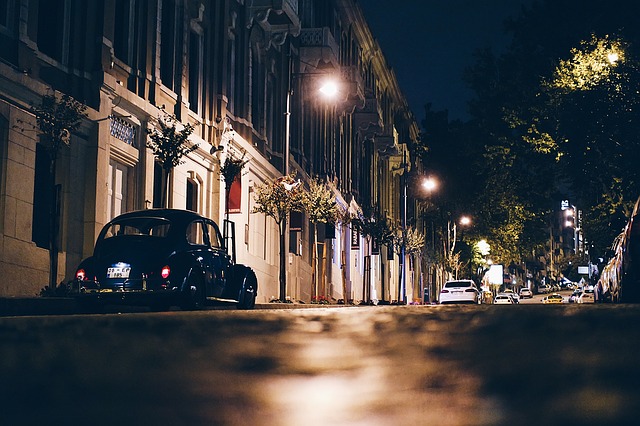
The fingers of sunlight withdraw, relinquishing their grasp. A button of a coat that had hung loose is fastened beneath the chin. Street lamps awaken. An old man dozes, his cheek brushing against the fabric of the armchair, his gnarled hands no longer clutching the crumpled newspaper that lays upon his belly. A fire goes out. A woman shivers as she enters the living room. She lowers herself to her knees. New logs are loaded, and the embers revived. Meanwhile, back in the kitchen, her cat slips out the flap. Its eyes shine. The woman thinks of it as hers, but no cat would ever admit to having an owner. It walks the lonely touchline of a football pitch at the vacant school. There is life in the dark, if you know where to look for it.
A driver yawns. The radio is turned up, to keep her company. A procession of brake lights stretches over the crest of the hill. She will be home late again. The passenger in the adjacent car gazes at her. His mother was last to collect him from the match; she had missed the entire game. He had scored, but that did not seem to matter any more. The field had been muddy; his shorts are damp from where he fell. He wriggles in his booster seat. The teacher who doubles as a referee is already standing at a bar. A female colleague waits for him to return with drinks. He has expectations. His bed linen was changed that morning. She shuffles in her seat and draws her handbag close as a group of youths jostle into position around the next table. They look barely older than her pupils.
Home at last, the mother draws the curtains, tutting as passersby peer in from the street. She calls for her son to get changed and showered, but the boy is already in the bathroom, and out of earshot. There is a smudge of make-up on the mirror. His sister, a fog of mystery and black, is back from university, and riding the bus into town. There are friends there, as old as friends can be when a woman is still young. It is a long queue and the wind cuts through her outfit, but once inside the music is so loud that it fills everything, until there is no space for anything else. Shots: one, two, three. She raises her knuckle to the corner of her mouth to catch a stray drop. Good and bad are out and prowling, circling her. They may touch her, but none will ever learn her secrets.
A television flickers. The old man is woken again. Some rich fool prattles at him from the other side of the screen. He turns the volume down, then up, then down again. It is too quiet or too loud, never right. He jabs at the remote control. Nothing on, nothing on. Maybe he should just go to bed. There was a time when he had dreams. These days there is only the deep dark of sleep, and the roaring snoring that drove his wife to another room. When the lights are off, he peeks around the edge of the curtains. Trouble sometimes dances outside his door, but not tonight. Half a world seems dead. Half a day is night. There is life out there, if you know where to look, but he does not want to find it any more. Perhaps he will stir again in the morning. The alternative does not trouble him.
Down and Fighting
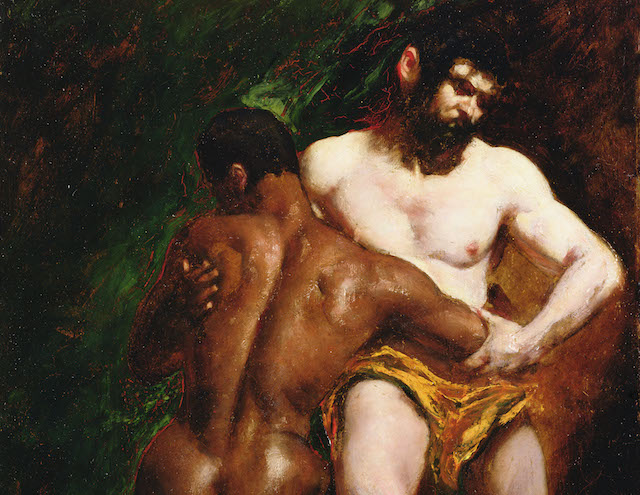
I will fight you
I will fight you
I must fight you
I will fight you
and anybody
who threatens this beautiful world and its people
who dares to put it at risk
who brings hate into it
I will fight you every day
in every way
with every resource I can call upon
I will give everything I have,
And will only hold back what I need to fight again tomorrow
and the day after
and the day after that
I don’t seek your approval
I’m not wanting your applause
I don’t need your permission
to pursue what I know is right
And I know that I’m right
I know I am right
because I know that I know
because I don’t need thanks or friendship or applause
from you
I only need to show you the truth, whether you like it or not, whether you accept it or not
I don’t want you to like me
I don’t care if you approve of what I do
I don’t require your recognition or your consent
I have my own appreciation
and the love of those who I respect
who respect themselves
who respect the truth
That’s why I’m right
that’s why I fight
the fight is good and true so long as it’s fought, and that’s why I’ll always fight it
If your goal is to make the world a better place,
you’ll never succeed through schemes that make you the centre of your world
it’s only when you give everything up
give away all delusions
care nothing for possessions
sacrifice the people who care for you
toss aside all other considerations
that you can be true to yourself
and in being true, know you’re not lying any more
that you can know what you do will leave this world a better place
that no victory is phyrric
because no cost is too great
for the pleasure of knowing this world can be better than it is
I’m going to fight
my fight is what makes life worth living
the fight brings us together
makes us whole
makes us one
fixes us like nothing else we can ever hope for
It’s not our compassion, whether abstract or personal, that allows us to care
we care because of our capacity to change
we can change ourselves
we can change others
we can change the world around us
if we have the courage to walk the straight line towards our destination
if we have the faith to overcome every obstacle
to push aside every foe that stands in our way
like I push
and push
and push you
And that’s why I fight you
not because I seek your enmity
but because you have given my yours
It’s always a reflection with people like you
I pursue
you oppose
I seek
you disguise
I live in truth
you proffer lies
It’s always a reflection with people like you
yours is the reversal of my truth
Those who live with me, breath with me, are with me
must seek the truth
the only alternative is the blind enmity that eats itself and must be defeated
by my hand
The fight itself is an education
the fight itself is a purification
for when we fight honestly, not for ourselves but for what we deem right
we can only profit from the blows rained against us
we can only welcome the lessons taught by our opponents
they make us stronger
teach us our weaknesses
destroy our vanities
banish indulgence
correct our errors
help us to see even further than before
for light is most powerful in the dark
so we must walk toward the night
walk through the night
walk only trusting the light that comes from within
the light that points us forward
Life isn’t a competition
my victory is inevitable
you just don’t know it yet
I hope you’re coming my way
but that’s for you to decide
I won’t be changing my course
no matter what the price
no matter what the sacrifice
I will spend my life fighting
not in bitterness but in furious love for this creation
which could have been so much better
if only it had been subject to a wiser design
the kind we know of now
We will be so much better, if enough fight like me
And if ever mankind finds paradise
I would pity them
for that is when they’ll be truly lost
it is the progress that keeps us vital
it is the journey towards good that gives us direction
the movement that makes us truly human
If I make it to old age, I’ll still not wither
not relax in my chair, not watch as the world gently rolls on
I will crawl, for every possible inch
to travel as far as my body and mind can take me
I’ll give whatever strength is left in my bones
I’ll give it all, knowing there’s no reason to save anything for tomorrow
I’ll push onward, never satisfied, always demanding
on my hands and my knees
just like I was as a child
And when I take my last breath
I won’t feel any fear at what I’ll lose
not because I expect a reward in some other life after this
not because I like pain or because I’m some fucked-up martyr
when I reach the end
I will only feel glad
that I lived
the life
I had
Why Even Pretend to Be Honest?
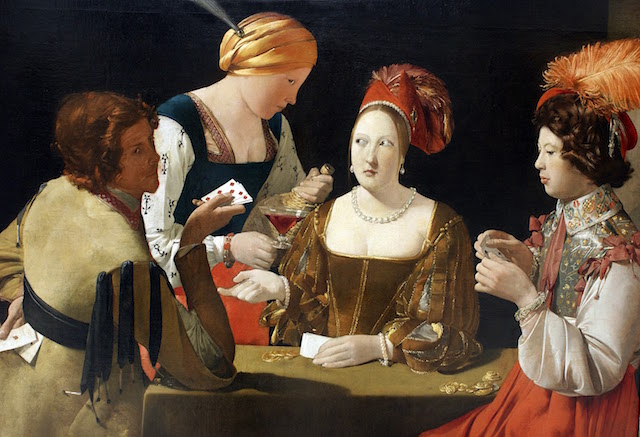
A plumber corrected me today. When I accused him of trying to cheat the taxman out of Value Added Tax (VAT) he explained that he was not registered for VAT, so there was no deception of that type. The plumber went on to explain the reason he asked for less money when paid in cash was because he intended to cheat the taxman out of paying the income tax that would be incurred for doing self-employed work. He considered the obligation to pay income tax to be a different and entirely separate principle to the obligation to pay VAT, implying that I was wrong to accuse him of deception. This is symptomatic of the world we live in today: you point out somebody is an unashamed liar, and they respond by explaining that your criticism is not justified because you have not sufficiently researched their dishonesty, so should not rush to form an opinion about it.
I saw today on social media that Brett Kavanaugh is accused of being not just a rapist, but also of taking part in gang rapes. Or rather, I saw an opinion which stated that ‘even if’ somebody – by which they meant an American white man – is accused of such despicable crimes they might still dare to profess their innocence during their ‘job interview’. That was an odd and deceitful way of putting it. Perhaps Kavanaugh is a liar, but the social media post was not about a hearing where an accuser had accused Kavanaugh of rape, or gang rape. The accusation at that hearing was from a woman who accused Kavanaugh of groping her. Groping is wrong, rape is wrong, gang rape is wrong. All three are wrong, but if you cannot distinguish groping from gang rape than you have no sense of perspective. But why pretend that the person who wrote this social media post cannot distinguish groping from gang rape? Of course they can, and they would make the distinction if an accusation was levelled at somebody they like and respect. They simply choose not to acknowledge the difference between groping and gang rape, so that if one woman appears to make a credible accusation about one thing, then every woman who makes an accusation must be treated as equally credible, even if there is limited evidence to support the less serious accusation, and none to support the more serious accusation. Everything is poured into a cauldron of shared dishonesty, where white men like the plumber are always dishonest, and always getting away with it, whilst no woman has ever lied, and certainly none have ever benefited from a lie.
We tell children not to lie, but I do not know why we would expect them to be honest any more. Not only is it the norm for adults to lie, but none makes even a modest attempt to disguise their brazen dishonesty. Consider the role of journalists, which is supposedly to provide information. Journalists repeat claims with almost no supporting evidence, which is why David Cameron will always be remembered as the guy who put his penis in a dead pig’s mouth (as claimed to be true in a book written by somebody who does not like David Cameron, who was reporting a story told by an anonymous person who had not witnessed the act, but was themselves reporting a story they heard from some other anonymous person who apparently was there), and Barack Obama was plagued by accusations that he was a Muslim who was not even born in the USA. It would be simpler not to reproduce lies, but journalists now reproduce them in full, even whilst dismissing them, because the goal is to profit from the distribution of lies, not to provide the public with information. But beyond that, how many journalists are now employed in the full-time inanity of recycling what other people have tweeted about some contentious event? So now we not only suffer a lack of accurate information, but we are encouraged to spend time validating and recycling falsehood presented as thoughts and feelings.
Vladimir Putin no doubt affords himself a chuckle at the stupidity of Western democracies. Being a former spook, he was trained to be a professional liar, and now he uses all the resources of the Russian state to promulgate lies so ridiculous that nobody should take them seriously. And yet people do, when it is convenient. They do this not because they care to speak truth to power, as they falsely claim, but because they care about their place within their tribe. Consider the following lies spread by Russia, or denied by Russia, and how different tribes will select which ones they take seriously, and which they will dismiss:
- Donald Trump paid prostitutes to piss on him
- Neo-Nazis took control of Ukraine’s government following the pro-EU Maidan coup
- A civilian, who may or may not be Russian, but who subsequently proved to be Russian, and who took a peculiar and spontaneous interest in a church in Salisbury, after never previously being interested in similar churches, was coincidentally in that city at the same time as people were attacked with Russian poisons, and has consequently been wrongly mis-identified as a military operative who looks just like him, although some British politicians were quick to observe we should not rush to judge anything because only a liar would make that mistake
- If any Russian sports stars took drugs, it was despite the best efforts of Russians employed to perform anti-doping tests
- Brits voted to leave the European Union because Russians successfully manipulated people through social media
It was only a few years ago that lefties uncritically repeated Russian propaganda that the Ukrainian pro-EU revolution was just cover for authoritarian fascists taking control of that country. Now the same lefties uncritically howl that leaving the EU only occurred because of Russian manipulation. Meanwhile right-wingers who agreed with Reagan that the Soviet Union was an ‘evil empire’ now claim it is perfectly rational for the US President to toady to the Soviet-trained tyrant who assumed control of Russia after the Soviet Union collapsed. Honesty has become irrelevant; people choose to believe what is convenient for them to believe.
The quality of a fact is not measured by the evidence supplied to support it, but the extent to which it corroborates an existing worldview, and is convenient for the community we identify with. Is it any wonder that some people now openly pretend that all men are liars, or that all women are liars, except for those few who adopt a contrary position to the majority? Truth is both utterly individualist and confirmed by a community of fellow-believers. We no longer need to reserve judgment, or entertain doubt, or change our minds, because once we know what we believe, we must merely find other people who have those same beliefs. And when we find people who are the same as us, we must be the same as them. A transitory coincidence becomes a permanent bond. We accept the common will in order to belong to superficial communities of fellow-travellers, even if that community has nothing in common except a desperate emotional need to belong. The most superficial common attribute is a common hatred of a perceived common enemy, whether they be refugees, or old white men, or liberals, or neoliberals, or social justice warriors, or gays, or TERFs, or any of the other labels most commonly deployed as the speaker’s bile builds in the back of their throats.
In times like these, it will become obvious to a few that the great majority of the human race are only worthy of utter contempt. George Orwell may have risked his life to fight fascism in Spain, but the resulting intellectual journey concluded with a vision of a world where a boot repeatedly stamps on a human face because the vast majority of human beings would welcome it. People would rather endure repetitive abuse than the realization that they are both alone, and unspecial, and that their life has no meaning because they lack the capacity to give it meaning. Faced with that stark truth, they will prefer the certainty and camaraderie that comes with always having been at war with Oceania, or always having been at war with Eurasia. Once we look beyond eating and shitting, what most people have in common is only their desperate need to have something in common.
Orwell was right to observe that “during times of universal deceit, telling the truth becomes a revolutionary act” but this is not unrelated to the fact that human beings are prone to deceit. On the contrary, people seek the ease and comfort of dishonesty just like they thirst for water or long for affection. The average person is not a revolutionary; most people are just squalid liars. And so observing this era of universal deceit I can only retain some shred of my personal integrity by honestly conveying my opinion about the entire human race: if we were all to be brought to our end in one sudden cataclysmic moment, it would represent no great loss. The universe would be fine without us, and only our vanity makes us believe otherwise. Our species is squalid and ugly because the vast majority of us are doomed to be delusional from birth, despite the punishments we give to children who tell lies. We lie not just to others, but to ourselves. So rather than conspiring to maintain our pyramid of dissimulation, if forced to choose which tribe I stand with, and which I must oppose, I would call for a plague on all our houses, for that would be the one true fair outcome we collectively deserve.