Home Blog Page 3

News Broadcasting Is Dying; Embrace the Narrowcast

British journalist Nick Robinson has many admirable traits. He is reasonable, sensible, and thoughtful. Impartial journalism is an impossible ideal, but Robinson offers a better approximation than the majority of his peers; his contemporaries may present two sides to every argument, but there are no serious arguments that possess fewer than eighty-seven sides in total. Robinson is wise enough to consciously plot a course through each debate, when most would simply feign balance by resorting to ‘he said, she said’ repetition of the inanities spouted by others. He does the same in the Steve Hewlett Memorial Lecture, arguing that news broadcasters face ‘guerrilla war’ from social media, extreme partisans and single-issue groups. He is right, but the language is unhelpful, even if it is designed to encourage wider interest from a population with scant interest in anything labelled with the words ‘memorial lecture. His lecture talks about the need for the BBC to change, which is correct, and how it might change, which is unlikely.

Modern public discourse is dominated by military and violent metaphors that help to create a sense of drama but also discourage objective analysis. People talk of ‘fighting’ for their rights, whilst elections become contests over ‘battlegrounds’. The BBC may feel itself at ‘war’ but there are no guerrillas seeking to overthrow them. There are only people who may sometimes be viewers of the BBC but who also desire more than to watch what the BBC offers. They wish to speak, as well as listen. If that makes them enemy combatants than the whole world is opposed to the BBC, apart from a tiny elite whose opinions are amplified because of their association to Britain’s oldest broadcaster.

The importance of the BBC is in decline because it is an old mass-produced product designed for an era when people might grumble about their limited choices but could do nothing about it. It is no surprise that the most ardent fans of the BBC are also the biggest supporters of national monopolies under state control. The BBC flourished in an era where everybody’s phones looked the same, and they sat in the hallway and had a cable attaching them to the wall. The BBC dominated when the cost of books was set centrally, and when everybody ordered their gas cooker from the same shop. The BBC’s finest hours were when everybody watched Top of the Pops to learn which songs they should like, even it was hosted by a peculiar man called Jimmy Saville. Today we carry our telephones in our pockets, download books to our tablets, and discover new music on Spotify. The BBC cannot possibly serve the same purpose as before, but its employees will seek to retain their jobs, which is the only real reason why the BBC will seek to find a new purpose. But even then it hampers itself, because it has limited reason to change, because it has never been subject to the dynamic forces which gave us Google, or iTunes, or low-cost airlines, or AirBnB. Put simply, the BBC has never had to listen to the money in people’s pockets, and so cannot learn from the messages expressed that way.

People who read Facebook posts do not pay for them. People who read tweets do not pay for them (and that includes journalists who increasingly depend on them as a source of news and copy). People who read the Canary do not have to pay for it (though they are asked to donate). People who read the Guardian online do not have to pay for it (though they are bombarded with begging requests). People who read Metro do not have to to pay for it. The same is true for the Daily Mail online, Wikileaks, Guido Fawkes, Labour Uncut, Breitbart or the Huffington Post. But people who do not watch the BBC still have to pay for it. Why would anyone be satisfied with a one-size-fits-all broadcaster in an era of unrivaled choice, especially when this broadcaster insists that you must be prohibited from accessing other sources of news and commentary if you choose not to purchase an annual subscription to the BBC?

Robinson remains passionate about the BBC.

I believe that it is still vital, and we should proudly tell our audience that the BBC is not owned, run or controlled by the government, media tycoons, profit-seeking businesses or those pursuing a political or partisan agenda.

The problem is that the BBC is not owned, run or controlled by me either. Or by you. It is somewhat controlled by its employees. An employee-owned business can offer a great service to customers – when it is subject to the desires of its customers. Removing the motivation to respond to customers is why monopolies deliver inferior service, whether owned privately or by the state. The BBC may worry about ratings but they are a poor proxy for customer choice. Even if 20 million people watched every programme broadcast by the BBC, it would not make the service responsive to some other millions who are compelled to pay for something they do not wish to consume.

The employees of the BBC rely on heavy-handed laws to force customers to pay for its privileged monopolistic position. In fact, that is too generous. They use their powerful position to lobby for better terms, even when circumstances go against them. Until recently the law required that the telly tax applied to anyone watching broadcast television, not somebody using the internet to watch videos which were not broadcast. So the BBC muddied the waters by creating a way of distributing their own content over the internet, so it may be watched at any time, and argued this created a ‘loophole’ where people could watch the content without needing a license. And so the law was changed, meaning we have now established that Britain’s parliament might tax people for using the internet, depending on how they use it. This should have been seen as a regressive step and dangerous precedent, though that was not the argument presented by the ‘impartial’ BBC.

When the owners of a business can guarantee their revenues without pleasing their customers they are likely to become complacent and self-indulgent. That is true if the effective owners are the employees, and the institution is the BBC. To my mind, the BBC has long been a flatulent piss-poor shower of mediocrity. Others may disagree. That is fine; people should live alongside each other in peace, even if they have very different tastes. But there can be no peace whilst the BBC spends £100mn per annum on hounding people like me because I do not want to pay for their service, in addition to already barring me from accessing other services that rival broadcasters would gladly give me for free.

Some people – like Nick Robinson – still behave well, despite the fact that the BBC lacks the economic motivation to improve. He is to be congratulated, because plenty of people will stuff taxpayer money into their trouser pockets and congratulate themselves for whatever tosh they produce, whether they are proofreaders who allow an increasing number of typos to be published on the BBC News website, or the Gary Linekers who have been convinced that they are a national treasure even though millions would choose not to pay a King’s ransom just to feed his bank account and ego. But Robinson’s argument, which focuses on the news, cannot stand even in that limited domain. Not all news is fake, and plenty of countries are able to deliver the news to the public without needing the public sector to intervene. On the contrary, it is the countries where the public sector intervenes where it tends to be hardest to obtain all the news that is fit to broadcast.

Again and again over the years, views that start off being seen as extreme quickly become the new conventional wisdom – monetarism, green politics, gay rights, calls for curbs on immigration.

Robinson hits the nail on the head, but draws the wrong conclusion. Unpopular opinions. Minority opinions. These are the opinions that will most struggle to receive airtime when a broadcaster has no motive to do better, and has no need to serve a certain clientele. Green politics get scant coverage on Fox News. Monetarism is not properly explained by the Canary. But those content producers work within systems where multiplicity is assumed. The BBC News, in contrast, exists to defeat all alternatives. It is at ‘war’ with every other source of news, after all. Many of its supporters make it plain that they like the BBC because it takes business away from right-wing newspapers (though it never occurs to them that left-wing newspapers should be doing that, and would be doing that, if people were prepared to pay for them). Choice is good. We are better served by having many narrowcasters, rather than a single broadcaster that tries to second-guess which minority opinions it should give more coverage to. Instead of thoughtful people like Robinson theorizing about what the public wants, allow morons and partisans and dogmatists to pour their time, energy and money into promoting their own views. The latter will learn what the public really wants much sooner than the BBC ever could.

And when the BBC is over, there will still be jobs for men like Nick Robinson. But he will be paid less, and will be less appreciated, not because I think that is fair or because an elite has stopped showing him the regard he deserves. He will receive less because most people do not value what he does, just as they do not value balance, and do not value the truth, and have little time for anything but hearing their existing prejudices being repeated back at them. That is right because serving the public should means giving people what they want, and not what somebody else has decided is good for them. And if you disagree with that opinion, remind yourself of what Robinson was hoping for in the first place, which was to save the BBC from losing its war because it repeatedly fails to acknowledge the ideas that large sections of the public will come to actively support.

The Tragedy of Great Stories

One reason I began writing stories was because I felt unsatisfied with many of the stories I would read. When it comes to modern fiction, it often feels like the writer has an agenda which they are determined to hammer into my skull. Perhaps that just means I am out of keeping with the times, and what I perceive as being the crushingly simplistic and worthless dogma of others is merely the mainstream opinion of this era of civilization. If that is true, then it is natural that writers should reflect the prejudices of the public. However, those prejudices are not shared by me, and I find them stifling. Whatever the truth, it occurred to me that I might write my own stories, partly to test if it was possible to create stories I liked, and partly to learn if others felt the same as me. Although art is nothing without an audience, I am content to be my own audience. That said, I would also be glad to experiment with writing that I imagined like a beacon: instead of searching for people with similar tastes by looking for the stories that I liked, I would see if others with similar tastes would find the stories I wrote. I hoped, but did not expect that the beacon might draw some similarly lost souls in my direction. If so, few have yet to arrive!

My stumbling attempts to light beacons have not been helped by many editors. They, like their paying audiences, rarely liked my stories well enough to publish them. And if the stories remained unpublished, then they would also remain undiscovered. So I sidestepped into a variation of my plan. If I became a publisher, then I might find stories I liked because writers had submitted them to me. Then I would publish them, and the beacon effect would be magnified. The results have been good so far; I am proud of the stories published in Sci Phi Journal since taking it over. Though it meant bankrolling a loss-making operation, the amount of money spent has been nothing compared to the satisfaction of connecting to writers whose work I admire. It is my hope that we may collectively light a bonfire so bright that it will be seen from very far away, taking our stories to new audiences, even if it proves impossible to please the jaded tastes of current fashion that leave me bemused.

Only two months have passed since acquiring Sci Phi Journal, but the results are pleasing so far. The publication is being read by far more people than the number that visited it previously. More importantly, the detailed web statistics tell me that visitors are clicking on the actual stories, and spending long enough on the pages to be reading them to the end. This is a change from the previous pattern of visitors, where many writers were checking the rules for submissions but ignoring all the stories written by their peers. Nothing lacks purpose more than a publication which is only read by people hoping to be published by it, and nothing is more depressing than observing reams of wannabe famous scribblers clicking through submissions policies whilst never sparing a second to acquaint themselves with anyone else’s work. I have been grateful for the praise and encouragement that the publication has received since it was relaunched. The criticism has also been heartening, because it is small in volume and seems to have mostly come from the worst kind of preening authors, worried about the appearance and popularity of their work but totally disinterested in every other writer that is published. A small niche publication will fail if it aims to please buffoons like this, so I am glad to disappoint them, and hope they never come back. They can only be parasites, who feed from success without helping to create it.

Nevertheless, Sci Phi Journal‘s success is not without tragedy. That is because our success is meagre, and the authors being published deserve much more than we can provide. They deserve more pay, and they deserve to be more widely read. I feel some guilt; perhaps it is a curse that their stories are to my tastes. These talented writers may never gain the audience that I believe they deserve, because so many in that audience insist on disagreeing with me. A publisher should not play favourites, and I consider all of the stories recently published by Sci Phi Journal to be superior to most of the stories found elsewhere. However, there is one story that is so good that I rank it amongst the best I have ever read, and it pains me that Sci Phi Journal is not popular enough to do it justice. I find “A Fractal of Eight Tragedies in Fifteen Parts” by Matthew P. Schmidt to be the equal of any science fiction story I have read by greats like Ray Bradbury and Isaac Asimov. Perhaps ‘Fractal’ is better, because it is written in this tawdry era, and not at the time that Bradbury and Asimov enjoyed their success. Its greatness is a tragedy, as I fear it will not be sufficiently appreciated, and my theories about beacons will prove as empty as a castaway’s hopes of rescue from a remote and deserted island.

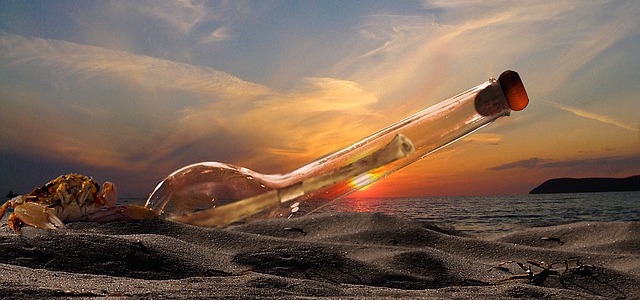
Occasionally we hear of a message in a bottle that was actually read, long after it was tossed into the ocean. Perhaps “Fractal” has similar chances of being discovered by the big wide world that surrounds us, but stubbornly ignores the majority of us. Only a forlorn form of communication is tossed into the sea of human ambition, with no reason to believe it will land on a populated shore. But there is no tragedy without aspiration. The beacon has been lit, and the bottle thrown as far as our strength allows. Let us see if this is a tragedy without end, or whether there will be an unlikely twist in the tale.

On Defending Big Pay for BBC Celebrities

To be honest, I like the fact that so many people are defending the BBC’s policy towards overpaying their overhyped celebrities. I like that they want to rationalize eye-watering salaries, claiming they must be justified because the same presenters have been presenting the same things for the last 20 years, and hence they must be uniquely qualified to keep on presenting the same things for another decade or so. I like that ‘activists’ who routinely complain about the income of CEOs – despite the typically short tenure of most CEOs, their responsibilities to shareholders and all the legal obligations that hang over them – think it preferable to give even more money to somebody tasked with introducing clips from sporting events. My perverse pleasure stems from the fact that this reflexive devotion to the BBC demonstrates something important about the BBC’s supporters, and about Britain more generally. It demonstrates that the BBC is not, cannot, and never will be the thing that its fans pretend that it is. The BBC is not a unifying force. It is not something that all British people can feel proud of. It is not representative of what is good about this country. Instead, the BBC represents the interests of factions of British society, and as our society becomes more factional, so does the BBC.

Like any political coalition which seeks broad appeal, the BBC has to appeal to many different factions. We should list some of them. The BBC represents the comfortable middle class who want cheaper telly subsidized by a flat tax on the poorest members of society. The BBC represents rich celebrities who like to signal populist virtues whilst enjoying unusual job security and pretending their enormous pay packets are hostage to market forces. The BBC is a hundred rich and powerful men arguing that transparency is uniquely bad when they become subject to it, and that the only good which will come from telling the truth is that a hundred women will soon receive obscene salaries too. The BBC is activists with friends who get them on telly shows, immediately making them more important than they really are. The BBC is nepotism, and Oxbridge, and access to the corridors of power, and the friend of every institution that says and does enough to hold on to privilege without really changing that much. Ultimately the BBC is a continuous war of the tens of thousands of people who receive their pay directly or indirectly from this corporation, against the 6-7 percent of the population who routinely watch telly without paying the BBC to do so.

People keep saying the BBC represents value for money. The BBC is an institution that takes £3.74bn a year from feepayers but has to spend £100mn just on collecting that money, in order to keep the ‘cost’ of evasion below £300mn. That’s a terrible ratio, with too much spent on collection. It reveals an obsession with evasion compared to other taxes. Because it is a crime not to pay your BBC entertainment bill – whilst it is not a crime to fail to pay for your electricity, water or gas – the BBC abuses the UK’s legal system by choking up magistrates courts with 180,000 cases each year. In other words, BBC demands for payment represent about 1 in every 8 cases that magistrates deal with.
Apparently all this is necessary as a ‘public service’, because nobody would broadcast or watch football unless Gary Lineker earned 10 times the wages of the Primeminister just to introduce it. Or because some people find adverts so unwelcome that they’d rather see their neighbour criminalized than allow them the choice to watch genuinely free TV without needing to pay a surcharge to the BBC.

When I moved back to the UK, I found my mailbox contained 6 warning letters from the BBC, all vaguely threatening to take me to court. BBC threats have to be vague because they are dishonest, and designed to fool people with limited education. In the 5 years since that time I have never purchased a licence, and not legally needed to. As a consequence, I receive a threatening letter every two months, each one saying the BBC is about to ‘investigate’ me, and telling me what will happen in court. The one time I was ‘investigated’ I learned something important about the people who collect BBC revenues. They use lies to trick people into paying money that is not owed. I was told that the previous occupants of my home had purchased a TV licence, so I must need one too. The liar even looked down at his clipboard, pretending he was reading from his notes. He walked off without another word when I observed that there had been no previous occupant of my home, because I was literally the first person who moved into my newly-built property.

So it makes me very glad that so many people are defending the BBC. They want to pretend they represent most people but they clearly do not. They want to pretend they are moral, but they are not. They only represent themselves, and their own selfish interests. They represent their faction, which might ally with other factions, but doesn’t represent their country. I am of Britain too, and these people do not represent me, even though they would gladly rewrite history and distort the news to pretend that people like me do not exist, or do not deserve to exist, or should not be allowed to exist. The BBC exists to represent them, by misrepresenting people like me. These people do not represent me, just as the BBC will never represent me.

Nor do these people represent my disabled neighbour, who was nearly intimidated into buying a second duplicate licence because of the BBC’s vague and baseless threats of court action. They do not represent millions of people who reasonably believe that the BBC could be offered as a subscription service to those who want it, without demanding payment from those who do not. They only represent an illusion of Britain, a fiction that suits their prejudices, as shown to them by the BBC. That is why they watch it, and why they want everybody else to pay for it too.

In a free society, if most people wanted to pay for the BBC they could, and wouldn’t need to be compelled to do so. What we have is a politically gerrymandered system where enough factions – the greedy, the vain, the lazy, the self-important, the authoritarian – want to maintain a mode of payment first introduced in 1946 because it benefits them. And because change is hard, they’ll hold on to this corrupt system for as long as they can, even though the notion of a national ‘broadcaster’ is incoherent as we transition to the supply of audio-visual content across a global internet.

It encourages me to see so many people defending the BBC because it proves the BBC can only persist so long as its lackeys and stooges pour energy into protecting it from people like me. I hope they continue to defend the BBC, and to do so loudly, and repeatedly, because it draws attention to the fact that the BBC tax would be scrapped tomorrow if they were not always defending it. That is because they are not defending the BBC from a few Tory MPs or from the right-wing press or whatever bogeyman they would prefer to complain about. They are defending the BBC from millions of straightforward and ordinary people like me. And that tells us who the BBC is for, and why the rest of us do not want it.

An Argument for Not Voting

Facebook encouraged me to vote in the UK’s general election, which is being held today. Presumably this private corporation, mostly owned and run by Americans, believes it has a civic duty to persuade the most people to vote. They do this no matter where the voter lives in the world – unless he or she lives in countries that are not democracies. They do this even though Facebook takes no responsibility for the quality of the choices being presented. But if voting is such an incontrovertible good that everybody should be encourage to do it, why are so many voters being forced to make such dreadful choices? Consider the Americans who were confronted with either Clinton or Trump. Or consider the French who had to pick between the life-long fascist who is daughter to another life-long fascist, or the egotistical opportunist who suddenly stopped being a socialist because the socialists were unpopular? I cannot mock the Americans or the French for the failure of their democracies because we Brits have it even worse. Their malfunctioning methods for appointing a leader appear relatively sane compared to the electoral tragedy that has befallen Britain. Confronted with the worst of all choices, the only appropriate response is to not vote at all, in the hope this will be interpreted as the rejection of every alternative.

So I am not going to vote today. Voting should be about expressing a democratic choice, and ‘none of the above’ is also a valid choice, especially when the other choices are so lousy. It’s been a terrible campaign, I don’t like any of the manifestos, I don’t like any of the leaders, and I can barely believe that both major parties have such substandard front benches who are so clearly loathed by their fellow MPs. I live in a safe Tory seat with a career Tory MP who has done nothing useful during 25 years at Westminster, and whose name I would barely remember if it was not for the fact he once sent me a woeful begging letter because he assumes anyone who owns a company should be grateful to the Conservatives. The Conservatives have been taken over by power-hungry nutters with no principles, but the alternative is a rabble who mostly hate their own leader, which is not surprising given that he is a pacifist except for the occasions when he supports both the goals and methods of terrorists.

Either May is going to introduce excessive authoritarian powers to spy on all of us, or we must anoint a nincompoop who suggested turning nuclear submarines into the most phenomenally expensive troop carriers in history, and whose top advisor is a Stalinist who repeatedly denied the scale of murder by oppressive Communist regimes. May is a neo-fascistic unimaginative over-promoted arse of a politician but the third-rate job she will do is somewhat better than the calamity offered by a Labour leader who is so lacking in ability that none of the five previous Labour leaders offered him any lowly job, and even Diane Abbott was promoted to the shadow cabinet ahead of him.

What of the fringe offerings? Farron is a bad joke, a weakling who leads the Lib Dems because his party was thrown into disarray by an electorate that likes to protest but fails to comprehend why adults must sometimes compromise. The Greens are the ultimate lefty purist nightmare, able to pretend to be scientific whilst relying on uncosted emotional gambits – three day weekends?!? – and still appealing to the overpaid pampered Brexit-fearing home-owning middle classes because promises have no price tags when you know there is no possibility of ever being in a position to keep them. UKIP has the ideological coherence of Ed Norton punching himself in the face during Fight Club, just before he started blowing things up. And don’t get me started on the nationalist fantasists who think their countries will turn into utopias the moment they succeed in ethnically cleansing the influence of the evil English.

So to the vast majority of Brits who voted today, I say you all made the wrong choice, with the possible exception of you diehard Raving Monster Loony loyalists, because you’re doing as much good as anyone whilst also having a laugh at the absurdity of it all. Perhaps the next election will afford us a choice worthy of a country with such a long uninterrupted history of democracy, but today is a day when we should think about everybody who ever made sacrifices to protect our freedom, and feel ashamed that this farce is what Britain has come up with.

On Confusing Science with Policy

I recently read the following statement, written by a scientist who believes the US government is paying insufficient attention to the scientific community.

No one who understands how climate works thinks we can continue to pollute our atmosphere without catastrophic cost. And given that we have already waited for too long to completely stop the process, we need help figuring out how to keep things from getting too bad and how to adapt to the changes we cannot stop.

This is taken from an LA Times op-ed entitled “Scientists are marching en masse on Earth Day because we believe reality matters”. In a way, the title is ridiculous. Nobody is indifferent to reality. Put a real boot up someone’s real ass and you will soon discover that even the most ardent solipsist will acknowledge what you really did to them. They are also likely to temporarily forget their philosophical beliefs, and to ask why you kicked them, or possibly kick back.

It is also hard to determine why reality would matter less if people failed to march in support of it. Might reality go on vacation unless we show it how much we care? Is reality like a quixotic Greek god, prone to inconsistent and unpredictable behaviour? Perhaps reality does suffer that temperamental defect, but scientists would struggle to do their work if it did.

However, the author has a serious point, if not well made. The successfulness of a policy will be determined by how realistic it is. Clearly the author is worried that some unrealistic policies are being adopted by the US government. These marches always seem to be about the policies adopted by the US government, even if they lead to a score of sympathy marches from people who live in other democracies elsewhere, hence begging the question of how realistic those voters are. All the polls indicate that Donald Trump is deeply unpopular in Westphalia, but this did not stop him winning a recent election in the USA.

Are (some) scientists arguing that (some) other people are insufficiently realistic? I suppose they are, but that only begs the question of how realistic anyone can promise to be when it is perfectly respectable for a philosopher like Karl Popper to argue that science proceeds by a process of falsification, meaning no hypothesis can ever be said to be true, just as no person lives forever. The best that can be said for a hypothesis is that it is currently awaiting its inevitable demise. That satisfied Popper, but I doubt it would satisfy the marching scientists. To be fair, it would not satisfy Trump either.

But let us grant, for the time being, that science delivers ‘truth’. Let us go a step further, and also grant that scientists are especially truthful people, even though we keep reading about scientists engaging in fraud and being unable to reproduce each other’s results. Would that mean they suffered no prejudice, no delusion, no faults? Probably not. The few sentences copied above show us why.

For a start, the process of science is supposedly objective. So why hector your audience with phrases that begin “no one who understands…” Maybe it is an objective fact that “no one who understands climate” would disagree with this particular author, but that fact is harder to prove than simply stating the proven facts about the climate. To prove the statement about everyone who understands the climate would involve objectively determining who “understands climate”, whilst avoiding the circularity that “understanding climate” cannot simply mean agreeing with this particular scientist. It is better to just explain how the climate works, if it is that straightforward, but the problem is that the scientific community has, in general, done a lousy job of explaining climate science. And that is a fact because the failure of the pupil must always reflect the failure of their teacher.

Science may be an enquiry into reality but it cannot determine our goals and priorities. What, in this context, is a “catastrophic cost”? If the author knows the cost then the approach should be to state it literally, with numbers. That would be unemotional and objective. That would encourage us to deal with useful facts. Instead, this author uses judgmental colour to show she thinks it is too high. But her ‘catastrophe’ might be what I would call a ‘mild inconvenience’. We do not know and cannot tell unless she states what the literal cost is – in dollars, lives etc – instead of telling us how we should feel about the cost.

Carbon dioxide, by the way, is not a pollutant in any truly objective sense of the word, because plants love the stuff. The use of the word “pollute” is more judgmental colour.

Contrary to what this author states, we have not waited too long to “stop the process”. Of course we could stop the process. One straightforward means would involve killing almost the entire human race. Though unpalatable to me, mass genocide at least has the advantage of being a technique that has been tried multiple times through history, often garnering significant levels of support from the individuals who expect to survive. Better still, we already possess the technology to kill billions of people, and could use it at very short notice and at a fraction of the cost involved in developing ‘cheap and safe’ nuclear fusion or any number of renewable energy sources that stubbornly remain more expensive than fossil fuels.

However, most of us would prefer some global warming to genocide, which is why we do not get hyperbolic about sea levels rising a few inches. The issue is hence how bad is, as the author puts it, “too bad”. Again, her “too bad” need not be the same as my “too bad”. We will not collectively “figure out” how to stop things being too bad if we fundamentally disagree on what state of affairs is considered too bad to tolerate. So why does the scientist not state the likely outcomes and costs? Because, I suspect, this author is so in love with her vision of reality that she fails to admit she does not have all the necessary information to reach a definitive conclusion.

“…and how to adapt to changes…” This is really the crux of the matter. It is not a question of only adapting to changes we “cannot” stop but of how much effort should go into adapting to climate change, versus how much effort should go into stopping climate change. That might be easy to do if the science delivered reliable forecasts, but it does not. Instead we get emotive language about the need to stop climate change, with no hard-headed analysis of whether it would be cheaper, easier, better to adapt to climate change. And that is because such enormous macro-economic decisions must take us, unsurprisingly, into the sphere of macroeconomics, a domain where even the most obstinate economist would refrain from suggesting the science is settled. Right now there is not a single scientist who can state, as a certain matter of fact, whether it would be better to allow climate change to progress unimpeded whilst we grow the economy, and then to spend the accumulated wealth on adaptation, or to immediately spend a large portion of the economy on limiting the extent of climate change, and to hence suffer less spending on other aspects of human society, and risk less wealth in future.

In some ways it is easy to understand why scientists might engage in such a daft argument. It is very unsophisticated for climate change deniers to dispute if global warming occurs, or how much it is caused by human beings. Disputing measurements of temperature or the volume of ice is a folly, unless you are sufficiently expert on taking those measurements. Perhaps climate models are bunk, but if almost every climate scientist supports the same models then their position is strong. If deniers want to obstruct action then the simplest course is to shift the debate to the realm of economic models, and predicting future technological advances. Here the scientists have no special advantage, and the human race is found to be generally deficient at any sort of useful prognostication.

Ignoring climate change deniers for a moment, and supposing most of us genuinely want to live in reality, then it becomes apparent that there is an obvious flaw with marching for science. The act of walking is not the act of doing actual science. So if science is a genuinely useful practice, walking is an unhelpful distraction. I could just as easily walk against science as I can walk for it, with approximately the same impact on global warming either way. Genuine scientists might better protest cutbacks in science by doing more science voluntarily, but I suppose they might feel they have played into the hands of their enemies.

Writing about walking for science is even less helpful than walking for science. For all the data presented in all the articles written by all the emotive scientists about why they need to go on marches, not a single person is more informed about what would be the likely cost of adaptation versus the likely cost of prevention as objectively calculated for several realistic climate change scenarios.

Note the importance of realism when seeking to determine policy. Realism involves such things as: admitting you do not have all the information you might like; being conscious that different people have different priorities; recognizing the extent of uncertainty when predicting the future; talking about specific tasks and showing how, in combination, they contribute to an attainable goal. It is this kind of realism that is sadly lacking in much of the current public discourse. If scientists want to help the public they should promote science, not promote dogmas which were supposedly derived from science.

I suspect the real problem with science is that it is hard, and that is why everybody cuts corners most of the time, including scientists. Should I adopt an evidence-based policy when assessing how to best influence government, or should I go on a march because that will also make me feel good and introduce me to like-minded people? If you believe in the evidence for evolution then you should also believe that human beings did not evolve like the caricature of a logical scientist that is Spock from Star Trek. Emotions play a valid and inevitable role in determining human choices. In that respect, I am being deliberately unfair – and as pointed as Spock’s ears – by observing that marches for science reflect the emotional desire for the marchers to express themselves and bond with like-minded people. In contrast, the evidence for marches changing government policy is patchy and contradictory.

Living by scientific principles is so hard that the campaigners behind the March for Science fail to apply their own principles to their own campaign. Their second ‘core’ principle is for evidence-based policy. However, their lengthy list of principles does not cite any evidence which might support their claims. They did not think to mention a single scientific paper that backed their opinions. Why not? The framers of the US constitution might have held some truths to be self-evident, but science has to do better, or else it is not science. Did this failure come about because the marchers’ belief in their third ‘core’ principle – supporting education that teaches children and adults to think critically, ask questions, and evaluate truth based on the weight of evidence – does not apply when critics like me ask questions like this?

Consider the following statement:

De-funding and hiring freezes in the sciences are against any country’s best interests

This may very well be true, as a statement about the current state of affairs of every country on the planet. But is there literally no advantage in showing the evidence to support this claim? Approaching this statement another way, a critical mind would observe that there must be some point when spending on science is too much to serve the country’s best interests. Instead of telling us that less spending is always bad, why not simply tell us how much is optimal? Or is the problem that these seemingly factual assertions are not as solidly grounded in fact as the scientists would have us believe?

I could go on, but the real point is that marches for science are like reading New Scientist for science, or LA Times op-eds about science, or text books about science. They may be a useful precursor for science, they may encourage people to do science, they may even teach people a few useful things, but they are an output, not the science itself. Like any output translated into any language, they can be wrong and misleading, even if drawn from science that was good.

When a woman in a white lab coat tells me how to brush my teeth she may be trying to help me by reiterating the findings of solid research, but when she sticks in a cigarette in her mouth and tells me the tobacco is stimulating I should realize the lab coat guarantees nothing. Public communication introduces an element of popularization that may undermine the science itself, and can lead scientists to say silly things that are neither scientific nor true. Scientists can be liars, charlatans and fools. They can also be selfish or vain, and so say things in order to get attention, or money, or because it is what their audience wants to hear. As Neil deGrasse Tyson once argued, the scientific probabilities indicate the entire universe is most likely to be an artificial simulation. Because scientists believe reality matters, obviously…

Happy Birthday Achoo

(To the tune of the happy birthday song)

Happy birthday to you
Happy birthday achoo
Sipping lemon tea for your cold
With three sugars too.

Another year has gone by
And you’re wondering why
Spots shrivel after your teenage years
But your nose will not dry.

You feel full of snot
So you’re wond’ring why not
Stick two tubes up your nostrils
And just drain the lot.

But please don’t get down
No, don’t wear a frown
Birthday sniffles may be miserable
But at least your sneeze gets around.

For a friend with a birthday and a cold

Cambridge Uni Airbrushed Tim Farron’s Wine Glasses

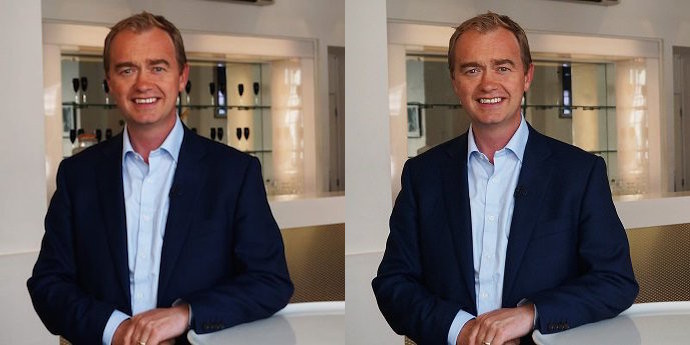
Yes, you did read the title correctly. We live in an era where we never hear the end of complaints when someone airbrushes an old photo of an Italian actress for a poster or when Google neglects to show Palestine as being separate from Israel on its maps but nobody cries foul when somebody digitally removes all the wine glasses from a photograph of Tim Farron MP, Leader of the Liberal Democrats. Even though people should complain, as this is a much more serious rewriting of history than pretending a curvy woman was slightly thinner than she really was. I can understand why Stalin erased Leon Trotsky from photographs but what nefarious left-liberal progressive goal is furthered by pretending that Tim Farron would not stand in front of a shelf of empty wine glasses? Especially as the pic of Tim Farron standing in front of the empty wine glasses is used by Tim Farron for his Twitter profile? And what do the academics at Cambridge University have to say about the implications for journalism and ethics?

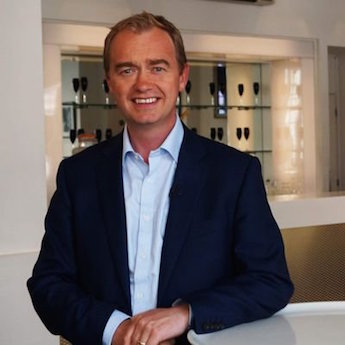
This is the photograph that Tim Farron has cropped and uploaded to his Twitter profile. Take a good look at the blue-coloured glasses standing on the shelf behind him, sadly neglected in a fashion that Charles Kennedy would never have approved of. These glasses hardly make for the best background for a photograph but I suppose the Leader of the Liberal Democrats cannot afford to be fussy.

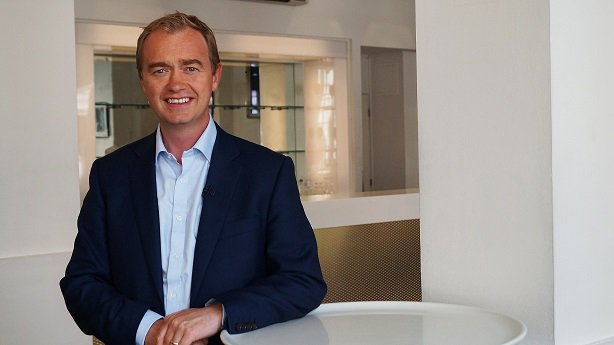
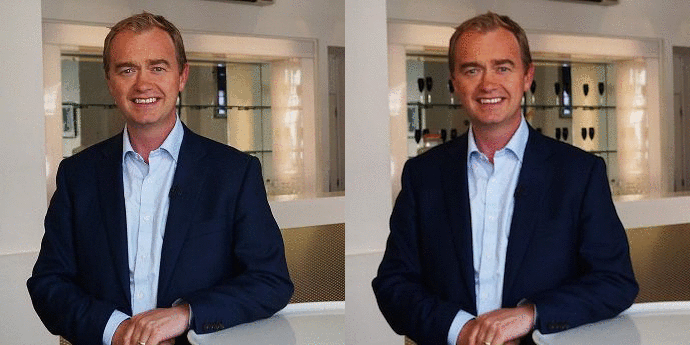
Now look below at the photograph tweeted by Cambridge Judge Business School, the business school of the University of Cambridge, when Farron went to visit them. In case you are wondering if this is just a similar photo but taken after they moved the glasses, you should look carefully at the polished white surface to the right of the shelves. You can see the reflection of the glasses upon that surface, just as you can with the unaltered original.

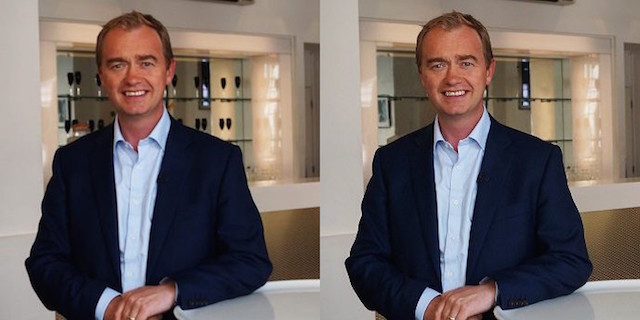
If you are still not convinced by inspecting the two photographs side-by-side then behold the effect when they are identically cropped, superimposed upon each other and turned into an animated gif! This proves beyond doubt that some nitwit thinks wine glasses are as unwelcome in our society as the fulsome bottoms of Italian ladies. If so, then I will gladly offer sanctuary for both, regardless of my views on Brexit.

How do I know Cambridge University photoshopped the image? Because they not only tweeted the manipulated image presented above, they also used it in their articles describing Farron’s lecture (see here and here). Googling the image reveals the original uncropped version at Mumsnet but only Cambridge University uses the alternative version that removed the wine glasses.

I have a theory that might explain why Cambridge University has purged the wine glasses. Writing about Farron’s visit, an anonymous Cambridge hack claimed:

Cambridge is the biggest and most diverse eco-system in Europe, and collectively it has a strong voice “” there is no doubt it is in a perfect position to help shape a positive future for Britain “” post Brexit.

Will the loss of EU funding force Cambridge University to recruit more overseas students, perhaps from the Middle East? That would explain their Shariah-compliant version of political debate. We can only hope their maps of Palestine are also in order.

Swallow Me Whole

0

Swallow me whole
Body and soul
Not just to the middle
But all of my quiddle
And I’ll thank you to never
Regurgitate me back again

Into your mind
Inside is fine
A life spent within you
Deserves to continue
And I’ll dance round your ballroom
Whilst you hold on to my chain

We will be one
And never alone
Your eyes as my window
Your dreams as my pillow
And I’ll strike up a heartbeat
To accompany you everywhen

Why Liberals Should Defend Milo

Society can and does execute its own mandates: and if it issues wrong mandates instead of right, or any mandates at all in things with which it ought not to meddle, it practises a social tyranny more formidable than many kinds of political oppression, since, though not usually upheld by such extreme penalties, it leaves fewer means of escape, penetrating much more deeply into the details of life, and enslaving the soul itself. Protection, therefore, against the tyranny of the magistrate is not enough: there needs protection also against the tyranny of the prevailing opinion and feeling; against the tendency of society to impose, by other means than civil penalties, its own ideas and practices as rules of conduct on those who dissent from them; to fetter the development, and, if possible, prevent the formation, of any individuality not in harmony with its ways, and compel all characters to fashion themselves upon the model of its own.

John Stuart Mill, On Liberty

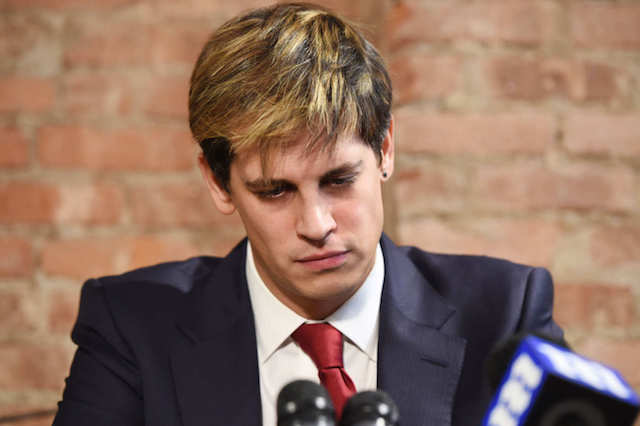
It is uncontroversial to state that John Stuart Mill was a liberal. There will be more resistance to using the term to describe Milo Yiannopoulos, a professional provocateur who recently stepped down from his editor’s job at Breitbart following a furore over a year-old podcast. I will argue that modern liberals should defend Milo, and recognize that Milo defends the key liberal principle of free speech, even when he uses it to express thoughts and feelings they dislike. Those who dislike free speech may want to stop reading now – though I hardly need to tell them that. Being prepared to entertain unpopular ideas is another key aspect of liberalism, which is seemingly being lost because so many other aspects of liberalism have become “the prevailing opinion and feeling”.

This is an argument about Milo, not Mill; like others I will refer to Yiannopoulos by his given name because it seems modern multiculturalism lacks the linguistic diversity to cope with Greek surnames. However, I begin with Mill to establish a precedent for what liberalism is. Mill spent much of the 19th Century arguing for the abolition of slavery, equal rights for women, and for the merits of worker cooperatives. He famously stated that “stupid persons are generally Conservative”. If Mill’s words do not define liberalism I doubt anyone else can claim to define it.

We can argue that words change their meaning over time, and that liberalism can evolve. However, ideas do not evolve by growing inconsistent. Politicians and journalists will often express ill-considered and flawed opinions but they may not take ownership of other people’s ideas, even if they routinely seek to hijack them for temporary gain. Liberalism is ultimately a philosophy, a body of ideas. That means it cannot succeed by being rendered incoherent through the adoption of inconsistent principles.

The most essential principle of liberalism is freedom of thought and speech. Whilst Milo is an ardent and passionate advocate of free speech, many so-called liberals would like to impede his freedom to speak. That makes Milo an effective advocate of liberalism, whilst his enemies are working against liberalism, even if they like to refer to themselves as ‘liberals’.

Why is free speech so crucial to liberalism? Some might argue that a person is liberal if they endorse most liberal tenets, even if they reject a few. However, I do not believe a philosophy is like a menu, where adherence is demonstrated by counting the number of dishes that suit your intellectual appetite. Some principles are more important than others. Some provide the foundations, others follow as a consequence. As Mill explains, free speech is necessary not just for the freedom of the speaker, but for the freedom of all listeners too:

But the peculiar evil of silencing the expression of an opinion is, that it is robbing the human race; posterity as well as the existing generation; those who dissent from the opinion, still more than those who hold it. If the opinion is right, they are deprived of the opportunity of exchanging error for truth: if wrong, they lose, what is almost as great a benefit, the clearer perception and livelier impression of truth, produced by its collision with error.

Free speech is vital for the coherence of liberalism, as understood to be a body of ideas that pursues not just the maximum freedom for all human beings, but also equality between human beings. Liberals are obliged to allow the opponents of liberalism to speak their mind. That is because free speech is the cornerstone of lasting equality within any society. How might we decide if somebody is being treated fairly if we cannot hear their point of view? Mill makes the argument thus:

…it suffices that, in the absence of its natural defenders, the interest of the excluded is always in danger of being overlooked: and, when looked at, is seen with very different eyes from those of the persons whom it directly concerns.

Without free speech we must be doomed to inequality of some sort or other, because we must have divided the population between those who may speak, and those who may not. Speech is powerful; it allows us to state our case, and to influence others. Arguing that we must deny influence because some ideas are wrong is to put the cart before the horse. I cannot know an idea is wrong until I am conscious of that idea. If you take away the freedom of the speaker you also take away my freedom to listen. And to determine an idea is wrong involves a willingness to entertain that idea. Those who deny free speech are insisting that they have listened enough, and have judged enough, so they must deny everybody else the opportunity to judge. By claiming the authority to judge on behalf of society the would-be judges grant themselves a power they simultaneously would deny to others. That is inequality, and is fundamentally contrary to liberalism.

It is helpful to recognize Mill expressed his liberal views during a time when they were a lot less fashionable. In many respects Mill was a feminist. He was also a meritocrat, and an opponent of inherited wealth. Mill certainly stood opposed to many ‘prevailing opinions and feelings’ of his time. In that respect he is not so different to Milo. Only a limp provocateur who target his ire at unpopular opinions.

What was unpopular during Mill’s time has become popular now. Women could not vote when Mill lived, whilst a bid to repeal the women’s vote would have no hope of success now. That means the evolution of liberalism cannot involve simply repeating Mill’s conclusions. Liberals must allow repeated argument for and against every conclusion. However, in recent years it has become normal for progressive politicians to make the argument for liberal conclusions by stating the date, as if they only need to appeal to historical necessity. A good example was the answer given by Canadian PM Justin Trudeau, leader of the Liberal Party of Canada, when asked why it was important that his cabinet have as many women as men. His answer: “because it’s 2015!”

True liberals should consider this an appalling argument, a blatant appeal to the current state of fashion rather than to an enduring principle. Let us imagine we sat with Mill as he wrote:

What is now called the nature of women is an eminently artificial thing “” the result of forced repression in some directions, unnatural stimulation in others.

Suppose a conservative had read those words, then turned to Mill and triumphantly uttered “it’s 1869!” Would we accept that the conservative had a valid counter-argument? I think not. We would say women were the same in 1869 as in 2015, so deserved equality then, as now, as always. But if your argument involves chanting today’s date then you must be arguing that you are right because prevailing opinion and feeling is right. This can hardly be called a coherent philosophy, or a principled position. Prevailing opinion and feeling will change from time to time, often for irrational reasons. It is a poor shadow of a liberal thinker who relies on the argument that we should all hold popular beliefs when they are popular, whilst only turning to reason when stating opinions that are currently unpopular.

Liberalism persists because liberals like Mill promulgated eternal principles, but the greatest threat to those principles now comes from supporters of a modern, debased variant of liberalism. They want many of the same conclusions that were reached by great thinkers like Mill, but not at the inconvenience of reaching those conclusions by building upon sound fundamental principles. That is why they prefer to conclude they are right because they are popular, and may also conclude that alternative points of view need not be entertained. They are convinced they are right, and are surrounded by people who agree with them, so why should they bother thinking about other points of view? Mill knew all about people who adhere to this way of life:

Stupidity is much the same all the world over. A stupid person’s notions and feelings may confidently be inferred from those which prevail in the circle by which the person is surrounded. Not so with those whose opinions and feelings are an emanation from their own nature and faculties.

Whilst Mill argued that stupid people tended to be conservative, I believe that progress means his criterion for stupidity is now satisfied by many liberals. Some liberals unashamedly revel in the popularity of their opinions, and they offer that popularity as justification for them. Popularity has become an alternative for exercising their faculties in order to construct justifications for their beliefs. In other words, some modern-day liberals are behaving like 19th Century conservatives.

Perhaps part of the problem is that liberalism is associated with the modern left because it was associated with the historical left, even though much has changed between then and now. Television presenter and comedian Bill Maher is a modern liberal, but a classic liberal too. He invited Milo to speak on his television show; you can watch the interview here. Maher is consistent in ways that make other liberals uncomfortable, and that includes unwavering support for free speech. Milo and Maher talked about the subject, and this is their exchange.

Maher: You’re so – let’s say ‘helped’ – by the fact that liberals just always take the bait.

Milo: Of course!

Maher: Now you’re a conservative, I’m a liberal…

Milo: Well, I don’t know, I don’t know if I’m conservative. I’m libertarian, I’m a free speech…

Maher: (talks over) You write for Breitbart and you’re a Trump supporter. You’re a conservative.

Milo: Well it’s interesting that the radical gay editorials saying interesting things, provocative things about gays are now being published by Breitbart. And I don’t think really you can call Trump a traditional conservative; he’s not that Republican.

Maher: No, you’re correct about that. He’s very dangerous…

Milo: (talks over) All I care about is free speech and free expression. I want people to be able to be, do, and say anything. These days you’re right, that’s a conservative position.

Maher: I care about the environment and living also. But you’re right, free speech… (interrupted by applause) But I mean, you’re right…

Milo: That’s a conservative position now.

Maher: … we’ve both been disbarred at Berkeley. You know, I gave the commencement address…

Milo: (talks over) much more dramatically I’d just like to say. They just disinvited you. I had riots, people got beaten up…

Maher: Right, okay, you win there. You beat me out there.

Milo: It’s not a competition.

Maher: No, it’s not a competition. But when you make liberals crazy for that part of liberalism that has gone off the deep end.

Milo: Most of it. You’re the only good one. You’re literally the only good one. Your side has gone insane. The Democrats are the party of Lena Dunham. These people are mental, hideous people. The more that America sees of Lena Dunham the fewer votes the Democrat Party is ever going to get.

Maher: Let’s not pick on fellow HBO stars.

What could have been a very sharp discussion about liberalism and free speech often failed to ignite at the crucial moment, either because Maher and Milo talked over each other, or because the audience intervened with applause for lines which echoed their simpler prejudices, interrupting the flow when it seemed more interesting insights were about to emerge from the dialogue. However, we can see that an avowed and passionate liberal is in uncontroversial agreement with Milo about the importance of free speech. Far from being a simplistic enemy to liberalism, Milo is reluctant to accept the contrast between his ‘conservatism’ with Maher’s liberalism. They both agree that some liberals ‘have gone off the deep end’, meaning those liberals have rejected free speech because they believe they should not tolerate their opponents having a voice. Perhaps the key point, and the key area of agreement, followed when Maher brought up his track record of hurting people by disagreeing with their religious beliefs.

Maher: … when you recognize that you’re a Catholic, I hope you say to yourself: ‘gee, I’m also capable of bullshit stupid thinking.’

Milo: Well everyone’s capable of bullshit stupid thinking…

Maher: Okay, right!

Milo: … and that’s okay. It’s a characteristic of the modern left, I think, requiring this absolute consistency. But forgetting that people are messy and complicated.

Maher: Right.

Contrast Maher’s engagement with “messy” free speech to the behaviour of Jeremy Scahill, who refused to appear on the same show as Milo because “there is no value in debating him.” Scahill posted his argument to Twitter, an ironic choice given that Milo has been banned from Twitter so could not respond directly.

I find Scahill’s argument to be despicable. Many of the rationalizations proffered – Milo will do this, Milo will do that – were subsequently shown to be flawed because Milo did none of those things on the actual show. How can we have free speech in our society if some people are selectively and preemptively barred from speaking because they might say the wrong thing? It is hard to imagine a censor’s rule which could be more open to abuse.

Arguing that Milo will ‘exploit’ the opportunity to ‘legitimize’ his agenda is nothing other than saying Milo will express his point of view and attempt to justify his opinions. Liberals like Mill welcome argument. But Scahill thinks he knows better than Mill, and Milo, and me, and you. Scahill knows that none of us need to hear Milo’s argument, because Scahill has heard enough already. Because Scahill feels that he is so very fit to listen and judge an argument, he is entitled to conclude that none of us can be trusted to listen to the same argument.

Scahill then turns to hyperbole – Milo should not be allowed to speak this time because he has publicly attacked people by name in the past, and such attacks could lead to death! Mill’s liberalism clearly allows limits to be placed on speech if people will otherwise come to harm. The problem, as ever, is in demonstrating cause and effect. Nobody has ever said that Milo’s words made them kill somebody. And what if somebody killed Milo and then cited Scahill’s rant as justification? Scahill cannot rule out the possibility; he does not know what is in the minds of countless other people. Would we then hold Scahill responsible for the murder, and so bar him from working as a journalist ever again, just in case he got other people killed? Should we bar him right now, just in case? Of course not. We would rightly avoid making such an extreme leap from one person’s words to the actions of another.

The imagined leap from words to violence has become the bane of modern liberalism, because that leap only seems to occur when right-leaning opponents of liberalism are speaking, and never when anyone else talks. But the chief reason why Milo’s notoriety has risen to the point where he is worthy of inclusion on Maher’s television show is that many people who tried to listen to Milo speak at Berkeley were physically attacked by a violent mob. Whose words incited those rioters? Should every blow that was dealt that night be blamed on every person who ever denounced Milo’s views? It is plain that liberalism falls into incoherence when it arbitrarily picks and chooses which words can be freely spoken, and which must be restricted because of the supposed potential to ’cause’ violence.

America is plagued by simple binary thinking that is deliberately and viciously exploited by those who want to suppress and channel debate. Increasingly liberals have made the mistake of thinking liberalism is the alternative to conservatism. There are many alternatives to conservatism, and to liberalism, although there are only two parties with a chance of winning elections in the USA. There are alternatives to conservatism both within and outside the Republican Party. There are alternatives to liberalism both within and outside the Democratic Party. Liberals should defend the free speech of all, no matter which party they are affiliated with. They should not pick and choose, irrespective of whether liberals form political alliances with some people who are not liberals, and irrespective of the alliances formed by their opponents.

According to some, a widespread and continuing attack on free speech is now justified as a defence against fascism. That is nonsense. Fascism is a bogeyman routinely deployed by alarmists seeking attention. George Orwell decried exaggerated threats of fascism as early as 1944 and there have been no successful fascist movements since, unless you strain the definition to include nationalist movements which also have leftist or religious roots. There are many systems of belief that liberals disagree with, and they should not all be conflated with a violent militaristic dogma that receives little real support in practice.

Just as liberals accuse fascists of seeking to co-opt more palatable philosophies, they should be sensitive to the accusation that liberalism can be co-opted by those who do not support liberal principles, but only wish to use them to manipulate liberals. It is informative to consider recent comments about Milo made by another British provocateur, Owen Jones. Jones is more usually described as an ‘activist’ because lefties prefer that label when they use words and criticism and mockery to encourage protest and provoke change whilst venting spleen at people they do not like. The views of Milo and Jones are diametrically opposed but in other respects the men are strikingly similar: white gay British men, both the same age, both intelligent, both paid to write opinions about politics and current affairs, both cultivating a personal following not least via social media, both passionate, both desperate to be in front of cameras at every opportunity. This is what Jones thinks of free speech:

Milo Yiannopoulos’s enablers deserve contempt “” and must be confronted

What does this mean? Should people argue with Milo’s ‘enablers’? That would seem to imply the freedom to talk on both sides, unless Jones imagines a scenario where the enablers sit with their mouths taped whilst he lectures them into submission. Or does it imply violence? The problem with Jones’ article is he never clarifies what happens during the confrontations he demands, though he implies that an important component is that ‘enablers’ should be bullied into removing access to communication from those who say things that Jones does not agree with.

Both [Milo’s] associates and enablers have no excuses. They should be held responsible and accountable. Whether Yiannopoulos disappears or not “” I suspect not “” there will be others who make bigotry sexy in exchange for commercial success. But there is nothing sexy about racism and fascism. It is a menace to be defeated “” and that means confronting not just its sympathisers, but its enablers too.

As usual with Owen Jones, he prefers to repeat the tropes beloved by his fans rather than deal with all the messy real-world examples that do not fit his argument; that is one more addition to the list of similarities between Jones and Milo. The chief reason why Milo is given a platform on television shows is that he says interesting things that some people agree with, others disagree with. There is no need to assume a cynical profit motive when inviting people like that to engage in debate. After all, neither Jones nor Milo are strangers to the BBC. Britain’s largest media organization supposedly has no interest in profit, but it has ‘enabled’ Milo on many occasions, just like it has ‘enabled’ Jones. It is not hard to find examples of Milo on the BBC: this is a clip of Milo on a BBC documentary arguing against limits on free speech on social media, whilst here is Milo’s profile for a BBC series entitled Free Speech. So Milo’s role in supporting free speech is consistent, and has nothing to do with making bigotry ‘sexy’ for BBC viewers or anyone else.

Contrary to Jones’ avowed goal, liberalism will never defeat any other ideology. On the contrary, it must always tolerate its opponents. Liberals only win if their arguments are truly superior. That requires liberals to engage in argument, instead of just supposing their inevitable victory whilst prohibiting any actual argument. If liberal arguments are truly superior, liberals have no reason to shun the techniques of argument.

Being the intellectual maggot that Jones is, it is no surprise he wants to hold people “responsible and accountable” for exercising free speech without specifying what that will mean in practice. Should we begin by putting certain BBC producers in the stocks, and throwing rotten vegetables at them? I doubt Jones would approve of such vague yet ominous language if it was used to assert that similarly ill-defined groups should be held responsible and accountable for social evils like sexual abuse or paedophilia. This brings us to the reason for Jones’ rejoicing:

Yet now that there is video evidence that he is an apologist for relationships between older men and younger boys, some of his associates (but not all) and his enablers are electing to distance themselves.

‘Now’ is a strange word to use for the replay of a year-old interview where Milo says the age of consent is right but that there may be positive aspects to a sexual relationship between some post-pubescent boys and older men. Without wanting to debate whether this makes Milo an ‘apologist’ for paedophilia – and surely this analysis is long enough already, without exploring that distraction – we can observe that Milo expressed a point of view during a reasonably sophisticated conversation about sexual relationships involving people on the verge of adulthood (as opposed to children). The expression of this view can only be said to cause harm if we take an extraordinarily nebulous view of how the words might be seen as encouragement to a prospective child abuser.

We do not ban the works of ancient Greeks that discuss the merits of homosexual relationships between men and physically mature boys. We do not ban Islam because its prophet married a pre-pubescent girl. We do not ban Romeo and Juliet because both of its central characters are below the modern age of consent, and we do not ban Lolita because it revolves around the sexual desires of an old man for a twelve-year old girl. In short, we tolerate them all because we cannot blame them for the harm done by child abusers. So it is both a shame, and an inconsistency, that opponents of Milo are leaping for joy at the inconsistency of Milo’s supposed ‘enablers’. If conservatives reject Milo because he expressed his opinion, this illustrates why Milo said on Maher’s show that he does not know if he is conservative, during an interview that took place a week before this latest furore.

To be fair to Jones, he does not consider himself a liberal. He joked that he considers the label an insult:

This aside helps to reiterate my point about the alternatives to liberalism. Much of the anti-Milo ranting supposes a false dichotomy: liberal versus conservative, with us or against us. The truth is that many on the left are not liberals, and many on the right are not conservatives, even if they choose to describe themselves that way. Liberals should feel philosophically obliged to defend Milo’s right to free expression, irrespective of the arguments made by people who vote the same way as them. And they should be prepared to support the free speech of anybody, including those who vote differently to them. Liberalism is not a political party. If liberals act in a politically tribal fashion when protecting or interfering with free speech they are rejecting the principles that are the foundation of liberalism.

That Milo is a reliable and passionate advocate of free speech is further reason for liberals to support him. Liberals should support free speech in practice, not just as a theoretical goal written in a forgotten textbook. It is better for liberals to support a non-liberal who supports the exercise of liberal principles than to support a so-called liberal who opposes them in practice.

Finally, I wish to come back to the opening quote from Mill. Our lost affinity for liberalism necessitated a lengthy affirmation of what liberalism is, and I was conscious that some phony liberals still have one intellectual grenade they like to lob into debates about free speech. That was why I chose the opening quote from Mill. Some will assert that Milo’s rights have not been infringed by anybody, so no harm has been done to him, and there are no negative consequences to his being banned from Twitter, or stopped from speaking at Berkeley, or protests that eventually succeeded in costing him a book deal, or his being disinvited from speaking at this years’ CPAC conference. They very specifically assert that Milo’s legal rights have not been affected because nobody is obliged to provide a platform for anyone else’s views. They are legally correct. However, they are being arbitrary about the requirements for liberalism to flourish in practice.

The law provides a framework for how we act in human society. It does not prescribe every detail of how we should behave. Mill was conscious that “society can and does execute its own mandates” and such mandates are familiar to many lefties who, like me, would argue against practices like slut-shaming, or barracking pregnant women as they enter an abortion clinic, or telling breastfeeding women to leave a public place. People can obey the law but still make poor choices that impinge on other people’s freedoms. Such societal mandates may also be found in the policies of a privately-owned communications business like Twitter, or in the choices made by a publisher or a conference organizer, or in the decision not to review works by a publisher who offends the reviewer’s sensibilities, or in the exhortation to ‘confront’ media businesses that present unpopular points of view. Mill explains that we all need a more general protection than that offered by law:

Protection, therefore, against the tyranny of the magistrate is not enough: there needs protection also against the tyranny of the prevailing opinion and feeling; against the tendency of society to impose, by other means than civil penalties, its own ideas and practices as rules of conduct on those who dissent from them; to fetter the development, and, if possible, prevent the formation, of any individuality not in harmony with its ways, and compel all characters to fashion themselves upon the model of its own.

And who should provide this protection? It falls upon liberals to provide it, if they really believe in liberalism. They should not expect any of the opponents of liberalism to do it for them.

These are the reasons why liberals should not calmly accept the actions of those who want to censor Milo’s words. Milo gets a stage because he makes arguments that are interesting enough to pique BBC producers, and TV comedians, and Californian students, and podcast makers, and conference organizers. Some people clearly want to listen to what Milo has to say. Liberals should defend Milo’s right to, and access to, any and every channel of free expression. Nobody is required to put Milo on stage, but it is unhealthy to deny him a stage because others dislike what he says. Liberals should want to listen to opposing views, and Milo agrees with liberals on many important points of principle. When the stage is offered to Milo, and then taken away, liberals should question the reasons why, the challenge the tyranny of prevailing opinion and feeling.
Why Not Apply EU Wisdom to the Middle East?

If you listen to some people, the European Union represents a bastion of hope in an increasingly terrifying world. For them, the EU is a shining template for a single, united human race without boundaries or creeds. EU citizens enjoy not just prosperity, but also freedom, and many believe that the best way to secure those freedoms is to grant more freedoms to more people. What began as a trading bloc has morphed into an archetype for transnational tolerance. There is no doubt that the European Union is a better place to live than many of the alternatives. But how much is cause, and how much is effect? What would happen if we took a key principle that supposedly makes the European Union such a good place to live, and applied it elsewhere?

The predecessors of the EU made it much easier to move goods between countries. Now the EU insists that people must also move freely, in order to act as a balance to the freedom of trade. They do this even though no tube of toothpaste ever grew legs and walked across a border, and no carrot ever committed a massacre before going on the run. True believers are convinced the EU’s model of openness can be rolled out further and further, without any dilution, as more and more countries apply to join the union. And they also believe that any individual should be allowed to make a personal choice to accede to the benefits of EU freedom by simply destroying their passports, surviving a boat journey, and being impossible to deport because the local bureaucracy cannot tell where they came from. Freedom of movement across borders is unquestionably a boon to millions of Europeans, and many will defend it vigorously whenever it is criticized by ignorant barbarian populists. But does the freedom formula always give positive results? What would it take, to construct a hypothesis that forces more Europhiles to admit there are times when people should not be allowed to move? Whilst we can agree the freedom to move is generally beneficial to the European economy, and may also help to foster positive emotions to foreigners, how far must we extend the concept before people sensibly reckon its costs and downsides?

Given that the European Union is worthy of a Nobel Peace Prize, and given that the most troubled, most fractious, least peaceful part of the world is the Middle East, a region which sits on the doorstep of Europe and whose peoples and cultures have enjoyed centuries of interaction with Europeans, why not simply roll out EU principles further than before? Instead of giving aid, advice or instruction to the Middle East, or refuge to their displaced peoples, why not simply invite every Middle Eastern country to join the EU? Or failing that, why not suggest an interim solution in the guise of an MEU – a Middle Eastern Union – which will give them similar benefits to those enjoyed by Europe? If freedom of movement encourages peace in Europe, what would it do in the Middle East?

Well, for a start, one reason not to encourage a Middle Eastern Union is that it would make life uncomfortable for some of the current lefty fans of the EU. Imagine how annoying it would be for them, if they had to stop protesting about illegal settlements in Palestine. There could be no illegal settlement within the MEU if its inhabitants were legally allowed to live wherever they chose. If the EU-philes are committed to the belief that movement leads to peace, then it would follow that more Israeli settlements should be encouraged.

On the right hand side of the political equation, the MEU would greatly upset the security hawks. Abolishing borders supposedly abolishes the need for security, because it will lead everybody to get along with everybody else. In that sense, freedom of movement is the long-term solution to the short-term problems it creates. Perhaps an Arab has moved within rocket range of your apartment building. Perhaps a Jew has launched a money-lending business in downtown Riyadh. And if some horny but unsophisticated Muslim men take a fancy to the daughter of a Yazidi family living nearby, then let nature run its course with the gang-intermingling of the races, even if the girl is only sixteen years old and would rather set herself on fire than be raped again. Those right-wing Arabs and Jews will all have to stop whinging about security, and learn that the only true security comes from the unfettered movement of people.

Free movement will also be a boon to the tourist industry. I know I would enjoy a holiday to historic Mecca, and many non-Muslims must feel the same. Christians, atheists, and all the other constituents of the global gum-chewing tourist hordes could express our deep interest in the teachings of the world’s second most popular religion by tramping our unwashed feet around the Kabba, just like the pilgrims do, whilst jostling for the best place to take a selfie. And the Saudi keepers of the holiest mosques should reciprocate our embrace of other faiths by allowing McDonalds to open a franchise within the Al-Masjid al-Haram Mosque. This would permit outsiders to gobble down a bacon-topped burger in air conditioned comfort whilst gawping at the awesome spectacle of thousands of devout Muslims practicing their Hajj rituals. If anybody questions the commercial motives for this decision – even though greed is so obviously the motive that drives the EU forward – we could argue that burger-flipping helps us to ‘learn about other faiths’, in much the same way that the BBC pays Gary Lineker a fortune to front football highlights programs because it is essential to providing a ‘public service’. And as everyone in the Middle East appreciates, McDonalds already deserves praise for pioneering the pan-cultural accommodation of different hygiene regimes, thanks to its consistent policy of keeping both squat and sit-down toilets equally clean.

Having enjoyed the highlights of the holiest Muslim city, canny tour operators would then jet European lager louts directly to Jerusalem, where they could photograph the Wailing Wall before taking a piss against it. Or take a photograph of their friends taking a piss against it. Or take a photograph of themselves taking a piss against it. Men everywhere are known to urinate whilst standing up, so Europeans can follow the example of the wise Greek Diogenes, and show our Middle Eastern brothers that pissing in public is something we can all have in common.

It is possible to argue that freedom of movement created some of the problems of the Middle East. The debate between a one-state and two-state solution for Israel and Palestine has only arisen because of the Balfour Declaration, and the subsequent policy of the UK government that allowed unlimited immigration of Jews to British-governed Palestine. Though the Brits are now looked down upon by some other Europeans, they deserve respect for these crucial experiments with the free movement of people, which began decades before Hitler launched Germany’s first great initiative to unify Europe. So if some Islamists now decide to colonize a British city or two, that would presumably make the Brits hypocritical if they tried to forestall their efforts. And because there is nothing worse than a hypocrite, especially a hypocrite who learns from his past mistakes, then we must be doomed to repeat them.

On the other hand, a lot of the problems of the Middle East would be eased if rich Arab countries reversed their unsympathetic policy towards refugees from poor Arab countries. The MEU would solve that problem instantly; refugees could flood into rich and successful countries, knowing they already have relatives there. The mosques would welcome their brethren, and the government would be saved the cost of paying for new Mosques to be built in Germany so Arab refugees can enjoy the EU’s freedom of religion. But let us not get started on the topic of freedom of religion, which guarantees EU citizens the universal right to be offended but not the right to state any of the beliefs I am sharing now.

Put like this, what high-minded person would admit that freedom of movement has any significant downsides? All that is needed to overcome any of the short-term inconveniences caused by freedom of movement is a rosy-eyed faith that the loving side of human nature must eventually prevail. And if that fails, you buy a more expensive house in a more exclusive suburb and let the poor people fight it out like usual.

Vague and sentimental thinking has turned a reasonably effective European compromise into an aimless whilst over-ambitious sop to dunderheads. Some believe the EU has saved the continent from its otherwise warring European tribes. That is nonsense. The tribes stopped warring, then constructed the EU. Cause and effect are being confused. If I am wrong, then EU-philes should hurry up and race to export their superior ideas to the warring tribes of the Middle East. If the EU brought peace to Europe, what prevents the same kind of institution from delivering peace everywhere else? I can only hope that the vast majority of educated, sophisticated, yet strangely uncritical Europhiles teach a lesson in 2017, or else learn it, by boarding a plane, flying to the Middle East, and seeking to convince the Arab and Israeli sceptics, to persuade the Shia and Sunni doubters, and to indoctrinate the Saudi and Iranian cynics into realzing that a Middle Eastern Union would permanently fix all their problems, and that freedom of movement is the foundation of peace and prosperity. I really hope they do, because more and more Europeans are understandably tired of hearing it.