
Home Blog Page 6

File 770 Mob Hunts for Racists; Fails to find one

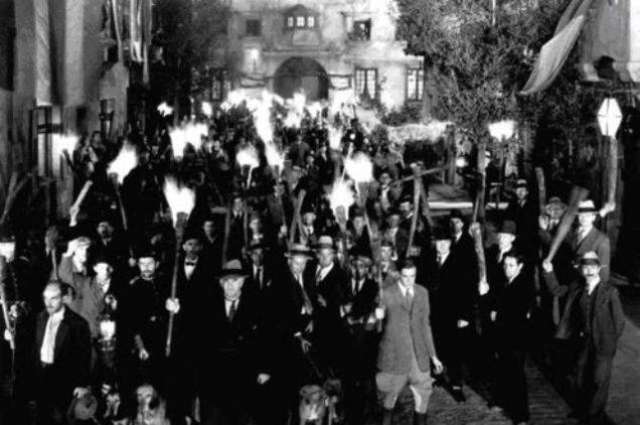
In this piece, I intend to repeat four taunts I recently threw at a group of self-righteous fans of another website. This prospect excites me, because this time the taunts will be supported by new evidence which they exclusively gave to me. But to do this, I must begin by discussing something very mundane: this website.

Halfthoughts is not a popular website. That is not surprising. I created it as a hobby project, to develop my skills with WordPress. And it is populated with lots of totally unconnected material, which also reflect my disparate hobbies and interests. There was a time when most of its visitors were interested in what life would be like if zombies were real. Then most of the traffic came from people wanting a poem for somebody’s 30th birthday. Most recently, it receives hits from people who really like, or really despise, Ricky Gervais. So clearly there is no common thread that links these disparate topics, or drives visitors to my site, except the fact that the content is by me. And not many people are interested in me. But recently the site received an unusually large surge of traffic, from people wanting to learn about me. And more than anything else, they wanted to know if I am a racist.

Where did this traffic come from? It came from File770.com, a website aimed at a certain kind of science fiction ‘fan’. I know where the traffic came from, because Google Analytics knows about inbound links to my website. It can also tell me where those people are in the world, what pages they visit whilst on the website, how long they spend on those pages, what kind of device they used, what version of browser they have installed, their annual salary, and the colour of their pyjamas. Okay, I kid about the last two, but you can learn a lot about people from how they navigate a website, especially if it is a mishmash jumble like mine. From the data collected, I can confirm something about every single one of the visitors I received from File 770: they show little interest in science fiction. I wrote the same thing about them before, so this counts as the repeat of taunt one.

My site has lots of posts about science fiction, but the File 770 mob did not look at them. The top post that was listed on this site, before I wrote this one, was about Interstellar, the SF film directed by Christopher Nolan. Not a single File 770 visitor followed that link. Instead, these were the topics that most interested them:

  • guns;
  • nationalist politics;
  • media bias;
  • religion;
  • Paul Krugman;
  • trade unions;
  • intellectual property infringement; and
  • racism.

This is not a list of interests I would associate with a science fiction fan. These are the kinds of things that obsess people who pursue social justice to an unhealthy degree.

Whilst here, the visitors from File 770 spent more time reading about racism than any other topic. But why would a bunch of self-identified science fiction fans, who mostly live on the West coast of the United States of America, be interested in my views on racism? I have a working theory about that. It is because they wanted to find evidence that I am a racist. If you have a better theory, feel free to share it.

One reason they were upset at me was because I recently suggested they behave like self-appointed thought police. Count that as taunt two. So how do they respond to taunts like that? By behaving just like self-appointed thought police, crawling all over my website in a vain effort to locate any politically incorrect comment they could use against me. But from the traffic data, I speculate they left disappointed. They looked at plenty of my most political essays, but there was no second surge of traffic from a different inbound link. That is what would have happened, if any of them located the ‘gotcha’ revelation they had hoped to find.

Keep in mind that these people repeatedly abuse me on File 770, making up all sorts of stories about what they think I do, who I am, what I believe, and so forth. I do not want to visit that website, because ignoring their bile is better than reading it, and engaging with those people is futile. But given that is the way they choose to behave, literally telling each other stories about me and the things I supposedly think, there can be no doubt that they would share any evidence which supported their beliefs.

Everybody is welcome to enjoy this website. I believe in human liberty. The website is in plain and public view; nothing is hidden. But when people visit, they should not be naive. They do not just learn about me. They give me information too.

This paragraph is directed to any File 770 readers who have come back to do further ‘research’ about me. It is obvious why you obsess about the man behind the arguments. You would prefer to attack the man rather than engage with his arguments. The analytics corroborate that. So let me reiterate a third taunt I previously threw at you: the truth hurts. Everything I write here is true, and pertains to the actual behaviour of File 770 readers. Perhaps you should put more effort into disguising the truth about yourselves, and less into exposing the truth about me. For example, use a proxy server next time you visit, so I cannot easily analyse the interests of a herd consciously sent here by Mike Glyer, a winner of multiple Hugo awards, and a hero to all SF fans who think exactly like him. If you used a proxy, you could spend even more time on my website, without risking comeback like this. But I am guessing you will not come back again. You did not find what you wanted. What you crave is confirmation, to feed your bias. You did not get confirmation here, so you will try to satisfy your hunger elsewhere, picking some other individual to demonize.

Funnily enough, the File 770 thought police could have found their smoking gun, if only they had known where to look. Being American ‘liberals’, they are absorbed by the insular world of American politics, but lack the cultural awareness to relate their obsessions to the specific circumstances of other countries. Like Paul Krugman, if they cannot analyse a foreign situation within the framework of American politics, they cannot analyse it at all. If they knew about British feminism, they would have surely noticed the name of Caroline Criado-Perez, which features in the titles of the two most popular posts I have ever written.

My most popular post was about discovering Criado-Perez had fabricated a statistic purportedly taken from a World Health Organization report. My second most popular post was about the UK press regulator agreeing that Criado-Perez violated the British code of conduct for journalists. So the File 770 mob would have found some evidence of thoughtcrime, if they had searched for more posts about feminism! However, they spent too much time reading posts about guns, which are not considered a big deal by Brits. Guns feature heavily in the American culture wars. The British political axis is not aligned to that found in the USA, despite the disingenuous efforts of American ‘liberals’ like Paul Krugman, who desperately try to pretend otherwise. Put simply, guns do not generate the same kind of political debate where I live, as they generate in the country where most File 770 readers live. Which shows how the American SF liberal thought police suffer from a crippling cultural bias. That statement is a repeat of taunt number four, and so my work is done…
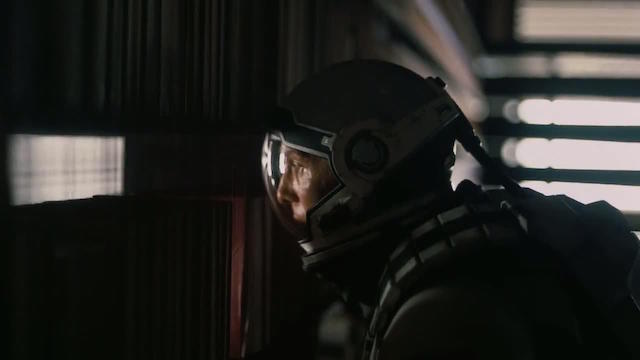
Was Interstellar Inspiring?

Christopher Nolan, the director of Interstellar, popped up this week, talking about the science in his epic space opera. He told the BBC:

I got a lot of fascinating insights into the possibilities of the universe and so we felt a real responsibility with the film to try to inspire young people in the same way.

He also said:

It feels like the time to try and inspire another generation to really look outwards, and look to the stars again.

And went on to state:

We really hoped that by dramatizing these ideas, by dramatizing science and making it something that hopefully could be entertaining for kids, we might inspire some of the astronauts of tomorrow… that would be the ultimate goal of the project.

I listened to the interview, and was perplexed. It never occurred to me that Interstellar might be considered an inspiring story. Dispiriting? Yes. Depressing? Quite. Desperate? Often. Inspiring? Hardly.

Inspiration motivates action. Its wellspring is the belief that the individual can shape the future. As such, inspiration is the mortal foe of fatalism. Whilst the heroes of Interstellar travel through a wormhole to exotic new worlds, the film drowns in its own sense of destiny.

Interstellar begins with the human race in a state of irreversible decline. A blight forces the burning of crops, making it increasingly unlikely that people will be able to feed themselves. Science provides no solution to this most fundamental of challenges. Nobody has a credible plan to save the planet, or to improve the quality of life here. Everything hinges on an improbable bid to relocate the human race to another world.

By the time the film finishes, we learn that everything was bound to work out the way it did, thanks to the literal engineering of loopholes in time. Whenever the protagonists face an insurmountable problem, they only need to wait for their fifth-dimensional descendants to provide the solution. This may take the form of an Einstein-Rosen bridge. Or it may be scientific data not obtainable with the technology currently available to humans. Or it may be a tesseract within a supermassive black hole, which catches the hero and lets him communicate with his daughter by flinging books from the shelf of her childhood home. I assume that few scientific equations were crunched to develop that last bit of the plot.

Without the help of the mysterious, powerful and benevolent future humans, the film’s prot-agonists are not even agonists. They may shuffle small pieces around the interstellar game board, but only because superior beings have invited them to play. And the consequence of each move deviates wildly from the protagonists’ plans. If they had known how to win the game, their first ship would have flown straight into a black hole, so they could phone a friend and explain how to solve the mumbo-jumbo-who-wants-to-be-a-millionaire-and-save-the-species equation. The end. That way, poor old Matt Damon would not have ended up so homicidally lonely on his crappy ice world.

The story blurs physics with metaphysics, riding an escalator of increasingly goofy principles that starts with the utterly respectable phenomenon of time dilation and ends with the cliché that love conquers all. I can accept that love might defeat an army of orcs, or wake a sleeping princess, or move a mountain, or cheat death. But it is too much to expect love to also transmit the gravitational equivalent of a telegram. No communications technology that combines love with morse code is ever going to catch on, whether in this universe or any other.

Heroes are inspiring, because they effect the change they want to see. Science is inspiring, because it can empower transformation. It is not inspiring to rely on our great great grandkids to clean up the mistakes we make, and cannot fix for ourselves. However, that has become a common theme in our profoundly hopeless era. I agree with Nolan that we need new stories which use science to inspire the heroes of coming generations. But Interstellar was not that story.

For those who disagree, this was the interview that Nolan gave the BBC.

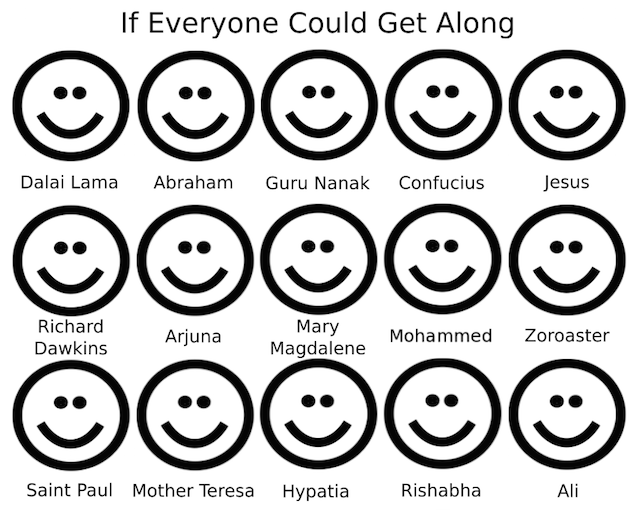
If Everyone Could Get Along

Some ideas are better represented by pictures than words. I have had this picture in my head for a while, and I thought it was time to turn it into a picture that I could see with my eyes. At the conclusion of that process, I am satisfied that this paints a better picture than many alternatives which are offered from time to time.

a cartoon about how things might look, if everyone could get along

Hardly Anyone Wants Dot Everyone

In this era of endless austerity, would you sign a petition calling for the Prime Minister to create a special government job that is bound to be given to a multimillionaire currently sitting in the House of Lords? Nah, me neither. But you cannot fault Baroness Lane-Fox of Soho for not trying (it on).

A few weeks ago Lane-Fox appeared on the BBC and lectured several Dimblebys about the evils of nepotism that fester whenever a quasi-public body is run by people who look after their own… usually at the expense of talented ordinary people who lack connections and so never get a look-in or leg-up. I joke, of course. Nobody would be so rude at use the Richard Dimbleby Lecture to lecture Jonathan and David Dimbleby about the evidence that our society sometimes suffers from nepotism. At least, nobody who might get invited to speak would be that rude.

Instead, the chancer formally known as Martha Lane-Fox lectured an exclusive audience about how prejudice is preventing people like her from becoming really successful in the technology sector. Obviously, she did not mean people exactly like her. She is reputedly worth half a billion dollars, thanks to being extraordinarily successful at making a website and then selling it off. Cast your minds back to a time before dotcom silliness, when fools struggled to believe a human being might book a holiday on something called the internet. Then some chancers came along, like Lane-Fox, and said the fools were fools, and insisted they could make squillions by proving the internet is the future. And so they did, thanks to dotcom silliness, which was a massively idiotic stock market bubble that burst very soon after Lane-Fox pocketed her cash.

If I try to be a bit more specific, I must admit I do not know what Martha Lane-Fox actually did. But then, nobody seems to know. When people argue she is an internet guru, the argument is always summed up by the phrase: lastminute.com!!! The truth of this 14-character proposition is seemingly so obvious that nobody ever dares to enquire further. But we do know she had something to do with lastminute.com, and she got a lot of money as a result, and nobody can argue with that.

Of course, they could argue a bit. They could argue that exploiting the dotcom bubble earned her several thousand times more than a nurse makes in a year, and that there is something morally dubious about that. Or they could argue that she made a fortune from disrupting traditional travel agents, causing them to go out of business, and meaning lots of low-paid people lost their jobs. But nobody said that at the Dimbleby Lecture. When you get invited to the Dimbleby Lecture, you must be the right sort of greedy self-absorbed stinking rich business executive, and never the wrong sort. If you cannot tell the difference, just ask a Dimbleby to give an impartial opinion. After all, the BBC is always impartial about matters like that.

So, according to Lane-Fox, what kind of people need more chances to succeed at British techno-wizardry? People like Martha Lane-Fox, obviously. By which she means white people who were educated at private school and Oxbridge. I joke, again. I mean women. And some miscellaneous others. Lane-Fox was a lot more vague about the others, but she was very definite about the women. Of course, she knew she was on to a surefire winner with that theme. Half the population are women. Add two Dimblebys and the maths indicated she would have a strict majority backing her plans, so surely no Prime Minister could possibly refuse her demand to create… (drum roll)… DOT EVERYONE!!!

DOT EVERYONE!!! Yeah! That is what we need. DOT EVERYONE!!! The purpose of DOT EVERYONE is so obvious, you should be able to work it out from the name.

(Do not blame me for the capital letters. Despite all the netiquette guides, Lane-Fox insists on writing the name like that.)

And what would DOT EVERYONE do? Well, sadly there was nobody in the audience who can be relied upon to ask tough questions. In other words, Paxman was not there. The Dimblebys already knew what DOT EVERYONE would do, so had no need to ask.

Judging by her lecture, Lane-Fox would prefer not to explain what DOT EVERYONE would specifically do. But she did say it would do lots of good in a British-y internet-y opportunity kind of way. And who should be in charge of DOT EVERYONE? Well, Lane-Fox was not explicit about that either, but I think we all worked out who she had in mind.

What Lane-Fox did say is that DOT EVERYONE would be a great British invention in the mould of two other great British inventions: the NHS, and the BBC. That presumably makes Lane-Fox a cross between Aneurin Bevan and Lord Reith, though in a more webby, womanly kind of way.

Some of you may have noticed that neither the BBC nor the NHS is an invention, as such. At least, they are not much like the inventions which techy people come up with, and then patent. People patent inventions because the inventions are brilliant and lots of people will want to copy them in order to make lots of money. Britain gifted the idea of the NHS and the BBC to the whole world. Sadly, the rest of the world declined to copy them. That is because the NHS and BBC suffer a particularly British trait that plagues most of our best ideas: they cost an absolute fortune and make bugger all money. Would DOT EVERYONE cost a fortune and make bugger all money? Only Lane-Fox knows the answer to that, and she did not share it with us. But as I said, there was nobody in the audience who wanted to ask such an awkward question. So instead, they all nodded and agreed that the new Prime Minister should create DOT EVERYONE, even though none of them knew what it would do or how much it would cost. Hoorah!

Lane-Fox’s success seemed assured. Within weeks, the new Prime Minister would hear a public outcry, as people rushed to the internet to demand DOT EVERYONE, a venture whose very name is demonstrably in the interest of everybody everywhere. How could Lane-Fox fail? She was backed by the massive propaganda machine that is the BBC, which pumped out the news that we cannot thrive without DOT EVERYONE. Then, Lane-Fox could also rely on her incomparable internet skills, harnessing millions of internet enthusiasts in a viral campaign of unprecedented proportions.

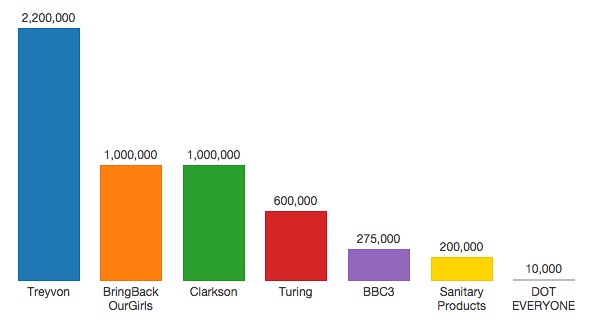
However, at time of writing, a month after Lane-Fox’s lecture, her petition on Change.org has been signed by only 10,084 people. That is barely half the number who work for the BBC. Did the Dimblebys forget to send round the memo?

Who knew that a really vague plan to give a posh millionaire a fancy government job with no clear remit might fail to capture the hearts and minds of ordinary people? Who could have guessed that, in the midst of the tightest general election campaign ever, most people might have more important things to think about? And who would have said that if you want a snazzy internet logo, then you should avoid images that look like Pac-Man ate too many blueberries and started throwing them up?

doteveryone

Not Lane-Fox, obviously. This is why she would be the perfect leader for a visionary new public body like DOT EVERYONE. Only she has the single-minded blinkered outlook that would stop her being distracted by such inconvenient truths as the country does not have money to waste on a millionaire’s pet project, and that nobody knows what the hell she is proposing.

The BBC was set up by great visionaries in the 1920s. The NHS was set up by great visionaries in the 1940s. Extrapolating from that, DOT EVERYONE would have been a great vision for the 1960s. But sadly, we are living in the 21st century, and in this age of hyper-connected super-knowledge broadband-highways, DOT EVERYONE sounds like a load of old cobblers.

Maybe some of the blame lies with Lane-Fox. How should I put this? Lane-Fox obviously has no fucking idea how to use a perfectly straightforward website. When she started the Change.org petition, she entered her location as London, California which is both wrong and a bad way to appeal for a job in Britain. She has since corrected that mistake, but she cannot undo the way she fucked up trying to post an update to the petition, not once, but three times in a row. (See here, here and here.) To the untrained eye, Lane-Fox seems as adept at using the web as an orangutan in boxing gloves.

Is 10,000 signatures a lot of people? Please, let us not be silly. Lane-Fox is desperately spinning that they ‘smashed’ the 10,000 barrier – even though it took a month to reach that number. But she had already given the game away when they passed the 5,000 mark within 36 hours of the petition’s launch. Overflowing with optimism, Lane-Fox proclaimed:

We need 100x that number

Forgive my cynicism, but I think the number ‘needed’ to justify wasting the time of the Prime Minister is about to be sharply revised down. And I can always turn to an impartial body for guidance on what is, and what is not, a popular petition. Just a short while ago, the BBC mocked a petition to reinstate Jeremy Clarkson as a host of Top Gear. This is what some ‘impartial’ BBC journalist wrote about petitions:

An online petition in support of suspended Top Gear presenter Jeremy Clarkson attracted more than 300,000 signatures as of Wednesday lunchtime – but how does that compare with other campaigns?

Some of the biggest petitions at the moment on Change.org are asking to:

  1. Pardon all men who, like Alan Turing, were convicted under UK anti-gay laws: nearly 600,000 signatures.
  2. Continue broadcasting BBC Three on conventional television: 275,000
  3. End UK VAT on sanitary products: about 200,000.

And what about some of the most popular petitions of all time on the site? More than 2.2m people signed a petition to prosecute George Zimmerman in the shooting death of Treyvon Martin, a black teenager shot by a neighbourhood watch volunteer in the US in 2012. And a #BringBackOurGirls petition – related to the disappearance and abduction of schoolgirls in northern Nigeria – attracted more than 1m supporters.

Many of these petitions have been live for some time, whereas the one backing Clarkson has seen tremendous growth in a short time. The story is in the news and numbers are climbing fast – adding tens of thousands just during the writing of this post. So there’s no telling how much support the presenter might get online, but he has some way to go to becoming an all-time cause célèbre.

So there you have it, from the BBC. 10,000 signatures is fuck all. Clarkson could get 10,000 signatures in the time it takes a dogsbody BBC journalist to write about how few people have signed his petition. 10,000 signatures is clearly not enough to justify the establishment of a new publicly-funded body like the NHS or the BBC.

Of course, that particular BBC journalist might have regretted dismissing the trifling 300,000 signatures obtained by the Clarkson petition at that point in time. It took just a few more days for the Clarkson petition to breach the million mark. (I would have offered a link to a BBC article reporting that particular news… but I could not find one).

A million people could not persuade the BBC to renew the contract of a very successful TV presenter who is popular all around the world. So why the fuck should the Prime Minister give Martha Lane-Fox a job on the basis of a measly 10,000 signatures?

For anyone not good with numbers, here is a bar chart that shows Lane-Fox’s petition to scale, alongside what the BBC considers to be genuinely popular petitions.

petitions

By now, some of you may have identified a brilliant way that Lane-Fox could achieve her goals, without wasting the time of the PM or demanding lots of taxpayer’s money. She could reach into her own pocket and pay for DOT EVERYONE that way. But I think I discovered the reason why she is not planning to do that. It is because she already has a crappy charity that is supposed to do the same thing as DOT EVERYONE. (And yes, you are correct, the front page of that website is dominated by a big picture of Lane-Fox giving her lecture at the BBC.)

Why do I say this charity is crappy? Because the stated aim is:

to empower everyone in the UK to reach their digital potential.

And at the time of writing, the ranking of her charity on Alexa, an independent measure of the popularity of websites, is:

Global Rank: 1,637,294

Lane-Fox’s charity website site has jumped up the rankings by over 600,000 places recently, presumably as a result of the extra traffic generated by the Dimbleby Lecture. But without all that extra publicity, Lane-Fox’s charity website would have a global ranking below my own business website. Does that mean I am an internet guru? Or just that Lane-Fox and her backers are full of shit?

The truth about DOT EVERYONE is that a privileged person wants a privileged job where they get to pick and choose which other people will benefit from privilege. When I use the words ‘pick and choose’, I mean people like me will never be picked. People like you might be chosen… but only if you know Lane-Fox personally, or if you fit her arbitrary ideas about who is most deserving.

Working class, raised in a council house, not privately educated, not Oxbridge educated, the child of two immigrants… but I just need to look in the mirror to know I would never get any help from the Baroness. Whatever success I may have with my webby business affairs, we can be sure that Lane-Fox thinks I already had more advantages in life than she ever did. However, we are dissimilar in more ways than she can see. Whilst she demands a high-profile government job to boost her pension pot (and her fading public image), I would never expect payment just because I saw an opportunity to help others.

Sadly for Lane-Fox and the Dimblebys, their comically overhyped petition will get no more publicity, not even from the BBC. Their failure is evident, or it would be, if anybody was paying any attention to it. The British public do not need reminding about how some people become rich and successful. From their actions, Lane-Fox and the Dimblebys make it clear that success in Britain is too rarely determined by merit. It is not even connected to popularity. They succeed because of personal connections, and the doors that open as a result. DOT EVERYONE? They should have called it DOT ELITE.

Being Quiet is not a Crime

The tragic crash of Germanwings flight 4U 9525 has again highlighted why society needs to better understand mental health… and demonstrated why this goal cannot be realized via the sensational speculation that always surrounds dramatic incidents. The world’s journalists have descended upon the life history of co-pilot Andreas Lubitz, who is believed to have intentionally crashed his plane after locking the pilot out of the cockpit. The hacks are interviewing former friends and partners, scrabbling through medical records, pestering his employers, in a bid to assemble clues about Lubitz’s motivation. They do this whilst simultaneously stating:

Only Andreas Lubitz will ever know for sure why he flew a plane into an Alpine hillside, killing 150 people.

Nobody ever knows the contents of somebody else’s mind. At best, people foolishly and arrogantly assume they can – until somebody does something unexpected which proves they were wrong. So why do people obsess over the trivial exercise of trying to determine what was in the mind of a person like Lubitz? There are two reasons. Neither flatters human nature. On one hand, it is easy and entertaining to speculate about the state of mind of another person, especially when that person has done something unpredictable, or shocking. We like to talk about people acting ‘out of character’, which is just a roundabout way of saying our assumptions about their character were not reliable. On the other hand, we want to control other people, and we think we can do this by knowing more about them. This is a supreme folly. As Freud originally observed, the conscious part of the human mind does not even know the true extent of what lies in the subconscious. Put simply, none us knows what is in our own mind. Why convince ourselves that we can then know the contents of someone else’s mind, including both the conscious and subconscious? Because, like a primitive who dances for rain, we want to control the world even though the methods we adopt may be ridiculous and futile.

The insidious nature of analysis of Lubitz has lead to many unhelpful pseudo-insights. For example, a former girlfriend claimed Lubitz had told her the following: “one day I’m going to do something that will change the whole system, and everyone will know my name and remember.” Rather than repeat this petty and unverifiable assertion, I would rather ask: which person has never once said something similar? It is perfectly normal for people to have ambitions, dreams, fantasies about changing the world. Young people, in particular, imagine their futures might lead to all sorts of tremendous victories and successes. It is only with the passage of time that people learn to be more realistic. Does that mean every young person is naturally inclined to crash a plane into a mountain? Of course not. It demonstrates that we are foolish for reading too much into mundane everyday aspects of how people behave. We combine hindsight with imagination and start convincing ourselves that we saw things that were never there in the first place.

The most despicable reporting has centred around a recurring observation about Lubitz’s character. People say he was quiet. At times, he was withdrawn. This is what Reuters wrote about Lubitz:

Lubitz was described by acquaintances in his hometown of Montabaur in western Germany as a friendly but quiet man who learned to fly gliders at a local club before advancing to commercial aviation as a co-pilot at Germanwings in 2013.

A friend who met Lubitz six years ago and flew with him in gliding school said he had become increasingly withdrawn over the past year.

Before Lubitz became a co-pilot in late 2013, the friend said the two had gone to movies and clubs together. But he noticed at two birthday parties they attended over the past year that he had retreated into a shell, speaking very little.

“Flying was his life,” said the friend, who agreed to speak to Reuters about Lubitz’s mental state on condition of anonymity. “He always used to be a quiet companion, but in the last year that got worse.”

The world is full of quiet people. They make no trouble. They obey laws. They behave politely to strangers. They are kind and thoughtful. And they probably receive neither the thanks nor the appreciation they deserve, because the world prefers to obsess about the sensational, the shocking, the extravagant and the egocentric. But the fact that Lubitz was a quiet man is now being painted as some kind of telling back story to:

“MAD SUICIDAL ACTION”

French Prime Minister Manuel Valls said the German airline had an obligation to share information about Lubitz.

“I am careful when there is a judicial inquiry, but everything points to a criminal, mad, suicidal action that we cannot comprehend,” Valls told iTELE.

The lines above came immediately before Reuter’s depiction of Lubitz as a quiet man. Politicians are, by nature, despicable gutter rats, who will say anything to get a headline that makes it seem like they care deeply about human suffering, so long as they need do nothing to actually alleviate that suffering. It is no surprise that a jackass like Valls would sprint to a microphone to pass judgement on the mental state of a man he has never met. Journalists are entitled to report what Valls said, and they are entitled to report what they learned about Lubitz’s character. But they are not entitled to present one as justification for the other, as if being quiet or not enjoying a party is evidence of a disposition towards ‘criminal, mad, suicidal action’.

If quiet behaviour really demonstrates a predisposition towards mental illness with violent consequences, then let us lock everybody in an asylum who has ever been to a party and made less noise than the average guest, or who did not seem to have a good time. We will soon find there are more of us locked inside the asylum than left to run things outside. And the few left outside will be the loud, boorish, pushy, arrogant, self-absorbed fatheads who are already rewarded too highly by a society that favours greed and vanity over introspection and self-awareness.

We need better understanding of mental health, and better treatment of mental illness. That does not begin with jumping to conclusions about the character and motivation of others. Any of us might be mentally ill at some point in our lives. Even if Lubitz was mentally ill in his final days – a fact which has yet to be established, and which may never be established – it would be wrong to connect this to simplistic observations like whether a man is quiet or reserved. Eventually, I hope the human race evolves to a point where we understand that such an ignorant assumption is as wrong as concluding someone is stupid because they are ugly, or extrapolating a person’s character from their race or their gender.

Incessant misguided attempts at cod psychology only excuse us from looking clearly at our straightforward and recurring faults. Lubitz locked the pilot out of the cockpit. Right now, politicians, writers and other egotists are clambering over each other, competing for attention as they loudly demand a change of safety rules, so that nobody can ever be left alone at the controls of an airplane. But the same ship of fools demanded lockable doors in response to an earlier tragedy. Did literally none of them envisage a scenario where the suicide-murderer might be locked inside the cockpit, instead of being locked outside?

A locked door does not know if it is barring entry to a person with good intentions or bad; it cannot tell if the danger is trapped outside or secured within. Lockable doors were supposed to save lives. Now a locked door has cost lives. In another era, the pilot, aided by passengers or crew, may have barged into the cockpit and restrained Lubitz before the plane crashed. Our decision-makers are too idle to have made even this basic risk calculation, but they encourage us to spend countless hours spying on each other, looking for supposedly telltale signs of madness or depression. They do so as a distraction from their failings, because even if our diagnosis were justified, it will not tell us how the patient will behave in practice.

The real lesson to be learned from this crash is that airplanes should be fitted with doors that can be locked and unlocked – from both sides – by the people trusted to enter the cockpit. But such a solution would cost even more money. That is why politicians, businesses and sundry loudmouths would rather misdirect us with pointless speculations about mental health, as if Lubitz’s employers could have been expected to know what Lubitz was going to do, possibly before even Lubitz knew.

Being quiet is not a crime, and the problems of this world will not be fixed by a culture where everybody’s words and actions, or their absence, are treated with suspicion. There are more practical ways to improve the world. To implement them, we must be honest with ourselves, willing to admit past mistakes, and realistic about the risks we take and the price we are prepared to pay to mitigate those risks. How much would we each choose to pay, via a more expensive ticket, for the added safety of better locks on cockpit doors? How much would we choose to pay, not when asked in an emotional moment immediately after a tragedy, but in those cooler moments of reflection whilst we shop around for the cheapest flights available? Learning to live with honesty, learning how to be honest with ourselves as with others, is an essential component of mental health. The reaction to the downing of Germanwings flight 4U 9525, and the gossip over the past behaviour of its co-pilot, demonstrates we are not ready to live in a healthy, honest society.

TV News Has Infected Movie Storytelling

[Opening Credits. Cut to a man sitting at a bar, nursing his beer. A large television hangs from the ceiling, at the far end of the bar. The news is on. The newscaster’s voice is barely audible, but sounds increasingly agitated.]

Man at the bar: Hey! Turn up the sound!

Waitress: Whaddya want, honey?

Man at the bar: The news. Turn it up. Something’s happening.

[The waitress looks for a remote control. Finding it, she turns it around in her hands and finally points it at the screen. The television volume rises until it is clearly audible. The camera zooms in slowly as the anchor man speaks, until we see only the screen, and his shocked face.]

News Anchor Man: Like I said, we’ve not been able to verify these reports coming to us from Stonebridge, Wyoming, but witnesses on the ground are saying that the zombie apocalypse has begun/a UFO is hovering above the town/there has been an outbreak of demons who have escaped Hell via a pan-dimensional rift/a giant lizard has eaten the mayor and most of the local police force/supervillains are running amok in the streets*.

[* delete as appropriate]

[Cut to the faces of the man in the bar and the waitress. They look upset and anxious. This reaction shot is needed because we assume the audience is so dumb they cannot judge this is bad news for themselves.]

Waitress: Jeez, my sister Holly lives in Stonebridge, Wyoming! I’d better call her! [She grabs a phone.]

Man at the bar: God help her. God help us all.

News Anchor Man: And now, here is some video footage of zombies/UFOs/demons/lizards/supervillains* that looks like it was recorded by somebody holding a crappy mobile phone whilst shaking violently with fear. [Because that is a good way to tease the audience and build dramatic tension whilst keeping the CGI budget manageable.]

There was a time when you had to watch the TV news to see TV newscasters. Now they appear on the big screen too, in every other film. And most TV dramas set in the present day also feature obligatory scenes where we watch the characters, as they watch the television. Both we and they allow ‘the news’ to inform us of crucial plot developments. And increasingly the actors who play the characters are not just watching other actors pretending to be newscasters. Instead, we see real newscasters, acting just like they act when reading the news. In movies, we have now seen everything from the BBC’s Jane Hill describing the war against aliens in Edge of Tomorrow to Fox’s Bill O’Reilly commenting on the behaviour of Iron Man. It seems news presenters are as likely to have a Hollywood agent as an education in journalism.

Telling a story can be difficult. Audiences want excitement and drama without wading through exposition just to understand what is happening. But the contrivance of using TV news to present information in a fictional story has become an overused absurdity. Have some filmmakers forgotten how to tell stories without taking the short cut of having somebody in a suit, sat at a desk, reading out text? It seems so. This begs a question: if they must rely on a speaking head to tell us what is happening, then why not simply employ the ages-old technique of employing a narrator?

There was a time when the technique of incorporating ‘factual’ news presentation within a fictional story was fresh and original. Orson Welles’ use of a news reel to relate the biography of Citizen Kane stands out as an example.

NewsOnTheMarchKane

However, Welles was not simply throwing facts at the viewer. On the contrary, the film opens with the newsreel announcing Kane’s death because the rest of the film shows how straightforward biographical reportage is inadequate to convey the nuances of a person’s life. At the same time, Welles is critiquing the idea of news reporters as impartial, neutral middlemen. Kane’s character is a newsman, amongst other things, and the film repeatedly explores the relationship between the truth and the way ‘facts’ are presented to an audience.

Compare Welles’ sophistication with the brutal stupidity of how the ‘news’ is incorporated into the plot of most modern films. The viewer is meant to uncritically accept the truth of anything shown to them. Are audiences really so trusting? In real life, news can be biased, and audiences can be sceptical. Treating TV news as an authoritative and flawless source of information is as much a fictional construction as dinosaurs in New York or alien visitations. It comes as a relief when the zombie rampage/nuclear holocaust/viral pandemic takes the final broadcast station off the air. From that moment, the filmmakers can concentrate of their job of telling a story about characters, what they do and how they respond to events. The obsession with presenting pseudo-factual information is to storytelling what a Wikipedia article is to a novel. Some people may choose to read Wikipedia articles for pleasure, but such entertainments should not be confused with the art of storytelling.

Filmmakers, in particular, should do a better job of telling stories about how the ‘news’ is merely another kind of storytelling. They appreciate that editing is a crucial element in the construction of their story. This is also true of factual news, where editing – deciding what is included, what gets cut, which elements are accentuated, how pieces are assembled and related to each other – determines the narrative presented to the audience. News is not a transparent window, overlooking a world of fact. On the contrary, news is an exercise in manufacturing stories and distributing them to audiences that want to hear them. In that respect, factual news shares much in common with fictional storytelling, and this analogy is underlined by the popularity of movies which were ‘inspired’ by actual events.

At its best, film can force us to rethink the relationship between the audience and the ‘facts’, encouraging us to be more critical about how events are presented to us. In Medium Cool, Haskell Wexler employed the techniques he learned as a documentary maker to slice into the objectivity of TV news reporting. The film famously concludes with fictional scenes filmed amidst the real riots around the 1968 Democratic Party convention. Network presented a biting satire about television news and how it manipulates audiences, with one newsreader delivering a notable catchphrase in the process: “I’m as mad as hell, and I’m not going to take this anymore!” The Insider allowed Director Michael Mann to draw out two extraordinary performances from his lead actors, with Russell Crowe as a former tobacco industry executive trying to tell the truth to the public, and Al Pacino as a veteran TV news journalist who has to wrestle with an industry which is susceptible to intimidation and backsliding like any other.

Most recently, Jake Gyllenhaal gives an extraordinary performance as a self-employed ‘nightcrawler’, in the 2014 film with that title. He makes money by filming car crashes and crimes, then selling the footage to the TV news. Gyllenhaal’s character approaches his work like he has degrees in business administration and sociopathy, calculating how to be first on scene, and cooly appraising which events audiences will find most shocking.

The makers of Nightcrawler and these other films deserve thanks; they use their narrative skills to explore the truthfulness of a parallel industry. But their good work is undone by other filmmakers who use TV news as a lazy mechanism to push their story forward. Our filmmakers, and our storytellers, let us down when they repeatedly treat news coverage as a simple conduit to fact. They should know better, and so should we.

Charlie Hebdo Will Live Forever

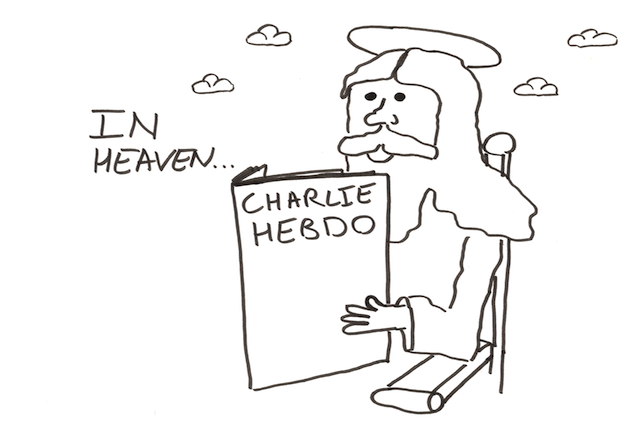
They were silenced, but now they will never be silenced. They were killed, but now they will live forever. The violent murder of Charlie Hebdo’s cartoonists, and other innocents who happened to be nearby, has strengthened our resolve. They are the martyrs, and their cause is our cause. We all speak. We all desire the freedom to speak. And any of us, at any time, might say something which could anger or upset another. We can choose our own words but not another person’s response, and if that situation were reversed, then we would grant evil people a power over us that they will not exercise on themselves. Our world is overly protective of people’s feelings. Too many of us are mollycoddled by politicians, businesses and so-called role models, because of their desperate pursuit of popularity. We must honour those willing to risk unpopularity, as only they can restore balance to our society. We need them, and if we wish to think freely, we are them. Just like you, je suis Charlie. And if there is a heaven, I know that God est aussi Charlie.

GodReadCharlieHebdo

The Christmas Mouse

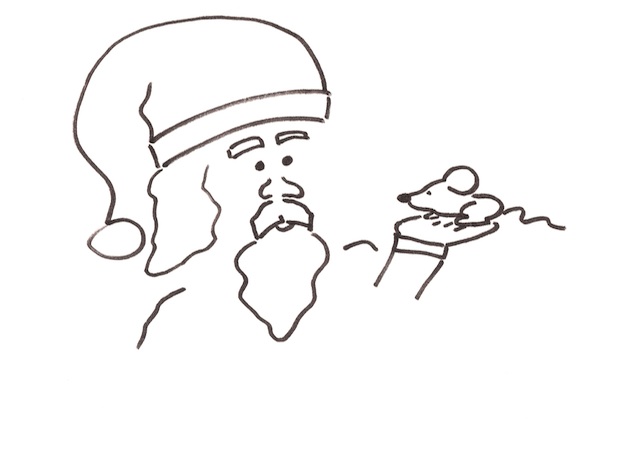
The Christmas mouse ran through the house, whilst everybody else was asleep. As was his instinct, he began in the kitchen. Oh what a feast! The remnants filled his empty belly til the mouse thought he might burst. After much chewing and licking, he was fully sated, and more than slightly inebriated. To the living room he retired. A tree grew inside, fully six feet tall, though none had been there just one week ago. There was, at its base, a congregation of boxes in shiny paper, so extensively stacked that they served as a staircase. Climbing upon them, the mouse reached up to the tree, and saw himself, oddly reflected, in monstrous silver balls. Upward he climbed, to survey the scene. At the top he was startled, by a woman with wings. Though he bit her in fright, she did not fly away. She stood perfectly still, and retained her fixed smile, despite the needles that prickled her bum. Down again ran the mouse, round a coil of cable, as this was the best-lit path. Back on the ground, he found more companions. Some miniature people stood around a poor stable, smelling of perfume and chocolate instead of muck. From the mantle hung socks, though when inspected, he found them laden with treats and not feet. Many colourful cards lined up above them, though few words were written inside.

To the bedrooms he scampered, to spy the masters of this orgy of gladness. The parents snored so loudly they hurt his ears, so the mouse ran to the children, who only murmured whilst sleeping. “Please Santa, bring this,” and “please Santa, bring that,” was what they seemed to be saying. The hour was late, and he feared they would wake, so the mouse departed for home. The Christmas mouse was a field mouse, and he lived in a burrow past the end of the garden. He ran quickly for it, as the bitter cold snow bit at each of his toes. But before he arrived, he was greatly surprised, by a man wearing a bright red coat. “Hello little mouse,” said the man, though his lips were obscured by his fluffy white beard. The mouse cowered in terror; there was nowhere to hide upon the unbroken white blanket, so he curled into a ball and hoped to be left alone. “Don’t be afraid,” said the man, “I’m the spirit of Christmas, I am.” The man cupped the mouse in his hands, to warm the creature. “Let me tell you a secret: there’s fewer that need me each year, though more that expect my attention. There’s such wealth in this world, that none need ever suffer, but it’s not for me to give them harmony. They’ll find it themselves, if they care to look, so I’m turning my favour to you, and your ilk. From now on, you’ll have plenty of grain, and won’t need to steal from them again. So go back to your burrow, and stay away from the houses, with all their mousetraps and poisons. Let me look after the rest.”

Back in his burrow, the mouse slept fully that night. When he woke, he remembered adventures, but thought they must be a dream. Such a Christmas would fill him with cheer: not an annual party but a life without fear. It seemed impossible to believe. Twas a story for children and the simple-minded. Such things could never be. And yet the Christmas mouse hoped, and that was somehow enough, and he never returned to the house.

The Joy of Blank

What’s in a name? that which we call a rose
By any other name would smell as sweet

William Shakespeare

This favourite quote comes from Romeo and Juliet; young Juliet reasons that Romeo’s surname has no significance. However, her mature deliberation demonstrates that names do influence human affairs, whether we want them to or not. The line is repeated in one of my stories, The Suit, which has just been published in Jupiter, the British science fiction magazine. Quoting Shakespeare prompts one of my characters to take a new name, calling herself ‘Rose’. The words on the page establish her new name, and mine also. This is the first time that one of my science fiction stories has been published, and so is the christening of my pen name. Step aside Eric, son of Priezkalns, and make room for Ray Blank, author. The technology of printing ink upon paper gave substance to that name, confirming the metaphysical connection between the label and that which is being labelled, even when it obscures the identity. Ray Blank can now be listed with George Eliot, George Orwell, Mark Twain and Voltaire, though I admit he belongs at the bottom of that list, appended only through my own scribbly handwriting.

Any of us might have been called by any name; custom guides us, but people can challenge and change customs. Names often do change over time, as the child becomes an adult, and as the adult explores life’s many narratives. Nothing prohibits us from having many names at once, except the decreasing utility of each new name we employ, though spies might beg to differ. Whilst a name might seem like our most constant, most static of verbal companions, they have no matter, and so may be manipulated like every word or thought. Names can be changed, or more precisely, they can be supplanted by alternatives. They gain meaning through use, and by association with what we do. Each use of a name extends who we are; the utterance also tells us we are loved, or wanted, or feared, or despised. Every time a name is published, it is augmented. I am proud that some people might come to know me as Ray Blank, through a story I wrote.

Not all my friends have liked my choice of pen name. I comfort myself with the realization that this was inevitable. People initially judge a name by its sound, which will evoke all sorts of irrational associations that I could never anticipate, and they may not be conscious of. I am reminded of this each time I give a name to a character, not least because I would prefer the character to be judged by his or her actions, and not by their label. Naming characters is a practical necessity, as well as an aesthetic choice, but it is not a fair approximation of reality. It is possible to experience the company of many people for many hours, without knowing or remembering any of their names. During that time, we might become intimate with them. However, in written stories, an aversion to labels is a liability, that increasingly strains both author and reader as the number of characters rises. And so readers perceive meaning in the character’s name, even when the character does not. If I gave the name of Romeo to one of my characters, you would attach an importance to this decision, although we can imagine places – in the past, future, or faraway – where Romeo, and everybody around him, are ignorant of Shakespeare. And so, for all my deliberation, I must shrug my shoulders when evaluating the merits of various pen names, and must settle on the selfish choice that is most meaningful for me. Others may have preferred a different series of syllables, like A.N. Altman, or Eric Capulet. Ray Blank will only be a true success when the sound of his name has been forgotten, replaced by the recollection of what he has written.

There were many reasons I chose Ray Blank as my pen name. A surfeit of associations causes some to slip from my mind too. A friend, on hearing my good news, jogged my memory with another quote, from another writer.

A person is a fool to become a writer. His only compensation is absolute freedom. He has no master except his own soul, and that, I am sure, is why he does it

Roald Dahl

There is something frightening, and equally thrilling, about the metaphorical blank page. At some time, all of us have imagined rewriting the story of our lives, to see what adventures we might have had, what terrors might have plagued us, and who we may have become, if events had taken a different course. The expanse of the unwritten page is like the life of a newborn child. It is full of potential, foreshadowed by hopes and fears. The limits are defined by imagination more than any other factor. To write about different characters is to be different characters. It is not possible for me to write about someone who is not, in some sense, me. I am my characters, and they are me, and so they allow me to be a little bit more than I was before I gave birth to them. And so I have become not only Ray Blank, but also Rose, and many other characters too. Like Juliet, I wish identity to be transcendent. Shakespeare had his stage, and I my blank page. Its vacuum draws the world out of me.

Halfthought of the Month

0

In 2008, a friend said I should write more whacky, thought-provoking posts…

“What, you mean my blogs aren’t whacky enough already?!?”

“No, no. I mean I like what you write on your telecoms risk website, talkRA.com, about technology and assuring revenues and the ways that telcos screw up and get things wrong. The serious posts are pretty good, but the best ones are where you go off on a tangent, and end up analysing why the Millennium Falcon shouldn’t have flown to the Rebel base on Yavin 4, or where you present a comic play about Facebook in the future. You should write more blogs like that.”

“Well, I like writing them. But other people prefer the serious stuff. They might get fed up, if I did less of the proper blogs and more of the silly ones.”

“Then start a new website, just for the silly ones.”

So I did, and I called it Halfthoughts. It ended up getting so silly that I wrote about literally anything I wanted, whether it was stories about meetings of misanthropes or comic essays on what life would be like if zombies were real. And I took all this nonsense so seriously that I eventually started writing proper stories for fancy magazines that get printed on paper.

Without Halfthoughts, and the business blogs that came before it, I would never have contemplated writing fiction for real magazines. But now I do. So after 350 weekly posts, I must bow to the inevitable. There simply is not enough time to write fiction for publication elsewhere, maintain my business website and to post a new halfthought every week. As I prefer to maintain quality over quantity, future halfthoughts will not degenerate into quarterthoughts, though they will only be published on a monthly basis… unless I fancy writing a bit more frequently than that. We shall have to see. The problem is, I found that writing proved as addictive for me as heroin is for some other people. If I can find time to write more, I will. And if you care to take a look at what I have written, then so much the better.