
Home Blog Page 7

Space Tourism is Dumb

Just because you can imagine something, does not mean it is possible. Conversely, it is the nature of genius that it can identify simple, elegant ways to achieve results that many thought impossible, or had never contemplated; Archimedes leapt from his bath, whilst Turing realized that an executable logic can be maintained independently of physical form. When we look long and hard at the history of imagination, science, technology and engineering, we realize the truth about what is easy, and what is difficult, is only apparent in hindsight. Everything seems straightforward, after we have perfected how to do it. Meanwhile, predictions about future technologies are notoriously unreliable. The science fiction writer Isaac Asimov was a professor of biochemistry, and he tried to be realistic about science throughout his fiction. He wrote stories set in a future where people travelled faster than light to colonize faraway planets, lived lives spanning several centuries and were served by super-intelligent robots. And yet, he wrote that the planetary colonies would grow slowly because the technology of artificial insemination would be beyond them. If we compare his speculations with what has happened in the meantime, we realize test tube babies were considerably easier to manufacture than positronic brains or hyperspace drives. The majority of human beings, ill-informed and data-poor as we are, have no good way of judging what innovations are possible, or the likelihood of failure when striving for novel results. Our only guide is how easily we imagine the desired result. That is no useful guide at all, because we can imagine all sorts of impossible things, whilst being unable to understand many things that are both possible and real. The way the universe works bears no relationship to what my mind finds convenient, or inconvenient, to comprehend. Hence comprehension is the slave of past experience. When there is no relevant past experience, we soon collapse into irrational guesswork. This is the context I want to apply to space tourism, a business model constructed around the idea of developing cheaper, safer ways to transport people into space. Headlines are currently dominated by the failure of Virgin Galactic’s SpaceShipTwo. Investigators have rushed to the scene, and it may take a year to determine what went wrong. But the real mystery is why we expected, or pretended, that a fatal accident would be unlikely.

I imagine that most people prepared to pay USD 250,000 for a sub-orbital space flight would have a passing interest in the history of space exploration. So here is a quick review of some of the main points.

  • The first animal sent into space died long before it returned to Earth.
  • In the early days of the American space program, lots of rockets blew up during or immediately after launch.
  • Soviet cosmonauts have been killed by a range of accidents, including parachute failures and accidental decompression whilst in space. They survived many more near-misses, including several malfunctions with the separation of re-entry vehicles.
  • The Americans suffered similar setbacks, including a re-entry vehicle that was supposed to float but which sank into the ocean instead, and a dangerous high-g spin caused by a faulty thruster.
  • Even after successfully sending a man to the moon, the Apollo program suffered an explosion on Apollo 13 which very nearly crippled the vessel and killed its crew.
  • Though highly experienced, the Russians finally abandoned their Mir space station after it suffered both a fire and a collision with a supply vehicle.
  • By the 1980’s, NASA was so confident in its technological prowess that it gave the name ‘Space Shuttle’ to its chief vehicle, and promised there would be shuttle launches every few weeks. In practice, the vehicle launched far less often than promised, and suffered two fatal disasters.
  • For all the failures of manned space flight, there have been many more failures where only machines were involved. Earlier this year, a privately-owned cargo vehicle, contracted to resupply the International Space Station, exploded after lift-off. The CEO of a rival space transport company had previously derided the failed rocket as ‘the punch line to a joke‘.
  • For all the people killed whilst lifting off, in space, or during re-entry, even more have been killed by all sorts of training accidents. Bear in mind that a key reason for training is to reduce the likelihood of mistakes.

In short, space travel is very dangerous. To make things much worse, people tend to seriously underestimate the risks, despite the lessons of history. When reviewing the first Shuttle disaster, Nobel physicist Richard Feynman pointed out that promises for the safety record of the Shuttle were risible. As he put it:

It appears that there are enormous differences of opinion as to the probability of a failure with loss of vehicle and of human life. The estimates range from roughly 1 in 100 to 1 in 100,000. The higher figures come from the working engineers, and the very low figures from management. What are the causes and consequences of this lack of agreement? Since 1 part in 100,000 would imply that one could put a Shuttle up each day for 300 years expecting to lose only one, we could properly ask “What is the cause of management’s fantastic faith in the machinery?”

Even the best and most objective engineers have a vested interest in maintaining their employment. As space programs are less likely to receive funding if the public believes they will likely fail with fatal consequences, it is fair to assume that even the most honest individuals will tend towards an optimistic bias when appraising the safety of space exploration. However, it is impossible to identify anyone who is likely to have a compensating negative bias, has useful access to pertinent safety data and has significant influence over decision-making or public opinion.

To summarize, the history of space travel includes a long list of disasters, which must be presented alongside the successes. That is not to say that the accomplishments have not been profound, or that astronauts, scientists and engineers have not made stupendous leaps forward. They have. Nor do the accidents reveal a history of foolish gambles and silly cost-cutting. Space travel has cost the human race many billions, partly because the people involved try to avoid fatalities. Rather, the litany of failure succinctly shows that lifting people into space, keeping them alive in its hostile environment, and then safely returning them to Earth, is a bloody hard thing to do.

You do not need to be a rocket scientist to understand the chief problem with space travel. It requires a lot of energy. Whatever fuel is used, it needs to supply the energy to lift the vehicle, and the people in it, and the machines needed to keep those people alive, plus anything else that is being carried into space. It also needs to provide enough energy to lift the weight of the fuel itself. As a result, space travel necessarily involves fuels with enormous explosive potential, being carried by vehicles that are otherwise as light and minimal as possible.

Amidst this backdrop, enter Richard Branson.

Grinning, amiable, charming Richard Branson is a bit of a PR whizz and business guru, is he not? He has been known to fly exceedingly high in balloons, and to break records when crossing oceans by powerboat. Everybody knows he means well, and they love him as a result. Who else can persuade us to treat space flight like a joy ride in a fast car? I can think of nobody better suited to the task. That is why he should be dismissed as the money-grubbing, life-wasting charlatan he really is. Branson is a lover of music, a genius with marketing and customer service, and an expert at picking top lawyers. These are the kinds of skills that allow him to slap the Virgin brand on everything from financial products to cable television. But the truth is that Branson does not understand many of the products that he sells. That is why he needs so many different business partners, and why he relies on lawyers to extract money from those partners, when things turn sour. Our desire to like Branson should not distract us from an important truth: a lot of the time, Branson has no idea what he is talking about. He may be a great salesman, but he is also a huckster. Branson will sell you crap – or something that kills you – whilst hiding behind the defence that he did not know about his product’s failings.

It was obvious that Virgin Galactic would kill people, sooner or later. We know that people still die on planes, and on trains. We might die on a Virgin plane, or train, without feeling that Branson takes risks we would not choose to take ourselves. But when it comes to trains and planes, we can somewhat gauge the risks intuitively: lots of people use trains and planes to travel a large aggregate distance, but we rarely hear of accidents. In contrast, very few attempt journeys into space, and many of them have died trying. Branson is selling space travel as a frivolous indulgence, not because the passengers need to go somewhere, or will do something useful in space. When people travel to space solely for the sake of the experience, the rest of us should seriously question the odds that people will die for the most flippant reasons imaginable.

You might think that I am too quick to judge Branson after one failure. I disagree. Firstly, I would have gladly pointed out the inevitably of fatal accidents before this most recent disaster. The problem with managing risk is that people do not listen to the data if it does not coincide with what they want to believe, and that means most people will not properly estimate the chances of dying on a Virgin Galactic excursion until after somebody got killed. In addition, this is not the first accident involving this stable of space vehicles. The predecessor to SpaceShipTwo was, unsurprisingly, named SpaceShipOne. It was made by the same people, before Branson entered into partnership with them. SpaceShipOne successfully performed the first private manned spaceflight. When doing so, it repeatedly rolled, contrary to the mission plan. Whilst the pilot was not hurt, we should remember that the sole purpose of SpaceShipOne was as an experimental vehicle used to develop the technology for low-cost spaceflight. As such, any major unintended deviation from plan is both a useful test result, and a failure. SpaceShipOne entered space ten years ago, but even now its successor is still not ready for commercial use, and evidently not safe. This is despite Branson repeatedly announcing deadlines that subsequently slipped. He first said that tourists would be visiting space by 2007. When Branson tells us that safety is his priority, we must question what this really means in practice.

Implying that safety is paramount is one of many ways to discourage clear thinking about risk. However hard people work, however much money is spent on safety, some risk is being taken and it is more important to accurately quantify what that risk is, than to spew platitudes that suggest the risk has been minimized. If preserving life was the only priority, then nobody would ever venture into space. There is always a segment of society that wants the lowering of speed limits for cars, lower tolerances for alcohol in a driver’s bloodstream, and so forth. They do not care if the data suggests that such policy changes will have little impact on the number of accidents. In a way, they do not need to review data – it is logically correct that a slow vehicle is less likely to be involved in an accident than one that moves quickly, and that a stationary vehicle is at even less risk. By that same logic, the cost-effective way to minimize fatalities in spaceflight is to never allow anyone to fly into space.

Thanks to computers and robots, it is increasingly questionable why we need to hurl people into space. Neil Armstrong landed on the moon, and like many astronauts he was a natural choice for the space program because he was a jet fighter pilot. These days, we are rapidly approaching a time when jet fighters will become drones, remotely piloted by individuals who sit on the ground, not in the cockpit. Computers can do a lot of the flying by themselves, without human intervention. When human control is needed, it is exercised via a radio link. This is not just a safety feature; it also reduces cost and enhances the performance of the vehicle. Why add to the weight and size of a vehicle by carrying a person, and all the apparatus needed to keep him or her alive, when there is no reason to do so?

As more can be done by machine, we have fewer reasons to send people into space. That is why some models for commercial spaceflight concentrate so heavily on space tourism. Only human vanity can create sufficient demand for the technology that is being developed.

If the safety aspects do not discourage some of us from space tourism, we should also consider the economic, environmental and moral implications. Virgin Galactic is offering customers ‘several minutes’ of weightlessness for the cost of USD 250,000. On Earth, the average GDP per capita is roughly USD 10,000 per annum. So to enjoy a few minutes of floating, every space passenger will consume as much of the world’s economy as the average human being consumes over 25 years. As Einstein showed, matter can be measured in terms of energy, and because energy is bought and sold, that means we can translate energy into dollars, no matter what form the energy takes. USD 250,000 is hence a representation of the total energy cost of space flight – not only measuring the fuel used, but also incorporating the energy that was expended on making the technology. When I replace a traditional light bulb with one of the newer energy-efficienct substitutes, it will typically reduce my electricity bill by USD 4.50 per annum. At that rate, I would need to replace 5,555 bulbs to earn back the cost of an individual’s spaceflight within the course of one year. I do not know about you, but my home is not that large. I will not need that many light bulbs in my lifetime. The SpaceShipTwo is designed to carry six passengers, so 33,333 bulbs will need to be changed to offset every flight. Some people honestly believe that changing light bulbs is a vital way to address the dangers of global warming. When individuals like Branson also express sincere concerns about global warming, they are ignoring the realities of how much energy is consumed by space travel. They are also indifferent to what this tells us about economic inequality, which is intrinsically bound to the problems of managing energy consumption and the environment.

In the spirit of the Darwin Awards, I rather hope that some of the world’s richest and most powerful people continue to solicit Branson to sling them into space. If these people are so poor at judging risk, and their egos so demand another thrill be added to lives that already overflow with material pleasures, then the world might be a better place if some of them explode. Their remaining wealth will be redistributed, and maybe power will also shift to individuals with more worthwhile priorities, and a better understanding of probabilities. Nothing should discourage Branson and his son from keeping their promise, of being amongst the first space tourists. I only regret the vessel will not be large enough to carry his entire genetic line into space, and by extinguishing it, deliver an even greater favour to we earthbound spectators.

Space tourists are likely to be killed during their journey; they will take a risk that is far higher than people consider tolerable in other spheres of activity. The cost of the trip will be very high, partly because the energy required consumes so much of the Earth’s precious resources. And the trip will serve absolutely no purpose, other than providing passengers with a novel kind of leisure. On that basis, space tourism is a very dumb thing to do, and there is no tragedy when the reckless pursuit of pleasure leads a dumb animal to its premature end. The world is full of pleasure, for those who know where to look. For every person seeking leisure, there is another with more pressing needs. We can all happily live without space tourism, and the money would be better spent elsewhere. And for those who feel they cannot survive without experiencing a few minutes of life in space, I will not be sorry if their heavenly chariot carries them further than expected, on what proves to be a one-way trip.
Unstoppable You

0

A poem for somebody with a coincidental birthday.

Unstoppable,
Time has made you stronger.

Resolute,
Though still full of wonder.

Vital,
You cut through the question.

Indomitable,
You cross the horizon.

Ineffable,
Your spirit will conquer.

Unique,
In ways like no other.

Soothing,
An energy surrounds.

Harmonious,
The inner peace abounds.

Incorrigible,
Age will never wither.

Dauntless,
We march on together.

When Two Tiers Go To War

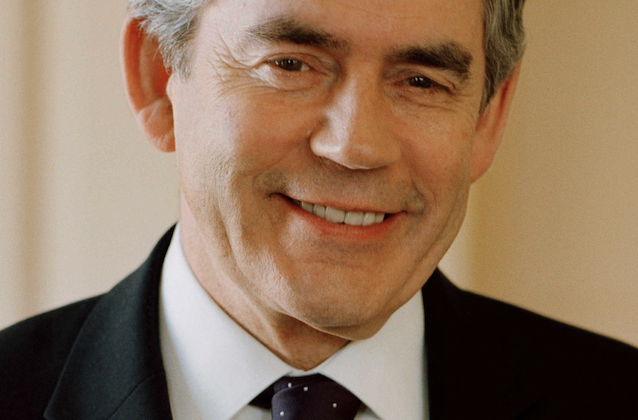
On the 14th October, former British Primeminister Gordon Brown did a very unusual thing. He spoke in Parliament. Since the last general election, the Member of Parliament for Kirkcaldy and Cowdenbeath has only managed to attend 144 parliamentary votes out of 1108. This paltry 13% attendance rate is slightly higher than he accomplished whilst Primeminister. However, it compares unfavourably with most MPs. David Cameron participates in 17.2% of votes, though being the current PM is a very good excuse for sometimes being busy elsewhere. Brown’s participation is much lower than the 68% attendance of fellow Labour backbencher Diane Abbott. Perhaps she has an advantage, because she represents a London constituency. But then, 71.4% is the voting record of Menzies Campbell, who is in a similar situation to Brown, being a former party leader who represents a Scottish constituency. Michael Weir of the SNP finds himself voting in Westminster 51.2% of the time, despite his party’s enmity to the Westminister elite. And the burdens of travel do not stop the Alliance Party’s Naomi Long from leaving her Belfast East constituency to vote in 52% of parliamentary debates. Perhaps it is understandable that Gordon Brown hardly bothers with Westminster politics. Dejected after his defeat in the general election, Brown has described himself as an ‘ex-politician‘. He believes he adequately represents his Scottish constituency without engaging in the party-dominated votes that occur in Westminster. So what issue can be so serious that it prompted Brown to not only attend, but to speak in a parliamentary debate? The answer is rather funny. Brown was worried by the threat that he, and other Scots MPs, might not be allowed to vote on matters that only concern English constituencies.

At this point, I believe a rational and impartial person stops bothering with the arguments. Brown’s position is, on the face of it, absurd. When we dig deeper, Brown’s position remains just as absurd. Brown believes he adequately represents the interests of his Scots constituents even though he rarely votes in Westminister. But he feels there will be a ‘constitutional crisis’ if he no longer has the right to vote on matters that have no significance to his constituents. If this is true, the UK must have a very strange constitution. If MPs are lazy and cannot be bothered to vote, Brown sees no risk. If parliamentary votes are dominated by small cliques within parties who can whip hundreds of MPs to vote in opposition to their conscience – the Iraq War being a notable example – Brown sees no risk. If a declining number of voters keep electing whatever stooge is put up by their favoured party – irrespective of whether they fiddle their expenses or fiddle with their pyjamas – then Brown sees no risk. Disenchanted voters may want the right to throw out crooked, corrupt and criminal MPs, but Brown sees no reason to rush to appease them. If important powers, like the power to collect tax, are taken from Westminster, and given to the Scottish Parliament, Brown does see a need to rush through those changes, though he saw no need to do so when he was in power. He sees an urgent need for that constitutional change, even though it was only proposed as a last-gasp attempt to sway Scotland’s independence vote. But when English MPs propose that only English MPs should vote on policies that exclusively affect the inhabitants of England, then, and only then, Brown worries about the health of our fragile constitution.

Brown has always been a political calculator. It is his greatest skill, and worst flaw. The fact that this ‘ex-politician’ has stirred himself is not evidence of a sudden concern for the constitution. He was one of the most powerful politicians in the country whilst the House of Lords was trashed by half-arsed reforms that concentrated more power in the hands of party bosses, whilst granting no compensating change in the powers exercised by the British people. Though he never supported electoral reform, Brown would have implemented the Alternative Vote without a referendum, and held a referendum on Proportional Representation, if it meant remaining in power at the head of a coalition government. His calculations always concern power, not principles. He does not speak because he is worried about rushing change to Britain’s time-tested constitution. He speaks because he fears that the power of men like him would be eroded by a more equitable constitutional settlement.

The vogue argument from the Labour Party is that they oppose the formation of two tiers of MPs. This is nonsense. We already have multiple tiers of MPs. Some have more influence, some less. Some are on the backbench, some on the front. Some sit with the party in government, some sit with the loyal opposition, some sit outside of the so-called ‘main’ parties. Some of their constituents are better represented, others are poorly represented. This has long been true. More recent changes have created yet more tiers of MPs.

Whenever the UK Parliament devolves power to some regions but not others, it creates tiers of MPs with different degrees of influence over the lives of their constituents. An English MP can vote about how the English National Health Service is run, and so they can change things for the people who live in an English constituency. A Scottish MP cannot do the same thing for his or her constituents, because the power to run the Scots NHS has been devolved. So when Brown and the Labour Party say they oppose a ‘reduction in the rights’ of Scottish MPs, what they really mean is that they are happy to reduce the rights of Scottish MPs to represent their own constituents. They just do not want to see a reduction in the influence of Scottish MPs over the lives of people who live in English constituencies. This has nothing to do with being a Scot, or being English, or where people choose to live, or how to align policy with the wishes of voters. It has everything to do with a future Labour government wanting to maximize its power over English affairs, whilst depending on a First-Past-The-Post electoral system that delivers them a disproportionate number of MPs in Scotland.

I can go on listing all the tiers of MPs we have under the British constitution, so I will. MPs in marginal constituencies are more likely to get concessions from the leaders of their parties, because their seat is hotly contested. The voters of Brighton Pavilion may have chosen Caroline Lucas to be their MP, but by choosing the only MP from the Green Party, they have selected someone with much less effective influence than if they had restricted their selection to the so-called ‘main’ parties. Some voters in Buckingham might have liked to have had a choice between the main parties when choosing their MP, but they are represented by the Speaker of the House, who by convention stands without opposition from any of the main parties. The Speaker does not vote in Parliament, either. Voters who support Sinn Fein in Northern Ireland are choosing representatives who promise not to participate in Westminster votes. As a consequence, there are some MPs who vote even less than Gordon Brown. The wide differences in constituency size and turnout mean that the 2010 General Election saw the sitting MP in Na h-Eileanan an Iar, the SNP’s Angus MacNeil, retain his seat despite polling only 6,723 votes. Meanwhile, Conservative candidate Annunziata Rees-Mogg received 26,976 votes but only finished second in Somerton and Frome. MPs in London speak with less authority about London’s issues than the Mayor of London does, making them less potent than MPs in other cities which chose not to have a directly-elected mayor. And the UKIPpers appear to have some popular support when they argue that the power of British MPs is continuously eroded by a transfer of sovereignty to the EU.

Furthermore, we already accept implicit tiers in the UK Parliamentary system, designed to give disproportionate power and influence to certain regions. 46,107,200 people were eligible to vote in the 2010 general election. Comparing the numbers of electors to the number of MPs shows obvious trends in how power is shared out. The Office of National Statistics explained:

The average size of constituencies varies between the constituent countries of the UK with a median total parliamentary electorate across constituencies of approximately 72,600 in England, 67,500 in Scotland, 66,200 in Northern Ireland and 58,000 in Wales

Put simply, if the English ratio of population to MPs was applied elsewhere, Scotland would have 54 MPs, instead of the 59 it currently elects. Wales would have 32 MPs, instead of 40. Northern Ireland would have one fewer than its current 18 MPs.

Why is the Labour Party not concerned about these national tiers? Why do they believe that Scottish MPs must not only vote on matters that only affect English constituencies, but they must also have an exaggerated number of MPs, relative to the size of the population?

We all know the answer to that. The parties of power are engaged in a cold war over rigging our democracy, to suit their own selfish ends. Whilst the Tory motivation for change is obvious, at least they can honestly state that the current system is rigged against them and their supporters. The Labour Party can make no such argument, so resorts to spinning any line which might help them consolidate power in Labour hands.

Constitutionally, it would have been better for Scotland to have won its independence – which is why Labour’s big beasts pulled out every stop to prevent it. A clean and simple break would have left Scotland’s people free to vote for the best policies for Scotland, and unable to vote on anything else. Instead, we are heading toward an ever more biased morass. Scots voters will be able to exercise increased influence over the policies that affect them, and disproportionate influence over policies that do not affect them. Meanwhile, the Labour party wants to make the devolution of further powers as murky and confused as possible. They only want the Scots Parliament to be able to vary tax rates according to some Westminster-bound formula, instead of permitting the Scots more freedom to set taxes, and the fiscal responsibility that comes with that freedom.

Gordon Brown craved power for a long time. When he finally got the top job, it was through a back door. That door led to 10 Downing Street, but it was unlocked by his bullying control of the Labour Party, not via an election. The ultimate power consumed Brown, who was so absorbed in the fight for power that he had no idea why he wanted it. His preference for calculation over principles most memorably resulted in Brown hiking taxes on the poorest childless people in our society, so he could finance tax breaks for families and the middle class. In 2010, the electorate took their first opportunity, ejecting Brown from office, though he attempted to wrangle a coalition deal that would have allowed him to desperately hold on to power. Brown is a hollow man, an ex-politician who only takes an interest when there is an opportunity to stand centre stage. He is not an example of the virtues of the existing constitution. Instead, he is proof that it survives despite its many corruptions. That Brown has appointed himself as foremost critic of English Votes for English Laws tells us much about where the opposition comes from, and what motivates it.

The arguments made by Brown and the Labour Party, from the fear-mongering that dogged the debate about Scotland’s independence, via the ‘vow’ to devolve more powers to Scotland, to the latest protestations about English Votes for English Laws, all point toward a single coherent objective. That objective is to increase the power of the Labour Party, and of individuals like Brown, relative to everyone else. There is no real interest in listening to the wishes of ordinary Scots, English, Welsh or Northern Irish. Every argument they make reaches a similar conclusion: the ‘right’ people will exercise power, by hook or by crook, and those people mostly belong to the Labour Party. These arguments are transparent. They come from the mouths of self-serving, power-hungry men. It is hard to believe that anyone, other than someone blinded by an irrational devotion to the Labour Party, can fail to see through them. As a result, it will create two tiers within the public: those who do not care how the system works so long as Labour are victorious, and the rest of us.

Reasonable people cannot ignore this cold war, even if they support many Labour policies. Good, impartial people will oppose the creation of more and more tiers within government, when designed to undermine our democracy. They will oppose the growing and shameless tendency to rig the system to ensure that no matter what reform is contemplated – of the voting system, electoral finance, constituency boundaries, or devolution – the Labour Party is always guaranteed an oversized share of power. Labour’s arguments are designed to entrench power in the hands of an established elite – their established elite. When Gordon Brown speaks on that topic, he speaks from many years of experience.

Press Regulator: Criado-Perez Abuse Claim Was Misleading

It dragged on and on… you will have to decide for yourself why the Independent Press Standards Organisation (IPSO), the UK’s press regulator, took so long to review the inaccuracies in Caroline Criado-Perez’s July 23rd piece about domestic violence. Published on the New Statesman’s website, Criado-Perez made the following assertion.

Domestic abuse is the largest cause of morbidity in women aged 19-44, more than war, cancer or motor vehicle accidents.

This is a dramatic statement, which caught the attention of many readers. When I surveyed Twitter tweets that linked to the article, I found ten percent repeated the claim verbatim. However, Criado-Perez’s domestic violence statistic is utterly false. It was most notably debunked by a 2009 episode of More or Less, the BBC’s statistical fact-checking show.

Criado-Perez did worse than repeating a common lie. If she had stopped there, then maybe she could have feigned innocence, pretending she made an honest mistake. Criado-Perez went further, trying to hoodwink gullible readers by hyperlinking her pseudostatistic to a 246-page report published by the World Health Organization, even though that report contains no data to support Criado-Perez’s hyperbole. The WHO report dates back to 2002, and the most pertinent data it contains is that interpersonal violence then ranked as the 43rd-highest cause of morbidity for women.

Though it has taken too long, IPSO has finally reached a decision. Their Complaints Committee said:

The Committee made clear that it would not be able to establish the accuracy of the statistic itself. However, it did consider it misleading for the magazine to cite as a source a WHO report which did not contain the assertion in question. The magazine had not been able to demonstrate that it had taken care. As such, there had been a breach of Clause 1 (i) [of the Editor’s Code of Practice].

Criado-Perez and the New Statesman have misled their readers. That was so obvious that nobody could sensibly deny it, even if they wanted to. I know that some of you have contacted Criado-Perez directly, asking why she cited the WHO report and what was the real source of her claim. Her attitude is plain: she intends to simply ignore those questions. Criado-Perez expects this all to blow over, allowing her to continue her career as a campaigner and journalist without even a hiccup. Instead of choosing to be honest, frank and transparent, Criado-Perez believes that the best course of action is to refuse to discuss questions relating to her integrity as a journalist. Better still, she hopes nobody will ask them. If the press, and its regulator, refuse to hold her to account, then only the public can do so.

I am not satisfied with the conclusion of my complaint. In all my dealings with the press regulator, I emphasized that time is of the essence, when correcting errors on popular websites. Articles on major websites are mostly read during the first few days of publication; this is when the article is featured on the home page and promoted via social media. The article may remain on the web forever, but only a very small number of people will read it after the initial rush. I contacted the New Statesman and Criado-Perez within hours of the publication of this article, alerting them to the error. It took the New Statesman two weeks to delete the bogus statistic (substituting other statistical misinformation in its place). By then, the article had long disappeared from their home page. Nobody was reading the article any more, so it hardly mattered what changes were made. No real effort has been made to correctly inform the readers who have been misinformed. In total, it has taken 10 weeks to get a judgment from the press regulator, though their standards state the following.

We will deal with your complaint as quickly as possible. We will explain any delays and keep you informed of the progress of our investigations. Overall, we aim to deal with complaints in an average of 35 working days.

The press regulator never explained why this complaint needed so much longer than their ‘average’. 10 weeks is a long time on the internet. In that time, a lie can spread worldwide.

More than that, we must question the purpose of a press regulator that is ‘not able to establish the accuracy’ of assertions made by the press. In this case, we are not dealing with a rarefied branch of theoretical physics or speculations about the nature of God. Either domestic violence is, or is not, the largest cause of morbidity for a certain range of women. Either there is statistical data to support this assertion, or there is not. In this instance, nobody can find any data to support this falsehood, and there is plenty of data to the contrary. In short, what is the point of a press regulator tasked to ‘uphold the highest standards of journalism’ and to ‘enforce’ a code which requires ‘the Press [to] take care not to publish inaccurate, misleading or distorted information’, if that regulator cannot tell the difference between a statistical fact and some made-up garbage that gets repeated by people who should know better?

Even now, the press regulator is complicit in misleading readers. If you visit the offending article on the New Statesman’s website, you will see a footnote. That footnote is a lie, though it has the blessing of IPSO. The footnote begins: ‘Update, 7 August 2014’. I believe an ordinary person, with no knowledge of the history of this article, would assume that this update occurred on the 7th of August. It did not. The wording of this footnote originated in late September. IPSO’s complaint handler told me about it on the 1st of October.

From: Bianca Strohmann
Subject: Complaint 143805
Date: 1 October 2014 09:58:07 GMT+01:00
To: Eric Priezkalns

Dear Mr Priezkalns,

My apologies for the delay in bringing your complaint to a conclusion.

The statistic in the New Statesman has now been amended to

The prevalence of domestic abuse means that in some countries 40-70 per cent of female murder victims are killed by a husband or boyfriend, according to the UN.

And the footnote has been updated accordingly.

The article was first amended on August 7th, and a footnote was inserted then. But what you see today is not the version of the article, or the footnote, as it looked on August 7th. It would bore most normal people to describe every edit made to the article, and to the footnote, since then. Let me assure you that what you see today is actually the fourth version of this article, and the third version of this footnote.

Throughout this process, the ‘independent’ press regulator has been in repeated contact with the New Statesman, negotiating changes to the wording. After each change, I was asked to comment. The implication is clear. The editors of the New Statesman wanted to make the least possible change, and to draw the least possible attention to the inaccuracy in the original article. The press regulator aided and abetted this, by asking me to comment on every change.

A genuinely impartial body would have no need to ask my opinion, because they could have told the New Statesman that the changes were clearly inadequate, as they continued to mislead readers by presenting statistical falsehoods. Why ask me about every change, only to then negotiate further changes, unless the regulator hoped I might drop my complaint? Why draw this process out unnecessarily, with repeated trivial edits, unless the goal was to avoid issuing a formal decision that the Editor’s Code had been breached?

Over the last 10 weeks, a lot of my time has been wasted. My ‘reward’, such as it is, is that the regulator was finally forced to issue a decision, stating that the public had been misled. This is of scant benefit, if the public does not learn the truth. Though it is entitled to do so, the regulator has not published its decision. I received the decision by email, as if lies about the prevalence of violence in our society are a private matter between me and a group of career journalists who never had the decency to respond to me directly.

At every turn, the regulator has done the least it can possibly do, to correct the misinformation spread by Criado-Perez and the New Statesman. It should not be up to private citizens, like you and me, to hold the press and public servants to account, in this fashion. But it is up to you, and me, to hold them to account. We cannot rely on anyone else to do it for us.

Criado-Perez is a famous victim. Her fame is inextricably linked to the abuse she received from Twitter trolls. Our society is humane; we have sympathy for victims. But we all know that bad people can be victims too. We must not allow sympathy for Criado-Perez to grant her leeway we would not permit to every journalist. She lied, and it was a gross lie. The readers of her articles should know about this, and apply appropriate scepticism to everything she writes in future.

The truth has come out, somewhat. But the truth has arrived late, and is only spoken in whispers. You are reading this now, but many more people read the original article by Criado-Perez, and they believed its contents. They are not reading this, or learning they were misled.

In many respects, this process shows how liars and cheats are winners in our society. It is people like you and I, who want journalists to present reliable information to readers, who are the losers. Perhaps we are in the minority. But even if we are a minority, I intend to keep fighting, and I hope to find myself fighting alongside you. If you agree with me, that Criado-Perez was caught in a barefaced lie but has suffered no repercussions, then I urge you to tell others about this incident, and the judgment issued by the press regulator. We cannot rely on others to do it for us.

The full text of the IPSO decision follows.

Committee’s decision in the case of
Priezkalns v New Statesman

The complainant expressed concern about an article, published on the magazine’s website only, which reported incidents of domestic violence, and called for a change in UK law to offer greater protection to victims.

Clause 1 (i) of the Editors’ Code of Practice states that “the press must take care not to publish inaccurate, misleading or distorted information, including pictures”. The complainant stated that a statistic used in the article, that “domestic abuse is the largest cause of morbidity in women aged 19-44, more than war, cancer or motor vehicle accidents”, had been widely debunked and was inaccurate. Further, the magazine had linked to a World Health Organisation (WHO) report to support this assertion. The report did not contain the statistic in question and the complainant considered that it was misleading for the magazine to suggest that this statistic could be attributed to the WHO.

The Committee noted the complainant’s position that the statistic under complaint had been widely debunked. The magazine had stated that it had been quoted in government reports, including one issued by the Home Office, but acknowledged that it had been widely contested. The Committee made clear that it would not be able to establish the accuracy of the statistic itself. However, it did consider it misleading for the magazine to cite as a source a WHO report which did not contain the assertion in question. The magazine had not been able to demonstrate that it had taken care. As such, there had been a breach of Clause 1 (i).

Clause 1 (ii) states that “a significant inaccuracy, misleading statement or distortion once recognised must be corrected, promptly and with due prominence”. The magazine was obliged to correct the impression that the statistic quoted had come from the WHO. The magazine had replaced the original statistic with one contained within the report, and added the following footnote: “This article originally referred to domestic violence as “the largest cause of morbidity in women aged 19-44”. However, this was not contained in the WHO report cited as the source. The article was amended to state that “in some countries 40-70 per cent of female murder victims are killed by a husband or partner”, a statistic contained within the report in question”. The Committee was satisfied that, in acknowledging that there had been an error, and making clear the amendment that had been made, the magazine had taken sufficient action to remedy the initial breach.

The Committee noted that the complainant was concerned about the prominence of the correction, stating that the original article had been one of the four most popular on the magazine’s website when originally published, but only a minority of readers would be likely to revisit the article and see the correction. The Committee made clear however that the correction should appear where the original inaccuracy had. It was satisfied that the remedy offered was sufficient. The complainant was further concerned about the time taken to publish the final correction. The Committee noted that the process had been lengthy, but was satisfied that the magazine had not failed in its obligations under the terms of the Code. The complainant had also suggested that the magazine publish a comprehensive history of its footnotes, but the Committee did not consider that it was obliged to do so.

Reference no. 143805

Preston Dirges Nears The End

In the last instalment of Preston Dirges’ office saga, Preston was briefing a hungover Valerie, and an ever ready Gordon, for the final audit meeting. We join them as the auditor, Thimbleby, is about to arrive…

Int. Preston’s Floor “” Day

Preston goes back to his desk, and lifts up an electric kettle which he normally keeps hidden behind the desk. He switches it on, and fetches mugs from the filing cupboard. Preston’s phone rings. He puts its on speaker.

PRESTON: Preston Dirges.

GUARD (V.O.): Hello. Mr. Don Thimbleby is here to see you.

PRESTON: I’ll be right down.

Preston sits and waits for the kettle to boil. Valerie looks at him.

PRESTON: What? You were late arriving this morning. Why should I rush downstairs?

Preston’s phone rings again. He puts it on speaker again.

PRESTON: Preston Dirges.

DOUG: Preston, it’s Doug here. I understand you didn’t provide Kirsty with the update for her management report.

PRESTON: I’ll give the update this afternoon, after we’ve finished the final audit meeting.

DOUG: Is that right? That’s the final meeting, you say?

PRESTON: If all goes well, it’ll be the final meeting.

DOUG: Alright. See to it. And call me afterwards, to tell me how it went.

Doug hangs up.

VALERIE: What was that about?

PRESTON: They’re just keen to get this audit over with. Gordon, why don’t you go down and collect Thimbleby?

Gordon nods and leaves.

PRESTON: What you said last night – it opened my eyes. I’m leaving, perhaps by the end of today.

VALERIE: What did I say last night? I don’t really remember. In fact, I don’t remember much of what we did. Did we…?

PRESTON: What?

VALERIE: Don’t make this more awkward that it already is.

PRESTON: Have sex? I’m a bit old for you, aren’t I?

VALERIE: Is that a roundabout way of saying I’m too young for you?

PRESTON: No.

VALERIE: Then don’t tell me who’s too old or too whatever for me.

PRESTON: Okay, but we didn’t break my induction rule. We have to work together. At least, for today. (Pause) Are you saying I’m not too old for you? That you’d contemplate having sex with me?

VALERIE: Preston! I don’t think this is a good time to have this conversation.

PRESTON: Perhaps not, but I thought you brought it up.

VALERIE: Hopefully nobody brought anything up.

PRESTON: No, nobody did. You fell asleep, so I carried you to your bed. I struggled with the sofa bed for a while, then gave up and slept on the floor. At 6am I woke up feeling stiff and cold, so I went home, got ready, had breakfast for a change, and came in – on time.

VALERIE: So you didn’t set my alarm for me.

PRESTON: No.

VALERIE: Well, there’s my excuse for being late, boss.

When the light goes down

0

The sun closes another day
I find myself tired inside
Weary to the bones
Wearing no expression on my face

It’s gone but not forgotten
Hours lost to sleep
Are also spent in growth
Rejuvenation comes with the daybreak

Preston Dirges and the Need for Chairs

Preston Dirges’ office saga nears its conclusion, with Preston and his colleagues preparing themselves for the final audit meeting. And that means finding enough chairs for everybody to sit on…

Int. Preston’s Floor “” Morning

PRESTON: You’re not ready.

VALERIE: Ready for what?

PRESTON: Thimbleby’s going to be here in 10 minutes for the final audit meeting.

VALERIE: Why didn’t you tell me. What do I need to do?

PRESTON: Because I didn’t want to alarm you. And because you don’t need to do anything. Except to find yourself a chair. And to look interested. It doesn’t look good having you sit on the desk. Plus can you find a chair for Gordon, whilst you’re at it?

VALERIE: You want me to look for two chairs?

PRESTON: I like the way you collate the information presented, and then neatly synthesise the expectations into a coherent plan.

VALERIE: What?

PRESTON: In other words, yes.

VALERIE: What?

PRESTON: Two chairs. Find. Now.

Int. Second Floor – Morning

Valerie comes out of the lift on the second floor. She looks around for any spare chairs in meeting rooms, but each room has a meeting take place in it. She tries asking a friendly-looking stranger with a vacant chair in front of her desk.

VALERIE: Excuse me. I’m Valerie, and I work downstairs. I’m really sorry but we’re short of chairs on our floor, and I wondered if you had two spare?

AMY: Hello Valerie, I’m Amy. So you work with Preston, do you? Never mind. Let me go see if there’s any spare chairs. Wait here.

VALERIE: There’s this chair here – could I borrow this one?

AMY: That’s my chair. For when people visit my desk.

VALERIE: I know, but I’m only going to borrow it for a little while.

AMY: That’s my chair. I’ll see if there’s spare chairs. You wait here whilst I see.

Amy walks away, into a different part of the office. Valerie waits.

Int. Preston’s Floor – Morning

Gordon walks up to Preston’s desk, pushing a chair.

PRESTON: Good man. You brought your own chair.

GORDON: Do I really need to be at this meeting?

PRESTON: Yes. But remember the golden rule: don’t speak unless I cue you in. Even if Thimbleby asks you a question directly, wait to see if I give you the nod.

GORDON: Whatever you say, Preston. I’d rather sit quietly and say nothing.

PRESTON: That’s what they pay you for.

Int. Second Floor – Morning

Valerie is anxious and checks her watch. Amy has not come back. Valerie looks at the chairs in front and behind and Amy’s desk. She looks around furtively, then grabs hold of the chairs and starts wheeling them away. When Valeries reaches the doors, she runs into Amy coming the other way, pushing two chairs.

AMY: Hello? Were you going to take my chairs?

VALERIE: No.

AMY: Then what are you doing?

VALERIE: I was just checking to see how easy the chairs are to wheel around, in case I needed to come and give you some help.

AMY: (Doubtful) Right.

VALERIE: Can I still have those chairs you’ve got?

AMY: You can borrow them, if that’s what you mean.

Valerie puts Amy’s chairs back where they were, then takes hold of the chairs Amy brought.

VALERIE: Thank you, I really appreciate this.

Valerie pulls a cringing face as she walks away.

Int. Preston’s Floor – Morning

Valerie pushes up the chairs. Preston and Gordon are drinking coffee.

VALERIE: There’s an extra chair now.

PRESTON: Gordon brought up his chair from the basement.

VALERIE: Tell me I can have a coffee.

PRESTON: Would you like a coffee? Or a tea perhaps?

VALERIE: Coffee. Black, like my mood.

Illogic is Free (and Plentiful), in The Guardian

“Comment is free, but facts are sacred,” wrote C.P. Scott, legendary editor of The Guardian. But what about logic? The rules of logic need to stand somewhere in the spectrum from the unconditionally free to the inviolably immutable. We can all agree that facts should be fixed, and never tampered with, at least as far as they can be determined. Our freedom lies in the realm of our thoughts, feelings and words. But that does not leave us free to say and believe anything, so long as we cite facts. Beyond the facts, we are also servants of logic. Whilst facts might have been different, logic is permanent and timeless, and to think illogically is not to think at all. A grammatical sentence can still be nonsense, even when referencing facts. The existence of the Queen of England does not imply helium is heavier than hydrogen. Humans have rational minds, but can only boast of this in as far as they choose to act rationally. Even if words appear to make sense on the surface, they are nothing more than bestial moos and neighs, if the words are assembled into illogical arguments. And so we should examine the true nature of Comment is Free, the comment and political opinion site of guardian.com. A read through its endless piffle reveals it is not a bastion of free thought, but of free grunting, unrestrained by any need, or desire, to live within the bounds of logic.

Being a rational, sceptical masochist, I like to read a range of views, to be fully aware of arguments and counter-arguments. But such arguments still need to be logical, in order to be arguments. So when I woke this morning, and started reading Comment is Free, I was forced to conclude that it presented no arguments, and that I was wasting my time. I tried to recover some value from this wasted time, by reading further. This left me even more frustrated. Then I decided to read even more, and to chronicle the fallacies I found, in the hopes of squeezing some modest intellectual profit in exchange for the loss of my time. Many will wish to disagree with me; they may feel The Guardian is worthy, because it says things they like. Others dislike the conclusions reached by The Guardian’s writers, but they should pay attention to the journey, as well as its destination. Either way, please allow me to briefly summarize the illogical nonsense I found, when reading through Comment is Free

Editorial, The Observer view on the Scottish referendum. The union is broken. After Thursday, Britain will never be the same again.

The Scots will soon vote on their independence. Whatever they decide, lots of things must change, all over Britain, not just in Scotland. Luckily, this newspaper knows what is best for everyone. Major constitutional changes are required, if the people are to be empowered. What this democratic campaign has shown is that we must make change, without the hassle of an actual popular vote, if we are going to stop unelected elites having too much power.

Catherine Bennett, It bears repeating: page 3 is still an ugly institution

Businessman Rupert Murdoch contemplates modifying some very soft pornographic content in the hope of increasing sales and thus making more money. Feminists think differently: they just hate the content and want it stopped because it is horrible, horrible, and horrible. Politicians talk about protecting children, but they do not pass necessary laws to protect children from horrible stuff like this. Stuff like this is horrible, horrible, and horrible. The horror. Oh, the horror.

Jimmy Savile gets a mention for no obvious reason. I presume it is because he was latterly found to be horrible.

When Murdoch tweets about whether to show photos of attractive clothed women, his 140-character question is insufficiently precise in defining its terms. Horror. HORROR! The horror of tits!!! Oh horrible, horrible boobs, causing our children to mutate into little Jimmy Saviles. Nobody should see a naked breast, especially not a child. Horrible. Murdoch’s views on women must change, not for business reasons, but because THEY MUST, because they are so horrible, horrible, horrible, horrible, and horrible.

Michael Cohen, Obama’s great dilemma: to be or not to be the world’s policeman

Cohen’s piece starts with a false dichotomy, so brazenly flashed in neon during the opening headline that you wonder why anybody continues to read. But I did. Oddly, the article mostly involves picking apart a speech made by a politician: US President Barack Obama. Obama may be US President, but he is still a politician. Cohen struggles to come to terms with the various kinds of illogic that infest this politician’s speech. Clearly this journalist has chosen the wrong line of work.

Ed Miliband, Devolution is for everyone. A no vote will change all of Britain

Scotland leads the way. If lots of Scots want independence, they should have devolution instead. And if they get devolution, so should everyone else in Britain.

This argument about sovereignty and constitutional powers is not about boring stuff like sovereignty and constitutional powers. It is about important and exciting stuff, like economic policy, and whether you get more money.

The mood of the country is that people feel left out of politics, including all those people who currently vote for political things. They feel left out because, even if they do vote, they were never allowed to vote for the economy they actually want. What people want is to vote for an economy that gives them as much money as they really deserve.

The New Old Not-New Labour Party will change all that. By voting against change, and against Scottish independence, Scottish Labour supporters will guarantee change to the British constitution which will, in turn, guarantee that everyone in Britain has their say, and gets the national economy they want and deserve. It must be as simple as that, so it will be as simple as that.

Glen Pole, Why has Kelly Brook got away with punching two men?

Because she is a woman. Also, perhaps it has something to do with the men involved not complaining about being punched. But they should.

Kevin McKenna, Scottish independence: why I have finally decided to vote a proud yes

As a child, McKenna’s dad brainwashed him into loving the Labour Party. It turns out, however, that the Labour Party is nothing more than a political campaigning organization which tries to get its representatives elected to various institutions. McKenna’s dead dad would have been disgusted by the modern Labour Party.

Fortunately, McKenna has seen the light. He makes no apologies for using the language of faith and mumbo-jumbo, when he says he had a conversion on the road to Holyrood. Nationhood and identity are sacred, unlike the scaremongering talk about the economy mouthed by those horrible ‘no’ businessmen and all those politicians in their capitalist pockets.

McKenna will be voting ‘yes’ for independence, because even if it is insanely risky, it is what his dead dad would have wanted. Except Dad always voted the way that Labour told him to vote. But Dad would have been just as angry at Labour as McKenna, if he was still alive. Amen.

Hadley Freeman, Oscar Pistorius and Reeva Steenkamp’s relationship was far from ‘normal’

The exceptional black female judge presiding over the trial of Oscar Pistorius was wrong not to send Pistorious to prison for murder. She must think it is normal for men to beat women. One ex-girlfriend was so scared of Oscar Pistorious that she once hid his gun. Being scared like that is not normal.

Meanwhile, a man hit his wife so hard in the United States of America, that she was knocked unconscious. Both these cases, the one where Oscar Pistorious shot a gun into a door and said he did not know who was behind it, and the case where some other man hit a woman in the face, shows that women fear men because of their superior physical strength. Obviously we do not take violence against men so seriously, because it is not possible for women to hurt men in the same way men hurt women.

Andrew Rawnsley, Whatever the result of the Scottish referendum, Alex Salmond will be the winner

The exception that proves the rule, Rawnsley’s arguments are all sound. He explains why Alex Salmond and the Scots Nats are doing much better than expected, and will get more of what they want, even if they lose the independence referendum. He accurately describes how people really behave, instead of pontificating about how he would like them to behave. Rawnsley’s thinking is straightforward, whilst his language is eloquent. This begs a question: why are other Guardian writers so incapable of following his example?

My logical conclusion

In a fair economy, Andrew Rawnsley would be cloned and the clones would be employed to write every article in The Guardian. Other journalists would start to receive a fair return for their contribution to society, by being summarily dismissed. A new country would be established, for exiled Guardianistas, where they could enjoy their wealth of words, and poverty of everything else. The state religion would involve praying to their dead dads for advice on how they would brainwash children into making the right political decisions, if they were alive today. Those wanting to be rehabilitated into the unfair society inhabited by the rest of us, would be allowed occasional furloughs to work for Rupert Murdoch. Those lucky few will be paid to deliver short and lively articles for ordinary British people to enjoy after their daily wank.

Preston Dirges and the New Day

The last episode of Preston Dirge’s office saga featured Tina, working on her comic, drawing her alter ego as she battles her demons. Now events return to Preston, and to Valerie, who is dreading the morning after the night before…

Int. Preston’s Floor – Morning

Valerie skulks in late. Preston is typing at his computer.

PRESTON: Morning. You look like a public health campaign, raising awareness about the evils of drink.

VALERIE: Good morning.

Valerie sits at the table for a long time, waiting for Preston to speak.

PRESTON: Did you want to ask something?

VALERIE: No.

PRESTON: Don’t you want to ask for some work to do? You usually do.

VALERIE: No.

PRESTON: Alright, I’ll ask a question then. What’s your excuse for being late? It’s important to arrive on time.

VALERIE: Funny.

PRESTON: I’m serious. People notice if you’re late. If you’re tired, don’t have a lie in. Just sleep when you get here. You’ve got it easy. Now there’s a whole floor where you can sleep undisturbed. When I started, I used to have to sleep in the toilet, with my cheek resting on the toilet roll.

Valerie sits in silence, restless.

PRESTON: What?

VALERIE: Don’t make this more awkward than it already is.

PRESTON: I don’t know what you’re talking about.

VALERIE: Where were you this morning? Did we…?

PRESTON: Have sexual intercourse? I’m a bit old for you, aren’t I?

VALERIE: Is that a roundabout way of saying I’m too young for you?

PRESTON: No.

VALERIE: Then don’t tell me who’s too old or too whatever for me.

PRESTON: Okay, but don’t worry. We didn’t break any rules about intra-office liaison. (Pause) Are you saying I’m not too old? That if drunk enough, you’d contemplate having sex with me?

VALERIE: Preston! I don’t think this is an appropriate topic of conversation.

PRESTON: Perhaps not, but you brought it up.

VALERIE: (Clasps her hand across her mouth) Don’t talk about bringing things up.

PRESTON: Don’t worry. You didn’t do anything shameful, apart from drinking too much. You fell asleep, so I carried you to your bed. I struggled with the sofa bed for a while, then gave up and slept on the floor. At 6am I woke up feeling stiff and cold, so I went home, got ready, had breakfast for a change, and came in – on time.

VALERIE: You didn’t set my alarm for me.

PRESTON: No.

VALERIE: Well, there’s my excuse for being late, boss.

Valerie lays her head on the table, but is restless.

VALERIE: Seriously, Preston, what are we doing today?

PRESTON: Nothing. There’s nothing to do today. I’m going to write some personal emails. You can just chillax.

VALERIE: All day?

PRESTON: Yup.

VALERIE: Are you being serious?

Cut to Black

Preston Dirges and the Hero’s Secret

In the previous installment of Preston Dirge’s office saga, he revealed that he is a father – to a drunk and sleeping Valerie. Now we move on to the next day at work, and Tina, who arrives early…

Int. Windowless Basement Office

Tina walks in and takes her coat off. Gordon’s chair is empty. She sits and draws.

Series of Cartoons

Tina draws herself, sitting alone in the office. In the cartoon, the hands of the clock turn.

Reportgirl, a supervillain based on Kirsty, kicks open the door, and tosses in a bomb. Kaboom!

The dust settles. Reportgirl surveys the devastation; electrical sparks fizz and cables trail from the ceiling.

Tina, transformed into the superhero ‘Scourge’, catches Reportgirl by surprise, dropkicking her to the jaw. Sock!

Scourge and Reportgirl fight viciously, but Scourge is gradually wearing out her opponent.

KIRSTY (V.O.): You’ll never defeat me. Minions!

Other workers in the office appear, having been turned into Reportgirl’s cyborg slaves. They converge on Scourge, pull her off Reportgirl, and restrain her arms and legs.

TINA (V.O.): No!

Reportgirl ties Tina up.

KIRSTY (V.O.): Tell me the secret.

TINA (V.O.): I don’t know what you’re talking about.

KIRSTY (V.O.): Tell me. Tell me now.

Reportgirl slaps Scourge across the face.

TINA (V.O.): I can’t tell you what I don’t know.

KIRSTY (V.O.): I know. I’m waiting for someone who does know.

Gordon, as the hero ‘Paradox’, crashes down through the ceiling above, grabs Scourge, and the two of them are reeled up on a rope attached to Paradox’s belt. They are lifted into the sky by a helicopter.

TINA (V.O.): She wanted to know the secret. But what’s the secret?

GORDON (V.O.): I don’t know any secret. I thought the secret was yours.

Int. Windowless Basement Office

Tina is drawing, alone in the office. She stops and looks up as someone casts a shadow on the closed door. They do not enter.