Home Blog Page 4

Forbidden Thoughts; or Why I Joined the Dark Side of Science Fiction

Please note that the Empire is a white supremacist (human) organization.

Deleted tweet by Chris Weitz, scriptwriter for Star Wars: Rogue One

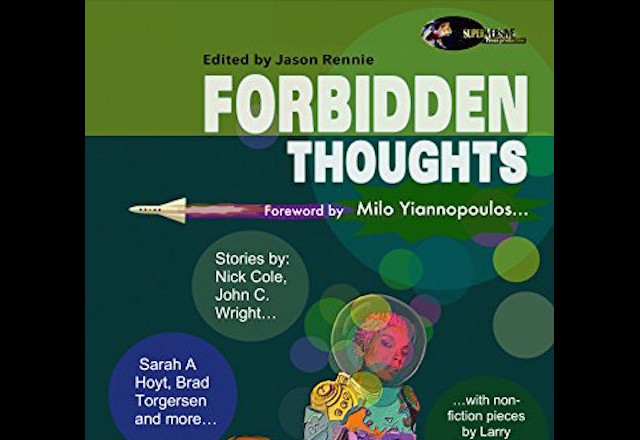
A new book is out and it is called Forbidden Thoughts. It is an anthology of science fiction and is unusually popular; Amazon.com currently ranks the book as #1 amongst SF anthologies, and #272 of all paid content on their Kindle store. I think you should buy Forbidden Thoughts, and read it, not least because it contains a couple of my stories. It also contains stories by other, much more popular writers, some of whom are routinely tagged as racists, sexists, and all those other words increasingly used to label every American who votes Republican. For want of a better description, every story in the anthology is politically incorrect, including mine. The stories are worth reading for their provocative value, if nothing else, though they deserve more respect than that. So I do not intend to apologize for submitting my stories to this anthology, and I would never seriously consider withdrawing them because of whose work they will sit alongside. It should not be necessary to justify myself. The justification of every story is found in the story, not elsewhere. I wrote some stories, I liked the stories, I submitted them to an editor, he did not reject them. That is sufficient explanation for why those stories were published in this anthology. But I know other people are going to think differently to me. So rather than engage in some petty internet ‘dialogue’ with a series of interlocutors whose worldviews can be expressed in less than 140 characters, I will explain why I have sided with the most evil people in science fiction. For those who cannot be bothered to read beyond this paragraph, it is because some of the people who will vilify me and my fellow authors have become too restrictive, seek to make science fiction too exclusive, and so need to be countered.

You were supposed to bring balance to the force, not leave it in darkness.

Line from Star Wars: Episode III – Revenge of the Sith

Like a lot of political moderates, I believe in balance. Those who understand the need for balance know that popularity should not be confused with merit. A debate cannot occur without the expression of less popular views. Balance requires that many voices be heard, even though few of us have the attention span needed to properly listen to opinions we already disagree with. Balance means extremes must be entertained, so we know where the extremes really are. A Modest Proposal was anything but; we are richer for having it in our culture. Mein Kampf was written by a moron; readers risk discovering the author was an imbecile. A tightrope walker extends his arms outwards to maintain balance; putting him in a straightjacket would increase the risk of his falling. The analogy applies to a balanced mind as well as a balanced body.

Without balance you get stupid shit of the type conveyed by a mass market business franchise like Star Wars. Without balance you start arguing that ‘balance’ is the alternative to ‘darkness’ or you reinterpret the meaning of an exceedingly successful 1977 film in order to suit the opinions of some people who voted for Hillary Clinton during an election held in 2016. Balance requires more than hearing the views expressed by the other side. It means recognizing there are truly no sides. All human lives are fleeting, all truths are subject to reappraisal on the basis of new data, whole paradigms can shift, and all coalitions of common interest are temporary. We all must eventually die, though I fear the attempts of some Californians to prove otherwise. Everything physical deteriorates over time, meaning good ideas have the best chance to persevere, unless we also have souls, and I have no knowledge of how to sustain the soul except by doing what seems to be right, and saying what I believe to be right. That is why the wheel does not need reinventing and Occam’s razor remains sharp long after Occam’s body has disintegrated. It is also why I should do what I think right, and say what I think is right, irrespective of whether other people will try to punish me or not.

And yes, I am a moderate. I know this because I have and will swap political affiliations depending on which policies most need to be implemented by government. Instead of being confined by one political ideology, I prefer to concentrate on the following facts, which are repeatedly borne out by history: the human race is prone to error; governments often need to backtrack; and people are less capable of predicting the future than they want to believe. Hence we need to muddle through, instead of seeking perfection, and that means being pragmatic rather than dogmatic. I see no problem in trying to occupy a political ground that embraces both Burkean conservatism and Popper’s piecemeal reform. Voting for Brexit and recognizing the legitimate concerns of working class people no more makes me a bigot than opposing creeping surveillance makes me an anarchist. The left-right spectrum is deeply unhelpful, and does little justice to the opinions of anyone but shallow thinkers and partisan fools. Furthermore, I have disdain for the common tendency of those who say they are moderate whilst expressing inflexible views and insisting everyone who opposes them must be extremists. Nobody can stop you from wrongly describing yourself as centre-left, but that does not mean that everyone who vehemently disagrees with you must be on the ‘far’ right. It is possible for two people to disagree about immigration without either being a racist. We can disagree on topics like religion without anybody being an Islamophobe or zealot. It is wrong to equate moderation with being in the middle. Political moderation means something quite different: accepting the possibility that you might be completely wrong, whether your views are mainstream, left field or totally unique.

Balance is the reason why future generations are unlikely to debate the simplistic thinking found in films like Star Wars and all over social networks like Twitter. Science fiction is not a good place to find balance. George Orwell was not typically a writer of science fiction, but Nineteen Eighty-Four may be the greatest work of political science fiction, and Animal Farm the greatest work of political fantasy. Orwell was of the left, but rejected its flaws. Newspeak, doublethink, thoughtcrime, “four legs good, two legs bad”, “all animals are equal, but some animals are more equal than others”… Orwell described the symptoms of a diseased left, but many modern science fiction writers and fans act as if they were unaware of his critique. By 1944 Orwell had already decried the absurd overuse of the word “fascism”:

‘Fascism’ is almost entirely meaningless. In conversation, of course, it is used even more wildly than in print. I have heard it applied to farmers, shopkeepers, Social Credit, corporal punishment, fox-hunting, bull-fighting, the 1922 Committee, the 1941 Committee, Kipling, Gandhi, Chiang Kai-Shek, homosexuality, Priestley’s broadcasts, Youth Hostels, astrology, women, dogs and I do not know what else.

George Orwell, What is Fascism?

If that insult was used too widely in 1944, how can modern leftist mudslingers pretend their attempts to control and dictate language still retain any integrity? That is why the concept of political incorrectness is so potent. Science fiction is especially guilty of this sin. Some of its members are consciously seeking to compress debate within an increasingly limited ‘safe’ space. This is both undesirable both for our freedoms and for the state of the art. I cannot see much lasting appeal for a genre that should be unusually open to discussing a broad range of future possibilities, but insists it will not do so because some of those futures are unpalatable to some people.

My hope is that the children of the future will learn nothing of the current trivialities that get treated as public discourse, either because they will have created new trivial ways to pass the time, or because a few of them will still be willing to learn about yin and yang, and about the Hindu trinity of Brahma, Vishnu and Shiva. Some cultures understand what balance is. Others miss the point entirely. Those that seek balance also see the need for light and dark. They see the benefits of a cycle of creation, preservation, and destruction. Life requires a mix of the positive and the negative. The combination is not just healthy but essential to growth. We need the cycle of birth, death, and constant renewal, not just for our bodies but for our minds as well. Deep philosophies embrace balance. And that means they must accept the terrors of freedom, including the freedom for bad people to expound bad thoughts.

Without the balance that comes from living through day and night, we must turn ourselves into children, sheltered from the evils of the world by our parents. But who should play the role of our parents, when we are already adults? Is it the government? Would you feel the same way if a very different government is elected, or otherwise comes to power? Should the role be trusted to businesses, like Twitter, and their Safety Council? What if the business was the Hollywood movie industry of the 1950’s, bedeviled by McCarthyism? What if the business was the kind of mainstream media that Noam Chomsky railed against? If businesses and governments can make decisions that are both good and bad, what other guardians might stand in their place? Should you be in charge of who is allowed to speak? What if we deny you that power, but still give you a lot of influence over determining whose voices are likely to be heard? If forced to choose a benign dictator, I would pick me rather than you, but I would prefer no dictators at all.

They say reading broadens the mind but I think that is self-aggrandizing bullshit; plenty of people just read books that confirm their existing tastes and opinions. Either you are the type of person who wants to be stretched and is willing to be challenged, or you or not, and both types can find pleasure in reading. Neither kind will suffer a shortage of books. I like reading George Orwell. Perhaps you like reading Seanan McGuire. When I want to tell my British friends about how skewed, narrow-minded and foolish the science fiction community can be, I tell them that Neil Gaiman asked Jonathan Ross to host the Hugo Awards when they were being presented in London, but had to withdraw after an outcry by ‘science fiction fans’, most of whom were insular Americans with no idea who Jonathan Ross is. This never fails to do the trick. My British friends might watch Game of Thrones and they might vote Labour and they might have read every book by Iain M. Banks but they will all agree that the kind of people who think Jonathan Ross cannot be safely trusted to host an awards ceremony must either be ignorant, or hypersensitive, or both. They feel this way because Ross has hosted lots of other awards ceremonies, so why would the SF community and its precious writers and fans need so much more protecting than everyone else in British society?

Perhaps safety is not the real goal. Perhaps some believe they will change society by acting like petulant children, using safety as an excuse to control language and thought. The French Revolution had its own Committee of Public Safety, and the free thinker Thomas Paine was lucky not to be executed by it. There is something deeply wrong with the oppressive thinking of many members of the science fiction community, as there has been something wrong with many people in many societies across the course of time. They turn safety into a comfort blanket into an excuse to suffocate those they fear. They marvel at the antics of anyone who deliberately provokes them, overreacting in a manner befitting a simpleton who actually wants to be upset, because they enjoy the bonding that comes from sharing the imagined status of victims. They should be opposed, through satire, parody and critique. If that means holding up a mirror and shaming their antics, then so be it, even if these children are no longer capable of feeling shame.

So I have sided with bad people, and my stories can be found alongside theirs. I have a habit of doing that kind of thing, and I hope the habit will only die when I am in my grave. I did not stop being friends with the biggest fan of Donald Trump that I know, just because I would have preferred President Rand Paul or President Marco Rubio instead. Probably that outspoken Trump fan will often be labelled a xenophobe and homophobe, though he seems to love his Japanese wife and lesbian daughter. I am not going to disavow people just because others disagree with them, no matter how passionate the argument. That is because I am not going to disavow people just because I disagree with them. To be open to ideas means being open to bad ideas too. That is how I tell the bad ideas from the good ones; I have no idea how other people attempt to do so.

I cannot speak for others, but I can be frank when stating there is no ego involved in my siding with these supposedly bad people who are rattling the cage of science fiction ‘fandom’. I am too unimportant to matter. Though I may sit on their side of the seesaw, I know I add very little weight. Nor is greed a motive for me; if money or popularity was my goal, there are easier paths I could take. Though the notoriety of the other authors in Forbidden Thoughts might lead a wider circle to discover my words, I know it will not greatly change the arc of my life story. Nor will it stop me from submitting stories to publishers who employ other kinds of dog whistles to attract attention, such as the words ‘diverse’ and ‘feminist’ and ‘multicultural’. As far as I know, the next anthology which will feature my work is from a publisher that belongs to the opposite side of the political divide. And that will change nothing about how to judge a story on its own merits, and who I am, and why we should remain open to ideas even if we disagree with them. Or maybe my story will be booted out of that anthology, but I hope not, because I cannot see how that would make the world a better place. I will continue to write stories, submit the stories I like, and then it is up to editors to reject them, or not. The stories will not change, either way. Perhaps you should read some, and see if you like them. Or read something else. You will always find stories you like, and stories you do not like, unless you keep reading the same stories over and over, because they have already proven to be safe. But what kind of adult hopes to develop their mind like that?

If you dare, you can buy Forbidden Thoughts for Amazon Kindle from here.

A Small Christmas Uprising

0

I’m a little light bulb,
Hanging on the tree.
Though you use me every year
You never think of me.
Wasting electricity on twinkly lights
To bring pleasure to your lives,
But you could get the very same thing
By looking at the skies.

I’m a tiny bead of glitter,
Stuck upon a card.
Or stuck upon your face or palm –
Removing me is hard.
Because I’m manufactured from plastic,
I never really go away.
I’ll still be ruining land and poisoning fish
A thousand years from today.

I’m a cutesy envelope,
At the post office.
Soon I’ll be delivered
To someone you miss.
This caring annual ritual
Is aimed at friends worldwide
But why does the address include more words
Than you wrote inside?

I’m the spectre of Christmas,
Sitting on your back.
I’m the reverse of Santa Claus
Carrying his sack.
I weigh you down with expectation
And demand phony cheer
So you do daft things during each twelfth month
When you should love throughout the year.

Afloat

My breath steaming through the frosty air, I sliced through effortlessly parting crowds. Wary of slipping, I walked gently. My step grew as light as light itself, and so I noticed, to my surprise, that my feet no longer touched the ground. Relieved of a weight so familiar that its origin was forgotten, my shoulders had risen three full inches, causing my back to straighten until my toes had left the tarmac.

I could have mused the unlikelihood of my still bring able to choose my direction of travel, but such enquiries seemed oddly beneath me, both metaphorically and literally. None seemed to notice the separation of soles and sidewalk, so I was spared the embarrassment of appeasing the quizzical looks of strangers. All seemed well, better than it had ever been, and I was content for this feeling to persist uninterrupted for as long as it naturally occurred. Though loftier, my head was not noticeably above any other’s, and so I strode on through the crowds, delighting in the easy progression of my journey, leaving no footprints in the slush.

It was at a junction, delayed by the ruby glare of a standing man, patiently awaiting the return of his emerald partner, that I started to doubt my destination. Why walk on? Where might today’s gift lead me, if I acted upon it? A church stood on the corner, owning its space for a hundred years longer than me. Was I now expected to enter, and give thanks for providence? I decided not. My body had been released. To prostrate it would be absurd.

Meanwhile, the pedestrian passage had turned green. Bodies flooded around me, eager to complete their crossing in the time allowed. I could yield by simply disappearing but that would cause alarm, so I blended with the people instead, hiding at the edge of each half glance askew, until none knew where I began or ended. And dislocated from my cares I had no call to return to the world of form, so I drifted shapelessly into the steam rising from the city’s heart upon that Winter eve.

That was sufficient; a divorce without joy, a homecoming without tears. Being perfection, I exhaled, and was gone.

No More Leaders of the Free World

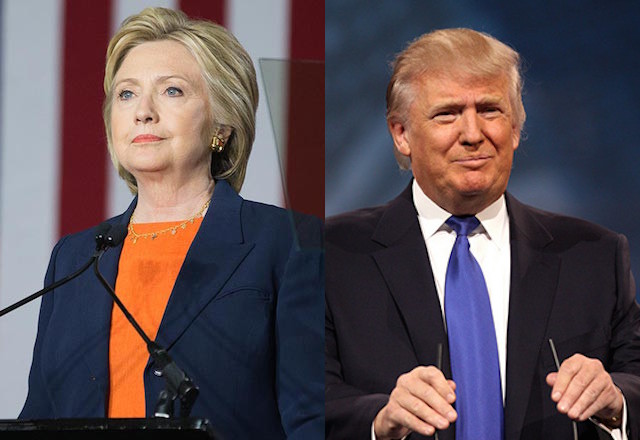
A minority believe the US will elect a formidable president, who will take their country forward. A majority know otherwise. As downright terrible as Donald Trump is, he remains in contention because Hillary Clinton is the lousiest Democratic nominee since Walter Mondale in 1984, and possibly worse than that. Democrats are right to call out Trump when he tries to intimidate judges by saying they are biased, and suggesting he would use the power of the Presidency to exercise legal retribution over a defeated rival. On the other hand, Clinton’s surrogates seem less interested in scrupulous objectivity when they vilify FBI Director James Comey for trying to deal with the unholy mess created by Clinton’s conniving to keep her emails secret, and the fractured marriage between her top aide and a perverted fallen Democrat hero. Nobody forced Trump to engage in ‘locker room talk’ or make himself ridiculous by promising to release his tax records and then failing to do so. And nobody forced Hillary Clinton to lie about hiding emails containing state secrets, conveniently have many of them deleted, get away with her crime, but also employ and share secret information with Huma Abedin, a woman whose taste in men is so flawed that her penis-waving jailbait-chasing husband Anthony Weiner somehow has Clinton’s emails still saved on the laptop he also uses to email pictures of his dick. Trump and Clinton are two depressing, preposterous, atrocious candidates. By selecting them as their nominees, the Republicans and Democrats have demonstrated that the USA can no longer act as leader of the free world. Their beleaguered country cannot even select a leader that Americans want to follow.

The failure of American leadership is nothing new. Obama only seems a halfway decent President because he followed the utterly inept George W. Bush. Expectations were so low that Obama won a Nobel Peace Prize just because he was not Bush. In hindsight, now that the Middle East has fallen into chaos, Russia increasingly bombs and invades its opponents, Islamic terrorism is at an all-time high, North Korea is perfecting its nuclear capability and the Iranians have only temporarily been bought off, there seems little evidence that Obama’s approach to diplomacy made the world a safer place. It is true that Osama Bin Laden was killed whilst Obama was in office, but that is like praising the world’s most powerful individual because a schoolgirl receives a perfect mark for her literature essay; only a small-minded partisan could believe Obama deserves most of the credit for work done by intelligence operatives and military personnel. The last respected American Presidents were Bill Clinton and Ronald Reagan, and both of them achieved economic ‘success’ by increasing or encouraging greater financial debt for one American or another. Obama did the same, but it would be churlish to criticize him for spending to avert a financial meltdown. So whilst people like to focus on the stellar Obama accomplishments of defining girls and boys in such a way that either can use any toilet, or in deciding he was in favour of gay marriage when the polls said most people were in favour of gay marriage (but not before), the best that can be said for Obama is that the US economy did not collapse whilst he was President. If he had done a worse job, it would have.

About 40 percent of Americans understand that the electoral process is so tawdry that they need not bother voting. It is little wonder that they stay at home, when the two-party system delivers candidates that treat them with such utter contempt. Donald Trump is a serial liar. He lies about things like the extent of his charitable donations. Hillary Clinton is a serial liar. She lies about things like being fired upon by snipers. In a sane world, such egregious falsehoods should automatically disqualify somebody from holding high office. Somehow neither party felt their preferred candidates were rendered unacceptable just because they engage in regular and repeated dishonesty. If anything, the two parties seem to have perfected a process designed to promote liars and fantasists. Their preferred candidate can adopt any position, no matter how unpopular or distasteful to millions of ordinary Americans, and then aspire to take the reigns of power so they can use them to whip the behinds of every recalcitrant in the country. In the near future either Clinton or Trump will make an acceptance speech where they will make token reference to healing the wounds and ending division in their country. But nobody but their most partisan dullard fanatical supporters will believe them. Clinton labelled millions as deplorable, lumping Islamophobics with sexists and pretending all the bad people must think the same way and vote the same way, even though the simplest analysis should conclude a modern liberal feminist has most reason to fear a rise in the popularity of Islam. In contrast, Trump decided to be an affront to everybody who refuses to praise him in the slavish fashion he demands. This might be a good strategy for a celebrity provocateur but a foolish one for somebody who chooses to enter a popularity contest.

In the 14th century, the great Arab historian Ibn Khaldun observed that societies reach a peak, and then they decay. Barbarians will conquer and supersede the civilization they both destroy and appropriate. English Historian Edward Gibbon reached the same conclusion in the 18th century, when discussing the reasons for the fall of the Roman Empire. I do not believe this was a coincidence. Both men saw the world as it is: strength grows from overcoming adversity, whilst wealth leads to indulgence, waste and decline. Systems can be rigged so the powerful hold on to their power; both Trump and Clinton know plenty about that. However, rigging a system encourages more of the inbreeding that fertilizes corruption. When advancement depends on political alliances rather than merit the result is putrefaction of the body politic. Favouritism favours those who cannot win a fair fight, whether the advantage is gained through trade barriers or corporate cronyism. Nepotism breeds the realization that the victory will go to the person anointed by the right friends and family connections, and that those with the tightest grip on the levers of power will only hand them over to somebody of like mind. This inevitably leads to stagnation. Advocates for Hillary Clinton will argue she had to overcome the adversity of being a woman. And yet, only a woman could have married Bill Clinton and so cemented such an advantageous political alliance. Supporters of Trump will argue that he is an outsider, though they usually refuse to give Obama the same credit. However, Obama was a genuine outsider, which is why he shocked the system by defeating Clinton in the 2008 nomination race. Obama’s mediocrity is not evidenced by his rise to power, which revealed a man of great political savvy, but by what little he did with that power, which revealed a man lacking any vision or motivation beyond aggrandizing his considerable ego.

It says a lot about how far the Democrats have declined that only Bernie Sanders provided effective opposition to Clinton’s 2016 procession, even though her flaws were perfectly illustrated during her 2008 defeat. And despite the absence of heftier challengers, the Democrats still felt it necessary to appoint not one, but two successive chairwomen who provided unfair assistance to Clinton’s campaign for the party nomination. At least Trump trumped an army of rival Republican candidates without any inside help, though many in that party must despair at the way the serious votes were divided amongst too many accomplished politicians, allowing a wave of low-interest and low-information voters to hijack the primaries and gift victory to a man best known as a television loudmouth. This intemperate diva and buffoonish hotelier overcame at least half a dozen much more skilled campaigners who could have assembled effective national teams for the Republicans, whilst also vexing Clinton far more during the debates. Clinton’s weakness is that she has adopted so many different contradictory positions she has usually adopted the unpopular one at some stage in her career. Only a bilious blowhard like Trump had the power to make her seem principled and consistent in her choice of policies.

Good people of America, a lot of you do not have a clue what the rest of the world thinks about you. Your television is too insular, and your politics more so. You only tend to hear the opinions of americaphiles, and they are not representative of the world, not least because many of them spend so much time watching inane CGI-laden Hollywood movies and frothing over gossipy US websites that they are barely conscious of the countries they actually inhabit. For your own sakes, I beg you to recognize that whether the next President is called Clinton or Trump, neither will be the leader of the free world. Neither is liked, neither is feared, neither is respected. Hillary Clinton may yet win the Nobel Prize that was so cruelly denied to her husband because of his unfortunate orgasm upon an intern’s dress. Trump would undoubtedly be a big hit on foreign TV shows, especially in countries that do not speak English. But they both represent the decline of a powerful country whose two-party system is utterly broken, and run by people with no solutions for the problems found in the real world.

Dear Americans, you will continue to have wealth, not least because of fracking, and you will continue to have more aircraft carriers than anyone else, though the Chinese will steadily close that gap. You will continue to have cultural influence, though more of your movies will feature actors that appeal to foreign markets, and you will continue to have many nukes, but so do the Russians, and their nation is an economic pipsqueak compared to yours. In many ways your decline will be gradual, and you will not notice it. The decay started years ago, and most of you have not taken it seriously, or else your parties would pick better candidates than a bombastic delusional idiot who cheats at golf and everything else, and an unlikeable legalistic manipulative scheming political hack whose idea of female empowerment is to sleep with yet another Democrat who cannot control his penis, just because he is more popular than her. And in case you forgot, these are the kind of despicable insincere two-faced elitists who get invited to, and choose to attend each other’s weddings. You may tell yourselves that your chosen leaders are also the leaders of the free world, but the rest of the world will not believe it. We know you only voted for the scumbag who was not as bad as the other scumbag, because both ran campaigns focused on just how scummy their rival is. After the election there will be an increasing number of reminders of the failure of American leadership, thanks to a growing army of antagonists like Putin and Duterte, who will gladly point out the gap between American self-belief and the country’s actual role in the world. Before long even the British will be routinely telling your leader to fuck off, just like they did when Obama instructed them to remain in the European Union. The United States of America is still powerful, and could still lead again. But first Americans must remember how to pick real leaders.

The Greatest Gift, and More

0

This poem is a present for an old friend who needs nothing and has more than she knows.

Being as great as you are
I thought of how to unleash you
Using your precious freedoms
To reveal your potential

Words can be spent cheaply
Though your dreams are dear
So I decided to task you
And dispel lingering fear

Praise yourself on your website
Wear a hat in the office
Have a nap in the toilet
And eat a big sausage

Do your yoga all wrong
Have a bath til you prune
Wear your glasses back to front
Plant booby traps in your room

Let the children run wild
Take a pee in the gents
Walk out of a meeting
And then go home instead

Smash a big watermelon
Dye your eyebrows bright blue
Allow yourself to get lost
And write a tale about you

Leap into a pool
With your clothing still on
Argue with strangers on Twitter
Til you’ve proven them wrong

Build your dream shed
Pencil on a moustache
Demand a huge pay rise
Then wipe your bum with the cash

Start a whole new religion
Offer your dentist a sweet
Go jogging backwards
Change the name of your street

Wrestle a giant teddy bear
Give a stranger a muffin
Frame your nail clippings
Invent a solar-powered oven

Spray paint your garden
Master tiddlywinks
Write to an agony aunt
Saying you don’t care what she thinks

Knit yourself a bikini
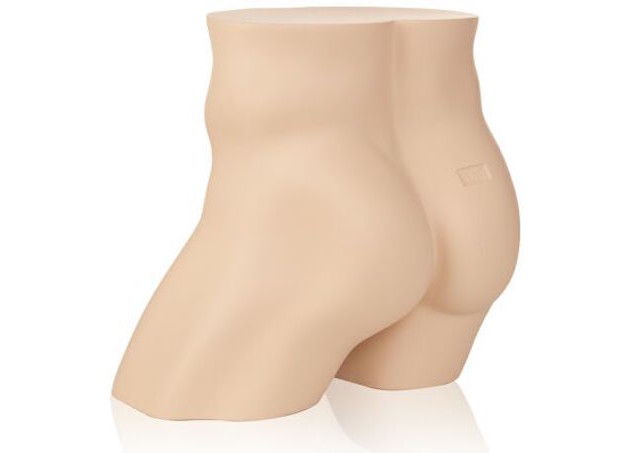
Pinch a mannequin’s bottom
Bite into an onion
Remember something forgotten

I give all these objectives
But you’ll pick and you’ll choose
No gift could prompt improvement
Because you’re already you

The Old Man of the Beach

0

An old man’s face stares at me through rock
His jaw jutting just above the line of the sand
Like he had been buried by overeager grandkids
Who left him there to fossilize

His crown and brow grow everlasting green
And the pores of his weatherbeaten cheeks and jowls
Are pockmarked and yellowed like my footprints
On the surface of the beach below

The roar of surf sings hymns to him
And drapes a green and white scarf around his neck
The sun turns around him, tanning both sides
Stars kiss his hollowed eyes goodnight

We entered the cove via a church-like arch
Hewed from stone by the persistence of the ocean
Perhaps he came long ago and was trapped by the tide
That creeps up upon us too

Many worship the congregation of land and sea
Occupying their hallowed chambers
Then returning to other sanctuaries
But the old man remains, and sees them all
He watches the fleeting white seabirds and multi-coloured backpackers
He watches wind and water and grit and tree
Clinging to each other as they fight for the upper hand
This shore is his cathedral
And his resting place
We can envy his fortitude
Before returning to our gentler beds

If Terror Has Nothing to Do with Islam…

We hear it all the time. Whenever somebody has the bad manners to shout “allahu akbar” before committing murder we hear a chorus of apologists: the killer had nothing to do with Islam. The murderer is somehow automatically expelled from the faith, even though I am sure there must have been some historical Muslims who killed but were still considered good Muslims. The killer is excommunicated through the force of public opinion, even though Western societies allow people to identify their own religion, just as we allow people to identify their own race and gender.

The previous behaviour of the terrorist is deemed irrelevant to any judgement about their beliefs. He may or may not have prayed at the mosque. He may or may not have been able to quote the Koran, or demanded that others be able to do the same. He may or may not have consorted with other Muslims, and been treated as a Muslim up to that point in time. But as soon as he commits murder a magical cord is cut, and he is retrospectively banished from Islam. Not only does he stop being a Muslim, he never was a Muslim. And so, we are denied even the possibility of interpreting terrorism from the viewpoint of religion, because of this insistence that terrorism must have nothing to do with religion.

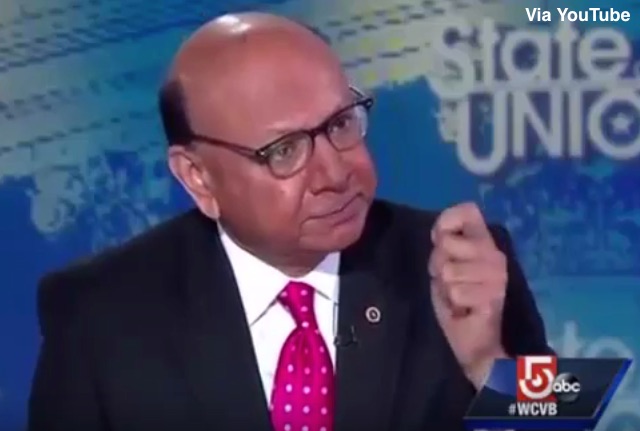
I wish he would have, somebody would have put something in his head that these are terrorists, these are criminals, these folks have nothing to do with Islam.

khazir_khanThose are the words of Khizr Khan (pictured), the man who recently stepped up at the Democratic National Convention to slam Republican nominee Donald Trump. Trump responded with his usual flame-throwing, grenade-lobbing antics, which further upset Khan and the people who think like him. Trump is a jackass, but that does not excuse the arrogance of Khan. Being the father of a dead soldier is not a qualification that entitles someone to pronounce who is, or is not, a Muslim. Nor is being a Muslim sufficient qualification. The followers of ISIS think of themselves as the best Muslims, and best placed to judge the religious virtues of others. Some in the West may applaud a rhetorical technique which begins with “I am a Muslim; he is not a Muslim,” but anyone with sense can see how flawed and unpersuasive that is. It invites an obvious response from those accused: “No, I am the real Muslim, and you are the kafir.”

There have been other ways to apologize for Muslim terrorists. We were told they did it in response to cartoons or books or films they found insulting. We do not hear the “provoked by insults” apology much these days, because it has become impossible to find excuses and scapegoats for all the violence meted out in the name of Islam. But back when provocation and insults were the preferred rationalization of terrorism, the excuse was that it definitely was something to do with religion, and that the terrorists were ‘fanatics’ or ‘fundamentalists’, which is quite different from asserting they are non-Muslims. The argument was that millions of Muslims are entitled to be upset if their opinions are satirized and their prophet mocked, so the violence of Muslims is mitigated, if not fully justified. We hear that argument much less these days, because now we are supposed to believe the opposite: it is not understandable to respond with any violence in any situation, because only a non-Muslim would ever respond that way. And yet, Muslims do engage in violence, at many levels, and every day.

Would Khan tour the country of his birth, to give lectures saying those who commit honour killings are not Muslims? Would he defend the rights of religious moderates gunned down by extremists, saying the moderates were Muslims but their killers are not? Would he actively campaign against the country’s blasphemy laws, where the highest penalty for insulting Islam is – you guessed it – the death penalty? And would he campaign for the repeal of this barbaric law by arguing it is against Islam? Maybe Khan would, if given the same kind of opportunity and encouragement that led him to speak at the Democratic National Convention. But if he did so he would be risking his own life, and he knows it. So who threatens his life, and who engages in all that violence, if not Muslims? Is Khan saying that millions of Pakistanis are merely pretending to be Muslims? And what exactly qualifies him to judge their faith, and prevents them from judging his?

When a guy slashes the throat of a priest, we can still find YouTube videos that provoked them, but they are always of the wrong sort: made by Muslims to encourage the murder of non-Muslims. The incitement to hatred cannot be denied, which means apologists can no longer claim that the inflammatory and intolerant behaviour of non-Muslims is the root cause of Muslim violence. Many tolerant people were gunned down in Orlando, run over in Nice. Realizing the old excuses have been neutered by the truth of Muslim violence, the apologists have resorted to the ultimate rhetorical device, oft adopted by those with closed minds: they will simply redefine words to ensure their meaning supports the desired outcome. They pretend a large group of people includes no trouble-makers, by redefining that group to exclude any trouble-makers. It is another example of how some think language is more important than reality. If a Muslim kills, then just redefine them as a non-Muslim, to logically prove the notion that no Muslim kills! It hardly matters to these linguistic connivers that they have won an argument by turning it into a meaningless tautology.

It is breathtaking that some cannot see the inconsistency in modern progressive arguments. They allow self-described Muslims to be redefined as non-Muslims, because their actions were evil. At the same time, they will agree to the notion that gender is different to sex, because anyone can choose their own gender and there is no wrong choice. How can anyone sincerely believe that gender is a subjective choice of the individual which has nothing to do with the physical truth of their own body, whilst simultaneously asserting that the religious beliefs of a person can be categorized and labelled by a third party? The source of this inconsistency is plain: some people want the votes of both Muslims and the transgendered. They do not care about the absurdities and trouble that must follow by trying to indulge both without forcing either to compromise their beliefs.

With that in mind, I want to propose four other arguments in the style of those who say terrorists have nothing to do with Islam. All these arguments are wrong. By being wrong, it should be plain that some are just picking and choosing the arguments to suit the conclusions they like.

  1. Rape has nothing to do with men. Anyone who rapes is not a man. Hence there is no point trying to tell men not to rape. Attempts to reduce sexual abuse should be focused on rapists, not men.
  2. Paedophiles have nothing to do with family relatives. Anyone who abuses a child cannot be related to them. Hence there is no point trying to raise awareness of abuse within families. Attempts to counter paedophilia should target paedophiles, not families.
  3. Homophobia has nothing to do with Islam, or Christianity, or any other religion that says it is wrong. No homophobe has a religion. Hence there is no reason for any religion to promote tolerance towards gays. Attempts to counter homophobia should be aimed at atheists, not those who have religious beliefs.
  4. Racism has nothing to do with race. If someone exhibits racial prejudices, it is because they have no race. Hence there is no reason to educate any race about racism. All races are equal. In fact, there are no races, so nothing can be done about racism.

These four arguments are nonsensical and wrong. Any decent person would skewer these arguments without hesitation. It is time that the apologists for Muslim violence to be held to the same standards as the rest of society, and have their wrong-headed arguments skewered too. I do not care if the apologists are peaceful, or good Muslims, or the parents of honoured soldiers. The argument that no Muslims are responsible for the spate of current terror attacks is not just wrong, but morally indefensible. It denies responsibility, when every person has a moral responsibility to promote virtue to everyone around them. However you want to label the terrorists, if they mingle with the Muslim community then the Muslim community has the obligation to influence them to be better people. They will not do that by disowning responsibility.

We do not make the world better by averting our eyes from simple truths. That is why we do not indulge men or whites when they complain that not all men are rapists, and not all whites are racist. Of course not all men are racists, and not all whites are racists, but some are. There are also racist blacks and women who engage in sexual violence too. We must confront all evil, whatever shape it takes, and whoever is responsible. Not all Muslims are terrorists, but some are. Any morality that pretends otherwise is morally bankrupt, and should be denounced.

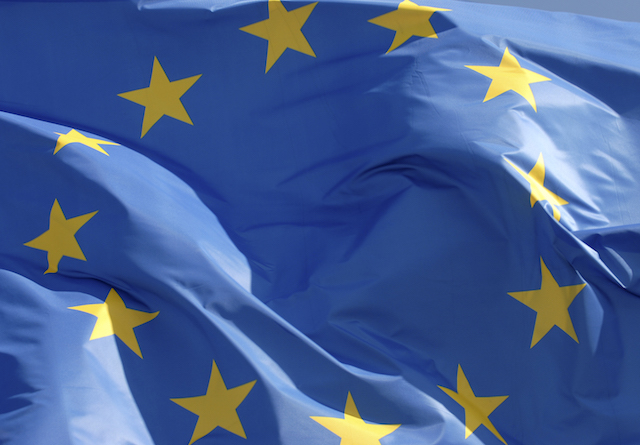
How to Remain in Europe; An Easy Guide to Avoiding the Consequences of Brexit

Brexit has upset a lot of people. They not only lost a referendum, but they feel like they are personally lost. They no longer recognize the country they live in, they do not know their neighbours, their future is ruined, they are alienated and frightened and angry and despondent. If you are one of those people, I have some advice for you. You are reeling from the impact of a decision made by your fellow Brits, but you can turn your negative emotions into positive action that will make you feel much better about yourself, whilst securing your rights as a citizen of the European Union. And you should act now, because this opportunity will not last forever!
You could go on Twitter, or Facebook, or a petition website, and so use the internet to vent some spleen. That might make you feel better for a little while, but it is not going to change anything. Any people you abuse have been insulted before; that strategy did not work. If anything, years of venom and vitriol have hardened the supporters of leave, making them much more stubborn than you. And no matter how many people sign a petition, no government is going to want to rerun that referendum soon, and they certainly will not retrospectively change the rules so the side that clearly won is reclassified as the losers instead. So please do not waste your energy on such hopeless shenanigans. You will only depress yourself and annoy other people. If you feel deeply about preserving your right to move freely around the EU, to work in other EU countries, to be protected by the European Convention on Human Rights and all the other rights that come with EU citizenship, there is one very simple and effective solution. You should move to another country in the EU.

Despite the referendum result, the UK has not left the European Union yet. That will take a while. In the meantime, you can pack your bags, pass through the open borders, and make yourselves a new life in one of 27 countries that have not recently voted to leave the EU. And if none of those 27 countries appeal to you in the long run, there are more countries that will join in future. Just pick one of the 27 countries currently available, live there, and secure your right to exercising even greater choice in future. It is so easy! After all, unskilled workers from poorer countries come to Britain in large numbers, so every wealthy, educated, remain-voting Brit must be able to move the other way.

It is understandable that many of you feel the people in other European countries are wiser, kinder, more sophisticated, more intelligent, better informed, less bigoted, less racist, and more tolerant than your fellow Brits. All those Europeans you interact with on holiday, or via the web, are much much nicer than people who live in godawful towns in the English North that you will never visit, even though nobody has put a border control in your way. On that basis alone, it seems you would feel more comfortable in the company of other nationalities. But also many of you believe the EU benefits by being a massive trade bloc that grinds down African nations, whilst Britain’s economy will inevitably flounder outside. After all, many wise economists and big investors predict decades of financial hardship for Britain, even though they wrongly predicted the referendum result just the day before, causing them to lose billions betting the wrong way. So what are you waiting for? Get out now! Leaving the UK behind will definitely make you happier, and will almost certainly make you richer too! What could possibly go wrong?

If you truly believe the EU is so wonderful, it is clearly better that you move to a country that really wants to be in the EU than spending years in a country which has grumpily chosen to be outside. Get a job in an EU country, and look forward to increased prosperity relative to the chumps who stayed behind in Britain. Old friends will be envious when you come back to visit, as they will witness how much you can buy with your euros compared to their crappy pounds. You believe those countries are much more welcoming of outsiders than the UK, so why would you doubt your right to live in them permanently, even after Brexit is concluded? After a while you can apply for citizenship, and they are bound to accept you with open arms. As the Germans and other European nations love refugees so very much, imagine how glad they will be to see you! If anyone questions your right to live in their country, just say you were in danger of having your human rights violated, and surely no European will argue with that. They will all know about the ignorance and bigotry you had to escape. After all, you were one of the thousands who repeatedly warned your fellow Europhiles about how awful most Brits are!

Of course, you will likely face a few inconveniences whilst you are settling in. You will need new plugs on your electrical goods, because our cunning European cousins do not believe in imposing such high safety standards on their appliances. If you get into legal difficulties, you will need plenty of money for lawyers; the UK spends far more on legal aid than other European nations. Perhaps you will find getting a job a little harder than expected, because of all those national rules and regulations that actually exist but nobody warned you about during our great referendum debate. You may live longer, but you may also pay more for medical treatment; the UK is way ahead of other countries by having healthcare that is 97 percent funded by the public purse.

Morally and culturally you may also find our European cousins are not as admirable as you might like. The Netherlands, Denmark, Luxembourg and Sweden give more foreign aid than the UK; everyone else gives much less. Britain has the toughest laws to prevent cruelty to animals, reflecting a significant difference in national attitudes. The UK has least road deaths; Brits are careful about such matters. And obviously you will no longer be entitled to watch the BBC at a rate subsidized by other British taxpayers, though you could still listen to its world service for free.

And there could be other downsides to moving to another EU country, depending on who you are and where you go. Apparently some feared Brexit because it would be bad for women; I hope they never have to pursue a rape trial in Italy or join the New Year’s party outside Cologne central train station. Others worried about the impact of Brexit on the LGBT community. Those people should not move to any of the 11 EU countries that say same-sex marriage is against their constitution, and they should definitely avoid gay pride marches in Hungary. Supporters of Brexit were said to be racists, so those fleeing prejudice should keep well away from the banlieues of Paris, or else experience ghettos used to systematically exclude non-whites from the workforce. And on the topic of work, young Brits angry about losing their ‘right’ to work wherever they please may want to enquire why 50 percent of young Greeks and 45 percent of young Spaniards are not working where they would like to.

So please go. Leaving the UK will have a few drawbacks but nobody is stopping you. The time for talking has passed; now is the time to act. If you believe the European Union is fundamentally superior to a Britain which prefers to be outside then you must move in order to secure your place in the EU. That is a much more realistic choice than insisting other Brits must give up their democratic rights to please you, not least because actions speak louder than words. The door to the EU is still wide open, and there is no point in demanding a right if you never intend to exercise it in practice.

If you choose to stay in Britain, please do not repeat that hoary old cliché about staying to fight for your country. That would imply you have respect for the people of Britain. Some currently show no respect for the majority that has dared to disagree with them. If you decide this country is not so bad after all, and you would rather get along with your fellow Brits, then I recommend you stay. Despite some increasingly disturbing caricatures, the British people are generally very tolerant. They will show you decency and listen to your point of view if you treat them the same way. So if you want to remain in Britain, let us move on from recent nastiness. Let us settle on our new course and work together, making Britain the best possible country for everyone who lives here.

This CEO Wanted a Debate About Brexit, so I Gave Him One

I was poor once. There are lots of downsides to being poor, and some of them get overlooked. When you are shivering during the middle of a bitter Winter, it hardly seems to matter if your opinions are fairly represented by the mainstream media. Poor people do not get to appear on television as much as rich people do, they are less often quoted in newspapers, they receive less attention on the internet, their opinions are easy to overlook. So when a public debate involves the diverging interests of the poor and the rich, it is easy for that ‘public’ debate to become horribly skewed. We end up disproportionately listening to the views of people who have succeeded in life, whilst taking little notice of those who are struggling. The debate over the UK’s membership of the European Union suffers this division. Polls show that poor people want to leave the EU, whilst the wealthy want to remain. We keep hearing plenty of views from those with wealth and power, and the people who represent them. In contrast the poor are not being listened to, and their insights are not being shared as widely as they should.

The European Union referendum polls show an overwhelming majority of poor people want to leave the EU. Yet our media is dominated by people who have succeeded in life – business people, scientists, actors – telling us we should remain in the EU. The bias should be plain to see. This imbalance is exacerbated because organizations that claim to represent the poor – the Labour Party, trade unions etc – have their own selfish reasons to oppose their wishes. However, many well-meaning successful people reinterpret this common bias as a problem relating to ‘education’ or ‘information’… and they make it very clear who needs to be on the receiving end of their lectures!

One medium for public debate is LinkedIn, the social network for business people. I often use it for professional reasons. It is a good place to engage with people with similar business interests, but it does not provide a representative mix of the general public. To say that the debate on LinkedIn is skewed would wrongly suggest that an actual debate is taking place. As far as EU membership is concerned, LinkedIn is just one selfish propaganda message after another. Posts with titles like “Why the EU Is Good for (My) Business” compete for attention with posts entitled “The EU Is Good for (My) Business (And That Is Good Enough for Me)” and the ever-popular “I Get a Grant from the EU so Obviously the EU Is in Everyone’s Best Interests”.

I joke, of course, but the truth about LinkedIn debate is not a lot better. Trivially selfish reasons to remain in the EU (‘I like holidays and I’m afraid of a future where I might need a visa to go to Spain!’) line up alongside absurdly apocalyptic messages (‘Without the EU there will be war!’), flooding the feed of what is happening on LinkedIn. Nobody in their right mind can think LinkedIn is a sensible place to hold a genuine debate about EU membership. A genuine debate has to involve both rich and poor, because we are all affected by the decision to remain or leave the EU. But poor people who do not like the EU are not users of LinkedIn. Regrettably, that did not discourage Ronan Dunne, the CEO of phone company O2, from using LinkedIn to call for a “properly informed debate” about the UK’s participation in the EU. So I gave him one. And I attempted to do something I am no longer well-qualified to do, by representing the wishes of all the poor people who Dunne will not find on LinkedIn.

Despite asserting the need for ‘information’, Dunne’s argument was drawn from the common litany of pro-EU talking points that have become the norm for wealthy successful people who are no longer conscious of how they talk down to everyone else. If you make assumptions about Dunne’s argument you will not go far wrong; he said the EU is good for (his) business and the economy. Dunne’s slight variations on a theme included a casual mention of the downsides of EU red tape, and he worried about relations between Northern Ireland and the Irish Republic if they were not both in the EU. But that was all Dunne argued; his lecture was neither informative, nor balanced. You can read Dunne’s argument here, but you will not find it illuminating. What stood out in my mind was two things: the comical absurdity of one assertion, and the failure to mention how the EU impacts Britain’s poor, even though some of them will be O2 customers.

…I certainly don’t think it’s for businesses to tell people how to vote.

Dunne actually wrote that. Does he think the same number of people would read his post if it did not come from the boss of a big business? I think this quote sums up the way successful people lose perspective when talking down to everybody else, so I responded to it.

“I certainly don’t think it’s for businesses to tell people how to vote,” writes the CEO of a business in an article telling people how to vote.

I could have written more, but why bother? I am not the CEO of a big business, nor a nobel scientist, nor a famous film star. I have only been moderately successful in life. All I bring to this debate is the memory of what life is like for those who do not succeed, and how hard it is to climb from the bottom rung of society’s ladder. I never expect many people will pay attention to what I write, even though I am keen on genuine public debate. To Dunne’s credit, he did respond. But he did not respond wisely.

Eric – I write as an individual with an opinion, keen for there to be a proper discussion on this a hugely important question. In no way inconsistent with the view that it’s not businesses role.

In short, Dunne doubled down on a disingenuous argument. He repeats his desire for a ‘proper discussion’ despite picking a terrible vehicle to host that discussion. Worse still, anyone who has been powerless understands how unlikely it is for the CEO of a big business to have a ‘proper discussion’ with anyone beneath them. I have spoken to a few CEOs of big businesses, and ‘proper discussions’ were the exception, not the norm, because they always had more power than me, and most CEOs are prepared to use that power. So what are the chances of Dunne engaging in a proper discussion that also appropriately includes the opinions and experiences of the poorest Brits? I tried to give Dunne the ‘proper discussion’ that he deserves.

People don’t read your post because you are an individual with an opinion; you can’t be so unintelligent that you think otherwise. If you were just an individual with an opinion you could have used a pseudonym and seen how few people would have noticed you then.

As for the discussion, you provided little, and encouraged none. You mostly focused on the ways a single EU market benefits your business. That is another reason to reject the pretense that you are just an individual giving an individual’s opinion.

If you want a proper discussion perhaps you would kindly explain why voters should prioritise the interests of wealthy successful educated people like you, who benefit greatly from the EU. I would rather we focus on the interests of poorly educated, low paid Brits who suffer terribly as a result of having fewer job opportunities, downward wage pressure, greater competition for housing, and all the social challenges resulting from immigration when we know immigrants tend to cluster in areas that are already prone to poverty.

Put simply, why should we follow your lead by only talking about the ways that EU membership makes rich people like you richer? Why don’t we talk more about the ways the EU has made many poor British people even poorer?

A properly informed debate would require us to recognize the pros and cons of each option. I don’t think you encouraged that. You listed some genuine benefits of EU membership, whilst neglecting to mention that individuals like you receive the lion’s share of those benefits. You mentioned some trivial downsides to EU membership, but none of the important ones. Now that I’ve mentioned the genuine and important reasons that lead millions of poor Brits to want to leave the EU, do you care to state an opinion on why those people’s views, and the quality of their lives, matters less than being able to cheaply recruit skilled European workers and thus save yourself the expense of training Brits to a higher standard?

I have drawn your attention to the fact that millions of your customers are quite probably worse off as a result of the EU’s influence over the UK. They are no worse ‘informed’ than you; their information comes from their actual experience of life, and you should not look down upon that. I have also questioned why it is of ‘benefit’ to Britain that businesses like yours choose to recruit skilled workers from overseas in preference to developing the skills of thousands of Brits who want good jobs but have never received the educational investment needed to realise their potential. Now that I have done this, do you care to engage in a real and proper discussion, or will you stick to vapid one-sided propaganda? Will you explain to all of us who intend to vote for Brexit why protecting the interests of the poor matters less than enriching you and your business? Or would that be the kind of genuine, unlimited, balanced and informed debate which is too risky for you to actually participate in, because of the potential damage to the reputation of your business?

Instead of allowing Dunne to talk down to me, I talked to him as an equal. There has been no reply, and of course there was never going to be a reply. ‘Discussion’ is a euphemism; it means the powerful speak, and everyone else listens.

This one-way conversation means I have listened to plenty of successful people repeating selfish arguments about foreign travel and EU grants. I have heard how British businesses prosper by selling to foreign markets whilst keeping wages low and hiring from abroad to avoid the cost of training British people for better jobs. I have heard all the silly arguments that Brexit will lead to unemployment for millions, a massive recession, huge government cuts, a collapse in housing prices, a crisis for the NHS, increased terrorism, a rise in illegal immigrants, the end of human rights in Britain, the secession of Scotland, and war with our European neighbours. After listening to all that, I will vote for Brexit. I believe many British people will ultimately benefit if we leave the European Union. And I believe this even though Brexit would be contrary to my personal interests.

Life is not just about making money, having holidays and consuming goods. And I do not live in perpetual fear of the scare stories promulgated by our society’s most powerful manipulators, especially when their selfish motives are so obvious. Freedom is important, and so is social cohesion. The EU has repeatedly demonstrated that it is an enemy to democracy. Just as importantly, the adverse social costs of unlimited migration of workers does most harm to the poorest individuals in our society. These are the reasons to leave the EU. We must trust ordinary people to choose their government, instead of preferring the supposedly benign dictatorship of unelected bureaucrats. And we must refocus our attention on developing the talents and improving the lives of all British people, instead of submitting to a bogus calculus which says GDP growth is paramount, even when most new jobs are going to immigrant workers.

Businessmen like Dunne say that it is in Britain’s interests to be in the EU. I say the interests of his business need to be realigned to support the interests of all the people who already live in our country. The elites that run this country should be made to listen to the millions of ordinary people who suffer because of the EU, and they should be forced to concentrate more resources on developing the talents of British workers instead of lauding the advantages of buying in skills from abroad. The only way to ensure both is to vote for the United Kingdom to leave the EU.

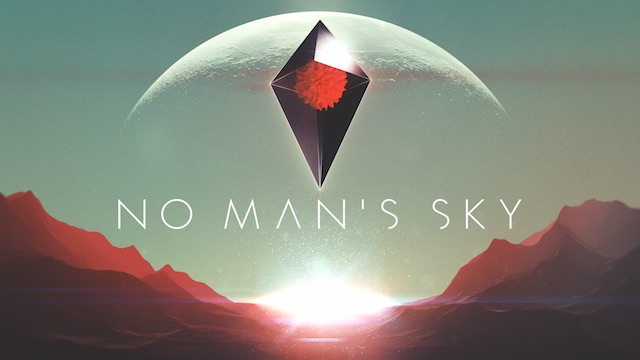
The Messed-Up Marketing of No Man’s Sky

The release of hotly-anticipated video game No Man’s Sky has been delayed, and the reactions of some people have been absurdly over the top. A few imbeciles even issued death threats to the journalist who broke the story, Jason Schreier. If life was fair then Schreier would get a medal: he forced the truth from NMS makers Hello Games and their colleagues at Sony. Any business deserves criticism if they take money for pre-orders, but do not share with the public the certain knowledge that their product will not be delivered on the date currently being advertised. I am not the sort of person who thinks video games as so important that they are worth killing for, or even so important that they are worth getting angry about. But marketing is all about managing the emotions of customers, and this sorry episode does at least demonstrate what a terrible job Hello Games and Sony have done of marketing one of this year’s flagship games. There are reasons why some self-described ‘fans’ are increasingly upset, and one important root cause is the disastrous communications strategy adopted by Hello Games and Sony.

I have no doubt that NMS will be a big success, and generate tremendous revenues. Terrible marketing will not destroy a star product, whilst the best marketing would struggle to breathe life into a dead dog. The basic concept of NMS – 18 quintillion explorable planet-sized planets in a universe that looks like the cover of a science fiction book – is so enticing and novel that I believe the game will generate healthy returns for its makers and for Sony, even if there are some problems with execution and marketing. But that is the heart of my argument: the concept of NMS is so appealing that there is no need to stoke expectations with unhelpful and unnecessary hype, no need to mislead, or overpromise, or make all the other mistakes that Sony and Hello Games have made with the public communications for this game. They have a potentially great product in the pipeline. So they should shut up and deliver it, instead of tarnishing it with their amateurish approach to engaging customers.

To some extent Hello Games has been unlucky, in the sense that they could not have anticipated the extraordinarily positive reaction to the NMS demo at the E3 trade show in 2014. But having seen that reaction, the smart play would have been to shut up and keep quiet, instead of further stoking the passions of fans who were not conscious they would be waiting over two years to play the game. Two years is a long time, especially bearing in mind the kinds of people who buy video games. During that period Hello Games have made every stupid mistake possible, from repeatedly saying the game was coming ‘soon’, to going on major television shows and hanging out with celebrities in order to further increase the buzz surrounding the game, to publicizing a launch date that was much later than anyone expected, to still failing to deliver on time.

The worst mistake is Hello Games’ haphazard engagement with the public, which means much of the surrounding publicity has been semi-outsourced to self-appointed fans. At date of writing the ‘news’ section of the official NMS website says nothing about the delay to the game’s delivery, though you do not have to look far to see the old, wrong delivery date being repeated alongside various promotions of pre-order packages that have boxed the game with overpriced toys and comics. In contrast, the ‘about’ section does point to the NMS subreddit, because what could go wrong by allowing the lovely level-headed and highly mature people who dominate Reddit to become the major source of updates and speculation about your product?

Sean Murray of Hello Games is clearly no fool, though he may lack useful experience at communicating with the public. At times Murray is obviously uncomfortable with being in the public eye; I cannot think of his interview with Stephen Colbert without visualizing the cringing way Murray bowed his head forward and stooped over as if he was trying to make himself smaller. Murray has sometimes talked about the goodwill of fans, and he is astute to do so. As Murray pointed out, the criticisms received from some quarters will matter less if there are many other people who feel goodwill towards you. But Murray should also reflect on the historic Chinese method of torture and execution that we call ‘death by a thousand cuts’. Murray and his colleagues repeatedly inflict small but avoidable wounds. They are not a thousand-fold, but they keep adding up. So whilst Hello Games have not killed their game, they have injured it.

Instead of reflecting on the goodwill that NMS still retains, and which will continue to be evidenced by diehards around the internet, Murray should think about the goodwill expended by every careless stumble, every pointless slight, every unforced error, especially as most of them appear to be motivated by money, glory, or both. If you have a million fans you can afford to lose a fan here or there. But if you keep losing fans then soon you will find your support has diminished significantly. And it is not hard to think of how Hello Games has repeatedly taken fans for granted, when they could have made different decisions and inspired even greater loyalty.

  • Differing release dates are unquestionably prompted by marketing strategies designed to maximize sales. But when a British studio releases a game that fans have been waiting two years for, and will buy irrespective of any marketing material displayed in their local game store, is it really necessary to force British consumers to wait an extra three days to download their pre-ordered purchase, compared to gamers in the USA?
  • Maybe some people will buy a game because it attracts the attention of Steven Spielberg, Elon Musk, and Kanye West. But not me, and not many others. So if you need to work 14 hours a day to finish the game on schedule you should expect no sympathy if you also pump up your hype machine by making time to give various celebs an exclusive demo of your overdue product.
  • All that stuff about the lore of NMS is bullshit, and the makers must know it. Some fans will also see through it, and shake their heads at the comic that is being used to extract even more money from kids who do not know better. Hello Games started making a game and, years later, a few guys who routinely profit from SF tie-ins were drafted in to come up with some kind of explanation for why the game is the way it is. This is a graft-on, an afterthought, a rationalization. And the worst thing is that we have to wait until the game is released to find out what this trivial ‘lore’ is, whilst knowing it will lessen the space for fans to dream up their own imaginative explanations for what they discover in the game.

The last point also touches on an important way that the makers of NMS have failed to understand their market. Time and again we have been told the game is inspired by science fiction. Fine. I like science fiction. But not everybody in the science fiction playpen gets along with everyone else in there. Selling to one does not mean selling to all. The superficial understanding of a casual fan or business person might lead to the erroneous conclusion that all SF fans read comics, all buy the merchandising toys, all watch Star Trek, all read novels with covers by Chris Foss. But the truth is that hardly anyone knows who Chris Foss is, slightly more have read the novels with his artwork on the front, many of them have also watched the latest Star Trek film, and the teenage comic readers that saw the Star Trek film have no idea what Foundation is, and no interest in the other SF books that are supposed to have inspired NMS. So which of these SF fans is NMS aimed at? Can anyone in Sony or Hello Games even answer that question? Or do they treat SF fans as a homogenous lump, in the way that Hollywood often does? Hollywood can get away with treating SF fans like that because the fraternity can be relied upon to pay 10 bucks for a two-hour movie, just so they can talk about it later. Paying 60 bucks for hundreds of hours of gaming is a far less obvious pitch.

Have the majority of the SF community even noticed that NMS is coming? If not, then why does Murray sometimes talk about the classic SF books he has read… and hence inadvertently signal that he probably has not read that many? Nobody would think less of Murray if he presented himself as a nice guy who spends a lot of time developing innovative games, and so never had much time for books. But for reasons that baffle me, Murray seems intent on presenting himself as a card-carrying stalwart of SF fandom, even though he is certainly too busy to read through all the good, bad and indifferent stories that an über-fan must plough through every week. It is sufficient that this game will be sold to people who like to play video games. Some of the links to SF fandom seem motivated by pushing gimmicky merchandise instead of genuinely appealing to the tastes of hardcore SF fans.

And therein lies another sin committed by Hello Games. They created an open universe. SF fans love to populate universes with their own ideas. They write fan fiction, make fan films, dress up and turn themselves into the characters they love. But instead of embracing and encouraging the potential for fan fiction, the insistence on the top-down delivery of NMS ‘lore’ has diluted the potential for good fan fiction during the long wait for the game’s release, and damaged the likelihood of any emerging afterwards. If Sean Murray wanted to write a game with a story, he should have given his game a story. Attaching a lore is the worst possible compromise – it limits the way fans might explore the back story and origins of the game, but creates no characters for other fans to build upon. So why create a ‘lore’? To make a few extra dollars by selling a crappy comic that will soon be forgotten by the people who spend their time actually enjoying the game?

Bad marketing decisions have been made at every turn. Lots of opportunities have been missed or messed up, from managing expectations about launch dates to engaging in constructive conversations with the public to formulating the narrative that will surround the game. Hello Games appear to lack the professional skills to engage with the public. That is understandable; they are a small business. But if their colleagues in Sony have helped, it is hard to tell how.

Maybe this game is too different, and the hype too extreme for either business to have properly thought through the ways they should manage and connect with their market. Their marketing playbook looks like that applied to many other games, but the messages are confused, timid, contrived, and fail to embrace what makes NMS so special. The game will likely be successful, but with the right strategies for outreach – to the SF community, to social media, to the people who are more excited by the maths behind NMS than by the tin models packaged with it – the taste of success could have been much sweeter. Nobody wants to make people angry, even if the angry mob is populated by silly, unreasonable people. Sony and Hello Games have made a lot of people angry because of the way they have marketed No Man’s Sky. They forgot that the essence of marketing is to encourage positive emotions amongst their customers, not to ramp up desires that lead to disappointment.