
Home Blog Page 34

Derren Brown: Magician or Charlatan?

Stage and television magician Derren Brown is something of an enigma. That is not to say his ‘magic’ or his stage persona is enigmatic. It is enigmatic, but there is no such thing as magic. Enigma is the path taken by the con artist that wants to entertain. There is only trickery and the presentational flair to make the perfectly possible seem like an aberration of nature’s laws. Brown is good at both. He is talented at sleight of hand. He is talented at manipulating individuals and using suggestion. He has the storytelling skill to gild a simple illusion with half an hour of anticipation. Magicians like Brown are inevitably enigmatic by necessity, if their illusions are to be entertaining. But the enigma of Brown runs deeper than showmanship. Brown sometimes does things that are far from necessary. In particular, he has a wonderful talent for exposing sham, when he wants to. At other times, he is the opposite. He can wrap up the most straightforward of tricks with pseudo-scientific codswallop. So what is Brown: president of debunkers or crown prince of bunkum?

As the opening illusion for his new television series, Brown correctly ‘predicted’ the numbers to be drawn by the National Lottery. I say he ‘predicted’ the numbers because, of course, he did no such thing. He just implied he had predicted the numbers in advance, waited until the numbers were drawn, then used some simple deception to reveal a previously hidden ‘prediction’ which perfectly corresponded to the lottery draw. All of that is fair enough. It is yet another variation on a very old theme: “think of a number, don’t tell me, I’ll write it down… what number did you think of?, look at the number I wrote on the paper… wow!!” What made the trick slightly different was that Brown promised to reveal how he did the trick. The disappointment was that, in the follow-up show, he did no such thing. No secret was revealed. He just talked nonsense and showed some other tricks that had nothing to do with his original illusion.

Brown claimed to have predicted the lottery numbers using a combination of automatic writing and the wisdom of crowds. The prediction was not revealed until after the draw, because Brown was not allowed to. Two straightforward observations should be made. To begin with, the National Lottery cannot stop people from predicting the National Lottery and telling everyone their prediction. Let me give you an example. 8, 10, 22, 27, 30, 39. That is my prediction for the next National Lottery. If it turns out wrong, then roll it over to the next lottery and keep on doing so until eventually it turns out right. Now everybody knows my prediction, the National Lottery’s secret police force should be banging on my door, desperately trying to shut me up, though even they do not know what the results will be… and hence should have nothing to fear from my tomfoolery. Wiser people in the audience would also have noticed Brown was not daft enough to tell the particular ‘crowd’ of gullible people their collective prediction. He added up their numbers, divided by the number of people involved, but did not share the ‘prediction’. For all we know, he added up their numbers, divided by the number of people involved, subtracted twelve and multiplied by the number he first thought of, before throwing his irrelevant arithmetic in the bin. The important part of the trick was not to reveal the prediction prior to the actual lottery draw, even to the people making the so-called prediction.

All of this is fine enough, but Brown publicized himself by saying he would reveal how he performed a trick, and then did not reveal how he performed a trick. What a very tedious lie, neither magical nor enigmatic. You might as well applaud makers washing powder that claims to clean clothes whiter than white, but actually leaves them grey.

Perhaps realizing how much of a risk he was taking, Brown even gave a comical, and equally irrelevant, spiel about how he did NOT do the trick. He did NOT do the trick by having an insider rig the National Lottery. Presumably the denial was meant to deceive those people who had seen through his ‘wisdom of the crowds’ codswallop into thinking the ‘wink, wink, nudge, nudge’ denial was the real revelation. But it was not a revelation either. It was perfectly accurate denial in that Brown is obviously not the ringleader of a conspiracy to rig the National Lottery. Any insider willing to rig the National Lottery, and ruin their career in the process, would expect a much bigger payout than could be offered by Brown’s television production budget. On top of that, if any person seriously implied that the lottery could be tainted, then Camelot, the business that runs the lottery, would sue that person to the point of extinction. Brown is telling the truth when he says he did NOT rig the lottery draw. It is also true that the moon is NOT made of cheese, that the streets of London are NOT paved with gold, and that I am NOT a monkey’s uncle.

Brown augmented his program by showing the ‘wisdom of crowds’ doing a reasonable job of guessing earlier lottery draws. In each example, the likely explanations of how the trick was performed are mundane, and have nothing to do with the final illusion. Based on previous tricks, Brown could have simply performed the stunt with multiple groups, and only shown the results that came out well, or he would have planted one or two assistants into the group, and had them do some mental arithmetic and submit numbers that would alter the group’s totals and hence decide the result. My guess is he used the latter technique. A similar trick in one of his stage shows involved audience members – probably including Brown’s helpers – writing ‘random’ numbers that would total to give a predetermined answer.

Brown said he would reveal how the trick was performed, but he did not do that. The most common explanation for how the trick was performed involves TV camera trickery. That seems very plausible, given the trick was performed in front of a camera crew but not an audience. Why else would Brown, stage magician, be scared of performing in front of a live audience? What clinches it for me is that, in the early shorts, the leftmost ball appears to be on level with the other balls. Just before the prediction is ‘revealed’, this same ball is distinctly higher than the others. Somehow, it is now squeezed between the side of the stand and next ball to it, leaving a little gap underneath it. How did that happen? Was there a minor earth tremor, or a very major quantum fluctuation? It is more likely that somebody, hidden by a split-screen camera trick, was in a bit of a rush to change the balls during the seconds between the lottery announcement and Brown turning them around to show the ‘prediction’. The balls had to be placed tightly within a stand so there would be no clue from their having rolled around. Unfortunately for Brown these balls were a little too tightly packed in this particular stand, causing the leftmost one to stand proud and reveal how the trick was performed. The real trick was in creating the illusion of a handheld camera filming the entire event, by cleverly swapping between a shot of a real handheld camera and one that had been placed on a stand and programmed to perform predetermined motorized movements that mimic the shakes and judders of a human cameraman. Why do this? Because then you could film a precise match between both halves of the split screen, whilst using the shakes and twitches to help hide the transitions where the splitscreen is in use.

Instead of making any real revelations about his latest trick, Brown talked about a hitherto unknown ‘deep maths’ and encouraged the audience to believe in superstitious nonsense. He was a whisker away from endorsing a latter-day variation of numerology. If he had to fill another ten minutes of airtime, he may have started talking about the innate clairvoyant powers we all possess, and all sorts of other balderdash. Compare Brown’s deception in this show to some of the performances he has given previously. In the past, Brown has used a masterful combination of truthfulness and powers of suggestion to undermine nonsense whilst generating results that both entertain and startle. Brown has persuaded people he can talk to the dead, by picking up on hints and reactions from the audience. In doing so, he prefaced his act with an explanation that he has no special powers. Instead of listening to the dead, Brown said he was reading the audience, but many in the audience rejected this truth and preferred a supernatural explanation for what occurred. In another show, Brown convinced people there was foolproof system for gambling, only to later reveal that he had bet every possible option and only highlighted the examples where he won. For example, he showed how to toss a coin so you get ten heads in a row. To do it, you just toss a coin repeatedly until you get a lucky sequence of ten heads. No mystery, only probability. In Brown’s case, it took nine hours of filming before he produced the desired sequence on film. In The Heist Brown showed how a skilled manipulator can pick the most suggestible people from a group, then train and educate them to behave differently and respond to subconscious stimuli. The end result was that three out of four ordinary people performed a hold-up which they believed was real at the time. Though disturbing on one level, the results are well known to any student of human nature. Whether the Milgram Experiment, suicide bombers or the Manson family, there is a litany of demonstrations about how ‘ordinary’ people can be influenced to do the most terrible of crimes. In all of these shows, Brown has revealed himself a talented enough storyteller to not need to lie in order to entertain. Or rather, he can let the audience in on how the lie works, and intrigue and amaze even more as a result. It may not be magic, but is much more impressive.

Force To Be Reasoned With

Alastair Darling, the UK’s Chancellor of the Exchequer suggested something laudable, and unusual, and despicable, yesterday. He suggested that legislators should not pass laws that are unenforceable. That is laudable, because we can all agree that a law that cannot be enforced is merely oppressive, and serves no good purpose. It is unusual because legislators rarely concern themselves with enforcement. They often pass laws which could never be properly enforced, simply to make it seem like they are taking action and appeasing the public. And it is despicable because he used the argument to justify not taking action in a situation where action clearly is possible: restricting financial rewards that people receive for the work they do. Darling is a mainstay of a UK government that has had no problem whatsoever with interfering with how much financial reward people receive from work. It has done it time and again, for reasons that vary from pretty reasonable to pretty terrible. Examples include mandatory minimum wages, increased income taxes and laws to prevent discrimination in pay. So this government has no problem trying to determine how much people should earn, and seeking to enforce it. Enforcing a rule that says someone should not be paid too little is just the mirror of enforcing a rule that says someone should not be paid too much. It you survey and inspect and find people paid too little, you can survey and inspect and find people paid too much. Yet Alastair Darling defends inaction based on the supposition that there is now a super-elite, who cannot be controlled by the government in the way that government controls the rest of society. If you want to join this super-elite who sit above the law, do not become a terrorist, or a cop or an even an MP. Terrorists and cops and MPs all get subjected to laws they do not like, at least sometimes. Darling has clarified the legal status of some in our society: to sit above the law, in a place where law cannot reach you or curb your dangerous and selfish actions, you should become a city banker.

In short, Darling argues that laws to cap bonuses for bankers are unenforceable because of two factors. The first is that bankers are clever, and powerful, and resourceful, and they will work around any law to find a way out of it. Of course they will try, but the fact that people try to work around laws does not mean the government gives up trying to pass laws. There are a myriad of laws relating to tax, and a myriad of schemes to work around them, and yet recognizing that people have the incentive to work around those laws has never been a reason for governments to give up on taxing people. In the UK, powers are misused to spy on people for petty offences. Powers supposedly introduced to prevent terrorism have mostly been used to stop people putting their bins out at the wrong time. However, Darling seems inexplicably squeamish about using similarly strongarm tactics to police bankers, even though reckless gambling within the world’s financial system is of more harm to society than disposing of household waste in an inconsiderate manner. Have recent events not shown that bankers can do more damage to our society than any terrorist could ever hope to? If we can live in a society that spies on people to enforce laws about bins, I see no reason to then protect the freedoms of city bankers intent on evading any law designed to prevent excessive bonuses.

Darling’s second explanation for the unenforceability of a banker’s bonus cap is that bankers are mobile chappies, and will simply move around to the country with the least restrictive laws. That is true, so any action needs to be global. It needs to be global just like the UK government is acting forcefully for global consensus about tax evasion. It needs to be global just like the UK government is acting forcefully for global consensus about money laundering. If the UK government can be proactive in these spheres, why does it assume global consensus is impossible for bankers’ remuneration? They ride the same international streams of money as the people who evade taxes, or the people who launder ill-gotten gains. Let us imagine the next private conversation Darling has with Charles Anarché, the tinpot dictator of a (fictional) place known as Libretaxville:

Darling: (furious) This is outrageous! You hide money launderers and you hide tax evaders? And all to profit from the money they bring to your ridiculous little country. You’re destroying the hope of international consensus and international policing of crimes that hurt all of humanity! How can you do such a thing? How can you be so selfish?

Anarché: (pleading) I want to change the law, I really do. But I cannot. If I change the law, then all the money launderers and tax evaders will move to Taxfreistadt, the place ruled by my cousin, Denzil De Catastrophe.

Darling: I don’t see how you can even want such people in your country.

Anarché: Come, come. We want them because they have money. My country is poor. We have very little industry. Our wealth depends on this small number of rich people who live and work here.

Darling: But can’t you see, arguing that they would go somewhere else is just an excuse not to do anything? It is an excuse to keep on profiting by harbouring these people.

Anarché: Of course it is an excuse, and a very good excuse. If anyone should profit from having these people around, I should profit… I mean my country should profit from having them around. Any country that does not give safe haven to these cheats is just hurting themselves.

Darling: But the world would be so much fairer if all governments pulled in the same direction, and cooperated, instead of being held to ransom by petty little regimes like yours.

Anarché: And yours.

Darling: I beg your pardon?

Anarché: And yours. I am referring to bankers who decimate our economy because of the rewards they get for taking enormous risks. We are not a rich country who can borrow our way out of trouble, like you do in the UK. When the bankers lose, we lose. When people stop buying our exports, my people go without. Unlike the bankers, we do not have a huge pile of money and assets to cushion the fall. When our economy falls, my people hit the ground hard.

Darling: But you can’t stop bonuses for bankers on your own. You need international cooperation for that, and you will never get it.

Anarché: Exactly, Darling. Exactly.

What appalled me about Darling’s rationalization for inaction was that there are so very many laws that are unenforceable, and yet enforceability is rarely stated as a reason not to pass a new law. To demonstrate, here is my personal top five of unenforceable laws.

1. Data Protection

Somebody in government passes a law that says your personal data will be held securely, will not be held excessively, will be treated with respect blah blah. Of course, nobody actually polices this law. Everyone is supposed to abide by it, but the only way of being caught doing wrong is to do something so grossly stupid that either the victim finds out or there is a national scandal in the press. Hence even the government regularly breaks its own laws with its sloppy handling of citizen’s personal data. In short, the only major impact of data protection law has been the proliferation of legalese that people are supposed to read before they waive the wafer-thin rights granted by laws that are unenforceable anyway.

2. The Working Time Directive

This is my experience of the Working Time Directive, the European rule that is meant to protect workers from regularly working more than 48 hours a week.

Memo

You may be aware that under the Working Time Regulations average working hours should not exceed 48 per week over a reference period of 17 weeks. It is expected that few people will work in excess of these hours over the course of a year, but some staff may be expected to work in excess of these hours on a short-term basis when necessary. Express consent will be sought for any adjustment to your working hours should they exceed the limits contained in the new regulations.

The point of this memo is that if you work less than 48 hours on average, then there is no problem, and if you work more than the hours on average, you need to sign a piece of paper and give express consent that says you want to do that. Note the absence of a third option – to not work more than 48 hours on average. Imagine anybody trying to insist on their rights in a workplace where HR has this mentality. Then imagine people who want to be stuck in a dead-end job, with no prospects of promotion or pay rises, and every likelihood of being first on the list of any redundancies. Thank the UK government for making sure the Working Time Directive was unenforceable: they pushed hard for the ‘flexibility’ of allowing workers to ‘opt-out’. If no opt-out had been permitted, as other European countries wanted, then there would have been a chance to enforce it, but not when it is easier to simply bully workers into signing away their supposed rights.

3. Taxes on Illegal Drugs

Illegal drugs are, well, illegal. People are not supposed to have them, buy them, sell them or take them. Yet some US states expect people to pay taxes on illegal drugs. For example, Tennessee’s Unauthorized Substances Tax requires anyone in possession of a certain quantity of contraband to buy a tax stamp and affix it to the drug. Not surprisingly, most people who break the law by having illegal drugs also break the law by not paying their taxes. Which is the point – to use tax as a back-door mechanism that allows the state to profit from illegal activities. This law is not so much unenforceable, as a way of legitimizing greedy governments that want to earn a profit every time a criminal is caught. They should be more concerned with the fact that by doing so, they also join the ranks of those profiting from the manufacture and supply of drugs. Legalize it or tax it, but doing both is morally indefensible.

4. War Crimes

It is an appealing idea that there is a pan-national law that sits above all, disembodied from any force or agency responsible for enforcing it. It is appealing, but a fiction. Laws have to be enforced by somebody, and invariably that somebody has power over the person on the receiving end of the punishment. That is why war crimes are by and large targeted at two kinds of offender: people on the losing side, of any rank; and people on the winning side, of low rank. The worst possible offender is neither a person of low rank nor a person on the losing side. The worst possible offender would be someone on the winning side in a position of high authority. They have authority, hence they can be the driving force behind the most large scale crimes. They were on the winning side, the side with the greater power to do more harm than the enemy, and hence the side with the potential to commit more crime. The greatest war criminals are unlikely to be discovered, never mind tried, never mind punished. Whilst it is good to see bad people punished for atrocities, we would be wise to keep in mind that punishment depends on power, and people in power are not subject to laws like everyone else, whether they are bankers or warmongers.

5. ‘Terrorist’ Hackers

Governments do not want bad people hacking its secure computers. Sensible solution: make sure the computers really are secure. Stupid solution: punish people you catch hacking your secure computers that turned out not to be so secure after all. If a government wants to punish any really serious hackers, people like organized criminals, terrorists and agents of foreign governments, they will find that all of them are working in places where they cannot, or will not be extradited from. That is because they are serious people, and either are hidden in lawless states or protected by enemy states. The only kind of terrorist who can be caught by a law like this is the kind that sits in a bedroom in an allied nation with an extradition treaty, looking for evidence of UFOs, because of the obsessive aspects of his personality. And that is why Gary McKinnon is the closest the US government will get to using unenforceable laws like this against a terrorist. This law is not about stopping terrorists, though it is about acting tough when ‘national security’ was shown to be anything but secure.

To summarize, let us clarify what governments think they can enforce. Governments think they can enforce laws to stop you being worked to death, but do not discourage your employer from using any and every legal means imaginable to encourage you to work yourself to death. Governments think they can enforce laws to generate tax revenues from criminal activities that they struggle to prevent, and do so without any sense of irony. Presumably they even budget for the revenues and would hence boast about the healthy state of their finances if crime went up. Governments think they can enforce laws to stop nasty terrorists hacking computers important to national security, so long as the nasty terrorists are actually lone individuals who live in a suburban house in a peaceful law-abiding nation. Governments think they can protect your personal data, by insisting that everybody using your personal data does only good things with it, without needing to make the most meagre attempt to police these laws. Remember that these were the same governments that could not adequately police their own data on their own computers and stop them from being hacked. These are also the same governments that regularly lose the personal data of millions of citizens as a consequence of penny-pinching, incompetence and carelessness. Governments even pretend to enforce laws against themselves, an idea as laughable as expecting Gordon Brown to punch himself in the face every time he makes a bad decision (although, at times, Brown looks so beaten you could almost imagine he does). Observe how hard the UK government tried to wriggle out of its own laws to hide the reprehensible but petty abuse of MP’s expenses. Now imagine how hard they would work to hide something really serious, like lies about wars.

Now we should summarize what governments supposedly cannot enforce. They cannot enforce laws that would discourage individuals from being rewarded for taking enormous risks which could lead to the destruction of the global economic system and hence plunge the world into ruin. That is enough to make you wonder why we need governments at all.

Crazy Cliches of Space Opera TV

Star Trek (TOS, TNG, DS9, VOY, and ENT). Battlestar Galactica (original and reimagined). Andromeda. Firefly. Space 1999. Blake’s 7. Babylon 5. Stargate SG-1. If you are still reading, there is a good chance that you, like me, have wasted some time indulging in the delights of space opera. Space opera is television that classifies itself as science fiction, but which belongs to a sub-genre so popular people forget that other kinds of science fiction are shown on TV too. Space opera, as the name suggests, tends to be set in space, or at least involves characters that pop to the next star like you might pop to the newsagent’s. In space opera we see the stories of the same group of people every week. Unlike soap opera, those stories are not confined to one planet, never mind a single street. The characters may visit different planets, but there is good old oxygen to breathe on every one. Which leads to my next point. As you know already, the cliches of space opera have been around for a long time. They were established not when Gil Gerard was Buck Rogering the 25th Century, but when Buster Crabbe was Buck Rogering pre-WWII America. Being so well established, I hardly need to tell you the best known cliches. Spaceships never fly upside down. Everyone speaks English, unless they speak Klingon, and even the Klingons speak English to each other when nobody else is around. You can hear sound in space. Rugged human males are considered surprisingly sexually attractive by females from alien races. The list of cliches is long, and you know plenty of them already. But probe within the exoskeleton of sci-fi cliche, and you will find even more cliches underneath. Here are a few of my favourites.

Deep Space, Deep Underground

Think of space opera and you tend to think of… space. That much is obvious. Or is it? No space opera series can afford to set every episode in space. Sets are expensive, and once you have done a few planets that look a bit foresty, a bit deserty, or a bit like a disused factory just outside Luton, you still need a couple more episodes that get the crew out of their spaceship. Whether it is caverns or corridors, no space opera writer can resist the temptation to set a few cheap stories underground. Best of all, claustrophobic plots also mean you can do with even fewer extras than usual.

Clothes Maketh the Alien

They have great clothes in the future, made with advanced sweat retardant fabrics. The clothes are so great, nobody ever needs to change. In the future, people wear the same outfit every single day. Heck knows what they wear on laundry day. You might imagine the ones with uniforms just have lots of tunics and pants that all look the same, but the ones who dress casual have no such excuse. The only people with two outfits are Captain Kirk, who has a regulation uniform yellow sweater, and an alternate green sweater, and hot alien females, who might have three or even four sexy outfits they can change into. How typical of women to waste so much money on fashion.

Seeing Eye to Eye

Tailors must struggle to find work in the future. Not only do most people own only one outfit, but everybody has roughly the same dimensions as humans, reducing the range that haberdashers need to stock. Two arms, two legs, a head on top of a neck, a face at the front of the head – very few aliens deviate from the norm. There is an upside to that. It means the standard interiors of spaceships (ceiling height, door width) always accommodate everyone.

Shocking Interior Design

They build spaceships to last. Torpedo them, phaser them, laser them, nuke them, crash them and bash them with asteroids, and they just keep going on and on like they were built by Ariston. But gently tap on the hull, and you will instantly cause any interior glass to smash and the work consoles to blow up in the face of the person using them. For some reason, whilst the outsides of spaceships are made for war, the insides are a veritable death trap for the occupants. With viewscreens and keyboards guaranteed to electrocute the nearest crew member following the tiniest little fender-bender, they should seriously consider changing the manufacturers. Star fleets should switch suppliers, giving all their contracts to the guys who make the one device that hardly ever malfunctions, no matter how bad a beating the ship gets…

[On the bridge, the captain holds on to his seat as the ship is buffeted by enemy fire. In the background, somebody struggles with a fire extinguisher, trying to dowse the flames from a science workstation. An ensign gets to his feet after being thrown to the floor. There is a gash across his forehead. He gets back to the helm and reports on the ship’s status.]

Captain: Shield strength, ensign?

Ensign: Down to 17%, Captain. I don’t think they can withstand another attack.

Captain: What about warp power?

Ensign: Warp drives are off-line. Thrusters only.

Captain: Weapons?

Ensign: We’re out of torpedoes. Laser banks are down to 9%. Not enough to penetrate our enemy’s ablative armour.

Captain: And what about life support?

Ensign: Life support is on backup emergency power, sir. We’re also venting atmosphere on decks 3 and 9.

Captain: There must be something working on this ship?!?!

Ensign: Artificial gravity is fully functional and operating at maximum efficiency.

Starry Nights, Peaceful Nights

If you ever take a flight to the East, or West, you might have noticed a phenomenon called timezones. It has something to do with when the sun comes up. But in space, everybody keeps the same hours. Aliens might attack at any moment during the day, but they have the good grace not to attack when people are sleeping. And when you go to a new planet and call the locals to say you have arrived, you never need to say sorry for waking them up. In the future, the two things nobody needs is voicemail, or to bang on the wall and tell the neighbours to keep the noise down because it is late.

New Worlds of Opportunity?

All space institutions have an equal opportunities policy. Any alien, whether blue, green or purple, can be an ensign, bounty hunter or scientist. Scots and Irish can be engineers and doctors. Women are encouraged to lead the way in hand-to-hand combat (especially when using the favoured ‘double fists clasped together’ technique). Russians are trusted to fire the weapons. Blacks can not only steer the ship, they can give orders. But captains must always be American. Even Space 1999, which was a British production financed with European money, had to import American Martin Landau to be in charge (though they also kept the Italian backers happy with the part of Security Chief Tony Verdeschi). The exception that proves the rule is Patrick Stewart’s French captain of the Enterprise, Jean-Luc Picard. Somehow the only French space captain in space opera history was portrayed as a demure and private man, who avoided liaisons with women, drank tea and spoke with an English accent. Incredibly, they wrote the character without feeling the need to explain his anglo-eccentricities as a transporter accident.

The Intellectual Crisis in Copying

Technology is an amazing thing. It makes you think. I do not mean it makes you think about how things work, though it does that too. It makes you think about things you take for granted. It challenges your assumptions about what is in the world, how the world works, and what makes for a good life. Take abortion and care for babies born prematurely. Better technology to sustain young life begs the question of when life begins. Take cloning and human rights. Manufacturing life will challenge our perceptions as to the rights of the individual. Take fertility treatment and increasingly older mothers, or the potential for families where one or other biological parent was never intended to be part of the family unit. This erodes our assumptions about what the family is for. The example I want to talk about today, but is not being looked at clearly, even though it is perhaps the most common example of how technology has outstripped our intellectual and ethical worldviews. Millions of people, all over the world, share digital files that contain copyrighted content. Yet there is no grown-up debate about the fundamental questions about the extent to which this is a good thing, or a bad thing. I will avoid promising to give a definitive answer, but I will outline what the problem is.

Here is the nub of the philosophical problem that underpins filesharing. If I lend a book to a friend, I may be depriving the copyright holder of the potential to make money from selling that book. If I invite a friend to my house, so he can watch a football match on satellite TV, a match he could not watch at home, I may be depriving the owner of the content some potential to make money from selling the broadcast. Every day, for hundreds of years, people have done things that may, potentially, reduce the revenues earned by the owners of content rights. However, we have long considered these actions to be moral and virtuous. When the owners of great houses allowed the local community to use their private libraries, this was considered a civilized act of charity, not an attempt to deprive publishers of income.

We know that technology has changed the potential to share, most importantly because the content is now divorced from any physical medium. The analogy of stealing is false. Thieves do not break into your house and copy your jewellery, leaving the originals behind. They take something from you. Filesharers, on the other hand, do not take. They make a copy. The truth is that now people are prepared to share far more widely, with complete strangers, because it costs them nothing to do so. However, the act of sharing would be identical if it was sharing an entire music library with a complete stranger on the other side of the planet, or sharing a single e-book with a next-door neighbour. The technological and legal aspects are the same. All that differs is the range and scale of the impact. We can understand that we live in a society that thinks it is wrong to share a music library with a complete stranger on the other side of the planet, but believes it is good that we share a book with a neighbour. The polarized debate about right versus wrong simply ignores the fundamental issue: that legislators have proven incapable and unwilling to creative a framework that reconciles and accommodates both extremes. No government anywhere has been able to coherently adjust laws to allow for the act we generally consider virtuous whilst prohibiting those thought to be harmful. The result is a terrible fudge. All sharing is a violation of civil law, including sharing an ebook with a neighbour. However, some actions are ‘decriminalized’ not because of a choice of the state, but by a reliance on the copyright holder’s goodwill and lack of interest in pursuing damages. This leads to a new and intolerable conflict within our legal and ethical outlooks.

This is as a problem for all political parties around the world, because no party has been able to form and articulate a coherent position that explains why denying a copyright holder the potential to earn revenue is considered to be virtuous in some cases, evil in others. Technology has moved the debate forward, but our understanding of how to live in a civil society has not. With an issue like this, there is a natural tendency towards petty party political squabbling and points-scoring. There is a fear of dealing with this issue head-on with the hope of resolving it. Burying the topic in overly simplistic maxims about right versus wrong is much easier than risking the unpopularity that comes with thoughtful attempts to find workable compromises. I believe the popularity of the Pirate Party movement around the world stems from the failure to address the fundamental paradox that we consider sharing to be virtuous whilst denying others an income is wrong. The problem has been there for a long time, and articulating the problem has kindled the interest of many people who were already aware of it in one guise or other. There may never be a perfect solution, but a mature political party that tries to explore workable compromises will be doing everyone a favour, and earning themselves credit in the process.

The American Sickness

The United States is sick.

I do not mean Americans are physically sick. They are physically sick, but every other nation knows that already. Sickness is a part of life. Barring accident, most of us expect to succumb to sickness sooner or later. Sickness in America is worse than in other rich nations, though the US is the richest of all. The US spends an extraordinary amount on healthcare, both in absolute terms and as a percentage of its GDP, yet still fails to deliver even modest levels of care for large swathes of the population. 47 million Americans have no insurance, and many more are underinsured. But I do not mean to emphasize America’s physical sickness. Yes, the US tends to rank lower than other rich countries, like the UK, on many measures of health. Comparing the US to the UK, the American life is shorter. The American infant is more likely to die. Americans are more likely to have HIV or AIDS. Americans are less likely to have a health professional present at a birth. Per capita, Americans have more dentists, slightly more doctors, but far fewer nurses. The meaning of the per capita measures is undermined, however, because the distribution of access is so different. Most Brits have very similar access to health professionals, whilst Americans enjoy, or dread, varying levels of access. In short, we all know that the US, on average, spends a lot on being well, but still manages to be, on average, sicker than the inhabitants of the UK and other rich European countries. But when I write that the USA is sick, I am not referring to the sickness, often untreated, that lies in American bodies. I refer to the sickness in the American soul.

Let me write one thing about freedom. Freedom is not worth dying for. Dead people are not free. Dead people have the least freedoms of all. However much we honour those who fight, and die, for our freedoms, most of us recognize that exchanging death for freedom is no kind of a bargain. To enjoy freedom, we must be alive to enjoy it. Moreover, illness and incapacity is the most debilitating kind of constraint on our liberty. Pain and infirmity leaves us imprisoned, trapped in a cage of our own bodies. Health, then, is a vital constituent of freedom.

Paradoxically, Americans want to die for their freedoms, or at least pay over the odds for it. The measures are straightforward. They know that inefficient healthcare is crippling their nation. Whether it is the unfathomable burden on unionized businesses, or the loss to the labour market of so many potential workers, or the astonishing waste on administration of insurance, or the wealth creamed off by ambulance-chasing lawyers, Americans know their healthcare is in a mess. But they cannot do anything about it. They cannot do anything about it, because they are worried about losing their freedoms.

In the US right now, there is a hate campaign about Britain’s National Health Service, nationalized provider of healthcare to all Brits. Britain’s NHS is being demonized. According to Conservatives for Patient’s Rights, a US pressure group, the UK suffers from lots of waiting lists. They also say that Britain suffers from rationing. Both are true. Both are natural by-products of efficiently providing universal healthcare. Waiting lists are a consequence of not spending money on having surplus resources, including healthcare professionals, lying around and doing nothing until somebody needs them. Waiting lists mean everybody waits a period of time, instead of having a system where some people can jump ahead whilst others wait longer, or a system where some go untreated to focus more resources on those who do qualify for treatment. As for rationing, even the free market rations scarce resources. A world without rationing is a world with infinite resources – in other words, a fantasy. People can say a human life is priceless, but that is only because they are not paying the bill. A simple thought experiment should clarify. Imagine somebody suffers from a disease, and the drug to cure it is very expensive. Imagine it is so expensive, it costs the entire combined GDP of all the nations on earth. What would happen? We would let the person die. Spending the entire world’s wealth on saving a single life would make no sense. Though difficult to measure these things on a scale, the benefit of a prolonged life for one person would be tiny compared to the loss of the rest of the world of sacrificing everything for the cure. So there are always decisions about who gets what treatment, and there will always be people who are denied treatment because of a limit on resources. The NHS is a system that rations healthcare based on the judgement of health professionals and a collective evaluation of the price to pay for health. America’s mess of insurance and private healthcare and hodgepodge of public provision and law also rations healthcare, but rations it based on a much less straightforward interplay between the wealth and economic value of the richer patient and the arbitrary rules and luck that befalls the poorer patient. Americans are only free of waiting lists because they pay the price in much more expensive care. Americans are not free of rationing, but because the rationing is a complicated jumble, and because it favours some over others, an alliance of the winners and the easily-confused now live in fear. They fear they will be less free if professionals are allowed to decide priorities.

Americans love to laugh at British smiles. Crooked old bad British teeth. Wonky smiles. Americans find British teeth to be an endless source of humour. There is also something else that Americans find odd about the British, though this attribute is less often on display. British men, ignoring those of a religious persuasion, have foreskin. I mention both dentistry and dicks because they both reflect a fundamental truth about the differences between American health values and British health values. Any idiot can judge a smile. Any idiot can see if a penis has been circumcised. Both are superficial. Both are to do with aesthetics. Braces do not make someone healthier, and there is no connection between circumcision and genital health. A nice smile and a cut cock can be judged by an ignoramus with no knowledge of medicine. In contrast, the knowledge of what makes for a good immune system, what reduces the risk of cancer, how to treat a disease and how to alleviate infirmity all belong in the domain of the expert. Americans idolize the Ben Franklins of the world: self-reliant generalists. But trusting an authority is more likely to deliver good health than trusting your own ignorance. Modern medical science is complicated and needs to be administered by people who are highly educated. Trust in authority is why British penises are not circumcised – because no money is wasted on an unnecessary procedure. Trust in authority is why British smiles are crooked – because resources have been applied to more important goals that prolong life and alleviate pain. That keeps the cost to the taxpayer down, whilst preserving the health of the people who keep the country running. In contrast, Americans trust their own judgement above all others. In the American deal, they can see how superior they are, thanks to the straighter smiles and aerated willies, but they must avert their eyes to fellow citizens who live life in pain or who die too soon. And to finance that deal, Americans spend double the amount that we spend in the UK.

The American evisceration of the NHS shows that the American people have souls in turmoil. For all the supposed flaws in Britain’s NHS, one truth keeps getting overlooked. The NHS is not a monopoly provider. The British state has not banned private medicine. Nobody is forced to pick state treatment. Nobody is denied the right to private treatment. The American obsession with freedom misses the essential truth that British healthcare is free. By the laws of demand and supply, nothing impedes private healthcare in Britain, other than the economics of inefficiency. Brits are free to get their healthcare supplied on a private basis. The NHS was deliberately designed to enable private care. Doctors were guaranteed the right to work privately, as well as the opportunity to work for the NHS. Many do both, guaranteeing that a free market is preserved within the provision of British healthcare. Put simply, Brits are at least as free as Americans. What Americans mistake for state oppression is nothing of the sort. The reason why the NHS often looks like a monopoly is not the product of state control, whether control of patients or doctors. The reason why the NHS looks like a monopoly is because most people chose to use it. Only 10% of Brits have private healthcare insurance. If more Brits wanted private healthcare, with more expensive doctors, in more exclusive hospitals, they could have it. They do not want it. They do not want it because, by and large, it is a poor deal. People would rather rely on the efficient provision of healthcare delivered by the NHS in preference to paying for private care.

There cannot be a better expression of freedom than Britain’s healthcare. Every Brit is free to survive. Every Brit is free to be treated. And every Brit is free to pay for a better supplier, if they choose. The vast majority chose not. In the American soul, the British system is something to fear. Fear is the American sickness. What Americans fear, more than anything, is the realization that they are already imprisoned, not by an authoritarian state, but by the labyrinth of ‘freedoms’ they constructed for themselves.

Harman-ies and Equations; Unions and Divides

There is an irreducible problem with making decisions. Decisions will always be terrible when people have beliefs that are passionate, confident, certain but wrong. Some of the most terrible chapters of human history were framed with extraordinarily incorrect beliefs that were, nonetheless, widely held. For example, there was a belief that many women liked hanging out with Satan. Best practice was to burn these woman at the stake. Another example was that Jews were part of an international conspiracy to take over the world and subvert Aryans. Best practice was to deny them rights and/or exterminate them. A third example was that Cambodia would be mighty and its people joyous if they returned to the traditional agrarian values of the Khmer civilization. Best practice was to destroy all modern technology and kill anyone who had benefited from a good education. In all three cases it is easy to get fixated on the terrible injustice and suffering caused by these mistaken beliefs. But we should not forget that part of the reason for the cruelty was that all of these practices were based on ideas that would never have worked. The witchhunters were talking bollocks. The Nazis were morons. The Khmer Rouge were full of sh*t. None of their ridiculous plans would ever have delivered their respective goals, so escalating violence became their substitute for another terrible realization that they had to avoid at all cost: the realization that they were imbeciles with no idea how to achieve their goals. They hence substituted hurting others as an alternative to admitting they could not find a way to get what they wanted. Killing women for being witches will not rid the world of evil. Exterminating Jews is not a mechanism to liberate Aryans or any other pseudo-sect of people. Destroying tools and knowledge would not have made the Cambodians happier. But an eager willingness to hurt your ‘enemy’ is a great way to keep your friends on side. The problem with modern mass government is it still affords some people the opportunity to seriously propose, and even implement, disastrous, stupid and wrong-headed policies on a terrible scale, with much the same quid pro quo. The unreasonable and inequitable demands always start small enough to be taken seriously by reasonable people, but always have to get worse as it becomes more and more apparent that paradise, the thousand-year reich, or any other twisted utopian fantasy has not been realized through the ‘temporary’ manipulation of society and human freedoms. That is why this week’s post is dedicated to the person who is by far the most over-promoted individual in British politics today. I am writing about the Deputy Leader of the Labour Party and general-purpose Cabinet dogsbody, Harriet Harman.

Before I dive into some detail, let me put Harriet Harman into perspective. She is Deputy Leader of the Labour Party. This is currently an important-ish post, because the Labour Party happens to be in government. She is popular in the Labour Party, sort of. She is popular with individual members of the Labour Party, and this popularity was vital for her narrow victory in the Deputy Leadership contest. Labour MPs and MEPs consistently favoured rival Alan Johnson, and the unions were fairly evenly split, so the backing of individual members gave Harman the decisive edge. Doubtless Gordon Brown was happy about that, because whatever Harman’s strengths, being a possible contender for leader was not one of them. In contrast the second and third-place men, Johnson and Jon Cruddas, might have been the kind of people who would have has a serious go at grabbing Brown’s crown. Cruddas is a serious lefty with solid union support, so might still place himself as a go-to man if the elastic snaps on the New Labour vision and it slides down to Brown’s ankles like the withered old pants they are. People also thought Johnson might be a leader, not least because so many of the parliamentary party would follow him, but he has now dimmed his chances by being all meek and mild during the recent attempts to dislodge Brown.

As Deputy Leaders go, Harman is a lightweight. As an MP, she started out as Harriet Likeable-but-Dim, but has matured as a politician. Now she is not so likeable. She entered Parliament after being picked for a safe seat. It is so safe that it is the modern-day equivalent of a rotten borough. If Labour selected Robert Mugabe for Harman’s seat, he would win by a landslide, and without the need for all that beastly violence and intimidation he uses in Zimbabwe. Labour should seriously think about making Mugabe an offer. Replacing Mugabe in Zimbabwe would be great for the people of that country, and the constituents of Peckham would probably prefer Mugabe’s common touch to Harman walking round the streets whilst wearing a stab-proof vest. Ignoring the redrawing of lines on electoral maps, Harman’s seat has been held continuously held by Labour since 1936. For a lot of the time that Labour have been in power, Harman has been given minor jobs, if any. She talks passionately about being a feminist, but even Harman must realize the Ministry for Women is not considered to be one of the top jobs (and subject to a rather less competitive pool of contenders). When briefly given the relatively big job of Social Security (lot of money to spend, new ideas not mandatory) she spent most of the time arguing with her underling, Frank Field. Tony Blair deserves a good slap for that pairing. Putting Harman in charge of the courageous and brilliant Field would be like asking Albert Einstein to report his findings to Oliver Hardy. Unlike her predecessors, Harman has never had one of the big Cabinet jobs. Healy was Chancellor before he was Deputy Leader. Beckett had a stint as Foreign Secretary. Even Prescott got trusted with the big budgets as Secretary for Environment+, before they realized he was not suited to a proper job and kicked him up to the honorary post of Deputy PM. Hattersley spent all his best years in opposition, but at least he shadowed big jobs that whole time. You have to go back to Michael Foot to find a deputy leader with a CV as meagre as Harman’s. The biggest job he ever got was Leader of the House of Commons, which happens to be the same Cabinet job that Harman has now. The historical analogy that Harman might like to draw is that Foot went on to be Leader of the Labour Party, and there are signs that Harman’s thinking runs along similar lines. The lesson from history she might prefer to forget is that Foot, more than any leader, led Labour into a ever deeper and darker oblivion, a course in devastating the party’s popularity that took seventeen years to reverse.

Harman’s the topic of this post, because she spent so much of last week trying to get attention, and hopefully appalling most people for the stupidity of her suggestions. With Brown ‘holidaying’ whilst ‘still in touch for the big decisions’, his minions have had the chance to lap up the limelight with good publicity, and not just be forced to answer all those tough questions that Brown is trying to avoid. Harman has grabbed the opportunity with both ham fists. She suggested that Labour should have a gender quota system for its top two positions: at least one man, at least one woman. That prompted Prescott to respond with the superb line that she should “stop complaining, get campaigning”. She said that Lehman Brothers would still be around today if it had been Lehman Sisters. She reportedly has dug her heels in and insisted that the replacements for half of retiring Labour MPs must be selected from all-female shortlists. Meanwhile, the Daily Mail reported that Harman’s husband, trade union bigwig Jack Dromey, was being lined up for a safe seat. Presumably the seat is on the other half of the list – one where the local party can pick a man, or pick a woman, but must pick Harriet Harman’s husband.

Comparing Harman to witchhunters and Pol Pot may seem extreme, but anybody who decides that people generally cannot be trusted to do the right thing, and must be forced to do the right thing, is a dictator. That is what Harman is. She is a natural and instinctive dictator. The Labour Party selects John Prescott to be Deputy Leader… WRONG! should have picked a woman. Any woman would have been better than John Prescott (a plausible theory until you remember that his predecessor was Margaret Beckett and his successor is Harriet Harman). Lehman Brothers screws up… INEVITABLE! should have listened to more women. Women are much better at understanding financial markets because of natural selection predisposes them to understand the harmonic variances between stock indices and their monthly cycle, or if not that, then something as equally scientific and proven as that. Want a select a particular man to represent your constituency?… NO! a woman, any woman, would be better. Want Gordon Brown as your MP? NO! a woman would be better. Mandelson to return to the Commons? NO! a woman would be better. Bring back Blair? NO! you must be thinking of Blears, not Blair. Give a seat to Mr. Harman? you might have a point there, men have their uses after all.

The irony is that, despite being a natural dictator, Harman used to be the legal officer for the National Council of Civil Liberties, the old stage name of what is now known as Shami Chakrabarti’s Liberty and is soon to be rebranded as We Love Shami Chakrabarti (formerly known as Liberty). But as I pointed out in a previous post about Chakrabarti and Liberty, it is not unusual for cynical politicians to exploit NGOs to further their career. In fact, the less the interest in the actual goals of the NGO, the easier it is to use as a springboard. Hence why Harman has been so resolute in trying to using anti-terror laws as a way to attack our civil liberties, and why Harman proposed an alteration to the Freedom of Information Act to enable MPs to cover up their abuses of the expense system.

Of course the world is unfair to women. But simple equations and crude gerrymandering will not make the world a fairer place for anybody. Whilst Harman keeps bashing on about quotas every time women are under-represented, and sometimes talks about blacks being under-represented, she never follows through to the logical conclusion of using quotas to deliver fairness. If the world is unfair, and quotas are a solution, you could have quotas for every kind of unfairness, not just for gender or colour. You can use it for disabilities. Check. Stop ageism. Check. Promote gays, bis and lesbians. Check. Give people with a Brummie accent a better chance. Check. No discrimination for fatties. I suppose… Help redheads. Erm, let me think about that. Equal representation for short people. Yeah, but… Stop prejudice to ugly people. Hang on, we need to think this one through. Give poor children a fair chance. No, we do not support that – that would be unfair on our middle class voters, erm, I mean to the middle classes in general, erm, I mean the classless society we are trying to build, erm, I mean have built.

Whilst Harman rants in the absence of any data to support her nonsense, others in the Labour Party end up publishing reports that show kids from poor families have less chance of entering the professions than they did when the Labour got into power in 1997. Alan Milburn’s report on Fair Access to the Professions drew on a broad panel of experts. It refers to inequalities of sexes, and race, where apparent. But the damning conclusion is that people who come from wealthier and privileged backgrounds (people like Harriet Harman) use their influence, more than ever, to secure the best jobs for their children (in much the way Harman decided ordinary state schools were not good enough for her children). Whilst some professions have opened up to young women (for example, women make up 57% of both applicants to and acceptances by medical schools) they have not opened up to the children of the poor (on average, a doctor born in 1970 will have been raised in a family that is richer than five in six of all UK families). As the report also points out, professions like medicine and law remain heavily biased towards those born into wealth and who are educated at exclusive schools (just like Harriet Harman). Yet whilst Harman rails on and on about statistics like how few CEOs are women, and will abuse statistics to suit her purposes (Harman was warned about abusing statistics by the Head of the UK Statistics Authority) she make no mention of stats that show poor men and poor women being treated unequally to men and women from rich backgrounds. That seems remarkable when we talk about the goals of a Labour politician, but perhaps less remarkable when we remember this particular Labour politician has always benefited from prejudice of the right sort, and is only against prejudice of the wrong sort.

To get a feel for how messed up the current equality debate is, I thought I would pick a completely different example to the ones Harman likes to use, but would use it to generate the type of stats that Harman loves to quote. As noted above, Harman’s husband is a union bigwig. When talking about the private sector, Harman adores the phrase ‘glass ceiling’. So what better topic to analyse, than whether there is a glass ceiling for women wanting top jobs in trade unions?

I began my analysis by going to the Trades Union Congress website, the umbrella body for 58 British unions representing nearly seven million workers between them. I stripped the data they had on all the unions in the congress, and I analysed it for evidence of a disparity between the chances for men and women to get the top job at a union. The results were:

  • Women comprise 44.6% of ordinary union members, but only 21.7% of union bosses.
  • There were 14 unions where female members outnumbered male members, but where the union boss was a man.
  • There were only 2 unions were male members outnumbered female members, whilst having a female boss. In one of these, the gender ratio of members was almost equal, with 50.3% men and 49.7% women.
  • The four biggest unions all had male bosses. Seven of the eight biggest had male bosses.
  • Some unions reported figures for male and female members that did not total to the figures reported for total membership. Either some unionists cannot count or they have identified an unspecified third gender.

Pretty damning. So why does Harman not campaign harder for more female union bosses, or for a law to create quotas for female union bosses? After all, these people are meant to be representing women in the workforce, the same place where Harman keeps insisting they get unfairly treated and unfairly paid compared to men. If the people who campaign for better worker’s pay and better worker’s treatment do not treat women fairly, is it realistic to expect the employers to do more?

It would be easy for Harman to do more for female representation in unions. She could turn over in bed, and talk to her husband, Jack Dromey. His union, Unite, was created by the union of two unions (yes, I know, but true). Unite is the biggest union in Britain. Dromey had been Deputy Secretary of the TGWU and continued as Deputy Secretary of Unite, though you might have thought the need for a deputy is excessive. The two unions solved the problem of a fight for the top job by having two joint General Secretaries (both men). Then again, I can see why unions might find it hard to cut excess staff. To be fair to Dromey, three quarters of Unite members are men, so you might expect more men at the top of the union. Unite’s top echelons include a fair share of women, so positive discrimination seems to be helping on that score. But if they could only persuade some of the male workers to stand aside, so women could take over their jobs… then you would see some real progress for women in the workplace…

I doubt there is much point arguing with Harman. She is in politics because she is convinced she is right. Listening to counter-arguments is best left to those with the minds agile enough to gain from the process. Harman is a bludgeon and will continue to be. She only ever changes her message if it might help her further her career, but even Harman can only double-back so often. She is the civil libertarian who wants to lock people up without trial. She is the advocate for equality that is silent on the growing inequality between children of poorer families and richer families. She is the voice of Labour that will not be silenced by critics, but says nothing about the decline in mobility suffered by those from poorer backgrounds. Aiding the mobility and aspirations of the poor is Labour’s raison d’être, so for a Labour Equalities Minister to ignore the topic is not just a disappointment, it is a betrayal.

Harman is a stubborn cynical ‘been there, done that’ sort of politician. When talking about political ‘big beasts’, Harman is the ox. She is slow and remorseless, supported by a safe seat which means no real need to compromise or reach out to a variety of voters. She presses forward in the direction she faces, with no real idea of where it will take her. Only an ox would see no contradiction in bemoaning the lack of top jobs for women in business, whilst ignoring the tendency for professional jobs to increasingly go to the wealthy at the exclusion of women – and men – from poorer backgrounds. That makes Harman that most terrible and terrifying combination: despot and dullard. At least Harman proves one thing about gender equality. Women can be overpromoted almost as much as men.

Every Fool is on TV

0

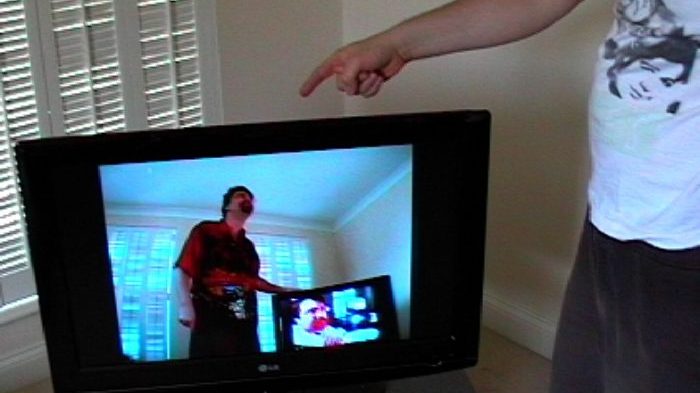
This is a bit of a break from the norm. For all of you who complain I write too many words, here is something totally different – a short movie. I had an idea for a comedy script, but instead of writing it up as usual, I went the whole hog and made it into a film. It stars me, with a supporting cast of me, and features a superb cameo by me.

Yet More Empire Strikes Back: Parallel Universe

Somewhere between this universe and the imagination of George Lucas lies a wondrous place, made up of rude astrodroids and goofball jedis. It exists in a dimension parallel to The Empire Strikes Back and parallel to our own. In the last installment, we left the story with Han and Leia arriving at Cloud City, and Luke being trained by Yoda in the swamps of Degobah…

[Luke is doing a one-handed handstand, using his Jedi powers to levitate a rock and R2-D2, whilst juggling three balls with his free hand and twirling a hula hoop around one foot.]

Yoda: Concentrate. Feel the Force flow… yes. Good. Through the force, things you will see, other places, the future, the past, old friends long gone…

Luke: (Starts to laugh) You know, I was hanging out at Tosche Station this one time with Biggs, and he saw this girl… well we thought she was a girl…

Yoda: Concentrate, I said!

Luke: I was just telling you some of the stuff I was seeing, what with the Force and all. This Force is great. I’ll never need cable TV again.

[Luke drops one of the balls he was juggling.]

Yoda: Concentrate!

Luke: Okay. But there’s a new broadcast coming through. Ugh! Somebody’s being tortured… they were in pain…

Yoda: The future you see, your friends…

Luke: (Interrupts) I don’t recognize any of them. The victims mostly have brown skins. One is being tortured by having his fingernails pulled out. He is complaining that he’s a British citizen – what’s a British citizen? Some white guys in fancy suits occasionally look in the room and then leave again. When they leave they say that they’ve seen nothing wrong whilst they were in there and keep saying how this has nothing to do with something called ‘extraordinary rendition’. Then they stick their fingers in their ears and hum to block out the sounds of the screams… and then the screams get muffled because the put a bag over the victim’s head and pour water over him – it must be like drowning… how barbaric…

Yoda: Wrong, I was. Not the future. Another universe you must be seeing. More civilized tortures, The Empire uses. Waterboarding banned, according to their Health & Safety policy. Their preferred tortures are things like putting you in a room with a loud car alarm that keeps going off. Pretty annoying, after a while, that gets.

Luke: Wait, now I’m getting something new… there’s a guy in the central bank of planet Nigeriona. He’s got a message for me personally, even though we’ve never met. Somebody rich has died… nobody to inherit his wealth… I could have it all if only I send a small up-front payment to cover the administration charges to process my claim…

[Luke gets excited, and falls to the ground. The rock and R2-D2, who he was levitating, come crashing down as well.]

Yoda: Spam! Your filters, not working they are! Concentrate!

[Lando is escorting Leia, Han and company to their quarters on Cloud City.]

Leia: Are you telling me that this whole city is floating on thin air?

Lando: This planet is a gas giant. (Aside to Leia) But if you want to see something really gigantic, let’s go somewhere private…

Leia: No thanks. Now tell me, it must take a tremendous amount of energy to keep a city of five million people flying in the sky?

Lando: True. It’s very difficult to keep our city flying. We’re a small outpost and not very self-sufficient. We’ve had supply problems of every kind… we’ve had labour difficulties… but recently we found a fantastic new eco-friendly source of energy. Would you like me to show you?

Han: (Laughs) You sound like a businessman, or a responsible leader…

Lando: Sure I’m responsible… it’s the price you pay… (looks at Leia and winks) for being successful.

Leia: So you’re part of the mining guild then?

Lando: No, not actually. Our operation is small enough not to be noticed, which is advantageous for everybody since our customers are anxious to avoid attracting attention to themselves.

Han: Aren’t you afraid the Empire’s going to find out about this little operation, shut you down?

Lando: It’s always been a danger, and it looms like a shadow over everything we’ve built here. But things have developed that will ensure our security. Speaking of which… here’s the city’s new eco-power plant.

[Lando opens the door to the power plant and leads the heroes inside. Inside they see cage after cage containing little creatures that look like teddy bears – Ewoks. A big mechanical hand reaches down and picks up an Ewok by the scruff of its neck. It lifts him high in the air, then throws the Ewok – which makes a long ‘eeeeee’ sound as it falls – into an enormous furnace.]

Han: Urgh, what are these ugly little creatures called?

Lando: Ewoks. They’re a pestilence. They ruin everything they come into contact with. We have a deal with the Empire. They round them up and we humanely dispose of them.

Leia: By chucking them into a big fire?

Lando: They burn surprisingly well. Their insides are made of a kind of stuffing that is both soft and highly flammable. They breed like wildfire, they happily eat garbage, and they have no higher brain functions, all of which makes them an excellent and sustainable source of power.

[C-3PO wanders around a corner, a little out of sight from the rest of the group. He strays too close to an Ewok cage, and it grabs C-3PO’s head, pulling it clean off.]

Leia: Well, I see no problem with burning these horrible little rodents. (In the background another Ewok falls – eeeeeeee – into the furnace.) But you say you did a deal with the Empire? I’m not exactly keen on them, you know.

[The local Jedi masters are enjoying their regular poker game at Jedi Master Tanah Lot’s house on Degobah.]

Tanah Lot: I don’t think Yoda’s ever going to join us. (He throws some chips into the pile.) Call.

Bora Bodur: (Waves his fingers towards Tanah Lot.) You don’t want to call. You want to fold.

Tanah Lot: Puh-lease. You’re Jedi mind powers are too feeble to win that way. Stop trying to cheat and get on with the game.

[With Bora Bodur’s attention distracted, Master Chechen Itcha uses his powers to briefly lift Bodur’s cards from the table, and get a sneak peek.]

Bora Bodur: (Noticing his cards have moved) Oi! (He grabs his cards out of the air) You can’t look at my cards.

Chechen Itcha: Why not? I could sense you were bluffing all along.

Bora Bodur: Well, I can see the future, buddy. And in the near future you’ll be walking home after I win your car, as well as all your money and the shirt off your back.

Sha-na-ram-a-lang-a-ding-dong: Can’t we just play fair for once? Why does every poker game have to be spoiled by using Jedi powers?

Chechen Itcha: You’re only saying that ‘cos you’re winning. Let’s have a look at what’s up those sleeves… (Itcha uses his mindpowers to quickly roll up the sleeves on Sha-na-ram-a-lang-a-ding-dong’s jacket. Out falls the Ace of Spades.)

Sha-na-ram-a-lang-a-ding-dong: (Acting surprised) How did that get there?

Chechen Itcha: I knew it. I sensed you must be cheating. Nobody has luck that good.

Tanah Lot: (Sad) What a shameful bunch we are. We used to stand shoulder-to-shoulder, fighting for justice and freedom. Now we sit round a table, fighting amongst ourselves over a miserable game of cards. We’ve made our homes in a swamp. How did we fall so low?

Bora Bodur: It’s all the fault of Yoda. He went to kill the Emperor but then he chickened out and ran away. And why didn’t that idiot Kenobi kill Vader, when he had the chance? We could still be on Coruscant, luxuriating in the splendour of the Jedi Temple…

Tanah Lot: Come on, it sounds like some of us are getting tempted by the dark side.

Bora Bodur: Do they let you gamble for more than matchsticks on the dark side?

Tanah Lot: Yes, but…

Bora Bodur: And do they let you use your powers to become rich?

Tanah Lot: They do, but…

Bora Bodur: And if we swapped to the dark side, could we get out of this smelly swamp?

Tanah Lot: Yes, but…

Bora Bodur: But what? I say we do it.

Tanah Lot: But we’d end up slaves of the Emperor.

Bora Bodur: Better a slave in a palace than king of the swamp.

Tanah Lot: The Emperor will make us do his dishes, and clip his toenails, and maybe even wipe his bottom.

Bora Bodur: Still better than living in a swamp.

Tanah Lot: The Emperor will make us listen to lots of speeches about preserving the natural order and protecting the people and all that guff.

Bora Bodur: That’ll be no worse than listening to one of Yoda’s sermons. At least the Emperor can string together three words in the correct order.

Tanah Lot: We’ll be bored. We won’t have anyone to fight. We won’t be allowed to do diplomatic negotiation because the Emperor’s just going to kill everyone who disagrees with him. They could do the same trick they did before and get the stormtroopers to try and shoot us in the back.

Bora Bodur: I can live with that risk.

Tanah Lot: We’ll have to comply with the Empire’s environmental recycling policies. We’ll have to put our rubbish into seven separate bins. Green for compostables. Brown for glass. White for paper. Blue for plastic bottles. Yellow for other plastic. Red for tin and aluminium. Black for non-recyclable.

Bora Bodur: What’s compostables?

Tanah Lot: Garden waste, food scraps, stuff like that.

Chechen Itcha: What about cardboard? That’s compostable.

Tanah Lot: That goes in the white bin, with the paper.

Bora Bodur: Why are plastic bottles separate to other plastics?

Tanah Lot: I guess it’s not made of the same kind of plastic.

Chechen Itcha: And I bet they expect you to keep all seven bins inside your house. I prefer the recycling scheme we got here. Throw it in the swamp and let the monsters eat it all.

Bora Bodur: Okay, okay. You win. We won’t go to the dark side. That recycling guff sounds like a real bore. I bet the local authority just tosses it all into the same landfill anyway.

[Luke has completed his training, and Yoda hands him a certificate as a mark of his accomplishments. Obi-Wan Kenobi looks on approvingly. Luke takes a look at his certificate. His mood suddenly changes from happy to angry.]

Luke: Hey, you spelled my name wrong! It’s Sky-walker, not Ski-walker. What kind of a stupid name is Ski-walker?

Yoda: Name as stupid as Sky-walker, it is. At least you can walk on skis. Seen anyone walk on skies, have you?

Luke: At least I have a surname.

Yoda: Certificate, give me. (He grabs it out of Luke’s hand.)

Luke: What are you doing?

Yoda: Certificate, change I will. (Yoda crosses out ‘Skiwalker’ and writes in ‘Skywalker’ instead. He hands it back to Luke).

Luke: (Frowning whilst staring at his messed-up certificate.) That’s just great. I paid double the standard rate for this?

Obi-Wan: Be happy Luke. You’ve just joined the ranks of the Jedi, and in record time too. Now you can go and save your friends on Bespin.

Luke: What?!?!? Are they in danger?

Obi-Wan: Yes. Very serious danger.

Yoda: (To Luke) Ready to face Vader, you are not.

Luke: That’s not what it says on my certificate. (Luke points at the small print which states he is ready to fight Sith Lords.)

Yoda: Yourself, suit you will. But if you fight Vader and lose, refund, none, you’ll get.

Luke: Han and Leia will die if I don’t go.

Obi-Wan: You don’t know that. Even Yoda cannot see their fate.

Luke: Man, you Jedis keep changing your tune. One minute you’re seeing the future, the next you have no idea. I’m outta here…

Obi-Wan: This is a dangerous time for you, when you will be tempted by the dark side of the Force.

Luke: I can believe that. (Waves his certificate) I bet they’re more careful with spelling people’s names on the dark side.

Yoda: No. They’re not. I lost count of how many times, my name, they got wrong. “Yoga”. “Yo-yo”. Even a “Jojoba” once.

[Luke climbs the ladder to the cockpit of the X-Wing.]

Luke: I don’t care about that. (To R2-D2) R2 – fire up the converters!

Obi-Wain: Luke! Don’t give in to hate. That leads to the dark side.

Yoda: Strong is Vader. Mind what you have learned. Save you it can.

Luke: I will. And I’ll return, I promise.

R2-D2: Bleep, flurp (translates as: “You can come back if you like, but you’ll never see me back in this sh*thole.”)

[Luke’s X-Wing takes off.]

Yoda: (Sighs) Told you I did, reckless is he. Now, matters are worse.

Obi-Wan: That boy is our last hope.

Yoda: No. There is another.

Obi-Wan: There’s another?

Yoda: Yes. Forget to mention, did I?

Obi-Wan: You did forget! Who is it? Is it Geoff Quantumslayer, from the planet Ibanjii?

Yoda: No.

Obi-Wan: Is it Anastasia Gridfunklier, on Pakrik Minor?

Yoda: No.

Obi-Wan: (Impatient) Well, why don’t you tell me who it is then?

Yoda: It’s… me! A comeback, I was thinking of making. The moves, I’ve still got!

Obi-Wan: You stupid old frog. You can’t jump around like you used to.

Yoda: (Dejected at Obi-Wan’s dismissive attitude.) Maybe you’re right. Let Skywalker and his sister do all the work, we should.

Obi-Wan: His sister? Do you a think a girl is up to the job? There’s not many girls who got far in the Jedi ranks.

Yoda: How could they? With you and Windu chasing every bit of skirt.

Obi-Wan: Speak for yourself. I lost count of how many of your female padawans gave birth to children with green pointy ears.

Yoda: Right, you are. If given women an equal chance, maybe we’d have had the numbers to defeat the Emperor.

Obi-Wan: Still, I remember this time I was training one young filly. She was strapping, well-built (he gestures as if cupping two large breasts.) I was giving her the old mind powers, you know… ‘you will undo your bra strap… you will undo your bra strap…’ but she was having none of it. Then old Mace Windu came along, and you know what he was like, and he whispered in my ear: “On this one’s planet, they’ve got three sexes. And this one ain’t one of the two that’s compatible with the equipment you’re packing…” The bugger had found out when he’d tried to bed her the night before! (Laughs.)

Yoda: (Laughing, wiping a tear from his eye) Happy days. (Yoda turns) To home, I shall go. Maybe still playing poker, they are.

Obi-Wan: Can I come?

Yoda: I think not. Like you looking at everyone’s cards, they don’t.

Obi-Wan: Oh, go on. You know how boring it is for me, being a disembodied spirit.

Yoda: Alright. But only if you promise to tell that story about you, Windu and those identical twins from Vandor-3.

[Han and Leia are alone in their guest quarters on Cloud City.]

Leia: Something’s wrong here. No-one has seen or knows anything about ‘3PO. He’s been gone too long to have gotten lost.

Han: (Puts his hands on Leia’s shoulders and kisses her on the forehead.) Relax. I’ll talk to Lando and see what I can find out.

Leia: I don’t trust Lando. He’s in league with the Empire!

Han: Well, I don’t trust him either. He cheats at cards! I only beat him because I cheat more! Besides, we’ll soon be gone.

Leia: Then you’re as good as gone, aren’t you?

[Han leans across to give Leia a smooch.]

[Chewbacca enters. He is carrying a box containing the dismembered parts of C-3PO.]

Leia: (To Chewbacca) Don’t you ever knock?

Han: What happened to ‘3PO?

Chewbacca: Roar-growl (translates as: “Those Ewok rodents pulled ‘3PO to bits!”)

Han: (Laughs) Hey, you should go easy on those ugly little fuzzballs. They’re kind of like your miniature cousins. They even have a similar name. EEE-Wok. Wok-EEE.

[Chewbacca motions to rip Han’s arms out of his sockets.]

Han: Hey, hey, I was just kidding!

[Lando comes in.]

Leia: Doesn’t anyone knock round here?

Lando: Sorry, am I interrupting anything?

Leia: Not really. (Aside) Not since Chewbacca interrupted already.

Lando: I’m glad to hear it. You look absolutely beautiful. You truly belong here with us among the clouds.

Leia: I think I’ll keep my feet on the ground, thank you.

Lando: Will you join me for a little refreshment? Everyone’s invited of course.

Chewbacca: Growl. (translates as “I’m parched. I could really do with a beer.”)

Han: If you’re buying, I’m drinking!

Leia: (Frowning at Han) Looks like I’ve nothing better to do either.

Lando: (Noticing C-3PO in the box) Having trouble with your droid?

Han: No. He’s the latest Lego™ model. We took him to bits so we could rebuild him as a go-kart and take him for a spin.

Lando: Robots in disguise? What will they think of next!?! This way…

[Lando leads Chewie, Han and Leia to the tea rooms.]

Lando: I’ve got a very special guest I want you to meet…

[Lando opens the doors to the tea room. Darth Vader sits at the far end of a long table, sipping tea with Boba Fett. Han pulls his blaster and starts shooting at them.]

Darth Vader: (Stands up) Mr. Solo, (raising his hand to absorb the blaster shots) I see your reputation is well-deserved. You really do shoot first.

[Vader uses his powers to make Han’s blaster fly from Solo’s grip, into Vader’s own hand.]

Leia: What do you want?

Boba Fett: I’d like the buttered scones, please.

Darth Vader: I think she was talking to me.

Boba Fett: Oh, sorry. You go ahead and order first. I’m only eating to be sociable anyway.

Darth Vader: She’s not the waitress. She’s Princess Leia Organa. I was hoping they’d join us.

Leia: Join you!?! I’ll never side with the Empire!

Darth Vader: No, I meant join us for tea. They really brew a very good cuppa. Though it’s darn tricky to drink it through this facemask. I use a straw, see? (Vader points at the drinking straw in his teacup.)

Lando: (Holding Han back) What do you think you’re doing? You’re upsetting my new business partner. Lord Vader supplies us with Ewoks for the furnace.

Han: He’s here to get us, you fool.

Darth Vader: No I’m not. I just want Luke Skywalker. There’s no need for any hostility between any of us. Let’s just sit and talk and share some tea whilst we wait for Luke.

Boba Fett: Actually, I’m here for them. At least, I’m here for Solo. He parked in Jabba the Hutt’s space, and he didn’t pay the fine.

Darth Vader: Well, you’ll just have to wait your turn. I want to chat to Mr. Solo and Princess Leia and Chewbacca first.

Leia: What do you want with us?

Darth Vader: I don’t want anything but for us to sit down and enjoy some tea and wait for Luke Skywalker to come and rescue you. He’s on his way already. Once he arrives, you’ll be free to enjoy the remainder of your stay on Cloud City, or leave whenever you like.

Leia: That sounds too good to be true.

Darth Vader: What do you want me to do? Do you want me to torture you? To be frank, I might have done that in the old days, but now I can’t bring myself to go through all the Health & Safety paperwork that comes with it. Anyway, about the worst we can do these days is to make you listen to a car alarm going off repeatedly. It does get pretty annoying after a while.

[A waiter arrives, carrying C-3PO in the box. He hands it over to Han and Chewbacca.]

Waiter: Excuse me, gentlemen. I believe you left your droid in your quarters. Lord Vader requested that your droid join the party.

Darth Vader: (Upset to see C-3PO in bits) WHAT!!??!?! What have you done to ‘3PO? He was the first robot I ever built. ‘3PO was a gift for my mother. Now look what you’ve done to him. He’s in bits and pieces!!!

Han: Hey, it wasn’t us. It was the Ewoks.

Darth Vader: A likely story. (Picks up C-3PO’s head and speaks to it) What have they done to you? (Turns to Boba Fett) Alas, I knew him well. I built him with my own hand. (Vader gestures with his hand) Not this hand, of course. I built him with the hand I had before it got chopped off and replaced by this one. I tried to build this hand too, but I couldn’t do it on my own. I needed a hand. (Turns to Han and Chewbacca) I was just going to let you two go, but pulling old ‘3PO to bits is an outrage. I’ll make you pay for hurting my mum’s protocol droid! Guards!

[A squadron of stormtroopers come running in.]

Darth Vader: Guards, escort these two (points at Han and Chewbacca) to the car alarm chamber…


To be continued…

The 90 Wonders of the World

Herodotus has a lot to answer for. He lived during the wars between Greece and Persia in the 5th Century BC. His writings about the origins of those wars mean he is now referred to as the ‘Father of History’. Herodotus also wrote about his extensive travels, and this started another, more unfortunate trend. He did not mean to, but Herodotus unwittingly started the business of marketing aimed at tourists. Herodotus, Father of History, was also the first person to write about ‘wonders’ of the world.

A couple of hundred years later, Philo of Byzantium followed Herodotus’ precedent, and came up with what in now considered the definitive seven wonders. He was writing the progenitor of a travel guide, but just like Lonely Planet it was out of date by the time it was published. The Colossus of Rhodes, a giant bronze statue of the god Helios, had fallen over the year before. If you wanted to see the wonders now, you would come up a long way short. Apart from the Great Pyramid at Giza, none are standing. The Lighthouse of Alexandria lasted longest, but was eventually toppled by earthquakes. If you want to see the Mausoleum of Halikarnassos you had best go to the British Museum. They have some good bits that were left over after Crusaders used the rubble to build a castle. The Statue of Zeus at Olympia and the Hanging Gardens of Babylon lasted a millennium and half a millennium respectively, which proves the adage ‘they used to build them to last’ – but not long enough. The most destructive history, however, belongs to the Temple of Artemis built near Ephesus. It was first destroyed by an arsonist, Herostratus. His motivation was pretty stupid. Herostratus destroyed the temple just so he would be famous. To serve him right, the people decided to not write down his name, so it would be forgotten. That largely worked, though by now you will have noticed that somebody cheated. The Ephesians rebuilt the temple, but then Goths went on a rampage and knocked it down again. The Ephesians were stubborn, and rebuilt the temple yet again. By this time, Christianity was changing. It had been a poor, downtrodden religion whose adherents suffered greatly from persecution. It was turning into the state religion, and it was the Christians’ turn to do the persecuting. Not content with closing the temples that worshipped the wrong gods, Saint John Chrysostom, Archbishop of Constantinople, personally led a mob to pull the Temple of Artemis down. So if you ever find your house or place of work under attack from a riot, you can console yourself that the rioters are behaving just like saints.

The real reason we still talk about the wonders of the world is that they beautifully serve the purpose of sounding official enough to influence where you take your holidays, but are unofficial enough for everybody to invent their own list, or to add their own crummy tourist trap to the list. People who work in marketing for tourism always have a way of telling you that, wherever you are or wherever you have been, there is somewhere else you really must see. I once stayed in a hotel right next to the Great Pyramid at Giza, the Mena House Oberoi. It was right next to the Pyramid. You walked out of the hotel and up the hill for ten minutes and you were at the Pyramid’s base. It was a short break for a few days, so we picked somewhere luxurious and ideal for the one historical monument we wanted to see. Yet, the whole time I was there, I was plagued by people suggesting I visit the pyramids – the pyramids located elsewhere in Egypt. The greatest pyramid of all, the only remaining wonder of the world from the original list, stands just a few hundred yards from your hotel balcony, but countless strangers suggest that what you really want to do is to get on a bus and go see another pyramid somewhere else. That is marketing logic for you.

Marketing logic now means there are quite a few more ‘wonders of the world’. We have ‘wonders of the modern world’, ‘wonders of the natural world’, and even ‘wonders of the underwater world’. Creating new lists of the wonders of the world is a bit like arriving at a bus stop, not wanting to join the back of the queue, so starting a new queue instead. There are so many ‘eighth wonders of the world’ that you marvel that so many people have had the cheek to consider their wonder to be eighth, and not ninth, tenth or eleventh. Being ‘eighth wonder’ is a bit like arriving at a bus stop and being prepared to queue, but only if you get to go eighth in line. Of course, if you get hundreds of wonders, then each wonder is a lot less significant than if you only have seven or eight wonders. That is how marketing logic works – you end up with hundreds of wonders, but each pretends it is in a special group of seven or eight. So here is my compilation of the wonders of the world, designed to find out how many there really are. I scoured the internet for as many lists and eighth wonders as I could find. In no particular order (except that I start with Philo’s seven) is the complete list of wonders of the world…

1. Great Pyramid of Giza
2. Hanging Gardens of Babylon
3. Statue of Zeus at Olympia
4. Temple of Artemis at Ephesus
5. Mausoleum of Maussollos at Halicarnassus
6. Colossus of Rhodes
7. Lighthouse of Alexandria
8. Stonehenge

Okay, they are big stones, but they are pretty lame compared to the Great Pyramid

9. Colosseum
10. Catacombs of Kom el Shoqafa
11. Great Wall of China

Great Wall, or great folly? If you wanted to get past it, you just got a traitor to open one of the gates…

12. Porcelain Tower of Nanjing
13. Hagia Sophia

Including the Hagia Sophia in a list of wonders shows how two-faced people can be about wonders – the Hagia Sophia was built using stones taken from the Temple of Artemis by Saint John Chrysostom’s mob!

14. Leaning Tower of Pisa

Says it all about why you should not add to the list of wonders. The Lighthouse at Alexandria was tall and straight. Building a crooked tower is no wonder, if you did not mean to!

15. Taj Mahal
16. Cairo Citadel
17. Ely Cathedral
18. Cluny Abbey
19. Channel Tunnel
20. CN Tower
21. Empire State Building
22. Golden Gate Bridge
23. Itaipu Dam
24. Delta Works/ Zuiderzee Works
25. Panama Canal
26. Petra
27. Christ the Redeemer, Rio de Janeiro
28. Machu Picchu
29. Chichen Itza
30. Potala Palace
31. Old City of Jerusalem
32. Polar ice caps

Come on! Who put this on a list of wonders? It is a lot of ice where the world is coldest. Geez. About as wondrous as my freezer when it is time for it to be defrosted.

33. Papahānaumokuākea Marine National Monument
34. Internet

All I can say is that some people are too easily impressed. Or have no idea what the internet actually is.

35. Maya ruins

It goes from bad to worse. Could they not work out which ruins were specifically the most wondrous ones?

36. Great Migration of Serengeti and Masai Mara

We are really stretching the envelope now…

37. Grand Canyon

As voted by 100% of Americans who do not have a passport.

38. Great Barrier Reef
39. Harbour of Rio de Janeiro
40. Mount Everest
41. Aurora
42. Parícutin volcano
43. Victoria Falls

Water falls off a cliff. Okay, it is a lot of water and a big cliff, but you get my point.

44. Palau

This is where the list gets a lot of input from underwater divers, hence I have no idea whether these really are that wondrous… or even where they are (unless it says so in the name)

45. Belize Barrier Reef
46. Deep-Sea Vents
47. Galápagos Islands

What, every bit of each island is a wonder? Even the bit where they erected a portaloo so you could take a dump?

48. Lake Baikal
49. Northern Red Sea
50. SS Great Eastern
51. Bell Rock Lighthouse
52. Brooklyn Bridge

Nice bridge, but come on… a wonder of the world?

53. London sewerage system

At last, a real wonder that does not get the credit it deserves. It did the tricky job (no pun intended) of saving London from being buried in sh*t (though some might argue it was not enough).

54. First Transcontinental Railroad

I am just copying from other sites. You would think that they would come up with a more impressive title for something that was a wonder. Or at least let you know where it started and ended.

55. Hoover Dam

Named after the George W. Bush of his time.

56. Bali

I have been to Bali. I am pretty sure the average Aussie surfboarder is not thinking ‘wonder of the world’ as he drunkenly lurches from one Kuta bar to the next…

57. Angkor Wat
58. Forbidden City
59. Bagan Temples & Pagodas
60. Karnak Temple
61. Teotihuacán
62. Iguazu Falls
63. Amazon Rainforest

Many parts of the world used to be covered in forest, you know. Man chopped them down. So the Amazon Rainforest is a wonder only because it is one forest we have not chopped down yet. But we will probably level it in the end…

64. Ngorongoro Crater
65. Bora Bora
66. Cappadocia
67. Milford Sound, New Zealand
68. Natural Tunnel, in Virginia
69. Pink and White Terraces near Rotorua, New Zealand

At last, a relatively honest ‘eighth wonder’, in the sense that nobody can exploit it any longer – the terraces were destroyed by a volcanic eruption in 1886.

70. Giant’s Causeway
71. Burney Falls in California

The connection between wonders and US Presidents goes on and on. This ‘wonder’ was nominated by Theodore Roosevelt. Perhaps the real ‘wonder’ is why US Presidents feel entitled to determine the wonders of the world. You might think they were too busy to do a comprehensive survey…

72. Banaue Rice Terraces, Philippines

This is a better entry than most. Carved with minimal tools into steep-sided mountains, these rice terraces are visually stunning as well as an epic feat of human endeavour. Try walking up and down those mountains for a few days, and you will soon understand just what it took to make them. Of course, what makes them so amazing is also why they are less likely to make it on to most people’s list – they are bloody hard to get to, and people do not tend to list wonders if they have never seen them…

73. The Terracotta Army of Xi’an

I have to say, I was rather underwhelmed when I visited the Terracotta Army in Xi’an. Sure, there are loads of them, and it was pretty mental to make a load of statues and then to bury them, but I am not sure I would call them a wonder. If they were, than making any art in very large numbers and then burying it would also have to count as a wonder. The real wonder is that the army was buried next to an earthen pyramid that is 76 meters tall. The mind boggles at might be hidden underneath that.

74. Amber Room in the Catherine Palace
75. The monastery of San Lorenzo del Escorial
76. The rock-hewn churches at Lalibela
77. The stelae of Axum
78. Sigiriya, Sri Lanka
79. Royal Palace in Amsterdam
80. Statue of Liberty

The Statue of Liberty is only a wonder if you are impressed by fat French women who have turned a peculiar shade of green.

81. The moai statues of Easter Island
82. Palm Islands of Dubai

Expensive. Impressive. But a wonder? This wonder will soon be diluted when we realize just how many plans there are to build palm islands elsewhere in the world. This entry will seem as anachronistic as all those skyscrapers that have since been surpassed by yet more skyscrapers.

83. Sydney Opera House

It is beautiful, but the real wonder here is the same as for many other ambitious modern constructions – you wonder how they managed to make something so much smaller than originally planned whilst spending so much more than originally budgeted…

84. Thames Barrier
85. Bahá’í terraces, on Mount Carmel
86. Three Gorges Dam
87. Reliant Astrodome

If you listen to Americans for long enough, then you might end up believing that fourteen of the world’s seven wonders lie within the borders of the US.

88. West Baden Springs Hotel
89. King Kong

At least, he is the eighth wonder according to the movie. But then, King Kong does not actually exist.

90. André the Giant

André the Giant, a wrestler, was proclaimed the eighth wonder by the World Wrestling Federation. People who watch pro wrestling will believe anything.

Compared to the seven wonders, I much prefer the seven blunders per Mohandas Karamchand Gandhi. It is a good antidote after wading through a list of bombast.

1. Wealth without work
2. Pleasure without conscience
3. Knowledge without character
4. Commerce without morality
5. Science without humanity
6. Worship without sacrifice
7. Politics without principle

My guess is that some of the items listed in the 90 wonders of the world owe a debt to blunders three and four on Gandhi’s list – knowledge without character and commerce without morality. Saying that, some people never learn. Gandhi wrote his list of seven blunders for his grandson. His grandson was then unable to resist temptation. He coined an eighth blunder of the world: ‘rights without responsibilities’. If he was going to make an addition, he should have gone with ‘lists without end…’

What Nukes and Porn Have In Common

There are always quite a few news stories about porn, and this week was no different. This week’s porn stories included: a toy shop saying sorry because somebody was using one of the display laptops to look at porn; a teacher accidentally sharing some self-made porn with her pupils; and Britain’s former Home Secretary, Jacqui Smith, revealing she is not happy that her husband watches porn. The human fascination with porn is easy enough to understand. Porn is about sex. Humans are interested in sex. We are all here because of sex. Saying that, these stories are rather unedifying. They are not really ‘news’, in the sense they are not very informative. We all know what the world is like. Taboos are there to keep things polite, but only the naïve are ignorant of the fact that sexual urges lead to the use of porn and the use of porn can sometimes lead to embarrassment when it becomes public. If I saw porn on a laptop in a toy shop, I would mention it the nearest shop assistant, but I would not run to local newspaper to share my story. Mistakes happen. There must be some kids who have seen or heard their parents having sex but we are not planning to ban marital sex just in case. No toy shop is going to make money by erecting a big screen and putting Best of Big Booty Buttf*cks Part 7 on continual loop. In the second story, a woman made a home film of herself doing something lewd. She was pretty careless to then stick it on a DVD and give it to her pupils, but it was an accident. It was a very peculiar accident, unless the woman has delusions about being a low-end Paris Hilton. The safest conclusion is that it was an accident. The likeliest outcome is that the fathers will be taking an unusual interest in their children’s schoolwork. Finally, a woman reaches high political office, but her husband masturbates to porno flicks. Is that a news story? Of course not. Nor is the ‘revelation’ that a wife might not be keen on her husband’s auto-gratificatory habits. This is contrived step number 1 in Smith’s attempt to rebuild her reputation, trying to get sympathy as a woman/feminist/whatever who has to put up with her husband’s need to bash the bishop now and then. As a man, my sympathies are with the husband, and I entirely understand why he wants to play his pink oboe with a little accompaniment. A nagging wife will not change that instinct, no matter how much she cites Simone de Beauvoir or Andrea Dworkin whilst trying to intellectualize the reasons why porn is bad. Instead of changing the subject, she should to stick to apologizing for why she has such bad judgment to employ a member of staff (her husband), at taxpayer’s expense, who is so incompetent or greedy that he tries to gets his wank aids paid by the taxpayer too.

Nuclear weapons, in contrast to porn, get less reliable news coverage. If a ‘bad’ nation wants to have nuclear weapons, it is a big story. North Korea and Iran can starve and shoot their own people as much as they like, but the big story to Western media is that they are, or might be, striving to get the bomb. That is why you hear a lot less about the swines that govern Burma. They beat their monks and imprison their nobel laureates all the time, but have no nuclear aspirations. In contrast, everybody is pretty much relaxed about the fact that ‘good’ nations, like the US, Russia and China, have enough nuclear weapons to kill us all. And then enough to kill us all again, just to be on the safe side. And when it comes to the Israelis, we know that talking about their nukes is a bigger taboo than talking about the masturbatory habits of Jacqui Smith’s husband. The emerging story is that we have a US President who is seemingly keen to reduce nuclear weapon stockpiles. We also have some Russian despots who are willing to go along with the talk so long as it does not usurp the exaggerated importance of their nation (2nd largest nuclear stockpile, but only the 8th largest economy). Plus we have some Europeans leaders happy to offer to cut their nukes too, not least because nobody has promised anything yet and because they are a bit short for cash thanks to their economic mismanagement. We found out this week that the world’s super-bullies, the governments of the USA and Russia, intend to talk about cutting nuclear weapons arsenals. It is an oddity that the power to kill countless people and devastate our planet has become part of the wallpaper of life, barely mentioned unless something comes along that threatens to shift the ‘balance’ of power (meaning from those who have more power to those who have less). Meanwhile, we never tire of hearing about pornographic peccadillos.

Some feminists, quite a few parents, and various religious folk dream of a world without pornography. Obama talks about a world without nuclear weapons, and maybe a few people take him seriously. A few more pretend to take him seriously. However, there is little effort required to imagine life without porn or nukes. First, think of this world. Then imagine this world, moving through time. Then imagine it moves back to the Dark Ages. We had a world without porn and nukes, and it was awful. People were ignorant, the world’s population fell, plague killed many, there were wars and religious intolerance, and little in terms of cultural or architectural achievement. I am not saying that the Black Death would have been cured by Hustler magazine, but there is a connection between why we have nukes and porn today, and why the world is a better place than it used to be. Science and technology changes lives. Improved knowledge of how the world works drives the improvement of humanity’s lot. With greater capability, we have greater potential to improve human lives. How we organize and manage our communities also makes a difference, but societal changes are unpredictable in terms of whether people benefit, who benefits, and by how much. In contrast, knowing how to do new things has pretty consistently meant better lives for real people. It enables us to share information, cure diseases, feed more and create material wealth. However, there will be the occasional downside – just ask any surviving First World War soldier about the merits of machine guns or mustard gas. One problem with useful knowledge is that, once it is known, it is hard to make it unknown, or to keep it restricted. That problem gets worse every year, because the individual’s ability to communicate and spread information keeps getting better. The other problem is that useful knowledge can be used to do things that some people might consider less than useful, such as broadcasting images of people’s private parts, or constructing ‘deterrents’ to war that work by guaranteeing holocaust.

Because good knowledge sometimes has bad uses, the human race often engages in a push-me-pull-you wrestling match with itself. We promote science and technology, invest in its progress, deplore and try to eliminate the bad uses that result, whilst investing yet more into those bad uses for the promise of financial gain and national security. Listening to politicians, the seeming solution to porn and nukes is the same: monitoring, control, audit, and restriction. This is nonsense. When a president, oligarch, autocrat or monarch asks for something to be monitored, controlled, audited and restricted, they mean for it to be monitored, controlled, audited and restricted by them. They do not mean for anyone else to have the power to monitor, control, audit or restrict. They especially do not mean for anyone else to have that power over them. That is the square that cannot be circled.

The debate about good versus bad uses of technology, whether it be printing presses for Playboy or D. H. Lawrence novels, whether it be communications protocols used to share this blog or pedophilia, whether it be nuclear reactions for controlled generation of electricity or uncontrolled explosions, comes down to some people trying to overrule everybody else in the debate about what is good, and what is bad. Needless to say, like Jacqui Smith and her porno-grazing husband, the people who like to say what is good and bad are likely to put their own interests, desires and needs ahead of the interests of everybody else. Whether talking about the movement of money, electronic communications, weapons controls, or censorship standards, the forward progress of ability has cast many of the world’s leaders in the role of wanting to go beyond national boundaries and ‘work together’ for the common good. The leaders of countries now find their power is usurped and undermined in an international world, where nuclear secrets, videos of riots and sexual images are increasingly easy to transmit across borders. In turn, it becomes harder and harder to stop this collective tide of information, entertainment and filth from being exploited by weaker and poorer nations, by smaller organizations, or by individuals.

The instinct of rulers, when faced with diminished power, is to respond by tightening the leash. They will work together to monitor, control, audit, and restrict more. In the process, they will put their own nation’s interests ahead of those of other nations, and put the interests of rulers above those of the people they supposedly serve. That is why you never hear US politicians talking about nuclear disarmament in Israel. Meanwhile, they rant on and on about controlling the nations they can still control, or at least try to influence. That is why Gary McKinnon, a British man with an obsession with UFOs and a gift for hacking, is being threatened with punishment for showing up the gaps in the so-called security of US intelligence. This is an individual who wanted to find out about little green men, not a foreign power infiltrating code to shutdown America’s power grid, yet the laws to punish the people are used to punish the people that can be punished, and are powerless in the face of the real threats to peace and security. As part of the price of international co-operation, the British government is once again lying down and playing dead for the sake of good relations with the US, this time by stifling parliamentary opposition about McKinnon’s extradition. What is the supposed reason why Britain’s democratically elected representatives can say nothing about this proposed brutalization of this man? What reason is there to allow American authorities to cover their arses and divert attention after they incompetently left security loopholes that even a lone hobbyist could exploit? McKinnon should not be punished. He should be put on the payroll and asked to help these buffoons tighten their security. British MPs are not allowed to speak out to defend McKinnon, because supposedly they might prejudice McKinnon’s appeal against extradition. In other words, if British MPs exercise their freedom of speech, and their parliamentary right, to say that a bad thing is happening, that might influence the judges who have to decide if McKinnon’s appeal has merit. What poppycock. And what exactly is McKinnon appealing? He is appealing that Jacqui Smith, the woman who uses taxpayer’s money to employ her husband to claim for wankfilms from the taxpayer, might have made yet another bad decision. Given Smith’s track record for blundering, that seems like a good enough argument on its own. Case closed. Excuse me if I am suspicious of whether Britain’s rulers, in trying to stop debate of McKinnon’s case, are motivated more by their own interests than by the interests of the people.

With power comes choices, and with new powers comes new choices. Human know-how is increasing, and this creates new powers and new choices. But the human instincts, human intellect and human selfishness changes a lot less rapidly than the pell-mell of new capabilities, whether they be used to make bombs or titillate base desires. It is because people do not change that new capabilities are made to serve old human pursuits. People still lust for power and they still lust for flesh. Our leaders wear modern suits, but they are essentially no different to the people who ruled throughout history. For every Charlemagne, there is a Stalin. For every Fidel Castro, a Julius Caesar. For every Nehru, a Herod. For every Alexander the Great, a George W. Bush. Our current rulers are unlikely to be wiser or better than the average over history, and even if they are, there is no guarantee that the next rulers will keep beating the averages. They will want to monitor, control, audit, and restrict for the same reasons as earlier rulers tried to do the same. New technology gives them new excuses to do so, and new capabilities to do so. The option to achieve greatness by military victory is all but gone, but will be sublimated into programs to create clubs of world leaders, jockeying for power amongst themselves, but also with greater power over their subjects. If they work together, it is harder for pesky rogue states – or rogue individuals – to circumvent their authority. That means more than changing the balance of power between nations. It also means changing the balance of power between rulers and the people they rule. Every excuse will be called upon to justify the shift, be it nuclear weapon proliferation, the war on terror, preventing prostitution, ending human trafficking, stifling pornography, protecting children, or reducing tax evasion. In some cases they will be right, and in others wrong. But if the see-saw of power sees the emergence of a club of world rulers, as some of them would seemingly like, then there will be only one force left to balance them – the common people. That might mean learning to tolerate the occasional auto-erotic faux pas, for the sake of protecting us from something far worse.