
A church,
But in the hallowed secular space of
A waiting room.
The pews faced the altars of
Glass-fronted counters
And I patiently waited for a priestly clerk to
Take my confession.
There, upon the bench of steel and circular holes,
Purgatory dawned,
And cast my shadow sharp and fresh.
I read again
My singular square of scripture,
Numbered 513.
A brief sermon interrupted, and contradicted, ordered
Red LED revelations
And ordained my place as half a century
From service.
Giving my dearest jewel, of finite duration,
I meditated
Upon my gift, to our new God,
Our government,
That demands not love or affection but only ritual obedience, as to
An adopted father.
My internal dialogue drifted, prayers not expecting to be answered,
And dreads rising.
My faith sure tested that I was witness to good,
And not evil,
I reformed myself, proclaimed myself, and surveyed
My mother nature.
It had long since run away, on open plain, in joyous flight, in preference
To bloody fight.
But my corporal coffin remained, resigned, unmoved and unregarded,
Inexorably decaying.
In broad expanse, my mind revisited
Forms of paradise,
And found them populated by philosophers and scientists,
Poets and composers.
On those unbounded frontiers, I sought sanctuary under
Wide open skies.
But even there I spied the ultimate limit of perception,
The horizon,
Which is only surpassed by motion and never by idle contemplation.
And I sat,
And my number was still not called,
And I waited,
For meagre validation that I live, that I am.
Freedom eludes,
Within the unseen scrutiny of the prison of fellow men,
Inmates of unconsciousness,
Not woken by eyelid’s light, but by identity’s doubt.
Resolved to dissipate
My incarceration, my spirit spoke with itself.
It rejected
The illusions printed upon its rational veil.
Pinning manifestos
Of imagination upon the heavy door of earthly convention as I threw it open,
I denied all,
But my own being, and the sovereign divine of
My own creation.
The Blunt Edge of Reason
The GOP and the Labour Party: Uncanny Similarities

It might seem like heresy to suggest there are similarities between the Grand Old Party of American politics, the Republicans, some of whom believe that Attila the Hun was a socialist, and the quasi-socialist invention of Britain’s trade unions, the Labour Party. But hear me out. They are poles apart ideologically, of course. The similarities I see are drawn from electoral maths and the challenge of building a coalition of interest amongst voters.
On paper, both parties should be benefiting from a weak economy and high unemployment. Being out of work, feeling financially stretched, or gloomy about the future is unlikely to make a voter ecstatic about the performance of the current government. However, neither Labour nor the Republicans have converted widespread discontent with governments into a mandate for change at the top. On the contrary, both parties now lack confidence in their own leadership. The analogy between the GOP and Labour has its limits. British political parties are hierarchical in a way that is anathema to the individualism that drives American parties. British parties elect their leader and, if they win, their leader becomes the nation’s leader. In contrast, American parties are fund-raising organizations that throw their support and money behind candidates on an election-by-election basis, most obviously in the case of their Presidential nominee. So Ed Miliband’s role as Labour Party leader entails more extensive influence than a Presidential nominee has over their party. But both are national leaders-in-waiting, and the popularity and success of both parties will orient around the popularity of their leaders-in-waiting. Recognizing this leads to the observation of a straightforward parallel between Labour and the Republicans. Both parties are far more popular than their leaders.
In national polls that ask American voters if they would prefer an unnamed Republican to Barack Obama, the unnamed Republican is consistently ahead. But comparisons between Obama and each individual Republican candidate, show that Obama is more popular than any of them. Romney comes closest to Obama, sometimes tying in terms of electoral popularity. Next closest to Obama, contrary to the beliefs expressed the exit polls at primaries, comes Ron Paul. Paul tends to be around 5 points behind Obama, though this match-up also generates the greatest proportion of undecided voters. According to current polls, neither Gingrich nor Santorum would stand a chance against Obama; both are typically ten points less popular than the incumbent. So, whichever Republican candidate is chosen (assuming no late wild cards enter the race) it seems the public prefers the general idea of Republican policies and leadership, more than they like the policies and leadership offered by any actual Republican. A similar pattern can be seen in the UK. Since the last General Election, most polls have put the Labour Party slightly ahead of the Conservatives, though the difference is too small to give Labour any confidence of victory. However, Labour Leader Ed Miliband has a much worse approval rating than the Tory Party Leader and Primeminister, David Cameron. As in the USA, the public has a lukewarm preference for the party in opposition, but very severe doubts about the man offered by the party as national leader.
When the public lacks confidence in prospective leaders, it tends to undermine the confidence of their party too. Likewise, a party that does not back a leader will send a signal to the wider public. One can debate which is the chicken, and which the egg, that leads to a vicious cycle of discontent, where both the party and the public feed off each other’s negativity. Whoever starts the cycle, it is hard to break once the wheel starts turning against a leader. Miliband must be all too aware of it. Every time the press brands one of his speeches or initiatives as a ‘relaunch’, it reiterates why he needs a relaunch “” to boost his popularity and instill confidence in his leadership. The old saying is that it is darkest before the dawn, but not in party politics. In party politics you are most backed before you are sacked. Though Miliband has been leader for only a little over a year, in recent times there has been an outpouring of support for his leadership from senior party members. Even his brother, who came second to him in the leadership election, expressed his emphatic support just a few days after writing a lengthy article that seemed to question the party’s current direction. In contrast, nobody in the Tory party expresses support for Cameron, because nobody needs to. They know he is a popular leader, and that means none of the rank and file want a change of leader. Overt support for Miliband, in contrast, is proof of covert doubts amongst the Labour party members.
Similar patterns of nerviness can be seen in the Republican nomination race. A proportion of the party’s supporters are willing to give their backing to Mitt Romney. Many others seem to prefer anyone who is not Romney. The result has been a sequence of not-Romneys whose stars have rapidly risen to the top of the polls, only to see them burn out like cheap fireworks and come crashing straight back down to ground. The Republicans have long had the chance to think about Romney’s strengths and weaknesses. Romney came second to McCain in the 2008 nomination race; at that time, he was portrayed as the conservative opponent to McCain’s maverick moderation. Romney was the first to start rolling his 2012 bandwagon, and he did so well before most rivals had launched their respective committees to consider whether to put the wheels on their campaign carts. The GOP has long known that Romney would be a front-runner. And yet, familiarity has bred contempt. Even though Romney has won most delegates from the early states, he has usually won with a lower vote share than he attained in 2008.
Whilst Romney fails to gain critical mass, the not-Romneys have taken turns to blaze against him. With the exception of Ron Paul and Jon Hunstman, the Republican Party has given each not-Romney a shot at being their next great hope. Paul is not qualified to challenge Romney because he is the Republican equivalent of Huey Long, a politician who is pragmatic enough to fight within the two-party mainstream for policies that sit well outside their binary logic. Huntsman had even less chance of supplanting Romney because, in all respects, he was Romney’s mini-me. However, there were plenty of candidates vying for the title of ‘best conservative’. And each of them rose rapidly as contenders, only to quickly fall back again. First Bachmann stole the show and entered the spotlight, winning the Iowa straw poll and positioning herself as the Iron Lady of social conservatives. But when Iowans came to the real vote, in the opening salvo of the nomination war, they placed her dead last, and she was finished. When Perry announced he would run, he instantly topped party polls. A Texan governor with considerable financial backing, he looked a credible contender. Then, oops!, he started looking even dumber than a certain other Texan governor that the Republican Party rarely mentions in polite society. Perry bravely fought on in the hope of a revival in South Carolina, but huge amounts of TV money were unable to raise the corpse of his campaign. In the midst of promoting his book, Cain unexpectedly found his campaign was being taken seriously, and he bounded up to take Perry’s place as most-likely not-Romney. But then somebody interviewed a ‘tired’ Cain who, seemingly, was far more ignorant than any wide-awake President should ever be. Many others accused Cain of sexual harassment, and that was the end of the serious portion of his campaign, though he still persists in the form of a vaudevillian joke sponsored by comedian Stephen Colbert.
Perhaps in desperation, the Republicans then turned to Newt Gingrich. He was the first of not-Romneys to display some staying power. Unlike the other not-Romneys, Gingrich had a big profile, acquired whilst Speaker of the House and general of its radical Republican contingent. The party remembered how well he had started in that role, but later remembered how poorly he had ended in that role, and Gingrich slid again, not only conceding the top of the polls to Romney, but finishing poorly in both Iowa and New Hampshire. Rick Santorum was Iowa’s surprise winner, then not-winner, then winner-after-all, when all the recounting had been done. This propelled Santorum from being bottom-of-the-polls fodder into the second not-Romney with staying power. But the success of Santorum’s tireless efforts in Iowa only underlined the hollowness of the media myth of ‘momentum’, as he did poorly in a string of subsequent states. There is no good reason to believe a candidate who spends a lot of time on a street corner, shaking hands with those who favour his views, can convert that enthusiasm into distant appreciation from the rest of the nation. And so Romney got on to a roll after winning New Hampshire handsomely. And his train came off the tracks in the next state, as all Gingrich’s faults were temporarily forgiven by South Carolinians. Then Gingrich was once again sweating in the spotlight as Romney brought the heat and burned him in Florida. And yet, to further prove that momentum is the invention of political journalists trying to bridge the gulf between actual votes, Santorum bounced back with a clutch of victories in Colorado, Minnesota, and Missouri. And there can be no more avid and delighted spectator than Obama. Whilst the Republicans candidates destroy each other’s reputations, Obama and his aides can sit back, taking notes. Whoever is chosen as the Republican candidate, Obama will already have a very good idea of which lines of attack will prove most effective.
When parties struggle to pick their leading representatives, it is tempting to locate all fault with the would-be leaders. But the specific problem of settling on the best leader is sometimes a proxy for a more general party malaise. Every political party is a coalition born of compromised ideals in pursuit of real influence. Sometimes there is too little in common, leading to excessive competition over the party’s direction. The problem with a two-party system, as best exemplified by candidates like Ron Paul, John McCain and Joe Lieberman, is that there are more than two plausible answers to the questions posed by the real world. When a party struggles with its identity, beyond the minimalistic truth that it is not the ‘other’ party, we hear phrases like ‘fighting for the soul’ of the party, and see rivalries over who is most conservative, or who is the genuine progressive. Members of these struggling coalitions of interest can still back their side in general even though they cannot find a way to back a specific program of action, as instantiated by a single leader. The party can be imagined the way its supporters would want it to be. The individual, in contrast, is all too human, and his or her frailties are amplified by the attentions of modern media. Leaders embody hard choices. Factions within parties may undermine leaders simply because no leader is able to reconcile all the divisions amongst the party’s ranks. Labour faces that now, with division between two broad groupings. On one side are the Blairites, faithful to the market-oriented and reforming attitudes epitomized by former leader Tony Blair. On the other side are the last vestiges of socialism and old Labour, seeking to prove that the Blarites are an anomaly, not the party’s destiny. Miliband overly courted this wing during his first party conference after winning the leadership race, when he pointed out that he is not Tony Blair. A similar division flows through the campaigning veins of the Republican Party, with the freshwater insurgents of the Tea Party challenging what they characterize as the party’s oily establishment. But even this is a gross simplification of party discord, suggesting that choirs can only sing in one of two keys. In fact, the Tea Party is too decentralized to be less than a broad chorus of many voices, with equal numbers that favoured Paul as much as Bachmann, despite their utterly opposing views on defense and society. Differences within the Tea Party only highlight the extent of differences across the party as a whole. Nevertheless, some candidates and some media pundits try to simplify leadership decisions into a false dichotomy between Tea Party radicalism and more mainstream moderation. Per this simplified narrative, Romney is cast as the establishment man, whilst the not-Romneys emphasize their anti-establishment credentials in order to gain the favour of the Tea Party contingent.
Perhaps the real source of division is not ideological, but more pragmatic. Parties want to win. It is easy to compromise in order to support a winning leader. It is harder to compromise when being asked to support a leader that looks like a loser. Politicians have a very curious relationship with self-doubt. They seemingly never doubt themselves. Furthermore, they do never doubt that they can persuade others to support their opinions, even though they lose elections from time to time. And, in the oddest reflection of all, they know that their rivals feel the same way as they do. Every political leader believes they are right, and believes that they can and will persuade a majority to support them, even whilst acknowledging that their implacable foes feel exactly the same way. Electoral success lubricates political alliances. Electoral failure, on the other hand, is grating. The friction of defeat intensifies ideological fights over whose message really is most persuasive. Widespread disaffection is repackaged as a tactical failure to put the best messages in the shop window. Needless to say, each competing camp thinks their messages are most compelling, and have been under-utilized. But the truth is more subtle, and elusive. None of the camps within either the Republican Party or Labour Party have come up with ideas that have broad appeal. Partly this is because they have not come up with new ideas. Their current positions, undeveloped as energy is drawn away from innovation and into in-fighting, are stagnant. Their internal differences are being measured on one-dimensional scales, with each plotting themselves more or less to the right or left, whilst nobody (save Ron Paul) has made a determined attempt to shift the axis of debate. The Tea Party thinks of themselves as more to the right, but refuse to admit how some of their would-be champions have beliefs that scare other voters. After all, some women really do want to have abortions, and even more want contraception. Republican moderates fail to explain why the optimal approach is to do less than Democrats but more than Republican conservatives can seemingly stomach. In Labour, the Blairites are advocates of a pragmatic realism, but fail to tie it back to meaningful goals that enthuse people. The more traditional left have retained their vision of a better society, but blind themselves to any difficult choices. And so politics is reduced to a tug of war fought over familiar territory. Parties engage in trench warfare, with neither of the opposing camps having the speed or guile to outflank their opponents or launch a decisive surprise attack. This vacillation leads to apathy amongst voters. Moderation is uninspiring; radicalism is disconcerting.
Whilst internal divisions yawn open like unbridgeable canyons, the greatest problem faced by both Labour and the Republicans is that they have been unable to overcome their last failure. George W. Bush left office very unpopular, in the wake of an economic collapse which he had failed to prevent and could only ameliorate through a massive bailout. Labour were defeated through a mix of ennui and economic mismanagement, exaggerated by how little the public liked Gordon Brown. The majority of the British public refused to believe economic crisis was solely due to global factors outside of Labour’s control. Since their respective defeats, both Labour and the Republicans have struggled to decide what parts of their former programs were good, and worth keeping, and which parts were rotten, and need to be discarded. Failure haunts some politicians; those close to mistakes are the least likely to admit to them. Others in their party were only held back by success, and took defeat as a signal to finally break ranks and start saying what they really believed all along. Whilst dogged by the negative aspects of their respective track records, both the Republicans and Labour find unity only in their opposition to those currently in office. This makes them doubly negative, sour about the nation’s current leadership, and dour about what came before. Negativity can influence elections, but it does not inspire activists. Negativity can sway voters over a short period, but it does bind movements or give them purpose. The public knows what the Republicans and the Labour Party are against. They are against so much they are often against themselves. To succeed, both parties need to rediscover what they are for, and to settle on leaders that embody those values.
The Reign of Forty
Here is a message of sympathy to anyone (who shall, and should, remain nameless) finding they have turned 40 years of age. Imagine it set to the tune of ‘Ring of Fire’ by Johnny Cash…
Life is a burning flame
And it commands a fiery reign
Thinking I was still young and naughty
I fell into the reign of forty
I fell into the burning reign of forty
It was teens, twenties, thirties… then suddenly old and warty
And it burns, burns, burns, knowing I’m forty
Knowing I’m forty
The taste of life is so sweet
And I’ve still got most of my teeth
I will get drunk at my party
But I won’t drink beer ‘cos it makes me farty
I fell into the draining reign of forty
I used to run, jump, dance… but now I’m not so sporty
And it drains, drains, drains, knowing I’m forty
Knowing I’m forty
My memory is just fine
Though I can’t recall the next rhyme
… Something that made me smile
… It’ll come back to me in a while
I fell into the thoughtful reign of forty
I was so sure of myself… but now I’m no great smartie,
And I think, think, think, about being forty
About being forty
I’ve no regrets about what’s gone
I’ll party like hell ’til I’m forty-one
However bad forty seems to me
I’m very grateful I’m not fifty
I fell into the burning reign of forty
And I found, found, found… it burns so brightly
Let it burn, burn, burn, the reign of forty
The reign of forty
And I’ll burn, burn, burn, through my reign of forty
My reign of forty
Outer Confines

Rob Nield, editor of Re:Move wants to film a short story by Iain M. Banks. That would be the same Iain Banks who helpfully uses his middle initial, M, to signal if he is writing very popular science fiction stuff, and who removes it when he is writing very popular ‘mainstream’ stuff. I hence conclude that the ‘M’ does not mean ‘mainstream’. As for what ‘mainstream’ means, I am not sure. I can only suppose it means ‘not science fiction’, given Banks’ extraordinary output over the years. So, from my earlier use of the ‘M’, you can already tell that Rob wants to film a science fiction story. In Doha. But, before you doubt the viability of such a project, let me point out that the story needs no CGI whatsoever, features no aliens, and is about a man walking around a desert. Hence Doha is a very good place to film it. There is no shortage of desert locations around Doha. Rather the contrary. However, there are two major obstacles to overcome before he can even think of filming the story:
- Iain Banks does not write screenplays; and
- So far, nobody has asked for permission to adapt his story.
Nevertheless, I read the story, which is called Descendant and can be found in a collection called The State of the Art. And I liked it a lot. There is something very appealing about reading and writing stories that involve a very limited cast of characters. It really concentrates the attention. So, liking the story, getting excited, and wanting to encourage Rob to film it, I just went ahead and adapted the story into a screenplay, without really waiting to be asked. Or waiting for permission.
Now, those of you who are vaguely aware of the principles of copyright might have deduced that my adapting an Iain M. Banks short story, and then sharing the adaptation with you, is not exactly lawful. I admit that I have used substantial parts of Banks’ story. If sued, I may have to pay substantial damages based on the substantial readership of this website. Possibly upwards of £2.50. But on the other hand, I did make some very radical changes to the story. Very radical. For example, a totally different ending, a quite different beginning, and a reasonably different middle. Other changes include quoting chunks of William Shakespeare. Happily, the Bard has long been in his grave, so there is no need to worry about infringing his copyright. And yet more changes included such things as adding lots of nudity. After all, nudity works much better in film than in print, though Rob might need to be careful about how he films any nude scenes. Liberal use of sunscreen should counter the sun’s attentions, whilst screening the horizon for illiberal police should counter deportations. And I even changed the title. So, after all those changes, I doubt anyone would have noticed the screenplay was based on an Iain M. Banks short story, if I had not admitted it first. That combination of story dilution and absurd honesty must count for something. Furthermore, I am hopeful that Banks’ reputation as an anarchist-socialist-utopian (and thoroughly nice chap) means I only take a minimal risk in sharing this with you, even though, when I refer to you, you might potentially be the entire human race. You are probably not the entire human race, but you never know. Though, on the other hand, you might know, because if you all read the screenplay, you might very well discuss it with each other. But if you are the entire human race, would you all please purchase a copy of Iain M. Banks’ The State of the Art, and then let me know your address, so I might refer to your purchase in mitigation of my unlawful behaviour. Also, let me know what you think of this draft screenplay. After all, getting your opinion is the reason why I take these crazy risks in the first place.
So, if you want to spoil your enjoyment when you watch Rob’s film, and when you read Iain M. Banks’ book, and when you watch the Hollywood-made and authorized adaptation of the story featuring Mark Wahlberg in the Gobi Desert, here is a screenplay called Outer Confines. Enjoy.
Preston Dirges and the Infinite Everythink

Orwell was a pussy. Anybody could manage doublethink. A politician, a Nazi soldier, a customer services representative, a spouse. They all engage in doublethink as a matter of course. At some time approximately halfway through the twentieth century, doublethink became the new think. It has been the new think ever since. Orwell was wrong; there was no need for doublethink to be encouraged by the state. Doublethink arose out of a natural desire to be liked, and to prosper. The only change was that people had more information. More information meant more choice of inconsistent beliefs to simultaneously believe in. Meanwhile, regular singlethinking had become the new unthinking. And unthinking had become the exclusive preserve of those few religious adherents still blissfully ignorant of what their priests really doublethought (and doubledid). Orwell had only been documenting the new orthodoxy, whilst softening the blow by implying it had not yet arrived. What a pussy. Preston looked out of the window of his new office on the 33rd floor. He was working, by thinking about anything but work, whilst looking out of the window.
Preston mentally surmised that, to succeed in business, you needed to engage in treblethink, at the very least. Quadruplethink was better, and quintuplethink was certainly viable. Preston had lost count of which layer of n-think he now inhabited. He mused that infinity-think might well be possible. It just required courage. To do it, he had to dismiss the fear of insanity. Sanity was another kind of orthodoxy, imposed by doublethinkers on each other. It required belief in what people said, irrespective of it being obviously false. Children are inherently insane, though forgiven because they do not know enough to engage in more than singlethink. They retain a mischievous capacity to see the world exactly as it is. They also have the cheek to describe it accurately. Education is designed to instill sanity, which means persuading kids to say what they should, and not what they know. The aim of education is to teach people to say what others want to hear. This training is ruthlessly inculcated through examinations and coursework, both of which seek to demonstrate a proficiency in communicating exactly what the audience wants to hear.
Preston sipped at his coffee, which was nearly cold. He had been looking out of the window for a long while. He thought about how to communicate. Communication was the only visible output of his daily work, so it mattered to him. There are only two alternatives to telling people what they want to hear. Tell them what they think they do not want to hear but really do want to hear, or tell them what they really do not want to hear but think they want to hear. To tell them anything else is pointless; they will be unable to comprehend it. Or rather, they will comprehend it perfectly at first, but will soon doublethink themselves into complete incomprehension.
What you should tell people depends on how much n-think you think is good for them. Generally the idea is to talk one layer of n-think above or below the layer of n-think that the listener is already comfortable with. Or you could just stick to the base case, and tell people what they already think. This is safe, but often boring, even for the listener. It is more daring, and interesting, to tell people what they might think if they thought one level above, or below, their current level of n-think. But creeping into n+2 or n-2 would only upset people. And when people had their brains upset they naturally reacted with accusations of madness, or stupidity. Hence sanity and intelligence were now grossly overrated, in an n-think kind of way.
None of the supposedly sane knew why they did what they did. Animal passions and human language had led to slide packs just as machine code and office productivity had led to Microsoft Powerpoint. We all know there is a route that connects them, but the journey is too long for a single mind to complete stepwise. So we buy suits in the hopes of getting laid, and we donate to charity in the hopes of getting laid, and we devise marketing strategies for our employers with the eventual hope that our children will get laid by better, richer, more beautiful people than we did. N-think can take you to that realization. But it also got in the way of creating the slide pack that Preston was supposed to be working on.
Preston’s diseased mind had long since lost respect for those peers stuck in strict doublethought. There was something wrong with a business that rewarded employees only capable of sustaining one contradiction at a time. The Queen of Wonderland could believe six impossible things before breakfast. It was no wonder that she was in charge. To be fair to the strict doublethinkers, they got where they did by being somebody’s friend. Or somebody’s gay lover. Or both. That meant they were honorary treblethinkers, not only believing the contradictions between what they did and what they were supposed to achieve, but also believing their success stemmed from their merits as doublethinkers.
It was time for Preston to alert his diseased mind to the slide pack’s incomplete state. Only one slide had been finished out of the thirty required, and that was the title slide.
Preston: I like looking out of the window, but one of us needs to finish this slide pack.
Diseased Mind: Don’t manythink me. I’m your mind. I know you’re lying. We don’t have to finish this slide pack.
Preston: It’s not a lie if I believe it.
Diseased Mind: Now don’t start rationalizing manythink either.
Preston: I want to get paid so I can get a suit so I’ll get paid more and more rapidly accumulate capital so I will be attractive to women who want capital to improve the life chances of their offspring. And that means we have to finish the slide pack.
Diseased Mind: But you don’t want kids.
Preston: My motivation doesn’t have to be rational.
Diseased Mind: So what are you saying – that you want to support somebody else’s kids?
Preston: Granted, that wouldn’t be rational, but that’s not my point either.
Diseased Mind: Why don’t you just jizz into a cup at the sperm bank, if you want to reproduce? You don’t need capital for that.
Preston: Four reasons. First, I don’t know where the sperm bank is. Second, I’m afraid to google the location of the nearest sperm bank whilst at work, in case they’re spying on my computer. Third, I doubt I’ll be able to go to the sperm bank during work hours. Fourth, when outside of work, I’m too busy to go to the sperm bank.
Diseased Mind: But not too busy to wank.
Preston: There’s always time for that.
Diseased Mind: If you don’t want kids, then why not ‘forget’ to do the slide pack and wait to see if you get fired?
Preston: Money pays for other useful things, as well as other people’s kids. For example, it pays for food.
Diseased Mind: And what’s your motivation for eating?
Preston: Now you’re just being silly. It’s an animal desire. I may not humour you, but I have to humour my rumbling stomach.
Diseased Mind: True. But I don’t want to do the slide pack. And your rumbling stomach is hidden under wads of fat. It’s easier to give up eating than to take up exercise.
Preston: Look on the bright side. Nobody’s going to read the slide pack. We can have some fun writing silly things in it.
Writing the slide pack consumed the whole of a miserable afternoon, barely improved by the feeble in-jokes contributed by Preston’s diseased mind. When finished, Preston spent a further half hour looking out of the window. He was waiting for the right moment to email the pack to his boss. He emailed it at 5.01pm, and he had left the building by 5.06pm. At some time after 6pm, Preston was arriving home whilst his diseased mind contemplated several ways in which business performance could be improved.
Preston: Don’t do that, we’re not at work any more.
Diseased Mind: Sorry. It’s so hard to think to a schedule.
Preston: If you can’t think at the right time, then don’t think at all.
Diseased Mind: I’m not sure if that’s the best way of going about things. But I’ll try not to think about it.
5 Unfortunate Reasons Why Ron Paul Will Not Be President
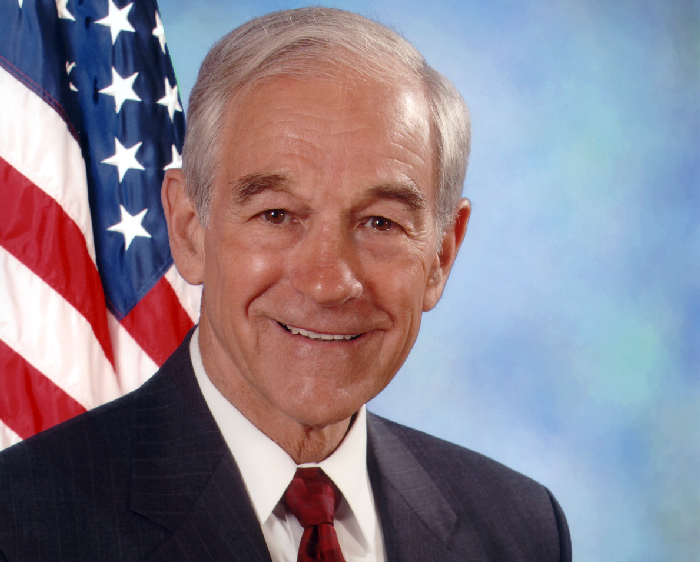
In 1988, Ron Paul did not become the President of the USA. He did not become President in 2008. And in 2012, he probably will not become President… according to most pundits. But Paul has previously said that he seeks not only to win, but also to “influence ideas and the future of the country”. In that respect, his current bid to be the Republican Party nominee has already been a relative success. Paul has progressed from being a deliberately overlooked player on the fringes, to a candidate whose passionate supporters, considerable fundraising and reliable poll numbers have left him impossible to ignore. To some extent, his time has come. Financial collapse, war fatigue, fear of surveillance and deficit deadlocks all bolster the American voter’s appetite for Paul’s policies. His vision of a low tax, militarily isolationist, constitution-respecting and minimalist government resonates with voters who are tired of feeling disconnected from career politicians who differ in degree but offer nothing new. Ron Paul is undeniably different. That is why his supporters love him, and his opponents despise him. Newt Gingrich even went as far as saying “I think Ron Paul’s views are totally outside the mainstream of virtually every decent American”. Gingrich has a reputation for being intelligent, though this was a typically stupid thing for him to say; Paul picks up support from registered Republicans, Democrats and independents, and he has raised far more money than Gingrich has, mostly through small donations. Winners want support like that. They do not alienate it. Gingrich is buffoonish, Romney is boring (when not flip-flopping) and Obama is… well, Obama, a man who loves to talk, especially if talk delays useful action. However, whilst Ron Paul’s time has come, and his opponents are flawed, he faces enormous obstacles. His opponents will gleefully eviscerate his ‘kooky’ and ‘dangerous’ thinking. But here are five other obstacles that even Paul’s opponents will not mention, because they reveal much of what is wrong with politics. Even so, they may well prove the biggest obstacles to Paul’s campaign.
1. None’s fair in love…
Perhaps the best and most memorable Ron Paul logo takes the word ‘revolution’ and writes the 2nd to 5th letters back to front, mirror-spelling the word ‘love’. Love is not a word normally associated with a political campaign, unless the politician is talking about the love of family. Ron Paul’s love is clearly meant to extend much more widely. It re-emphasizes the distinctness of a campaign that could be painted as soft on dealing with foreign threats, and soft on social matters like drug taking. To his supporters, the use of such a word helps to characterize Ron Paul’s liberty-loving outlook. But for those disposed to distrust Paul, it subconsciously underlines their worries about whether Paul could ever be more than a protest vote.
2. …and war
Wars are expensive. Overburdened taxpayers might enjoy an end to America’s self-appointed role as the world’s military police force. But big military contracts lead to big vested interests. You do not have to believe in left-wing conspiracy theories to recognize that businessmen do not like to see their profits diminished, and workers do not like to lose their jobs. In many ways, Ron Paul’s campaign to restructure the US military is more threatened by domestic self-interest than foreign powers.
3. All you need is money
Money wins elections. In 2008, a lot was made of the fact that Obama raised a lot of money from small donations. It was true he raised a lot of money that way. However, Obama raised a lot of money from big donations too. Of the USD747M raised by Obama in 2008, 33% came from donations of USD200 and under. Over 30% came from donations of over USD1000. In contrast, 63% of the Ron Paul’s 2008 funding came from donations of USD200 and under. In this cycle, Obama is once again leading the fundraising race, though so far the proportion he has raised from small donors represents 57% of his total. For his current campaign, Ron Paul has generated 58% of his USD13M from small donors. Of the Republicans, Romney and Perry have raised more, but their money overwhelmingly comes from donations of USD2000 and over. When it comes to donations of USD200 and under, Romney has raised less than half what Paul has raised, and Perry has not managed a tenth of the funds Paul generates from small donations. Big money is on the side of Paul’s Republican rivals. And make no mistake – Obama will call in the big dogs when he needs them, which is not yet. Part of Ron Paul’s appeal is that he has not been corrupted by big money interests. That is noble – but he has many opponents who can, will and do call on wealthy backers… and they will find ways to reward their supporters once they have been elected.
4. Something old…
American politicians tend to talk a lot about the founding fathers and sticking true to their principles, but the reality is that the so-called political ‘mainstream’ is a million miles from anything the founding fathers could possibly have had in mind. After all, they were slavers “” which is hardly the current mainstream. But that does not stop modern politicians trying to position themselves in the midst of some sentimentalized and fictionalized account of the politics of the founding fathers. To summarize some of their main positions: they thought liberty was a god-given right whilst government only existed as a minimalist practical compromise; they fought a war of independence with a force of amateurs, and they did so to expel a standing army from overseas; they wanted states to be largely autonomous and countenanced that each state could vary in their social norms without that provoking federal interference; and they believed that free trade and friendly relations would be the cornerstone of peace “” which is why they quickly normalized trade with the defeated Brits. Can you think of a politician espousing similar principles? Ron Paul’s problem is that he is closer to the mainstream of the founding fathers than the current mainstream, and a misty-eyed mystification of American political history is an obstacle to sensible debate about why the mainstream has moved so far, and if it has moved too far.
5. … and nothing new
Obama was new and he won. Palin was new and she was briefly popular. Bachmann was new and she did well in the polls. Perry was new and he did well in the polls. Cain was new and he did well in the polls. Have you noticed the trend yet? In reality, some of these politicians are not new “” Perry is a career politician at state-level, trying to become the top national politician by criticizing anyone who was a career politician at national level. However, modern politics is dominated by shooting stars who appeal to a broad range. They can do so, without contradiction, because they have so little (known) track record that they can appeal to a range of voters who want contradictory things. The net result is a prejudice towards the unproven. Some are so unproven that their popularity is quickly shown to be based on nothing but novelty. Ron Paul has shown himself willing to attack the Achilles heel of anyone with a track record, which is why his campaign has highlighted Romney’s flip-flops and Gingrich’s serial hypocrisy. The problem for Paul is that he too has a record that – like everyone else’s – will exhibit vulnerabilities. The Ron Paul Survival/Financial/Imbecile Reports provide easy ammunition to opponents. He can probably overcome those bee stings, because his personal presentation is so consistently at odds with the voice that spoke through those reports. But nothing removes the stain of having to fight so hard, and lose so hard before, just to get noticed. When it comes to the final showdowns, his opponents will portray themselves as statesmen, and will make a telling nod towards Paul’s history of frequenting the low down and dirty side of public debate, just to find audiences for his message. That does not make them better than Ron Paul. But it does mean that Paul will struggle to appeal to the kind of voter who prefers a perfect record of doing nothing to the grubbiness of doing whatever it takes. In the end, Paul’s greatest asset of being who is his, might also prove to be his greatest impediment.
Who Makes Jobs? Maybe Newt, Maybe Not
The political right faces a key challenge when arguing for small government. Some voters are motivated to support politicians who promise that good things will happen after they are elected. So far, so obvious. An equally obvious example of a good thing is the creation of new jobs in a stagnant economy with high unemployment. So the right is faced with demonstrating a counter-intuitive cause and effect between a less active government, with fewer employees, and more jobs overall. Furthermore, how does the right extend the argument further, by aiming to receive (and deserve) credit for the jobs made in the private sector?
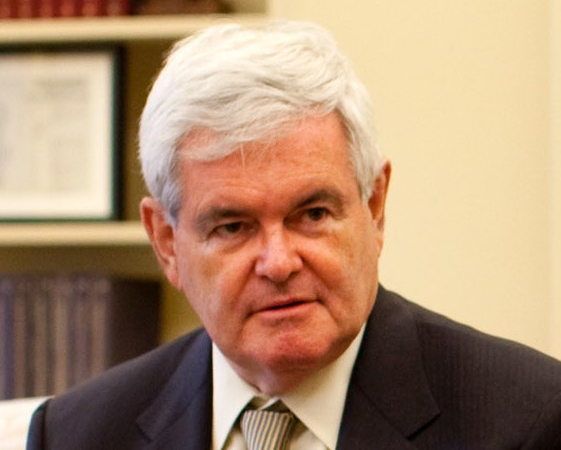
The intellectual muddle was recently illustrated by Newt Gingrich’s campaign for the Republican presidential nomination. The former Speaker of the House of Representatives is an undeniable conservative, though sometimes a confused one. Gingrich has tried to exploit discontent with the high levels of unemployment seen under Obama, highlighting his plan for more jobs. But as illustrated by these three 30 second TV slots, which were shown in the run-up to the Iowa caucuses, there is confusion about who deserves credit for new private sector jobs. In the first spot, from Gingrich’s official campaign, he is quoted saying that jobs are created by the people, not government. The second spot, from a pro-Gingrich Super PAC, tells us that Gingrich created jobs when he was in government. And the third spot, again from Gingrich’s official campaign, explains that ‘we’ can create lots of jobs. Confused? Of course you are. You just vote for policies; you do not dream them up.
The New New Year with num-Eric

Plus ça change… this morning I consulted Samuel Pepys to see what he was thinking about, 350 years ago to the day. It turns out Sam was planning to do his year end accounts, and was worried about whether he could afford his spending. I have the same concern, especially since the University of Berkhamsted refused to fund my latest research proposal: experiments to determine whether Ricky Gervais is funny. If you ask me, the experiments were brilliantly designed. They involved showing the entire first season of Ricky Gervais’ recent TV comedy, Life is Short, to two groups. One room would be full of BBC executives, who had just been reminded of the strong DVD sales for Gervais’ previous shows and how the BBC had a fabulous track record for discovering great international comedy stars. The other would be full of severe amnesiacs, unable to remember any BBC comedies since Morecambe and Wise or The Goodies. My forecast was that the BBC executives would holler with laughter for hours on end, whilst the amnesiacs would smash the screen 7 minutes into the first episode. Sadly, the vice-chancellor of the university’s venture capital fund said the research would have no commercial application, so he vetoed it. I tried to point out there might be a saving for BBC licence fee payers, if it meant they sacked Gervais and re-ran The Goodies instead. He said he could never forgive The Goodies for their song, the Funky Gibbon. Apparently the tune had played inside his head continuously for 12 years. Having reminded him of it, I had inadvertently set it off again. I apologized and left his office, slightly dejected, but cheering myself up by whistling their very catchy tune… do, do, do the funky gibbon…
… ooo ooo ooo funky gibbon… where was I? My watch has progressed three hours since that last paragraph, so maybe the VC of VC had a point. Given my strained finances, New Year’s celebrations will be very muted this year. The clones and I will be staying in, passing around the bottle of gherkin schnapps that MaV-Eric brought back from his marketing junket in Ljubljana. He says it is a local speciality but I think they must only make it for tourists. All the other clones are here too, preparing for the party, in their own special ways. Lim-Eric is writing a new poem that he will recite after midnight, Cube-Eric has his camera ready to video everyone enjoying themselves, h1ST-Eric is huddled in a corner because he thinks the world will end, and @MosF-Eric has decided to DJ. Even col-Eric is helping out; he is flicking the TV channels trying to decide what should play in the background. I say Charlie Brooker, Lim-Eric wants Jools Holland whilst col-Eric prefers Tweets of the Year. col-Eric is making his choice for the wrong reasons – he wants to see if he can start a trend with #tweetsoftheyearisshit – but at least he is trying. However, num-Eric simply refuses to get into the spirit of things…
num-Eric: But it’s so arbitrary. Celebrating midnight on January 1st makes as much sense as celebrating 6:19am on August 8th.
Eric: I prefer to celebrate the new year at the start of the new year. Also midnight is a better time for partying.
num-Eric: You don’t understand. This is only the new year as a matter of convention. We could have decided that the year started on any day, at any time.
Eric: I suppose you have a point there. It is kinda annoying that they put New Year just one week after Christmas. It would have made more sense to spread them out. But then, they had to have New Year at this time of year, because that was why Mary and Joseph were rushing back to Bethlehem, to take part in the new year census, wasn’t it? Then… whoopsie… she had to have her baby all of a sudden, whilst sat in the manger. So maybe we should blame God for the bad timing.
num-Eric: No! The Romans started the year on January 1st because that was when the new consuls entered office. When Julius Caesar took over, he stuck with January 1st as the first day of the year in his calendar.
Eric: Well, if they’ve been celebrating new year on January 1st for all that time, why change now?
num-Eric: Because it hasn’t been consistently celebrated on January 1st, and because it’s inconvenient.
Eric: I suppose the tax year doesn’t start on January 1st, not that a new tax year is something to celebrate.
num-Eric: No, but you make a good point. Our tax year starts on April 6th, and that’s because, until the British government passed the 1750 Calendar Act, this country’s year officially started on March 25th.
Eric: Huh?
num-Eric: And – if you let me finish – because of the change from Julian to Gregorian calendars, the old March 25th was equivalent to the new April 6th. By setting the tax year accordingly, nobody had to pay extra tax.
Eric: That was good of them. I can’t imagine the modern Inland Revenue being so generous. So when would you like to celebrate the new new year?
num-Eric: We could be like the revolutionary French. They invented a decimal calendar. It had 36 weeks of 10 days each, and the year started at the Autumnal Equinox.
Eric: Hang on, doesn’t that mean they had a lot fewer weekends?
num-Eric: Yeah, they didn’t think that one through. Well, maybe we should celebrate the new year on ‘Lady Day’, which is March 25th. Or we could celebrate on July 2nd, which is the opposite to January 1st.
Eric: Don’t you mean July 1st?
num-Eric: No, there’s only 181 days in the first 6 months of the year, and 184 in the last 6 months of the year, so July 2nd is closer to the exact middle than July 1st.
Eric: By your logic, midnight on July 2nd is not the middle of the year. The middle of the year would be noon on July 2nd.
num-Eric: Perfect! Can you imagine how much easier and cheaper it would be to book a party venue for noon on July 2nd?!?
Eric: Possibly… but if we’re going to give up on our current calendar, why schedule our celebrations to be held once a year? It’s not like we’re farmers, wedded to the seasons… and we’re not French, so we know how to calculate with fractions…
num-Eric: That’s a very astute point. We could celebrate every galactic year, which is the time it takes our solar system to complete an orbit of the galaxy.
Eric: That sounds like something worth celebrating. How frequently would we celebrate that?
num-Eric: Once every 225 million years.
Eric: So not often then. It had better be a very big party to compensate. And when does the next galactic year start?
num-Eric: Well, modern humans have only existed for about a thousandth of a galactic year, and we don’t have sufficient data to pinpoint when the Earth was created. That means we could pick any time we like to be the start of our new galactic year. How about 4ish, Tuesday week?
Eric: I find that terminology confusing. Do you mean Tuesday coming?
num-Eric: No, I mean the Tuesday after that.
Eric: I’ve got a dentist’s appointment then.
num-Eric: How about the Wednesday?
Eric: Fine by me.
num-Eric: It’s agreed then. We’ll celebrate the new galactic year at 4ish, a week on Wednesday.
Eric: Sorted.
num-Eric: It does make you think about why we celebrate things when we do.
Eric: How so?
num-Eric: Well, take birthdays. If you’re pro-life, and you believe life begins at conception, then surely you shouldn’t celebrate birthdays, and you should count somebody’s age from the time they were conceived.
Eric: That’s a fair point, but I shudder to think about the circumstances of my conception.
num-Eric: Births are pretty ugly, messy affairs with lots of blood and screaming.
Eric: Yeah, but it’s still a prettier image than my parents copulating. [Pauses] Where’s the gherkin schnapps? I need a shot to help get these disturbing thoughts out of my head.
num-Eric: Oh, you don’t need a drink. I’ve got a perfect solution for clearing your head of any unpleasantness.
Eric: What’s that?
num-Eric: It’s a great video I saw on YouTube. There’s these three guys singing a song about a funky gibbon…
Writing a Carol for Everyone
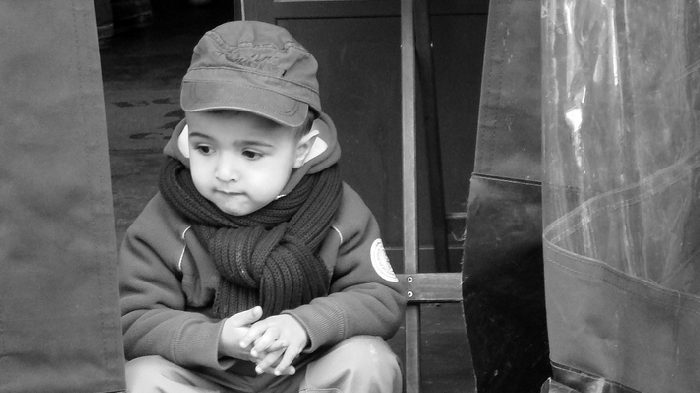
There is no festival for literally everyone, which is a shame. Christmas does pretty well; its popularity extends beyond the two billion people who call themselves Christians. On the other hand, I can sympathize with those Christians who feel dispossessed when Christmas is morphed into a non-specific ‘holiday’ season. No other religion can offer a festival as globally popular as Christmas. The celebration of the New Year is widespread – but not everyone shares the same calendar. Harvest festivals are common across the planet, though increasing numbers only ever do their harvesting at a supermarket. Sporting events can bring people together, but even the World Cup falls short on two scores: not everybody likes football, and the people running the sport are hideously corrupt and self-serving. Despite the difficulties, every year, at this time, I look for a way to reach out to everyone, irrespective of their beliefs. Christmas is a time for giving; I do not want to discriminate based on the beliefs of the recipient, but nor do I see benefit in offending people either. Is there a middle route, that allows me the option to borrow from Christmas, without undermining or challenging anyone’s religious beliefs? The Christians borrowed much of Christmas from the pagans, which was why the Puritans were opposed to celebrating Christmas. I wondered if I might create a gift suitable for anyone, and to make it from ingredients that were borrowed widely. This is what I borrowed:
- the idea of a carol as a way to communicate goodwill;
- the oft-used folk tune of O Tannenbaum;
- a dulcimer recording of the tune shared through creative commons; and
- lots of recently uploaded photos to Flikr, featuring people I have never met and which were shared by people that I do not know.
I tried to tie them all together with some new words that hark back to some very old themes. The result, for want of a better description, was a carol for everyone, incorporating words, music and pictures. The words are below. You can watch the assembled film here.
O human race, O human race
Your home spins round in outer space
Once more you’ve gone around the sun
And wound right back where you’d begunO human race, O human race
You run through life at fearsome pace
Yet still you’re apt to linger on
Within the guise of your childrenO human race, O human race
So many times you fall from grace
Through every battle, lost and won
Descants of peace will still be sungO human race, O human race
So much to see, within your face
But after all is said and done
Each person looks like everyone
I hope you enjoyed the carol. If you celebrate Christmas, I wish you a merry Christmas. If you do not celebrate Christmas, I wish you the same peace and goodwill. And most of all, I wish it not just for the season, but for every day, and everyone.