Home Blog Page 16

The Funnel Begins

In the last episode of Karen Zipslicer’s adventures, she left Airship Downs, walking into the heart of town, headed for the ships that docked on its Southern side.

Karen could barely move her feet as she started the descent of Airship Downs, but she picked up speed as she went, and by the bottom, all her systems were in overdrive. Karen’s disappointment propelled her forwards. Desmond’s words kept repeating in her head: seaship captains sail over the edge of their maps. Maybe they could sail Karen home. She doubted it, but she wanted to find out. A chemical reaction had transformed Karen’s frustration into fuel, and it burned inside her. She wanted her red boots to tear across town like flaming rockets, and they did, for an hour. Then her movements clogged as she neared Lundern’s heart. Tough on the outside, her boots had pounded Lundern’s stony streets. Tender on the inside, her feet now suffered. Her left ankle was sore and her soles were blistered. She thought about slipping on her Heelys. However, she was too shy to do it in public. The pain was annoying, but what really delayed Karen was a congestion and compression of people and animals that filled every passage she walked down. Without noticing at first, her lone path had fed into a trickle which led to a stream which swelled into a river of Lundern life, all flowing towards Farrago Square, Lundern’s greatest meeting-place. Karen had no interest in the square, or the meeting, or the Lunderners going to it. She wanted to escape Lundern, not join its community. It was coincidence that her route to the river went through Farrago Square. This way was direct, so best for her painful feet. The streets were swamped, so flowed painfully slowly. Karen always hated it when people slowed her down. Her mind and body longed to get ahead.

Obstructed in her movements, Karen tried to break through. She jinked ahead of a waddling goose, but was trapped behind a herd of sheep. She tried to slip between a Welsh Corgi and an Old English Sheepdog, but a Scottish Terrier beat her to it. She nearly snagged her coat on a stag’s antlers, and she almost stepped upon a hedgehog. Karen was crammed in, hemmed in, hampered and impeded. She felt like she was walking to a big football match in the company of a zoo, though she did not like football, and was not keen on zoos. Fed up, she dived down a side street that led East, hoping to distance herself from the crowds. The street was empty, apart from two police constables “” one a woman, the other an enormous brown bear. They instantly confronted her.
“Insurance!” demanded the policewoman. Karen shakily reached for the inside pocket where she kept her waiver. “Hands where I can see them!” shouted the policewoman.
Karen put her hands straight up. “I was just getting my insurance,” pleaded Karen.
“Oh yeah, were you? Go on then,” said the policewoman.
“It’s alright dear,” said the policebear, speaking in a mild, feminine voice to the policewoman. “I don’t think this one is going to be trouble, are you?”
“No,” said Karen, energetically shaking her head. She pulled out the insurance waiver and handed it to the policewoman.
The policewoman scrutinized it carefully. “Is this all you’ve got? Karen Zipslicer. Karen Zipslicer. Are we looking for anyone called Karen Zipslicer?”
“I don’t think so,” said the bear.
“Alright, you can go,” said the policewoman, handing the waiver back to Karen. Karen put it inside her jacket pocket and zipped her coat, then stepped to go past the policewoman…
“Not that way!” roared the policewoman. “Go back the way you came!”
“No need to shout,” said the bear to her colleague, in a mild, feminine voice. Then the bear told Karen: “you’ll have to turn around sweetheart, we can’t let anyone through this way.”
“But I want to get away from the crowd,” begged Karen. She begged the bear, as she was far too afraid to speak to the woman.
“Sorry dear. Orders is orders. Now you’ve joined the protest rally, you’ll have to stay with it.”
Karen pouted, and her shoulders drooped, but there was no sign of sympathy from these police officers. She traipsed back to the crowd making their way towards Farrago Square. Rejoining them, she soon realized that the police had blocked every side street. There was no way to leave the throng. Inside her hip pocket, Whiteley was restless as well, and too frightened to climb out.
“Me don’t like crowds,” said Whiteley.
“Me neither,” said Karen.

The streets absorbed more and more, until they were fit to burst. As Karen progressed towards Farrago Square, she went from striding confidently, to treading carefully, to tiptoeing cautiously as everybody competed for space. Nobody wanted to fall like a domino. The multitude now walked in unison, bustling and bumping along with each other. In the crowd, Karen felt alone, even though Whiteley was with her. Everybody else shared a common purpose; she was just passing through. The crowd burbled excitedly, waves of chatter rippling all around. Some carried placards or banners with messages like ‘freedom now’ or ‘we want our rights’. Whiteley hid inside her pocket, refusing to talk. Karen bit her lip. She watched her boots shuffling forwards. The eyes of the crowd were opened wide and burned with passion; they wore no black boxes. Whiteley kept being jostled when strangers accidentally brushed alongside Karen. “Go back,” demanded Whiteley. Karen thought of her poor feet, and about swimming against this tide. “We’ll be alright,” she said.

The buildings turned from wood to stone as they neared Farrago Square. They grew taller, grander and paler. The roads stretched wider and the paving stones lay smoother, which was a blessing for Karen’s downtrodden feet. She would have loved to heely-wheely down these roads, if there had been room to do so. Every inch had already been occupied by a foot, or a hoof. Now they passed a line of police “” men, women, Alsatians, Dobermans and Giant Schnauzers “” who guarded Lundern’s Treasury. Karen recognized it from the likeness on the pfennigs in her purse. Those coins were tiny. The Treasury building was monumental. It made surrounding buildings look like doll houses next to a real house. The line of police was unbroken, guarding the Treasury’s perimeter. They looked fearsome. The police dogs were attentive, with wide eyes and ears pointed forward. The policemen and women had helmets on their heads and faces behind bars, circular steel shields in one hand, and wooden batons in the other. The crowd kept its distance. Karen, desperate for space, broke the other way, towards the police. “Please officer, is there a way to walk around the Square, without going through it?” He did not blink, saying: “you can’t stop here, girl “” now you’ve joined the protest, you’ll have to keep moving”. Karen did move on, muttering that she was “a young woman.” But there was not much further to go. Like many, she stopped and stood in awe after turning the corner, round the Treasury and into Farrago Square.

Wow. Some people pushed past to either side of Karen. Karen barely noticed. She was so small… they were so small… everything was so small compared to this open space. Airship Downs had impressed. Farrago Square exceeded all estimation, and boggled the imagination. It was shaped like a giant rectangular granite bowl, with a cascade of steps that ran down each side, leading to a flat expanse in its middle. Its size was matched by the weight of the crowd it contained. Though full already, more poured in from all four corners. In the centre of the square, a pillar rose five hundred feet above the sea of people. From that vantage point, the statue of Gilbert the Observant looked down upon the living ocean beneath, watching it through a pair of binoculars. And whilst he looked down on the square, birds looked down from him, having occupied every spot and space upon his head, shoulders, arms and around his feet. The birds had commandeered his column, and did the same to every roof of every building around the square, including the façade of the mighty Treasury. So many birds were flocking to the square that the skies were temporarily blackened. And above the birds, a giant airship hung, like a full moon over the ocean. Whichever way she looked, Karen could not take it all in. Her neck craned around, turning back and forth as she observed the scene. This was so much larger than the protest she had witnessed at Parliament Square in London. And whatever these Lunderners wanted, an awful lot of them wanted it, and they wanted it an awful lot.

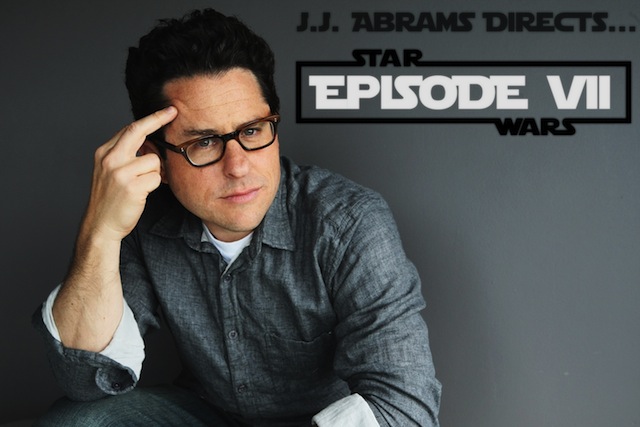
Why JJ Abrams Was A Bad Choice for Star Wars

Who could do more harm to Star Wars than Jar Jar Binks? J.J. Abrams could, and I think he will. The clue is in his name. Move over JJB, because Disney has hired JJA to direct the new Star Wars movie. Whilst half the world is clapping with joy at this supposedly brilliant appointment, and the Disney money men laugh all the way to the bank, where they will roll around naked in the vault, tossing gold dust over each other and shoving precious gems up their orifices, I shrug my shoulders and resign myself to watching the next bastard deformed Star Wars offspring only when it appears on broadcast TV for free. Or maybe I will I get to watch it three inches by three inches during a long haul flight (edited for rudeness and to fit the screen). Oh yeah. This fool has been stung before, and I am not shelling out for yet another overpriced cinema ticket just to discover that I am as big a sucker as all the other suckers. You will not catch me wasting more money on yet another rubbish Star Wars cash-in knock-off degraded regurgitated necrophilic shagging-over of what worked well during two-and-a-half films during a time so long ago that George Lucas still had a neck. Once bitten, twice shy, and this fool not only saw Phantom Menace on opening night, but I flew to New York to see it.

I already had my doubts when Disney paid $4bn to get a slice of hot Star Wars money action. Disney + Star Wars = Pirates of the Caribbean in Space. Then they put J.J. Abrams at the helm. Now I have to imagine something worse than Pirates of the Caribbean in Space. And I know what some people are thinking. “J.J. Abrams is really good, he’s really talented…” Bullsh*t. Here are ten reasons why J.J. Abrams stinks as the choice for Star Wars director.

1. Lost in Space

The words “J.J. Abrams” are often used alongside the words “creator of Lost“. They mean it as a compliment. Lost was loved by two kinds of people. First, there was the money pigs, who loved Lost because it generated so much cash. After all, Lost had huge audiences (plus lots of product placement for Zero Halliburton luggage). Second, Lost was loved by its huge audiences. But anyone who watched Lost to the end must be a real loser, and I can prove it. The whole plot of Lost was one big never-ending tease. Hours and hours of tease. Add them together and you ended up with weeks of tease. It was the only show on television where literally no character ever answered any questions asked by any other characters. For weeks on end. Turning into months on end. Turning into years. And what was it about? Nothing. Absolutely nothing. So Lost was like an intelligence test. The test was: how quickly do you realize you are wasting your time because nothing in Lost ever gets explained? That was the test. I scored a D for ‘dunce’ because I watched it way too long. But I least I got out before the end. The only way to keep watching that show would be to do so much drugs that you have no recollection of what happened in any of the previous episodes. You would have to wake up stoned, just in time to put on Lost, enjoy the episode as a standalone experience, right up to the end where you think to yourself “hmmm… that was mysterious… I’ll watch next week to see how it gets explained.” And the next week there would be a new mystery. And the week after, a new mystery. And so on, endlessly. In other words, it was a gigantic con act. Again, the clue was in the title. When they called it “Lost”, it was a warning that you were going to lose a big chunk of your life watching a load of claptrap with no real plot or meaning. Or that you had to lose your mind if you wanted to keep watching it.

2. Serial Cheat

Abrams not only cheated in Lost, he cheats with all his stories. This is supposed to be great storytelling. It is not great storytelling. It is cheating. It means treating the audience with disdain. He turned Spock into a liar (which is meant to be impossible), Alias was a bunch of unrelenting hooey, and the tension in Armageddon depended on a phoney-baloney argument about whether a drill would break or not. So if you think J.J. Abrams is some kind of sci-fi storytelling guru, then let me quote what a real sci-fi storytelling guru has to say about telling sci-fi stories (in guru stylee). In the introduction to Asimov’s Mysteries, sci-fi giant Isaac Asimov explains that sci-fi has no limits, but it should not cheat its audience either:

There is a tendency for many people who don’t know any better to classify science fiction as just one more member of the group of specialized literatures that include mysteries, westerns, adventures, sports stories, love stories, and so on.

This has always seem odd to those who know science fiction well, for s.f. is a literary response to scientific change, and that response can run the entire gamut of the human experience. Science fiction, in other words, includes everything.

And yet science fiction writers seemed to be inhibited in the face of the science fiction mystery.

Back in the late 1940s, this was finally explained to me. I was told that ‘by its very nature’ science fiction would not play fair with the reader. In a science fiction story, the detective could say, ‘But as you know, Watson, ever since 2175, when all Spaniards learned to speak French, Spanish has been a dead language. How came Juan Lopez, then, to speak those significant words in Spanish?’

Or else, he could have his detective whip out an odd device and say, ‘As you know, Watson, my pocket-frannistan is perfectly capable of detecting the hidden jewel in a trice.’

Such arguments did not impress me… [Authors] stuck to the rule of being fair to the reader. Clues might be obscured, but not omitted. Essential lines of thought might be thrown out casually, but they were thrown out. The reader was remorselessly misdirected, misled, and mystified, but he was not cheated.

… the same would apply to a science fiction mystery. You don’t spring new devices on the reader and solve the mystery with them… In fact, you carefully explain all facets of the future background well in advance so the reader may have a decent chance to see the solution.

Does Abrams pass Asimov’s test? He has never tried to. And now the creator of Lost is going to bring the Star Wars franchise to an end. Expect it to end for the same reasons that Lost reached an end – not because anyone wrote an end, but because the audience was tired, the ratings fell, and the money men saw the profits were dwindling. Abrams will not add to the Star Wars legacy. He is going to bury it.

3. Cloverfield

In contrast to the last argument, this needs no elaboration. Anyone who saw the movie monstrosity Cloverfield knows damn well why they may talk about “J.J. Abrams, creator of Lost” but never describe him as “J.J. Abrams, Producer of Cloverfield“.

4. Fast Films

J.J. Abrams is to film what Colonel Sanders is to food. It may sell by the bucketload, and you may even like the taste, but the product is cheap, fast, disposable trash for lazy masses who want to feel good for while and have nothing better to do but swallow crap. Instead of telling you a wholesome, soul-nurturing story, J.J. Abrams makes mass-produced pap with a taste that nobody objects to. If there was any justice, he would signed up to make Fast and Furious 7, instead of Star Wars 7. But by the time he has finished with Star Wars, there may be nobody able to tell the difference.

5. The Star Trek Reboot was Overrated

Star Trek is an indestructible franchise. It is so rock solid, that they had a balding, ageing Brit playing a French starship captain, fighting hand to hand with the rock hard twenty-something Tom Hardy… and defeating him. And people were still bound to come back to see the next Star Trek film. But for all the nice visuals and the very good cast, the Star Trek reboot did little apart from rape the existing mythology of Star Trek. So now we have seen young Kirk and young Spock doing a young Kobayashi Maru. Why does that work? It works because the original Star Trek was successful. And it was successful because the old Kirk and the old Spock were such good characters. They were such good characters that it did not matter that they really were very old indeed. The first Star Trek film began with Kirk and Spock coming out of semi-retirement to go adventuring again! And in the second film, Bones gives Kirk a pair of reading glasses as a present – because they’re both so bloody old by then. But they still went on to make another four films after that. So the secret of the reboot is no secret at all. J.J. Abrams got a good-looking talented young guy to play Kirk, ditto for Spock, ditto for most other characters, put them on a good-looking set and surrounded them with good-looking CGI. Excuse me if I fail to see any genius with that. Oh, and he got them to act out a really lame story that was quite boring, even though it involved the destruction of not one, but two inhabited planets. (What will he do next? I half imagine Benedict Cumberbatch saying the line: “with my ray gun I will destroy the whole galaxy!!! No, wait – the whole universe!!! Mwahaha…”)

6. No Hips, Tits, Lips, or Balls.

By now, you must have noticed a recurring theme in my arguments against J.J. Abrams as a creative force. He is a risk-averse corporate puppy, which is why the money men love him so much. “So what?” you cry. Because taking risks matter. If nobody took risks, there would be no Star Trek, or Star Wars. The original Star Wars took lots of risks, of all sorts. Star Trek also took lots of risks. It was so gutsy that they put a Russian in charge of the weapons systems, ignoring the cold war between the US and the USSR. And Star Trek was responsible for the first inter-racial kiss to be shown on broadcast US television, when Kirk puckered up with Uhura.

There was something very special about Uhura. Yes, I know they made the woman the receptionist, but what a woman they chose for the role: 100% black woman. Nichelle Nichols had a serious case of hips-tits-lips-black-woman-with-the-real-fine-ass-power. And there was no hiding it, not in those costumes. If something looks good on a black woman, then Nichelle Nichols had a double helping of it. Flash forward to the ‘post-racial’ future of today. Ordinary black people are buying skin bleach, and celebs are guilty of doing the same. This is not the future that they were hoping for, when they made the original Star Trek. Yet who was cast as Uhura in the reboot? Zoë Saldana is a beautiful woman, but she was a safe conservative, mainstream choice from an industry that likes its black women to come coffee-coloured. Her svelte figure and ponytail hair also speak volumes about how Hollywood likes to play safe with beauty. In other words, it was a sell-out choice to select Saldana, when we could all have enjoyed a really big and healthy dose of good old Nicholesque busting-at-the-seams black beauty. So we know that Abrams will not push a tough artistic line, taking risks as a director, even if the ‘risk’ means staying true to the spirit of the original. Where will that leave us in Star Wars? It means the Force will become even more insipid and less religious than it has already become (in case it upsets any bible-bashers in the US) and that it will present a fight between good and evil that is pure moral caricature.

7. Simon Pegg

I like Simon Pegg. He has been good in lots of things. And I am sure there are lots of reasons why he would like to be in a Star Wars film. But Simon Pegg should not be in any Star Wars film, because if they cast him, he will play the comic relief, probably wearing an outfit that looks like the mutant lovechild of C3PO and the robot costume worn by Woody Allen in Sleeper. Pegg will end up being another ridiculously obvious character aimed at the segment of the audience whose IQ is between 80 and 100. Yup, I just wrote that, but I do not regret it. Simon Pegg gets cast as comic relief by people who want filmmaking by the numbers, which means it will be predictable and boring. And predictable and boring is not funny, except for those people who laugh at boring and predictable things (in other words, people who are a bit stupid). You know who I mean. I mean those people who think it is funny when Eddie Murphy puts on a fat suit and a dress and plays a flatulent old woman. Yeah – Disney wants them to watch Star Wars in the cinema too, so they talk on their phones and kick the back of your chair, all through the show.

Abrams has used Pegg as comic relief in Mission Impossible 3, and in Star Trek, and both times Pegg really was a lot less funny than if he was either playing a proper role with comic effect, or if he was appearing in a genuinely funny film. If Pegg is cast in Star Wars, I hope they put a custard pie in his face then shoot him during the opening scene, so we get it over with and do not have his faux funniness hanging around for the whole film, stinking it up like the stale fart from that guy who is also kicking the back of your chair. And the worst thing about casting Pegg as comic relief is that he is already a lot older than Harrison Ford was in the original Star Wars. Why does this matter? Because great humour in great adventure stories comes from characters that have an unexpected edge to them. You get great humour when you take a rouge like Han Solo and make him say “boring conversation anyway”, not from getting Pegg to put on a Scots accent and asking for “fud, real fud” whilst rubbing his belly and winking that he might be fat in twenty years’ time.

8. Genre is the Mind Killer

Time and again, J.J. Abrams has been described as a genre director of Science Fiction. Why is that praiseworthy, as opposed to damning? Alarm bells should be ringing if – as Asimov pointed out – the SF genre is treated a ghetto. The art of storytelling is universal. Character, consistency, realism are three elements where Abrams is weak, and inhabiting a Science Fiction niche is not an excuse for those weaknesses. Disney has to buy franchises because they have no ambition and cannot take risks, meaning they cannot do new and unexpected things. Hence the Disney that pioneered feature-length animation ended up being walloped by the imaginative people working at Pixar. Picking a ‘genre’ director fits with Disney’s narrow, myopic, conservative approach. Star Wars does not need a genre director. Lucas was not a genre director when he made the first film, and that turned out pretty darned well.

Consider, if you will, what a really different director might do to rejuvenate Star Wars. Skyfall, the latest Bond film, did not have a genre director. Sam Mendes has directed everything from Shakespearian theatre to musicals to American Beauty. The Bond producers took the attitude that Mendes’ range of ability would bring something fresh to Bond’s action adventures – and they seem to have been right. If Mendes could do that for the Bond franchise, then other directors could do something similar for Star Wars. Just imagine what kind of film we might have if a more radical choice is made – somebody like Steven Soderbergh or Edgar Wright (though Wright has the disadvantage that he would still cast Simon Pegg).

If I could pick anyone to direct a Star Wars film, it would be the Taiwanese genius Ang Lee. Ang Lee seems to be able to do anything and everything. That means infinite possibilities for what he could achieve if let loose with the budget and scale of the Star Wars universe. The first Ang Lee film I saw was The Wedding Banquet, made in 1993. It is a brilliant drama-comedy-romance, that cuts through dividing lines of nationality and sexual orientation. Although I loved the film, nobody could have anticipated he would go on to nail the family and traditional values represented in Eat Drink Man Woman, Jane Austen in Sense and Sensibility, martial arts and wirework in Crouching Tiger, Hidden Dragon, gay cowboys and beautiful landscapes in Brokeback Mountain, and 3D CGI tigers in Life of Pi. But he has done all that. And if he can do all that, he could bring together drama, action, fighting choreography, comedy, romance and 3D computer graphics and put them all into the next Star Wars film. Or you could have J.J. Abrams (creator of Lost and director of Star Trek). I know which I would prefer.

9. Joss Whedon

If you have to pick a genre director, at least pick the best genre director. Whedon has proven he can keep the most difficult fans happy, weld together many-faceted stories and make every aspect work, and he is great with action. He can deliver big budget CGI-laden films, and he has proven he converts them into much bigger box office takings. Best of all, he handles humour really well (no need for Simon Pegg in his films). Also, I find it hard to believe that Whedon would have turned down the chance to direct Star Wars. Whedon is the fanboy that all fanboys and fangirls love, and he has balls big enough to sometimes go against what his studio bosses want, in order to get the best results for the audience… but maybe those are two reasons why Disney would prefer a more pliable director. Disney wants safe and it wants broad appeal, without realizing that they risk ending up with bland mush that satisfies nobody.

10. All this has happened before. All this will happen again.

Even when Lost was at its popular peak, it was not the best SF on television. Like Whedon, I thought the reimagined Battlestar Galactica was incomparable in the sophistication of its storytelling. Whilst Lost put up mirrors to give the illusion of depth, most notably by naming characters after the philosophers John Locke and J.J. Rousseau (it seems there are JJ’s everywhere), Battlestar Galactica was throttling the viewers with its sheer audacity, describing struggles for survival between monotheists and polytheists, questioning what is life and if we have souls, and smuggling chunks of Nietzsche into its ‘sacred texts’. One of its recurring themes was that everything is a recurring theme – which sounds a lot like Nietzsche. But, contrary to this message within the story, the best thing about Battlestar Galactica was that it had an end. The characters get on a spaceship when their world is destroyed, so they travel to Earth, and then they arrive. The end. The end really is the end. Okay… there is a tiny little postscript which implies our Earth is heading for destruction, thus starting the cycle again. But all in all, Battlestar Galactica was a story by people who knew that stories need a beginning and an end, even if written over the arc of several seasons. Star Wars is no less deserving of having a proper end, especially as its beginning has been ruined. The final scenes of Return of the Jedi do that job. Unfortunately, being rich was not enough for George Lucas, so after adding a flaccid start and a pant-bustingly slack middle-aged spread to the franchise, he has sold the dying body to Disney so they can butt-fuck a few more dollars out of it.

With Abrams, and his proven ability to create parallel timelines, Hollywood really can rape the same idea over and over forever, meaning that our great great great grandchildren will not only be forced to take their kids to see yet more Star Wars films, they will also be taking them to see the latest in vampire, zombie and spiderman sequels/remakes/reboots. But even the best ideas run their course and need to be laid to rest. We want our memories of Star Wars to be like beautiful young Anakin Skywalker, and not to see them disfigured and twisted, like Darth Vader was. Good stories have an end, and for Star Wars, that will not come soon enough.

Rights and Chocolate

In the last episode of Karen Zipslicer’s adventures, Karen was told the bad news that there were no airships that could fly her back to Britain, and the shocking news that Britain was not even on their maps. Disconsolate, she needs some care and attention…

Karen left Thomas’ filing shed without a word, without needing to be asked again. She wanted to be outside, wanted to be alone, wanted to be in the rain, wanted to feel it crashing down on her head. The rain was coming down, and the world was coming down, as far as Karen was concerned. She stood motionless, her arms by her side, eyes unfocused, rain running down her face, colder every second. Until Desmond stepped up, and held his umbrella over her.
“You don’t look happy,” said Desmond.
Karen did not answer.
“You’ve had a bit of a shock,” said Desmond.
Karen did not answer.
“You’re going to catch cold if you stand around in this pouring rain. Why don’t you come with me and warm up with a cup of hot chocolate?”
Karen did not answer.
“And maybe a nice slice of cake?”
Karen did not answer. But she did not resist when Desmond placed one hand on her arm, leading her away. Her stomach growled. Cake would help to fill it.

The coffee shop rumbled with all the people and conversation that was packed inside. Desmond plonked Karen down at the only free table, then went to buy their drinks. Sitting alone in such a noisy, boisterous place made Karen feel nervous; she pulled out Whiteley for company. A sign outside had read “no animals allowed”, under the silhouettes of a bird and a four-legged creature with red crosses painted over them. Karen was more afraid of feeling lonely than being thrown out. She held Whiteley and stroked him firmly.
“Me not allowed in here,” said Whiteley.
“Why shouldn’t you come in here? You’re doing no harm,” answered Karen, wearily.
“Sign says not allowed.”
“I say differently. Why wouldn’t you be allowed?”
“Human beings think they’re better than animals.”
“People are better at some things, and ferrets are better at other things, like chasing rabbits.”
“People think they’re better. Doesn’t matter what at.”
“Relax. Nobody’s complaining, Whiteley.”
“Me complaining. Makes me plenty angry,” said Whiteley. “Gilbert the Good emancipated all animals in 412 P.G. but me still not allowed in here.”
“What does ’emancipated’ mean?”
“He banned people from owning animals.”
“You mean like slavery?”
Desmond returned with a tray. There was a mug of coffee for him, a mug of hot chocolate for Karen, and a slice of battenburg cake for each of them.
“You’d better hide your rodent,” said Desmond, taking off his cap and sitting alongside Karen. “We don’t want to get chucked out.”
“He’s not a rodent,” said Karen.
“Me not her rodent,” said Whiteley.
“Don’t get upset. I’ve got nothing against animal’s lib. I only want to drink the coffee and eat the cake I bought.”
Whiteley climbed back into Karen’s pocket without speaking.
“You’re horrible,” said Karen.
“So horrible that I bought you cake,” said Desmond, calmly, his mouth already half full of battenburg.
“How much did it cost?” Karen dramatically unzipped her coat and reached inside for her purse. She wanted to show Desmond that she did not expect him to pay. At the same time, she hoped he would pay, because she doubted that her two little pfennigs would be enough.
“Don’t worry about it.” Phew. Karen put her purse away again. Desmond continued: “I’m fine with animal rights, I am. But I can’t change how the world works.”
The cake was good, generously sliced and covered in a thick layer of marzipan. The hot chocolate was bitter and greasy, but it warmed Karen and woke her up. She was not in the mood for talking, and Desmond was not the talkative type, so their table was the conversational eye of the hurricane. They sat in silence whilst all the other coffee shop customers roared around them. Desmond’s head bobbed as he tried to think of something to say.
“Your coat’s good. Looks like it’s still dry inside,” was the best he could come up with.
“It’s made of Gore-Tex,” explained Karen.
“Oh,” said Desmond, not knowing what Gore-Tex was. His head bobbed around some more, whilst he thought of something else to say.
“What’s England like?” was his next effort.
“It’s alright,” said Karen.
“Good.” Desmond was really stumped now. He had long finished his cake, and his coffee was turning cold by the time he could think of something else to say.
“The rain’s stopped,” said Desmond, nodding towards the window.
“Has it?” said Karen, not even looking. She was taking her time to finish her cake, pausing between each spoonful she swallowed. A fight broke out two tables behind Karen. An airship pilot, still in his uniform, broke the back of his stool over his co-pilot, also in uniform, and several others jumped in to pull them apart. Karen never noticed.
“Well. I’ve got to go now,” said Desmond, standing up.
Karen looked at him at last. “Have you?” she said. Suddenly she wanted him to stay.
“Yeah.” Desmond was good-looking. Karen had been daft to ignore him.
“It was really nice of you to buy me cake and hot chocolate,” said Karen. Desmond was putting his coat back on. Karen was now thinking of lots of things to say to him. “Do you have to go back to work this minute?”
“Yeah.”
“Thanks for everything,” and she stiffly held out her hand towards Desmond. It took him a few seconds to realize he should shake it. He had a very firm grip, which caught Karen off guard; the handshake hurt a little but Karen tried not to show it. He walked out of the door, and she sat down again. Her cake was almost finished. She put the last spoonful in her mouth.

“Wait! Desmond! I’ll walk back with you.” Karen had run down one street and caught up with Desmond a little way round the corner.
“Yeah, good,” said Desmond, who was caught unawares, but pleased.
Now Karen struggled to remember all the things she was going to say. They crossed the street in front of a horse-drawn carriage, and headed up the hillside of Airship Downs. The rain had stopped but the wind had picked up, forcing Karen to shout when she worked out what she wanted to say.
“I didn’t thank you enough for taking me to the coffee shop.”
“That’s alright.”
“Really. I’m feeling a bit spaced out about having come here but not being able to find a way back. I don’t even understand where this place is, but that’s no reason to be mean to you.”
“You weren’t mean to me. You’re just upset. Do you have somewhere to stay tonight?”
“Yes, thanks,” and Karen started to cry. There was a rush of blood to her head and a tear squeezed out, though Karen did not want it to. She put one finger to her eye, dabbing the tear, but playacting at removing a stray eyelash whilst she turned her face away. Desmond kept looking and walking straight ahead, pretending not to notice, but he took hold of Karen’s other hand.
“It’s okay,” he said.
She rubbed the tear away. The emotion choked her. When she could speak again, she said: “it’s my eyelashes “” they’re long and when you get one stuck to your eye it really hurts.”
Desmond squeezed her hand. “I don’t know about any way you can get back home, but I can ask people, if you like.”
Karen did not know how to express what she was feeling. “Thanks. Yes, please.” What she said fell way short. “How will you let me know, if you do find out?”
“Tell me where you’re staying. I can always send one of our birds with a message.”
“Desmond, why are you being kind to me, when I was mean to you?”
Desmond thought about his answer, before he said: “helping matters most when there’s nobody else to help.”
They were back at the top of Airship Downs, and though they were high up, it was hard to see beyond the edge of the fields, past the airships that kept rising up and landing in front of them, and into the haze that still hung over Lundern. Whatever bits of Lundern Karen could glimpse, they all looked grey.
“It’ll be alright,” said Desmond. “I’ve really got to go back to work now. But you should check down the river. One of the ships might be able to take you home.”
“My home is not even on the map.”
“Yeah, but I heard that some ships sail right off the map, beyond the edges of the map.” He did not sound like he believed what he was saying, but Karen did not argue. “Keep walking straight ahead, due South, right through the centre of town. The river’s not that far after that. You can’t miss it. It’s big and wet.” Karen smirked. She had a good idea of how to get there, but she pulled out her map with the excuse of making Desmond explain the route. He looked at the map as he spoke. She looked at him as she listened. And then she pointed out Winton’s place, so Desmond would know where to send a messages.
“… or I might come round on my day off, if that’s okay.”
“When’s your day off?”
“I don’t know yet. I’ll send you a message, to let you know. I’ll send that as well as sending any other messages, if I find out about travelling to England.” And as he finished what he was saying, there was a ruckus between a pair of passengers queuing to board an airship. “I’ve gotta sort that out. I’ll see you “” unless you find a way home in the meantime. Remember, for the river, first head for the column,” he said, pointing to a monument that Karen could not actually see, “and then it’s straight on from there.” She thanked him again, before walking away. As she headed down the hillside, she looked over her shoulder and wanted to wave, but Desmond was too busy breaking up the row with the unhappy passengers, so she pulled up her hood to protect her from the wind, and bowed her head down as she walked into it. A minute later, Desmond glanced towards Karen. He watched Karen march down the hillside, but lost sight of her in the muddle of people and animals and birds and airships and wagons and crates. He crossed his fingers for her.

Relentless Negativity of Pro-EU Camp

David Cameron is the Primeminister of the UK. So far, so uncontroversial. His status as a politician depends on the performance of his party in national elections. Again, this is not a controversial statement. Given the process that makes David Cameron important, he is unlikely to favour the interests of citizens of other nations, over the interests of those who can actually vote for him. I hope this is also uncontroversial. And to continue with the string of uncontroversial facts, there are many British voters who already think the British government does too much to help foreigners at the expense of Brits. This manifests itself not just through antipathy to the European Union, but also through anger at the government’s commitment to provide 0.7% of GDP in foreign aid, and hostility to immigrants. These are all facts. One of the inconvenient features of democracy is that people will vote according to their beliefs, and not everyone shares the same beliefs.

Given this context, it is unsurprising that a politician like David Cameron would try to steer a course where he gains what advantages he can from Britain’s membership of the EU, whilst minimizing the disadvantages. To do anything else would be political suicide or, a masterclass in democratic manipulation. There are ways for politicians to win elections whilst pursuing policies that are unpopular, but they often involve trumping up popular successes to distract from unpopular decisions. With this as basic context, Huff Po UK published a piece by Guy Verhofstadt, former Primeminister of Belgium and now an MEP. Verhofstadt is committed to further European integration, which he describes as ‘federalism’. In his piece, he lambasts Cameron for ‘sleepwalking to the EU exit’. Verhofstadt’s article is a typical example of the current pro-European arguments, but it also raises profound questions about pro-EU politicians and their commitment to democracy. Why do they attack national politicians for adopting positions that clearly serve their interests and are designed to maximize their political support? You might as well criticize the Pope for being Catholic. And why are they unable to make a positive argument for European integration which is aimed at real voters? If they spoke to voters, and not just to other members of the political elite, they might actually succeed in making the EU more popular than it already is.

Verhofstadt begun his piece:

David Cameron’s long-awaited speech on Britain in Europe tomorrow will force him to make some hard choices that will affect the future of British influence on the continent.

Already I have a bitter taste in my mouth. To begin with, we have the arrogance of a man who writes his riposte before waiting to hear the argument he is challenging. He could have just given a positive argument for the EU. Or he could have waited to hear what Cameron said, and then pointed out its faults. But with the reliably twisted logic of a pro-EU career politician, we are set up to hear Verhofstadt’s critique of Cameron’s critique of the EU. The problem with such arrogance is that voters dislike it, because it emphasizes that high-handed politicians are nothing like ordinary people. It also leaves the imperious politician looking foolish if real events overtake their ‘debate’. Terrorism in Algeria has rightly displaced the trumped-up importance of a political speech, so Verhofstadt is left looking like a man who went to heckle a rival political rally, only to find his rivals have all stayed home. And then, a speech does not force anyone to make choices, least of all a politician. So within his first sentence, Verhofstadt has summed up the corrosive artificiality of most ‘debate’ about Europe.

Will Britain aim to be a key player at the heart of the EU or a bit player on the margins? Will he show himself to be a slave to opinion polls and a sceptic press, or a statesman who knows his own mind and is prepared to argue the case for Britain’s continued place in Europe?

The problem with a false dichotomy is it only works on people who already agree with your point of view. A large number of British voters already believe their nation is a bit player on the margins, and that it always has been. Britain was denied entry to the EEC not once, but twice. It had to pay outrageous amounts to support a broken Common Agricultural Policy that benefited other Europeans, but not Brits. And time and time again, European politics has been a procession led by a peculiar marriage of French and German interests. So instead of implying that Britain is at risk of being a bit player, it might be interesting for a pro-EU politician to actually point to evidence that Britain has ever had any influence. Sadly, I never see that happening, possibly because it would upset voters in other countries. More British influence might mean less influence for the French, for example. Indeed, there is good reason to believe that the pro-EU vote in various countries is not based on love of their fellow Europeans, but on their combined enmity to Britain, as illustrated by this tweet from the European Parliament:

#MFF How much does your country pay for the UK rebate? Check it out in our MFF-tool, updated with new figures: europarl.europa.eu/news/en/headli”¦

I also wonder why the former Belgian PM is no slave to opinion polls or the press. Is this a back-handed way of saying that he takes no interest in what voters believe? Neither opinion polls nor the press decide who will be elected to power. Voters do.

The UK has been central in shaping the enlarged Union of 27 Member States that we have today and a vocal defender of the Single Market enabling goods, services, persons and capital to flow freely across internal borders to 500 million consumers. But the Single Market can only work if each member abides by a common set of rules, applied and enforced equally by everyone.

It is fascinating that we hear the UK has been central… but that no example is given. Perhaps this is evidence of intellectual sloppiness. And further evidence of this sloppiness comes when choosing the unfortunate words: ‘enforced equally’. The eurosceptics in Britain already believe that rules should be enforced equally. Their scepticism is based on the belief that the rules have never been enforced equally. The sceptics did not invent stories like those where French fishermen physically attack British fishermen, a small but emotive story that provokes many. More importantly, the sceptics would have noted that the EU adopted a ‘growth and stability pact’ with a view to limiting government deficits, but in 2005 the EU weakened enforcement because big economies like France and Germany were already ignoring the rules.

Cameron will not succeed if he attempts to hold his European partners to ransom, exchanging acquiescence to EU treaty change over the eurozone for a unilateral repatriation of powers. Moreover, the rest of the EU knows that stability and economic recovery in the eurozone is vital to the UK’s own economic interests. Some have said Cameron is not going to get his way by pointing a gun at everyone else’s head. I believe a more apt metaphor would be that of a suicide bomber, threatening to blow himself up unless he gets his own way.

Is this really how a supporter of European integration views the inevitable process of negotiation between European leaders? Either you agree with what we say, or else you are a suicide bomber? This may not be appreciated in Verhofstadt’s federalist dreamland, but in Britain there were ten million people who voted for David Cameron’s party at the last national election. Verhofstadt dismisses him like a lone fanatic. This sounds like the ridiculous ‘with us or against us’ bile that George W. Bush specialized in.

In truth, it is perfectly possible to imagine more than two outcomes. Britain could leave the EU. Britain could acquiesce to the federalist vision of Europe as favoured by Verhofstadt. Or there are an infinite number of possibilities where Britain stays in the EU and the EU integrates no further. Anybody with a genuine interest in politics can tell that Cameron wants to stay in the EU, but not at the cost of adopting the kind of federal vision pushed by Verhofstadt’s Spinelli Group:

We believe that this is not the moment for Europe to slow down further integration, but on the contrary to accelerate it.

To compare Cameron to a suicide bomber because he does not want to accelerate integration makes Verhofstadt sound more like Bashar al-Assad than a democrat who respects the diversity of beliefs held by European citizens.

One issue on which Cameron has been deliberately vague is what powers he seeks to repatriate. Social and employment law which sets minimum standards for annual leave, maternity, working hours or health and safety practices? Police and judicial cooperation which leading law enforcement figures have said are vital to the UK’s national security? The Common Fisheries Policy, which is already currently undergoing major reform? Do the fish even know where international borders are anyway? The only thing Cameron will achieve by seeking to renegotiate terms of membership is that Britain will be left ostracised, resented and alone. And the failure to meet expectations back home for a repatriation of powers would risk sending the UK hurtling towards the exit.

I shall have to remember this ‘deliberately vague’ quote whenever I think about political negotiation in future. Do political leaders normally negotiate by saying what they want at the outset? No. And nor does the Spinelli Group, which made this statement about its goals:

In addition, it is necessary to strengthen the democratic legitimacy of the Commission President. This could involve the President’s direct or indirect election.

So, it is necessary to strengthen the democratic mandate of the Commission President. This could involve an election, and if it does, that election would either be direct or indirect. What an impressively unambiguous commitment to democracy!! The amazing thing is that Verhofstadt expects a political leader with an actual mandate from voters to show their cards prior to negotiation, but his useless ‘initiative’ cannot even state if elections are necessary for strengthening democracy. And we all know why they have to use such vague language – because the members of the Spinelli Group could not even negotiate a better wording for their own ‘position papers’, even though they were only negotiating amongst themselves.

As British business leaders have been quick to point out, the economic consequences of such an exit would be disastrous. Almost half of the UK’s exports go to the EU, while 87% of small business exporters and 3.5 million jobs rely on trade with the single market. The City of London currently handles 40% of global euro-denominated trade and would rapidly lose its position as Europe’s pre-eminent financial centre. Foreign investment of the kind which has rekindled the British car industry would soon dry up as the UK would no longer be seen as a launch pad into the single market. Furthermore, the UK would no longer be a party to the EU’s free trade deals, and would have to renegotiate its entire trade policy from a position of weakness.

In other words: nothing in the EU is allowed to change, and if any national leader tries to negotiate for change, federalists like Verhofstadt would prefer to devastate their economy rather than find a compromise. And not only would they devastate the UK’s economy, but they will happily damage the economy of the remainder of the EU – last time I checked, the EU economy also benefits from having the UK in it, though none of those benefits were listed by Verhofstadt. Who sounds like the fanatic now?

Any alternative arrangement, be it in EFTA or a separate associate membership, would leave the UK powerless to shape EU legislation while remaining strictly bound by it. Neither would be an enticing prospect for a nation that prides itself on global influence. As Britain’s American allies have recently emphasised, exit from the EU would greatly diminish Britain’s position on the world stage.

In other words, anybody outside of the EU club will regret it, because the EU is going to crush them. And if that was not bad enough, the US will crush them too. Why are supposedly sophisticated politicians incapable of seeing that this message might be counterproductive with some voters?

Some commentators have argued that the UK is in some way profoundly different from its European partners. But Britain is not the only country in the EU with a proud history, strong cultural identity, or former empire. The real difference in Britain has been the failure of politicians to make a positive case for Europe over the past two decades, and relentless bias and misreporting in a monopolistic and largely populist press driven by vested interests.

If I was to write a parody of a Euro-nut, I would still not have written something as silly as this. If some Brits dislike the EU, that must be the fault of British politicians and British press? And none of the fault lies with the EU itself? And British voters are all zombies, who just think the way that the press and politicians tell them to think?

The truth it, there is nothing special about the Brits because, all over Europe, there are lots of Europeans who dislike the EU. Europe is so disliked by European voters that the turnout for European elections is consistently below 50%. The 2009 turnout of 43% would have been even lower if countries like Verhofstadt’s native Belgium did not impose compulsory voting on their citizens.

When given the chance to vote, lots of Europeans have voted against joining, expanding or further integrating the Euro-club. In total, the voters of six European countries have shown their scepticism to Europe in nine different referenda: Norway (1973, 1995), Denmark (1992, 2000), Ireland (2001, 2008), Sweden (2003), France (2005) and Netherlands (2005). Note that Britain has never voted ‘no’ on any of the referenda it has held, yet Verhofstadt singles out Britain for being ‘different’. Are Brits so very different to the Norwegians, Danes, Irish, Swedes, French and Dutch? Given that there are plenty of Euro-sceptics in those countries, it seems not. Furthermore, when Europeans have rejected the goals of the federalists, the routine answer has been to force them to vote again! So if voters must be forced to vote over and over, until they finally answer ‘yes’ to more integration, then what is so despicable about suggesting a referendum that asks voters if they want less integration for a change?

But the most sour note struck by Verhofstadt is his criticism of Britain’s “monopolistic and largely populist press driven by vested interests”. For a start, the British media is not monopolistic. Nobody could seriously take a look at Silvio Berlusconi’s control of Italian media and say that Britain is ‘different’ because its media is less free than that on the continent. Secondly, I am unclear what is wrong with being ‘populist’. Perhaps the EU would be far more popular if some of its politicians would occasionally lower themselves to be populist instead of adopting an incessantly hectoring tone.

Britain’s destiny, like its history, will always be inextricably bound with the rest of Europe. And in the past, Britain has never been a country to cut and run when the going gets tough. It has always stood and fought for its interests and principles in Europe, profoundly shaping the history of our continent. As a Belgian I know this only too well. It was Britain which organised the Treaty of London in 1839 under which European powers formally recognised the independence and neutrality of Belgium, and it was a British regiment which liberated Brussels in September 1944.

Was that a belated attempt to be populist? But I think this reading of European history is bland, perhaps to hide the blushes of other Europeans, or to avoid provoking their nationalist sensibilities. The 1839 Treaty of London was needed because Belgium fought to gain their independence in the aftermath of the French Empire, which was constructed by the great tyrant of his time, Napoleon Bonaparte. In 1944 Belgium was liberated from the great European tyrant of that era, Adolf Hitler. Whether because of its interests, its principles, or just good fortune, Britain has an extraordinary track record of fighting against tyrants who sought to unify Europe. In this nuclear age, when Europe cannot be unified using military force, it is easy to sympathize with anyone who thinks men have not fundamentally changed, though their methods might. If any latter-day tyrant sought to unify Europe, the mechanism would be the EU. The onus must be on the pro-European camp to explain how their chronically unpopular institutions are designed to defend Europeans from tyranny, when they look like they are designed to impose their will upon reluctant subjects. Scepticism is profoundly healthy for the European democracy. The supporters of a federal EU need to sharpen their arguments and persuade the people. Otherwise, they only look live servants of the oft-observed anti-democratic tendencies of the EU, as beautifully exemplified by an MEP crassly comparing Britain’s Primeminister to a terrorist fanatic.

The challenges we now face in the 21st century may have changed – economic decline, an aging population, climate change, organised crime and terrorism – but they continue to be shared by countries across Europe. And in a globalised world these challenges cannot be solved by retreating into our nationalist shells. We must work together if we are to defend Europe’s prosperity and way of life, in an era set to be dominated by economic superpowers such as India and China and the emergence of regional trade blocs such as ASEAN and MERCOSUR.

If I understand this argument correctly, it says to compete with China, we must be like China. To compete with India, we must be like India. To compete with Chinese nationalism and Indian nationalism, we need a new alternative to nationalism… which looks rather like European nationalism, with Europe being a single unified nation, where diversity is minimized. Perhaps I am being unfair to Verhofstadt, and maybe he can offer positive explanations for why European statehood would be good for all its citizens. If so, he should do so, and not hide behind a false dichotomy of ever more integration or national isolation. Here he just appeals to nationalistic sympathies, turning the Chinese and Indians into demons and bogeymen, implying that if Europe’s citizens do not bow down to Europe’s elite, then they will be forced to bow to China’s elite, or some other foreign regime. This is not post-nationalism, but a janus-faced neo-nationalism, that decries the lines drawn on an old map, then demands we erect a new wall around a fortress Europa, and surrender our freedoms to a European elite for fear of being conquered by outsiders. But even if we agreed to this analysis, it still leaves one question unanswered: why is the tyranny of a European elite inherently preferable to a foreign-imposed tyranny?

In fields as diverse as the single market, foreign policy, trade and enlargement, the UK has shown that it can play a leading role.

Though, again, Verhofstadt fails to give examples. Would it be such a sin to go on the record and point to a specific example of what the UK has done right?

Crucially, Britain’s liberal instincts have helped ensure that the EU remains competitive, outward looking, and a force for peace and trade liberalisation throughout the world. It has achieved this not through blackmail, but by building alliances and pushing for EU-wide reform.

In other words, Verhofstadt is quite keen on Britain acting as a counter-weight to the main bloc that pushes for European integration: the socialists. Verhofstadt is not a socialist. But he refuses to address the chief problem with the European program: that most supporters of ever-increasing integration also believe this is a mechanism to attain greater government control over people’s lives and private enterprise. It is not inconsistent to want an EU whilst rejecting the notion of a monolithic European superstate. But in practice, the pro-EU agenda is unwilling or unable to articulate a vision distinct from the socialist vision. So where does that leave a politician, or a voter, who has no antipathy to Europe but who objects to giving more powers to governments? By failing to offer anything positive, Verhofstadt does nothing to close the gap between the equally extreme camps that favour all, or nothing, and are unable (or unwilling) to articulate any option between.

If Cameron fails to show leadership now and allows Britain to drift away from continental Europe, he will guarantee his place in the history books – but for all the wrong reasons.

Politicians should make arguments in the present, without appealing to what will be written in future history books. History is determined by our current actions, and many have misread the consequences of what was happening around them. Nearly one hundred years ago, Europe embarked on the slaughter of 16 million of its people, in what came to be known as the ‘war to end wars’. J.M. Keynes, an economist of rejuvenated popularity following the recent economic crash, cheered people up during the 1930’s depression by projecting everybody would enjoy a 15-hour working week by the start of the 21st century. Turning to recent memory, Verhofstadt might ask Jacques Delors, a fellow leader of the Spinelli Group, if he regrets any of his predictions. In 1988, Delors predicted that it would only take 10 years before the European Community originated 80% of Europe’s economic legislation. My personal sympathies lie less with those who make grand forecasts, and more with those who comment on human foibles. Field-Marshal Earl Wavell saw what a mess was made by politicians during the 1919 Paris Peace Conference, and he commented:

After the ‘war to end war’, they seem to have been pretty successful in Paris at making a ‘peace to end peace’

The track record of European politicians is underwhelming, to say the least. If politicians want to invigorate public interest in an ever-closer European Union, they had best start by saying something good about Europe’s elected politicians, and not just by finding fault with their peers.

Airship Downs (Reprise)

After a long hiatus, I am working on a complete rewrite of Karen Zipslicer’s adventures in Lundern. This instalment retraces the steps of the last episode published on Halfthoughts, and reimagines the scene where Karen reaches Airship Downs, looking for transportation back home.

As the day wore on, the skies began to drizzle. It thinned the grey smog, so Karen could see through it to the equally grey clouds that hung above. Karen fastened her coat and pulled her hood over her hat, picked up Whiteley and put him into one of her hip pockets. She promised she would leave the pocket open, so the ferret would have nothing to worry about. Whiteley did not seem worried. He promptly fell asleep, forcing Karen to navigate using her map again, whilst being careful to keep it dry.

Though they were lighter than air, Karen could feel the hulking dirigibles, even before she could see them. As she approached the hill, she encountered their noise. They droned so thickly that the sound hugged her. Then she became aware of their shadows, looming from above. The airships were grey too, almost perfectly camouflaged for this dismal weather. The rain really started to pour, clearing the air. The airships emerged, as if a veil had been pulled away, and Karen realized just how many were above her. The sky teemed with them; they dominated the landscape. Dozens were suspended in the sky like monstrous elongated lampshades, except that they absorbed light instead of radiating it; the thin fabric of their shells had no lustre to it. Many were a hundred feet long. Some reached beyond two hundred feet. Their dense scrum caused Karen to gasp. Some were leaving. Others arrived. Yet more jostled and manoeuvred for position. They wore their names with pride, codes of giant letters and numbers painted on their sides. One was B330fj and another was N602sk. They owned Airship Downs.

Standing at one corner, Karen saw the hill as one wide expanse of green grass, some of it churned and scarred to brown by thousands of feet, hooves and wheeltracks. Hefty warehouses ringed the roads that ringed the airfield. Airship Downs gently rose to its highest point, which was the nicest thing that could be said about it. Mooring masts were arranged in a grid pattern all the way across it. A third of the masts were occupied by tethered airships. The airships that were moored sat like strapped party balloons, wavering when the breeze changed direction, but held tightly by many thick ropes tied to iron hoops in the ground. At their moorings, the balloons hovered barely above ground level, with their gondolas hanging beneath like windowed pot bellies. They hung so close to ground that Karen might almost touch them if she stood beneath and jumped.

For all their grandeur, the airships were not the most daunting aspect of the Downs. There was such a gaggle of people and birds, such a melee of horses and carts, that Karen felt overwhelmed. The people and the animals made such a racket that from close-up they rivalled the noise of the airship engines. It woke Whiteley up; he peered out of Karen’s pocket, then ducked back inside again. To Karen’s eyes, the Downs looked like a ballet of chaos in three dimensions. Some crews, numbering fifty or more, were strenuously hauling ropes and tying down newly-arrived airships, or pulling up gantries, or using hand-cranked cranes for the weightiest items. Large birds squawked and cried at each other in mid-flight, as they led the way for their respective ships, holding their airship’s tethers in their mouths as they guided them through. Gas tanks where wheeled to and fro by horses or oxen, then hooked up by men to replenish the balloons. Families and friends waved their farewells, sometimes tearfully, or bounded for joy at the arrival of their loved ones. Cargoes were rapidly loaded and unloaded, to and from the wagons that were so patiently pulled by sturdy Shire horses. Boys ran back and forth, shouting their offers of tickets for sale, to destinations that Karen had never heard of.

“Whiteley, are you awake?”
“Yes.” He poked his head out of Karen’s pocket.
“We’re here. Where do I find the airship to take me to England?”
“Me know this field alright, but not the airship for your flight.”
“You’re talking in rhyme again.”
“No. Is me talking in rhyme?”
“Not now, but you were.”
“Me stop.”
“Should I ask one of these boys about airship tickets?”
“Airships they know, which places they…”
“Okay.”
“…go.”
A nearby boy, of about thirteen years of age, saw Karen and started shouting in her direction: “tickets for the city-states of Wassailham, Chapstow and Duncester.” Karen walked closer, squelching through a patch of mud as she did. As she approached, she began to speak. “Which airships go to London?”
“London?” His face was blank.
“London.”
“Is that foreign?”
Karen was not sure of the answer. She guessed, “yes.”
“Dirigibles to foreign places are the biggest ones. They moor close to the top of the hill, miss.”
“Thank you.” She sighed. It would be a long walk to the hilltop. It was muddy and it would have been a trudge even if it was a straight-line walk. But it would not be a straight-line walk. It was going to be a marathon of circling around and pushing through the frenetic activity. At least she was wearing the right footwear, Karen mused to herself. She pulled her hood forward, and headed purposefully into the driving rain. Dense crowds congregated, forcing her to detour around them. Moving wagons rolled across her path, making her wait. She tripped over one of the iron rings used to tie down a tethered airship. She walked into a refreshingly wide open space, only to be pulled back again because it was the landing zone of an incoming airship. As Karen progressed up the hill, she would catch the eye of ticket-boys and ask them: “to London?” but none of them recognized the name. With diversions and hold-ups, it took Karen an hour to get near to the top. She plodded on, sometimes spitting the rain from her lips as it beat down upon her face. Whiteley fidgeted in her pocket, but did not speak or look out. He wisely wanted to stay dry. She checked her phone again as she neared the top; there was still no signal. Karen reached the mooring mast of an especially long airship, which had just taken off and was climbing upwards, looking like a fat cigar fired from a slow-motion cannon. An older boy stood by the base of the mast. He was watching the airship depart. “Excuse me, do you know where’s the airship to London?” said Karen, to the boy.
“To where?”
“London. London, in England.”
“England?”
“England, in the United Kingdom.” She was getting tired of repeating herself.
His eyebrows kitted together in thought. “England? United Kingdom?” he said back at her.
“England. London. London, capital of England,” she elaborated, squelching her boot into the mud as she twisted it from side to side.
“England, England…” and then he shouted at another boy, standing thirty yards way. “Desmond, do you know of an airship to England?”

Desmond was older and better dressed than the ticket-boys that Karen had seen so far. His leather waistcoat and knee-high boots were as black as his sturdy umbrella. He wandered over, looking around to see if anybody else was nearby, then spoke to the other boy. “Why are you asking about England?” Karen lifted her head up. At last she had found someone who did not look blank-eyed or quizzical at the mention of her homeland.
“This girl wants to go there,” said the first boy, glancing toward Karen.
“Why does she want to do that?”
The first boy just puffed out his cheeks and shrugged his shoulders. Karen spoke instead: “I’m from there, and I want to get back as soon as I can.”
Desmond told the other boy that he had “better get back to work,” pointing, then pushing him in the direction of a tethered airship further down the hillside. Desmond sucked his teeth whilst he waited until the other lad was out of earshot. “Are you really from England?”
Karen nodded. “Yes. I’m from London, in England. Well, from just outside London, but definitely from England.”
“You look honest. You’d better follow me.” Desmond led Karen over the rise of the hill. Karen walked briskly alongside; Desmond held his umbrella so they could both shelter under it. He did not speak, and only looked ahead. Though polite in his actions, Desmond was reserved in his manner. Karen decided it was best to just follow where Desmond led, and not to disturb him with questions. Whiteley peeked out to see what was happening, then snuggled back into the pocket where he was safe from the cold rain. When they crossed the brow of the hill, Karen could immediately tell where Desmond was headed. A shack stood near a beech tree. It was the only building standing upon the hill itself, and it stood by the only tree. The shack was little more than a wooden shed with a corrugated iron roof and windows on either side. Off-duty birds congregated on the tree’s branches, resting and sheltering from the rain. Their chatter grew loud as Karen and Desmond approached. Desmond shooed away a young kestrel that had briefly perched on top of the shack, then he leaned against it, sheltering from the rain, and rapped his knuckles on the window. “Thomas? It’s Desmond.” The window swung open, and a large bearded man looked out, without rising from his chair.
“What do you want?” asked Thomas.
“This ‘un here says she’s from England.” Desmond nodded towards Karen.
“That’s a strange thing to say,” said Thomas. He was talking to Desmond, not Karen.
“Why would she make it up?” observed Desmond. Thomas looked Karen up and down. Desmond stood impassively; the fine features of his face revealed nothing to Karen.
“She’s got the right kind of clothing on,” said Thomas, more to himself than anyone else. Karen put her hands in her pockets so she could fidget with her fingers. She forgot that Whiteley was in one of the pockets, so she accidentally poked him in his tummy. He nipped her finger in return. She pulled the finger out and shook the pain off, turning away from the gaze of Thomas and Desmond so they could not see. She glanced at the wound; it was only a very small scratch. Karen pulled her hood forward, and she held her hands behind her back, one hand squeezing the finger that Whiteley had bit. All the while, Desmond kept blankly looking at Thomas, and Thomas looked lost in thought.
“I just want to know if there’s an airship that flies to London, or anywhere in England,” said Karen, eventually breaking the silence.
“You’re from England, are you?” asked Thomas.
“Yes,” said Karen, nodding.
“Which city-state are you going to?”
Karen did not understand the question at first. “I want to go to London. London, in England.”
“You’re planning on going back to England? Aren’t you supposed to go somewhere else?”

Karen was speechless. Thomas’ questions were so peculiar. She looked to Desmond, but his expression remained impenetrable. She stumbled over her words. “No, err… I’m not, there’s not anywhere else I’m supposed to go. I’m supposed to go home. My dad will be wondering where I am.”
“There’s nobody escorting you?” asked Thomas.
“No. I came on my own. I came here to get a flight back home.”
Thomas turned back to Desmond. “Is the girl all alone?”
“There’s a rodent in her pocket, but that’s all. There’s nobody looking after her, I’m sure of that,” answered Desmond, who then sucked his teeth again.
Thomas told Desmond: “get rid of her, she could be trouble,” and he pulled his window shut.
Desmond’s face did not flicker. He stopped leaning against the shack, and stepped toward Karen. “We’d better go.”
“I just want to buy a ticket to fly to London,” pleaded Karen, “I’ll pay!”
“Nothing doing,” replied Desmond.
Karen backed away from Desmond. The two of them circled the shack like that, with Desmond walking toward Karen, and Karen walking backwards, her hand trailing along the shack’s walls. “Why don’t you sell me a ticket?” asked Karen, but Desmond did not answer. When Karen was on the far side of the shack she saw the door, grabbed the handle, and jumped inside before Desmond could react quickly enough to stop her. Once inside, she put her back to the door, preventing Desmond from pushing his way in.

“You’re not allowed in here,” said Thomas. He stood up behind his desk, which was a table top balanced upon two large crates. The desk was covered in many piles of paper, each pile at least a foot high. Thomas laid his enormous hands over the top of two of the piles, then started turning over the top sheets of the other piles, to stop Karen seeing what was written on them. “This here’s the filing office, and we’ve got confidential paperwork in here.”
“Maybe I shouldn’t be here. I don’t want to be here, but I am,” said Karen. “I’ll go, I promise. Please just tell me why you won’t sell me a ticket to England.” Desmond kept pushing at the door. Occasionally it would open a chink, but Karen leaned back hard and pushed with her legs, forcing it closed again.
“Leave it Desmond,” shouted Thomas through the window, and Desmond stopped pushing at the door. “I don’t know if you’re from England or what, but wherever you’re from, you’ve got to go. I have work to do.”
“Tell me about flights back to England.”
Desmond was looking in at the window. Thomas noticed, and rapped the back of his hand against the glass, driving Desmond away. “You know it’s entrapment, to ask questions about illegal places. If I answer, you can’t use it against me in a court of law.”
“Entrapment!” squeaked Whiteley. Now they were inside from the rain, he had popped his head out to check what was happening.
Karen shook her head. “You’re being silly. England’s not illegal.”
“It is here.”
“How can England be illegal here,” rejoined Karen, “when England isn’t here? You can’t make other countries illegal.”
“I don’t make the laws,” replied Thomas, obliquely.
“And why’s it illegal?”
“I can’t tell you.”
“Is it illegal to tell me?”
Thomas said nothing, but he looked away sharply.
“So, it is illegal to tell me,” guessed Karen.
“Did I say that?”
“No.”
“Eyes did,” said Whiteley, butting in.
“Not my mouth,” complained Thomas.
“Mouth no, eyes yes, good game, next guess?” said Whiteley, who made about as much sense as Thomas.
“My next guess is that you’re at secret war with England,” pronounced Karen, pointing at Thomas. Thomas rolled his eyes.
“Bad guess,” said Whiteley.
“You’re smuggling something illegal to England?”
Thomas scowled.
“Getting warmer,” said Whiteley.
“You’re buying something illegal from England?”
“No. I shouldn’t tell you this, but no airship flies to or from England. Satisfied?” Thomas’ tone was final.
Karen grasped the door handle, needing it for support. “No flights? None?”
“Not now, not never. Even if somebody wanted to fly there, nobody knows how to.”
“How can they not know how to fly there? You point the airship in the right direction, then go!”
“They might point it in the right direction, if they knew which direction.”
“What do you mean?”
“It’s not on anyone’s maps, sweetheart. Otherwise I expect we would fly an airship that-a-way, supposing it was legal to run an airship in that direction, which it might not be. Then again, some might fly there even so. But legal or otherwise, they can’t fly there if they don’t know where it is.”
“But you’ve heard of it?”
“All I know is that every so often we have a kid from England travelling through, on their way to one of the other city-states. That’s all. And I’m not supposed to talk about those kids to anybody. You’re the first kid I’ve met that says she’s from England that’s been travelling on their own. The others always have… company, so to speak.”
“How do you know they’re from England?”
“That’s what it says on the insurance paperwork.”

Karen persisted but Thomas would not reveal any more. He acted like he did not hear the rest of Karen’s questions, though she tried one last time: “do you really have no idea where England is?”
“Look at the map,” said Thomas, gesticulating to the wall behind Karen. Karen turned toward it. A big red dot signified Lundern. Straight red lines shot out in multiple directions from the dot, representing the routes flown by the airships. Many went to various points within the coloured blocks of land that immediately surrounded Lundern. Other lines stretched much further, stretching to other red dots with names like Duncester, Nidaros and Ilipa. The strangeness of the names were bad enough, but that was not the strangest thing about this map. The map showed two circles of blue sea, joined in the middle. In the middle of one circle there was a single land mass. The island continent was roughly in the shape of a lower-case letter ‘h’, with Lundern at its middle. On the other circle, there were two islands. One looked like an onion with a large bite taken out of it, whilst the other looked like a wedge of swiss cheese. Big bold letters were written right across the top of the map. They read: “A New And Accurate Map Of The World”. Geography had never been Karen’s favourite subject, but this lesson was much worse than most.

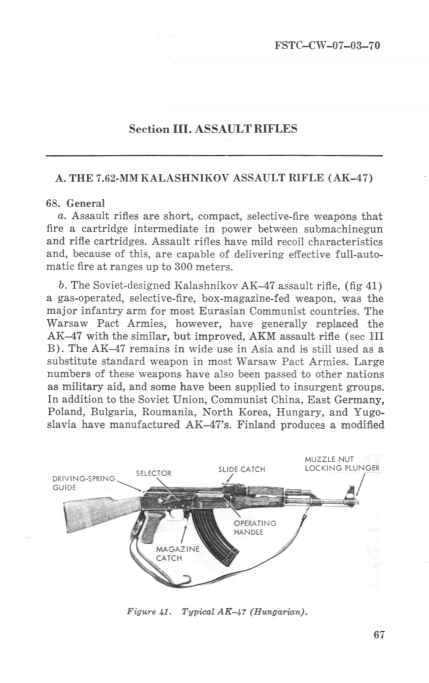
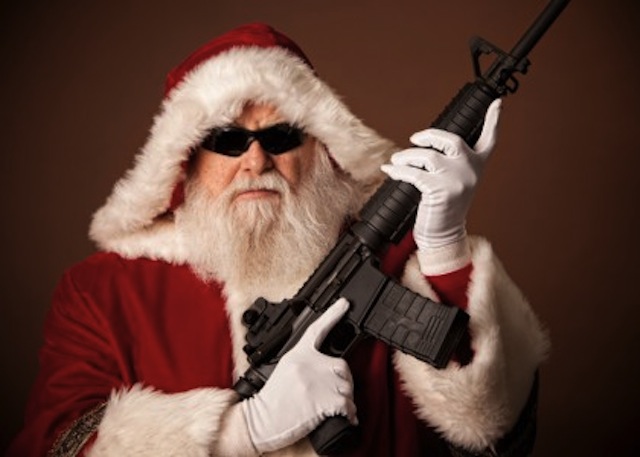
Limbaugh Lied About Assault Rifles

Some words should not be used lightly, especially when they come in the wake of a tragedy.

I realize I’m in the minority now, people that deal with facts and reality… but I still want you to know what are the facts are about all this…

Many people love Rush Limbaugh, American talk radio host. Others despise him. I think he acted like a jackass for calling a woman a prostitute just because she holds opinions that he disagrees with. But Limbaugh and I definitely share one opinion. I feel in the minority when it comes to dealing with facts and reality. In fact, I would say that I no longer trust anyone in mass media to deliver facts, which is why I always double-check every interesting ‘fact’ that I hear. To my mind, it is a great shame that more people do not do the same, especially when we live in the information era, and humanity’s vast stores of knowledge can now be accessed even by phone. Limbaugh made a comment about gun control and assault rifles toward the end of last year, after the murders at Sandy Hook Elementary School, but just before Limbaugh took his holidays (why Limbaugh needs a holiday from mouthing off his opinions, I will never know, as he clearly loves his job and would do it for free). Many will have ignored the peculiar claim that Limbaugh made at that time, and those that noticed it will have probably forgotten it as their minds turned to festive celebration or the latest topic to grist the mills of the current affairs cycle. But a man should be judged according to his own words, and that rule equally applies to Limbaugh. He started by professing how he felt that he belonged to a minority still concerned with facts and reality. And then he went on to denounce US politicians that propose a ban on assault weapons. This is how Limbaugh tried to shoot down their plans:

Let’s go through these gun terms just for the heck of it here, for what it might matter. “Assault weapon.” “Assault rifle.” There is no such thing. Go to a gun store and tell ’em you want an assault weapon, and the guy will look around and show you his entire inventory and say, “Pick one.” But there is nothing – no brand, no label – that identifies the weapon as an assault rifle or assault weapon.

There’s no such category.

It has been manufactured, invented, purely for political-agenda advancement reasons. The term “assault weapon” first began being used in the early 1990s by people opposed to the Second Amendment. There was legislation in 1994 that banned “assault weapons,” and they had a definition. What they did was simply repeat a bunch of cosmetic features…

A semiautomatic weapon fires one bullet at a time and puts another bullet into the chamber. It’s called an “assault rifle” to create the image that it is an instrument of mass death with one pull of a trigger. It’s a political invention. The whole term “assault rifle” is a political invention.

To summarize: Limbaugh stated that the term ‘assault rifle’ was made up in the 1990’s by people with a political agenda. So, if somebody with no political agenda was using the phrase prior to the 1990’s, then that would show Limbaugh must have pulled his ‘fact’ right out of his ass. It would show he has not even a passing concern for facts. Being the sceptic I am, I checked this fact. I expected to spend at least ten or twenty minutes checking this particular fact, and perhaps a lots longer. I completed my research in less than a minute, because the relevant facts were so easy to find, even for a multimillionaire concerned citizen like Rush Limbaugh, who presumably can afford access to the internet.

Within a few seconds I found that Wikipedia attributes the phrase ‘assault rifle’ to Adolf Hitler. Now, Adolf Hitler was pretty darn political. But unless Limbaugh is suggesting Hitler survived the war, assumed a new identity, moved to the US, and became a campaigner for gun control in the 1990’s (having lived past his 100th birthday) then we can safely assume that Limbaugh thinks Wikipedia is wrong to give Hitler credit for inventing the term ‘assault rifle’. But a 1945 US Military Report says otherwise. It turns out the phrase ‘assault rifle’ is a political invention – but it was invented by the Nazi Führer in order to motivate his troops:

To bolster troop and civilian morale, the German High Command is now widely advertising the general issue of an automatic small arm which Adolph Hitler has personally designated the “Assault Rifle 44” (Sturmgewehr 44). The much-touted “new” weapon is actually the familiar German machine carbine with a more chest-thumping title.

I suppose Limbaugh might argue that the word ‘sturmgewehr’ was mistranslated by the US military. A more literal translation would be ‘storm gun’, rather than ‘assault rifle’. Nevertheless, nobody made the US military translate Hitler’s words that way… unless Limbaugh has discovered that the liberal mainstream politico-media conspiracy had actually begun during WW2! What prescience those WW2 liberals must have had, inventing a phrase just so they could resurrect it 50 years later and deploy if for the utterly selfish political goal of wanting to make it harder for murderers to shoot people so quickly.

To appease Limbaugh-inspired conspiracy cranks, let us ignore Hitler and that translation and instead look for other evidence that the phrase ‘assault rifle’ was used, without any political slant, well before the 1990’s. What might count as an apolitical use of the term? I think the US military should, once again, be considered a good and apolitical source for the terminology of weapons. So I found excerpts from the US Army intelligence manual FSTC-CW-07-03-70, which was published in November 1970. The book is called “Small Arms Identification and Operation Guide – Eurasian Communist Countries”. It is fair to say that a military intelligence guide listing the kinds of guns used by 70’s Communist countries is not the most obvious starting-point for inventing terminology ‘purely for political-agenda advancement reasons’. Section III of the guide is entitled ‘Assault Rifles’, and it first discusses the famous AK-47:

Assault rifles are short, compact, selective-fire weapons that fire a cartridge intermediate in power between submachinegun and rifle cartridges…

The Soviet-designed Kalashnikov AK-47 assault rifle, a gas-operated, selective-fire, box-magazine-fed weapon, was the major infantry arm for must Eurasian Communist countries. The Warsaw Pact Armies, however, have generally replaced the AK-47 with the similar, but improved, AKM assault rifle…

So where do Limbaugh’s ‘facts’ come from, when it takes less than two minutes on the internet to find US military documents that prove they are false? Many weapons were already categorized as ‘assault rifles’ long before the 1990 political campaigns to restrict the ownership of guns. This shows that Limbaugh’s ‘facts’ come from his imagination, simply made up as he talks endlessly to his microphone, filling the vacant hours for his vacant audience. He is too busy talking drivel to spend a single minute on checking the accuracy of what he says. He is, in truth, confusing fact with a fiction that he invented for himself and his audience. And that is why Limbaugh is a truly despicable liar. It is one thing to just make something up to push forward your own political agenda, even whilst families grieve the loss of their children. It is another thing to then cynically drape yourself in the clothes of an honest man, pretending that you stand for truth against the tides of a credulous and misled world.

I realize I’m in the minority now, people that deal with facts and reality… but I still want you to know what are the facts are about all this…

I hope that Limbaugh is in a minority, but not the one he would like to be in. I hope he is in a minority of lazy, pompous, self-serving fantasists that make money by telling the foolish the lies that they want to hear. Now is the time when the majority of Americans need to check the facts for themselves, and not rely on the broken values of media whores like Limbaugh. It is no wonder that Limbaugh refers to others as prostitutes. It takes one to know one.

America needs to ask itself one question, and then to answer it. Who needs most protection. Should protection be given to the inflated pay packets of businessmen who sell guns, and to the media trolls who grease the gun industry? Or should protection to be given to those people who want to be free not to carry a gun? It can be very hard to admit to walking down the wrong path. It is harder still to turn around and start the long walk back again. The difficulty of reversing disastrous political policies is the reason why South Africa took so long to reverse apartheid, and why so many North Koreans continue to starve. And it was hard for the US to admit that a person’s pay or job prospects should not be constrained according because of their gender, race or sexual orientation, or that this continues to be a struggle for some. In the same way, every newly manufactured gun is a step in the wrong direction, condemning Americans to an ever-more dangerous and dismal future. Limbaugh’s desperate fiction shows that the gun manufacturers will never sell the solution to the problem they profit from. Like Limbaugh, they just sell twisted fantasies instead.

Good Night Old Year

0

Nothing’s eternal, except eternity itself.
Goodbye old friends, I wish you were here.
Gone to your rest, but I don’t envy you.
Memory is sorrow; I want to see you again.
Your eyes filled with flame, faces so vivid,
Those were the times when you were so splendid.
Poured away, drained away, washed away, now.
And remaining dust submits to the wind.
Springs fed hope of tomorrow, but not the day after.
We all looked ahead, but never that far.
There’s a day we each meet the horizon,
And find that we still want another.
How we swam with the current, our bodies so lithe,
When we should have hidden somewhere deep inside.
Curled ourselves in that moment, and never come from it,
But those moments are gone, and these ones are here.
Pale onward stride, until each is broken.
Still reaping the vortex I sowed.
Chasing the sunlight and everything dear,
But we left behind more than we knew.
If only we’d learned how to stay where we were.
We counted beginnings, as if they were blessings,
When we should have been weeping, for what we were leaving.
We only woke at the end, when the story was told,
And then tried to find its true meaning.
By then it was too late, the fire had gone out,
And all is forgotten, without being forgiven.
Given the chance, I’d stop the turning.
There’d be no more pain, no laughter, no yearning.
We’d float like a leaf upon the lake,
Basking our praises to the sky above us,
And when it turned night, we’d have nothing to fear,
Because we’d never know of an end.

Merry Christmas from the National Rifle Association

ANNOUNCER: We interrupt this Christmas to bring you an important message from the National Rifle Association. Let’s go straight to the press conference at the NRA’s headquarters…

COLONEL MUSTARD KEENE, PRESIDENT, NRA: Hello. I’m Colonel Mustard Keene, President of the National Rifle Association of America.

A few days ago we invited you here to begin our discussion of a topic that’s been on the mind of parents across the land, and that is, what do we do about the tragedies of the sort that struck in Newtown, Connecticut? Today, we’ve invited you back to do some more discussing, where we at the NRA will be listening as well as talking, though once again we won’t be taking any questions. Following our last press conference, we received some unfair criticism that the NRA had been too slow to begin the discussion. Some pointed out that there had, in fact, been plenty of discussion before the NRA started to discuss anything. We respond to that criticism by observing that the discussion that started before we started our discussion must have been a premature discussion, because, as we know, you cannot have a real discussion if only one side is doing the discussing. But the NRA are listening, as I already said, and we’ve decided to be the first to discuss today’s extraordinary events at the North Pole.

AUDIENCE: (gasps) North Pole! (inaudible) what the heck (inaudible)

COLONEL MUSTARD KEENE: This morning we found out about another dirty truth that the media will do their utmost to conceal. Though it has not yet been broadcast on any mainstream media network – apart from Fox – we want to be first to respond to the events of this very morning, when Santa Claus successfully defended his workshop at the North Pole from attack by an unknown individual. The attacker was heavily armed, and whilst we do not have the full details, some may wrongly rush to describe the attacker as a member or supporter of the NRA. We do not know that for certain. All that we know is what we have learned by watching a video taken by Mrs. Claus using her iPhone. This video was briefly visible on YouTube before it was removed for potentially infringing the copyright of Warner Brothers and their upcoming Vince Vaughn slasher-flick, ‘Freddy Claus Goes Psycho’. Before it was taken down, we had our best people scrutinize Mrs. Claus’ video, and they’ve been able to determine that the attacker was wearing the following:

Apart from this, we have no idea if the attacker felt any allegiance to the NRA, and we believe it would be wrong for media and politicians to rush to judge, until we have all the facts. What we should instead focus on is the good news that the attacker was driven off by Santa Claus, with reportedly only a minimal loss of life – somewhere between five and seven of Santa’s magical little helpers were sadly killed. We also understand that Rudolph the Red-Nosed Reindeer was injured. Rudolph has been airlifted to hospital where he is said to be in a stable condition. As a consequence, there is a possibility that Santa will need to call off or postpone his Christmas delivery run.

AUDIENCE: (inaudible) …call it off, what the f… (inaudible)

COLONEL MUSTARD KEENE: Please, please… just hear me out. Our immediate reaction was to ask what we could do to help keep Christmas on track. We have been in touch with the North Pole, volunteering our every assistance at this difficult time. If Santa agrees, we will deploy a corps of 1000 NRA volunteers to make deliveries on Santa’s behalf, all across the North American continent. In fact, our volunteers are being trained as substitute Santas even as we speak, in case they are called upon. They are also being fitted out with the NRA’s very own customized Santa suits, boasting superior tactical properties. To start with, the suits use absolutely no Velcro, and we believe they are the quietest Santa suits ever, ideal for sneaking down chimneys without waking the little ones. They are also kitted with multiple concealed carry compartments and front slash pockets with a notch for knife clips, and they are made from a 65/35 polyester/cotton rip-stop fabric treated with IntelliDry technology that repels exterior moisture and resists stubborn stains like cranberry, mulled wine, or blood. Also it helps that the suit is colored red. Unfortunately the NRA santa suit will not be ready for sale to the general public this Christmas, but we’re expecting it will be very popular next year.

In addition to offering our assistance with Santa’s deliveries, we’ve been thinking about how to protect Santa in future. With that in mind, I’d like to introduce Wayne LaTrine, our executive vice president, who will share our thinking with you.

Thank you again for being with us.

And at the end of this conference we will not be taking questions, but next week we will be available to any of you who are interested in talking about these or other issues of interest. So contact us then, please, when some of the fuss will have died down and we won’t look so bad.

Thank you very much.

Wayne?

WAYNE LATRINE, EXECUTIVE VICE PRESIDENT, NRA: The National Rife Association’s four million mothers, fathers, sons and daughters, join the world in horror, outrage, grief and earnest prayer for the families of Santa’s slain little helpers, if the magical little helpers have families, which is unclear at this time.

What happened at the North Pole this morning was an unspeakable crime. Whilst some will try to exploit tragedy for political gain, we always remain respectfully silent, at least for the week in the immediate aftermath of events like this, when everybody is making a big hullabaloo and anything we say is going to be torn to pieces. After that, we will not be stopped from speaking up for our members, who carry with them the only real source of security in this world. Many of our members carry security with them every single day of their lives, carrying it not just for themselves but also on behalf of their fellow man, and with love in their hearts. Some of them sleep with security under their pillow, and a few even keep a tight hold of their security when they visit the restroom. And increasingly our members carry double or treble the security that they used to carry, possibly utilizing the multiple concealed carry options available with NRA-branded sportswear.

You may ask, why is the National Rifle Association of America speaking out about an attack at the North Pole? Well, we consider an attack on Santa to be an attack on all of us, and we stand shoulder to shoulder with Saint Nick at this time. Also, the North Pole is in international territory, not the sovereign land of any nation, so we feel compelled to fill the void, and to step up and defend the rights of gun enthusiasts living to the very far North of Alaska. Like failed Presidential candidate Newt Gingrich said at our convention this year, the United Nations should extend the human right to carry guns to every person on the planet, whether they are American, Afghan, Nigerian, Palestinian, Mexican or whatever. Only by guaranteeing the rights of all individuals to carry guns can we guarantee the safety of every single person on the planet. We, in the NRA, will not stand by and let Santa’s safety be compromised merely to appease the voices of political correctness, whether they are in the US, the UN, or Lapland.

We must speak – for the safety of Santa, his family, his reindeer and his magical helpers, whether they be elves or dwarves or some previously unknown species of little people. We’re not entirely sure about whether Santa’s little helpers are a different species or whether someone’s put a spell on them or whatever, but we’ve got a team researching it right now. And we must speak to defend Christmas, a glorious global coming-together in peace and harmony. For all the noise and anger directed at the NRA, no one “” nobody “” is addressing the most important, pressing and immediate question we face: how do we deploy lots more guns to protect Santa and Christmas in the one way that we all know is going to work?

The only way to answer that question is to face up to the truth. Santa, and Christmas, has been politicized. Every year we see films on television, nativity scenes in our schools and churches, and – most comprehensive of all – mass-produced greetings cards that revel in Christmas joy and extol the virtues of brotherhood with our fellow man. And yet, not a single one of them depicts an armed security guard carrying a semi-automatic rifle. We are bombarded by a politicized and fictional version of peace, a blatant twisting of the truth by our media. We all know that the only reason that Joseph and the Virgin Mary did not carry concealed weapons to protect themselves on the road to Bethlehem is because the Chinese had monopolized production of gunpowder at that time. Thankfully, the lowering of trade barriers means that more and more people are free to enjoy the protection of guns made in the US or overseas, and to enjoy this protection at a very affordable price.

Have you ever seen a Christmas card depicting Saint Nick firing a Smith & Wesson 9mm handgun? Or a festive film where Santa’s sleigh is outfitted with an M134 gattling gun for air-to-air encounters and ground suppression? No, neither have I. So it should come as no surprise that Santa’s workshop is viewed by insane killers as a safe place where they can inflict maximum mayhem at minimal risk.

How have our priorities gotten so far out of order? Think about it. We care about our money, so we protect our banks with armed guards. Airports, office buildings, power plants, courthouses “” even sports stadiums “” are all protected by armed security.

We care about the President, so we protect him with armed Secret Service agents. Members of Congress work in offices surrounded by armed Capitol Police officers. Yet we do nothing to protect the most vulnerable and trusting members of our society. There are no armed guards surrounding Santa. He maintains a huge and valuable store of gifts at his workshop, but there is not one sniper, not a single watchtower to guard its perimeter.

The inadequate security at the North Pole is no different to the inadequate security we have grown used to in so many public places. Our churches are left utterly defenseless; neither priests nor nuns carry guns, although the NRA believes their robes are ideally suited to multiple concealment options. Ordinary citizens are denied permission to wear handguns whilst swimming with their kids at the local pool. Pizza delivery boys are expected to visit strange houses without first being issued with a .44 Magnum. And only a small minority of shopping mall Santas carry concealed handguns underneath their jolly red coats. Americans are not allowed to protect themselves with guns whilst flying on airplanes, and some of us are even expected to go on holiday to dangerous foreign countries without being allowed to take our guns with us! In a world where we routinely fail to implement armed protection, it is no wonder that an insane killer has now attacked the ultimate soft target – Santa’s workshop. In our society, Santa and other vulnerable targets are left utterly defenseless. That must change now!

The truth is that our society is populated by an unknown number of genuine monsters “” people so deranged, so evil, so possessed by voices and driven by demons that no sane person can possibly ever comprehend them. The whole of society is full of these people, except for the NRA, because none of our members are like that. If given the chance, these sick non-NRA members would even kill Santa Claus, the most beloved man on the planet, whose approval ratings are in the high 90’s whilst President Obama’s approval rating languishes in the low 50’s.

The killers walk among us every day. And does anybody really believe that the next mass murderer isn’t planning his attack at this very moment? Today it was Santa’s grotto. Tomorrow it could be your home, or your gym, or your favorite Chinese restaurant, or the cemetery where they buried your great-uncle, who was a war hero. Maybe they’ll dig up your great-uncle’s corpse and shoot his dead body in the face, just for the fun of it, even though, during his lifetime, he evaded all the bullets fired at him by the Japs and the Nazis and the Italians.

Anywhere could come under heavy fire from one of the almost infinite number of insane monsters that rove our streets. But I tell you one place they won’t attack. They won’t attack here, the headquarters of the NRA. And you all know why – because we’d blast them to kingdom come, that’s why. And that’s why the NRA way is the only sure way to guarantee a peaceful Christmas and prosperous year ahead.

How many killers are out there now, planning to shoot you and your wife whilst you’re sleeping in your bed? Is it a dozen? A hundred? More? How can we possibly even guess how many, until they all try to do it? And yet, our nation refuses to create an active national database of the mentally ill. Politicians instead focus on bizarre and irrational programs designed to oppress decent folk, like demanding background checks on gun owners. I have even heard some politicians go so far as to suggest that people should be forced to get a mental check-up before being allowed to buy a gun, as if wanting to buy a gun is somehow evidence of being mentally ill. This is nothing but another attempt to impose tyranny. Gun owners are not the problem, and they should not be oppressed. The mentally ill are the problem, so let’s oppress them instead. And the fact is, oppressing the mentally ill wouldn’t even begin to address the much larger and more lethal criminal class: killers, robbers, rapists and drug gang members who have spread like cancer in every community in this country. All of them want to kill you and ruin your Christmas. All of them would gladly shoot Santa’s sleigh out of the sky, if it means that Santa is forced to crash-land and the robbers get to steal the presents that were meant for you.

But whilst we sympathize with Santa at this time, Santa must also carry his fair share of the responsibility for the attack that took place this morning. Who hands out the kind of violent video games that drive these insane killers to be so insanely killy? I can think of one man – St. Nicholas himself. My research department has obtained a summary of the most popular items on wishlists mailed to Santa, and it makes shocking reading. Even more shocking is the revelation that many violent games are approved and supplied by Santa, though he only gives them to the good girls and boys. What is Santa trying to achieve – this policy can only succeed in corrupting the good kids, whilst ignoring the real problem of the bad kids, who then just turn to crime and steal their own presents.

Let me just read a few titles of the violent games on Santa’s list: Assassin’s Creed; Hitman; Streetfighter 2; Call of Duty; Desert Strike; Halo; and Super Mario Kart. Santa also hands out DVDs and Bluerays of films and TV shows that portray gun murder in a casual way, as if everybody is shooting everyone else all of the time. On this list we see such examples as: Taxi Driver; CSI Miami; Die Hard; The Hurt Locker; Hill Street Blues; Skyfall; Iron Man 3; Saving Private Ryan; Bugsy Malone; and Raiders of the Lost Ark. And then Santa hands out music albums and music videos from artists that treat guns and murder as if they are a way of life. And Santa has the cheek to call this ‘entertainment’ or ‘an artistically valid representation of real life for far too many people today’. We call it something else. We call it ‘pornography’. And it’s not the good kind of pornography, the sexy kind of pornography where three men simultaneously penetrate a woman who moans with pleasure the whole way through. No, it’s the bad kind of pornography, the kind of pornography that makes gun lovers look like sick people who get a kick from the power of carrying a gun.

We need to fight the promotion of gun pornography, which is why we’re lobbying Santa to remove all gun porn from his approved present list, and to replace it with responsible media products, like our NRA magazines. And we’ll be dedicating new regular columns in our magazines and e-journals, providing our members with lists of the most violent films, games, records, and books, so our members can easily avoid them.

QUESTION: (inaudible) magazines (inaudible)

WAYNE LATRINE: We’re not taking any questions today. This is a discussion, not Q&A.

QUESTION: In which NRA magazines will we find the lists of films and games that glorify gun violence?

WAYNE LATRINE: I said we wouldn’t take questions, but as you ask, our blacklist of gun pornography is going to be promoted via Armed Citizen, our journal of heartwarming true stories about citizens who shot down their assailants, Freedom Times, our magazine about how the tyrannical government is crushing us and how gun-owning citizens can fight back, American Warrior, our tribute to our brave servicemen and women who risk their lives to go overseas and shoot down our country’s enemies, and Traditions Magazine, our quarterly magazine dedicated to teaching America’s youngsters how to shoot.

Now, to return to the subject, we have identified that Santa has made some other mistakes, potentially even more devastating than distributing gun pornography. He has also given away guns as toys, or, to be precise, toy guns. Yet, contrary to the advice given in Traditions Magazine, Santa is giving toy guns to kids without mandating that the kids participate in an NRA training program. We believe this encourages kids to play at shooting each other, establishing a dangerous belief that festers in the mind of the juvenile insane proto-killer. When giving children toy guns, it is essentially that the child is also taught that guns should only ever be used for legitimate purposes, such as hunting deer, scaring away rapists or repelling the agents of a tyrannical government.

The kinds of guns that have been given by Santa include replica cowboy guns, much like those brandished by decadent TV stars such as Roy Rogers and Clint Eastwood. He also gives away space laser ray pistols. We regard these toys as fetishizing a needless escalation in gun technology that would undermine the legitimate business of ammunition manufacturers. And Santa has also been known to make a present of so-called ‘supersoakers’ which share the same basic characteristics as a gun but which fire water instead of .38 hollow-points. In each case, Santa is encouraging kids to think of shooting each other as a harmless game, as if it has no serious consequences. Is it any wonder that a juvenile, given a water pistol and encouraged to spray his parents during a hot summer, later grows up to believe that spraying his parents with automatic fire is just another kind of playtime?

That is why we have made the following offer to Santa. We, the NRA, will supply him with free toy guns to give as gifts to every single child on the face of the planet – but on one condition. Our condition is that the children also receive, with no obligation, six weeks of complimentary membership to the National Rifle Association of America, which will be renamed the International Rifle Association of the Free World. All the kids need to do is to provide us with their parents’ credit card details, from which we will take a one-off lifetime membership fee at the end of the trial period. And if they take up the lifetime membership, we’ll send their parents a special voucher entitling them to a discount on a range of handguns and ammunition from Wal-Mart. That range has been especially endorsed by the NRA as suitable for defending the family home from murderers, looters, rapists, anarchists and tyrannical government agents.

We, in the NRA, are willing to protect the safety of this world, in the only way we know how. Is the press and political class here in Washington so consumed by fear and hatred of the NRA and America’s gun owners that you’re willing to accept a world where real resistance to evil monsters comes in the shape an unarmed elf, reduced to throwing snowballs at a heavily armed intruder, sacrificing his life for our right to enjoy Christmas? No one “” regardless of personal political prejudice “” has the right to impose that sacrifice. At this time of year, we remember how Jesus Christ willingly died on the cross for our sins, but if he’d had the armaments needed to fight off the tyranny of Rome and Pontius Pilate, wouldn’t Jesus’ sacrifice have been so much more meaningful? I believe that if Jesus was alive today, celebrating his birthday with us, that he’d be a card-carrying member of the NRA, proudly holding his Colt AR-15 above his head, and reminding us that God defends those that defend themselves.

I call on Congress today to act immediately, to appropriate whatever is necessary to put armed police officers at the North Pole, on every street corner, by every chimney and behind every Christmas tree “” and to do it now, to make sure that blanket of safety is in place when Santa is ready to deliver his gifts.

Santa’s workshop needs to immediately identify, dedicate and deploy the resources necessary to secure its perimeter. And the National Rifle Association, as America’s preeminent trainer of law enforcement and security personnel for the past 50
years, is ready, willing and uniquely qualified to help. We have promised Santa that we will send a crack team to help him implement armed security around his workshop, and to coach him and his magical helpers on how to handle firearms. Our training programs are the most advanced in the world, and this is proven by the very low numbers of gun accidents that happen in the USA every year. If it was not for NRA training, the very high number of guns owned by Americans would lead to an intolerable number of deaths. Thanks to the NRA, the number of accidental gun deaths in the USA tends to be no more than 600 per year. Compare that to Japan, a country which rarely has more than 2 accidental gun deaths per year. Now, it is very very very hard for Japanese citizens to buy a gun, yet some Japanese still get accidentally killed by guns because the Japanese don’t know how to use them properly! Seen in this context, the NRA can take credit for literally saving thousands of American lives each year, and if politicians would only listen to us more, we’d be able to save many more lives, by giving lots more training to the many more people who will be walking around with guns in their concealed compartments.

If we truly cherish Christmas more than our money or our celebrities, we must give Santa the greatest level of protection possible. That means the kind of security that is only available if Santa is literally surrounded by properly trained “” armed “” good guys, so he is never surrounded by untrained “” armed “” bad guys. Our team of security experts will make Santa’s workshop a pilot project demonstrating how to protect everyone everywhere. And just as Santa gives his gifts without expecting anything in return, we offer our services to Santa free of charge.

That’s a plan of action that can, and will, make a real, positive and indisputable difference to the safety of Christmas – starting right now. There’ll be time for talk and debate later, after everyone has gone out and bought a gun. This is the time, this is the day for decisive action, if we want to save Christmas. We can’t wait before we act. We can’t lose precious time discussing things that won’t work, which is why the NRA are only prepared to discuss things that will work. We mustn’t allow politics or personal prejudice to divide us. We must act in solidarity now, with literally everyone buying a gun and joining the NRA before it’s too late.

Our thoughts are with Rudolph, who we wish a speedy recovery. We hope his bullet wound is superficial and that he will once again be leading the way with Santa’s deliveries. And our thoughts are with the relations of those magical little helpers who were so helplessly mowed down, if they have any relatives, because we’re not sure how they reproduce, if we’re honest. For the sake of the safety of Santa, Mrs. Claus, the reindeer and the surviving magical little helpers, we must protect them with the only positive defense that’s tested and proven to work against bullets. And that’s firing our bullets first.

God bless us all, we wish you a merry Christmas and a peaceful and prosperous new year.
When Paid Media is Not Professional

It is a truism that the world is run by elites. The very nature of power and wealth means that it is coveted most by those who are prepared to act most selfishly. As such, those who attain power are motivated to erect barriers to preserve their position. Those outside the elite are faced with the choice of kowtowing to it, in the hopes of gaining admission, or of attempting to overthrow it. Some elites are hard to displace. For all the scandals that have blighted the Catholic church, the Pope continues to be revered by millions around the globe. At other times, elites can be made vulnerable by changes that are outside of their control. The elites of the paid media come under threat when their revenue streams dry up, as occurred when broadcast television supplanted much of the cinema industry, or is happening now to the music industry because so many young people have redirected their disposable income to games and software instead of pop records. The old elites may survive, but only after a transformation that makes them slimmer and more supple. But there will always be some who will rely on protectionist behaviour in order to hold on to their throne as long as they can. Jack Warner, the legendary boss of Warner Bros. Studios, was so upset by the rise of television that in 1950 he insisted:

The only screens which will carry Warner Bros. products will be the screens of motion picture theatres the world over.

On other occasions, the elite respond with disdain for their rivals. In 2004, Dale Hoiberg, editor-in-chief of Encyclopædia Britannica, criticized Wikipedia for devoting too much space to trivial topics:

People write of things they’re interested in, and so many subjects don’t get covered; and news events get covered in great detail. In the past, the entry on Hurricane Frances was more than five times the length of that on Chinese art, and the entry on Coronation Street was twice as long as the article on Tony Blair.

However, more recent analysis suggests that Wikipedia has now arrived at the stage where its contributors are literally running out of topics to write about. Just as importantly, the criticism that Wikipedia gave too much coverage to trivial topics ignored the basic fundamental that the format suffers no need to ration space in the way that a printed book would. A long article about Yoda from Star Wars in no way obstructs or detracts from an equally long article about Honoré de Balzac.

Despite the success of Wikipedia, and the important role by played Wikileaks in breaking some of the biggest news stories of recent years, much of the paid media continues to dish up an appallingly self-serving line about how it needs to be protected from economic realities, for fear that the world will end up forced into the laps of the amateurs. It is almost as if those who are chiefly employed for their communication skills are willfully blind to the nuances of language – they equate being paid with being professional, and they assume that the professional is superior to the amateur. Therefore, we need to protect those who get paid, or else we will suffer the agonies of amateurism QED. The most severe reactionaries are often the ones who think of themselves as progressives, as was neatly demonstrated by David Leigh of The Guardian in a bizarre rant where he demanded all British internet users be taxed and that the money should be used to pay his wages:

There are almost 20m UK households that are paying upwards of £15 a month for a good broadband connection, plus another 5m mobile internet subscriptions. People willingly pay this money to a handful of telecommunications companies, but pay nothing for the news content they receive as a result, whose continued survival is generally agreed to be a fundamental plank of democracy.

A £2 levy on top “” collected easily from the small number of UK service providers (BT, Virgin, Sky, TalkTalk etc) who would add it on to consumers’ bills “” would raise more than £500m annually. It could be collected by a freestanding agency, on the lines of the BBC licence fee, and redistributed automatically to “news providers” according to their share of UK online readership.

And what would happen if taxpayers refuse to pay yet another tax, just to keep David Leigh employed?

We’ll just get the timid BBC on the one hand, and superficial junk on the other.

It says on David Leigh’s profile that his work was behind the jailing of Jonathan Aitken and the exposure of secret payments by arms company BAE. But perhaps Leigh is not familiar with more recent scoops that were published by The Guardian, but powered by Wikileaks? Or would he agree that the tax on internet users should, in that case, not go to The Guardian, which did barely any investigation beyond reading the juicy material that was served up to it for free, but that it should go instead to Wikileaks, or maybe to Bradley Manning’s legal fees? Cablegate is just one of many examples where paid media professionals have been happy to receive valuable content for free, only to expect a handsome reward for being middlemen. What upsets David Leigh is that the internet is a wonderful tool for destroying the livelihoods of middlemen, forcing them to add some value that goes beyond levying a toll just because interesting and entertaining content can be bottlenecked by those who control the communication channels.

Leigh is not alone in his prejudices. Lord Leveson spent over a year hearing how paid media professionals engaged in all kinds of sordid and despicable behaviour in order to make money for themselves and the businesses they worked for. In contrast to Leigh’s opining over ‘quality’ media, it turns out these people were paid to hack into the phones of grieving parents, to bribe police, and to steal health records. Yet, on the completion of his report, Leveson flew to Australia and gave a speech on the topic of protecting the paid media from unfair competition by amateurs. I must have missed the part where Hugh Grant was demanding statutory regulation of twitter because some member of the public made an unkind comment about his haircut. I thought he, and most others, were upset because of the actions of those who sought monetary reward for invading his privacy. Nevertheless, Leveson’s public lecture at the University of Melbourne concluded we must:

…ensure that the media not only remains subject to the law but that it is not placed at a disadvantage where the enforcement of the law is concerned. We will therefore have to think creatively about how we ensure that the law is capable of equal application, and is applied equally and fairly, against the mainstream media and bloggers, tweeters and other amateur online journalists.

To be fair to Leveson, he does not despise every amateur. He went as far as to say:

…blogging adds to free speech and is not necessarily a bad thing.

Of course, that is somewhat short of saying it is a good thing. But it was pretty clear where Leveson’s biases lie:

In the future, professional newspapers, magazines and journals both online and in print, will compete ever more directly with the blogger and tweeter, whether good, bad or indifferent, whether accurate or fiction dressed as fact.

The prejudice is clear. Some bloggers and tweeters are bad or indifferent, and some present fiction as fact. It seems to have escaped Leveson’s attention that the same observation could equally well have been applied to paid journalists. Some paid media is bad or indifferent, and some presents fiction dressed as fact. But I suppose that from Leveson’s giddy perch within Britain’s elite, it must be natural to think that only best climb so high, that they deserve their rewards, and that the rest of us must be kept in our place. On the other hand, there is a good chance you are reading this precisely because you do not believe that purveyors for profit are significantly more trustworthy than your fellow citizens. You must have faith that a blog can contain value, even though it is given freely. With that in mind, let me remind you of ten instances when the paid media were a lot worse than indifferent, and where they paid very little regard to the facts.

1. The Hitler Diaries

In 1983, German news magazine Stern told Britain’s Sunday Times that they had obtained 62 handwritten volumes of Adolf Hitler’s personal diaries. Eager to publish the story before any other journals broke it, they gleefully shared the extraordinary revelation with the world. There was only one problem – the diaries were fake. After historians lambasted the gullibility of the press, Stern released some of the diaries for tests. Quick examination showed that not only was the ink too modern, but so were many of the written phrases. Stern had paid a cool £3mn to the forger who produced them, but seemingly spent nary a penny on obtaining a decent second opinion about their authenticity.

2. The Zinoviev Letter

The Hitler diaries were far from the first example of the press hastily publishing an extraordinary document supposedly written by a political extremist. On the eve of the 1924 general election, the British Daily Mail published a letter purportedly from Grigory Zinoviev, head of the Executive Committee of the Communist International. The letter talked about agitation leading to revolution in Britain, which was a great embarrassment to the moderate Labour government of Ramsey MacDonald. Zinoviev dismissed the letter as a forgery soon after. After a lot of investigation, modern historians, including those who have had access to secret intelligence resources, have determined whilst the real source of the letter cannot be determined, it may very well have been a forgery. However, concerns about the letter’s authenticity did not lead the Daily Mail to exercise any self-restraint.

3. ‘Unbiasing’ the Biased Polls that Were Not Biased After All

Most Europeans take it for granted that America’s Fox News Channel is unreliable because of its right-wing stance. On the other hand, it is fair to observe that many Americans are similarly hostile to what they perceive to be a more widespread left-leaning bias in other parts of their mainstream media. However, even the most sympathetic Fox viewer was left aghast on election night when President Obama was re-elected, exactly as most mainstream polls predicted. For weeks in advance, the Fox commentariat had routinely explained that the mainstream polling firms were biased, and accused them of trying to rig the election in favour of Obama. The polling firms’ turnout models were lambasted as unrealistic, and Fox repeatedly showed that the ‘real’ results would be a win for Romney, once the polls were adjusted to remove their systematic errors. The recalculations involved re-projecting the turnout on the basis that blacks and minority voters were bound to turn out less than they had in 2008, and that whites would turn out in higher numbers. Unfortunately for Fox, the real poll turned out exactly as the opinion polls had predicted: the minority turnout was ‘impossibly’ high, and white turnout was lower than Fox had expected. If anything, the mainstream pollsters had slightly underestimated the support for Obama.

Fox admitted their mistake after the election, and spent some time reviewing what had gone wrong. However, given that Fox’s presenters were viciously criticizing polling firms for exerting an undemocratic and undue influence over voters, Fox’s apology could never make amends. Fox News had wrongly accused others of the very fault that Fox was hypocritically guilty of – the fault of biasing factual information in order to sway voters.

4. Piersgate/Pissgate

Piers Morgan has done well for himself, presenting big TV shows in the US and UK. However, in the Leveson Report, his testimony that no phone hacking occurred whilst he was editing the Mirror was described as ‘utterly unpersuasive’. Nevertheless, Morgan is a media celebrity who has done very well out of the lack of professionalism exhibited by the paid media. In 2004 he was booted out of the Mirror after publishing a sub-Abu Ghraib story about British soldiers peeing on Iraqi prisoners of war. The military very quickly responded, showing how the photographs were crude fakes. They were even able to demonstrate that the photographs had not been taken in Iraq. Nevertheless, the media elite still clasps Morgan to its bosom. You have to wonder if an amateur would have received the same benefit of the doubt that Morgan has received all his career.

5. Breaking Glass

It is one thing for journalists to lazily allow themselves to fall for a hoax. It is another when the journalists are the hoaxsters. However, plenty of journalists have been downright liars. One of the worst was Stephen Glass, who wrote for US journal The New Republic between 1995 and 1998. What he wrote was a mix of fiction mixed with fact. When short of a quote, he would make one up. When short of a person to include in a story, he would make them up. And if he needed to invent a company, a building, a location for an event… he would make it up. He even created a phoney website for one of the fake companies he wrote about. When his lying ways were finally discovered, The New Republic reviewed all 41 stories that Glass had written for them, and found that at least 27 of them had contained fabrications.

6. Using New Media to Fool Old Media

Old media snootiness about new media is truly amazing, when you come to realize how much the lazy, paid employees of old media will simply reproduce whatever they read on new media without doing a single satisfactory check. Why argue about the relative low quality of new media, if old media fills column inches and broadcast time by simply copying what anyone could have read from a blog in the first place? There are now many stories where mainstream journalists have been discovered repeating lies from biased and unreliable sources or even believing spoofs from such outlets as The Onion. However, one American has perfected the art of using new media to bluff and bamboozle mainstream nitwits. Ryan Holiday is a self-styled ‘media manipulator’ who cleverly builds up his presence until, lo and behold, he is actually on the mainstream media, presenting himself as an expert. And Holiday is no one-off prankster. He fooled Reuters into thinking he was a stressed-out Generation Y investor. He told MSNBC a story about being sneezed on, and he told CBS an embarrassing office story. On ABC News he pretended to be an insomniac. And the New York Times printed excerpts from an interview about his vinyl records – which was pretty amazing given that Holiday does not have a record player! (Go on, check out the note at the bottom of their revised article). All in all, Ryan Holiday is proof that the mainstream media is happy to be fooled by an individual so long as they act in a way that fits the journalist’s preconceived expectations.

7. The Unwilling Autobiography of a Living Billionaire

You might think that no investigative journalist would be foolish enough to write a fake autobiography, including faked interviews, when the autobiography is about a real, living man who does not want their autobiography to be published. You might think that no book publisher would be foolish enough to print such a book. And you might think they would both be cautious when the subject is one of the richest men alive. Well, if you did, that just shows how credulous people really are. People want to believe they are being told the truth, even when they are being told inordinate whoppers. And the lies can seem that much more believable when they are backed by a mainstream publisher like McGraw-Hill.

Clifford Irving had already had several books published by McGraw-Hill when he approached them in 1970 with his latest project. He promised them the autobiography of Howard Hughes, the rich and famous aviator and film-maker, who by then had long been a notorious recluse. The publisher was naturally interested, and there were convinced by letters addressed to them and purportedly written by Hughes, but which were forgeries. So the mainstream publisher went ahead and signed contracts with Irving and Hughes (again, Hughes’ signature was forged) and they proceeded to pay hundreds of thousands of dollars in advances and expenses to Irving and ‘Hughes’. Irving and his accomplices then proceeded to accumulate as much public and private information as they could get on Hughes, including a manuscript for the unpublished biography of one of Hughes’ business associates. Irving cobbled this material together and bundled in some made-up quotations from make-believe interviews that he claimed to have held with Hughes in a variety of exotic locations around the world. In reality, Irving was enjoying a series of wonderful vacations at the expense of his publisher. In late 1971, Irving duly delivered his ‘work’ to the publisher, who proceeded to publicize the forthcoming book and release excerpts of it in Life magazine.

Irving gambled that Hughes, old and afraid of public life, would do nothing to reveal Irving’s scam. McGraw-Hill backed their writer even when some of Hughes’ associates cast doubts about the book. Eventually Hughes gave a tape-recorded telephone interview to several journalists he was familiar with, denouncing Irving’s book as a fake. Even so, Irving persisted with his gamble, saying that the voice on the phone line was not that of Howard Hughes. Finally, when Hughes’ lawyers sued, McGraw-Hill started to do some real investigative work of their own, discovering that their money had gone into a Swiss bank account opened by Irving’s wife under the invented name of Helga Hughes. McGraw-Hill narrowly escaped the ignominy of publishing the full book, but Irving was to serve 17 months in prison for his crime. Afterward, Irving kept on writing, concentrating on fiction.

8. The Wrong Guy

Everybody loves the good old BBC. After all, they do not show adverts. And whilst all those commercial organizations might have deplorable standards, you can rely on the good old BBC… unless they are just too busy to check who they put in front of the camera. On 8th May 2006, Guy Goma, a business studies graduate from the Republic of Congo, was patiently waiting to be interviewed for a job as a ‘data support cleanser’ at the BBC. Meanwhile, a producer for BBC News 24 was looking for Guy Kewney, so he could be interviewed on live TV about a court case between Apple Computer and Apple Corps, The Beatles’ record label. The producer walked up to Guy Goma, asked if he was ‘Guy’ and was waiting for an interview. Unsurprisingly, Guy Goma assented. Before he knew it, the wrong Guy was on live television, forced to bluff his way through the ridiculous debacle…

9. The Rest of the BS from the BBC

What really beggars belief in Leveson’s remarks about protecting commercial media from amateur competition is that British taxpayers already have to pay for a public-service rival to commercial media… and this public service has yet again revealed itself to be utterly flawed. Here is a quick summary of three of the worst BBC failures of the last ten years.

Weapons advisor David Kelly took his life in the aftermath of the BBC’s reporting about ‘dodgy dossiers’ in the run-up to the Iraq War. In 2003, the subsequent Hutton Inquiry reviewed how the BBC had handled Kelly and his information, and concluded that the BBC’s editorial and management processes were ‘defective’. As a result, the BBC Chairman and BBC Director-General, both of whom earned huge salaries, were forced to resign.

In 2009, the BBC was fined £150,000 for ‘Sachsgate’, a tasteless episode where overpaid celebrities Russell Brand and Jonathan Ross spent an entire episode of Brand’s radio show amusing themselves (and nobody else) by leaving lewd and boorish messages on the answering machine of Andrew Sachs, a minor celebrity. The very well paid Director of Radio 2 resigned following a deluge of complaints. Ross, however, went on to joke that he did not mind the twelve-week suspension he received, because he enjoyed the holiday and he earned so much money that he hardly needed the pay.

Fast forward to 2012, and we found the BBC was unable to bring itself to broadcast a perfectly justified Newsnight report about the serial child abuse conducted by Jimmy Savile, former BBC star. Then, just a short while later, they exercised almost no self-control at all in broadcasting a different Newsnight story that wrongly implicated a senior politician as a child abuser. Incredibly, the BBC felt unable to find sufficient evidence to break the news story that one of its biggest presenters had sexually abused what is now reported to be over 450 children, sometimes on BBC property after inviting the children to appear on his BBC shows. However, the BBC were quite happy to report that an unnamed senior politician had abused a boy at a care home, even though the simplest fact-check would have revealed the politician had never visited that care home. As a result, yet another BBC Director General stepped down, receiving a £450,000 pay out for his trouble.

You have to wonder if Leveson suffers from a congenital defect suffered by all British elites. Call it ‘elitist blind spot’, if you will. The BBC is woeful, although it is a taxpayer-funded organization that is under no commercial pressures whatsoever, and despite paying astronomical salaries to its leading ‘talent’. It is genuinely hard to imagine how complete amateurs could possibly do any worse. Not only are amateurs less likely to do the harm that the BBC has done, they cost an awful lot less. In terms of accuracy of information or quality of entertainment for every pound spent, the BBC seriously undermines the argument that ‘paid’ means ‘professional’ and that ‘professional’ is better than ‘amateur’.

10. Back to the Broom Cupboard

Philip Schofield first came to national prominence as a continuity presenter for Children’s BBC. During the after-schools children’s segment of programming, it was his job to sit in the “broom cupboard” and fill time between other programmes by talking to a hand-puppet called Gordon the Gopher. Twenty-seven years later, Schofield has wrongly come to believe he is some kind of heavyweight presenter. As a result he thought it would be clever to spend a few minutes reading tittle-tattle on the internet about who may or may not be child abusers (see above for how the BBC’s Newsnight started that ball rolling). He wrote down the names on a card, then waited for an opportunity to ambush the British Primeminister on his daytime ITV show, handing over the card and demanding that the Primeminister give an instant reaction. And if that was not crass enough, he was so careless that viewers could see the names he had written on the card.

Far from holding themselves to a higher standard than the amateurs of the internet, Schofield showed that media’s paid professionals all gladly and freely suck at the teat of the internet, but then expect to be paid for taking gratuitous advantage for their superior access to power and celebrity. Most people, unlike Schofield, would be cautious about believing unproven claims that they have read on the internet. In contrast, Schofield can lend credibility to even the most scurrilous misinformation, even when he has done literally nothing but copy what he has read from some unknown webpage. As a result, ITV found itself making an additional big settlement to the same politician who was first wrongly implicated by BBC’s Newsnight, just because Schofield had needlessly presented his name on television and acted as if the baseless assertions of others should be taken seriously.

***

There is a moral to this story, but it is not about protecting the privileged or expecting them to conform to high standards, and it is certainly not about enforcing those same so-called standards on everyone else. On the contrary, we should expect the professionals to be as utterly lousy as any amateur, and hence treat them with an appropriate degree of scepticism and irreverence. Where the law should intervene, and how it intervenes, should be based on the impact of any transgression. On that basis, Leveson’s argument is a folly; the malice and mishaps of the mainstream media cause far more harm than any blogger or tweeter will. What Wikipedia proved in its victory over dead tree reference books was not that amateurs drag down the professionals. On the contrary, the Wikipedians have shown that no matter how much you pay the professionals, the best professionals still perform no better than the sincere and motivated amateurs. But try telling that to the elite, and of course we will hear a different story. After all, they are paid to write the story that suits them.

Two is Too Many

0

As the calendar catapults us
And we contemplate the new new year’s resolutions that propose to make us into version 2.0 of what we are
Version new
Version something else
Version improved
They escalate
The numbers accumulate.

Going on the 4G
To connect with the six degrees of Kevin Bacon
And download another 50 shades of grey or maybe just catch up with Catch 22 at long last
Now that’s what I call music, 363. Have I got news for you, series 144.
Or listening to the fifth, or the ninth, of somebody with an actual name, who put some notes in sequence,
I glimpse myself as an old man looking back on me now
Peering through the curtain folds of time
Wondering what the hell I was doing. What I am doing.

That old old man that is me suffers.
He has an aversion, an affliction
His inerasable permanent personal history.
What I did, what I do, stabbing him like pins in voodoo
He knows the answers to how fast is superfast and how much is much, how soon is now and how we spilt the hours whilst carrying them in a champagne glass.

And he knows how much is enough. Enough is enough, at the last. The rope unfurls. The knot untied, it lays loose from each frayed end to the other.

Up and up the numbers go
Like the elevator in the triumphal tower
So proudly looking down until another comes to loom over
Ding ding ding ding
And on the musical score rings
The numbers never cease, always climb, until we reach the roof
And the mists dissipate
And the winds die
And I am looking down and there is nothing to see upon the ground
There were no footsteps because they went over themselves, repeatedly
There is no keeping track if you never face a direction
The sands of our foundations were cracked, and they bled with the tides
We dug shallows; nothing was raised but air and phantasms
That we mistook for our levels.

I had a version sickness
Craving something new and new
Until I was too old and old to care
And there were no more versions left but one
Nothing to invent but be
Nothing to know but me
And disappearing like the perfect point
I occupied nothing
And was content
At the last.