Home Blog Page 17

Locating Disgust

0

You ask me what I think?
Then I’ll tell you what I think.
It’s them in charge what’s all to blame.
They each one bloody stink.

Have you seen the papers?
And the awful things they say?
They’re spying on’t people’s private lives.
Trust me “” I read ’em ev’ry day.

The internet is mostly porn,
And there’s too much crap on TV.
If they’d pay me to, I’d watch it all,
And stop what folks shouldn’t see.

Houses prices went through’t roof
When’t credit was all the rage.
Now greedy banks have tightened screws
And won’t give me a third mortgage.

There’s scroungers living off benefits.
Tax evaders pay nowt, but live flash.
Means I don’t get what I deserve,
So I do all my business in cash.

Fat cats just worry ’bout their pension.
They don’t care about the country.
But what’ll happen when I retire?
That’s why I bought shares in the FTSE.

All’t them in government cheat expenses,
They just want to fill their pockets.
The way they act is a bloody disgrace.
I think somebody should stop it.

Corruption, crime and filth,
It’s half the fault of immigrants.
And’t rest of blame is plain enough:
We’re run by a bunch of bloody cunts.

What have I done ’bout it?
I wish it were my responsibility.
I’m not afraid to speak my mind,
But changing things ain’t up to me.

10 Bond Secrets We Will Never Know

Thanks to Skyfall, the new Bond film directed by Sam Mendes, we know more about James Bonds’ back story than ever before. We know he used to live in a big drafty house in Scotland which was implausibly isolated from the rest of the world. It must have been hard persuading the other parents to bring over their kids for one of little Jimmy’s parties. We know that he still owns the same 1964 Aston Martin DB5 that he used to drive… hang on. How old is Bond supposed to be? Perhaps they should bring Shaun Connery out of retirement just to aid with continuity. And we know he can take a drink whilst a scorpion sits on the back of his hand (if the scorpion is so dangerous and unpredictable, then how did the scorpion get on to his hand in the first place?) But there are many things we still do not know, and we will never know about Bond. Here are ten things that go well beyond the limits of Bond’s mystique.

1. Duvet cover

Stripes? Plain? Floral? Or maybe a print featuring Spiderman? We will never know what duvet covers are kept by Bond in his linen cupboard. And that is because nobody – absolutely nobody – looks glamorous whilst changing their duvet cover. It is physically impossible to look good whilst putting on a duvet cover, because it is so bloody hard to put them on.

2. Socks

We all know what he looks like in a dinner jacket, but none of us remember his socks. Bond’s sock drawer is a mystery that will never be solved. Does he buy packs of three from Marks & Spencer? Or perhaps he gets the kind with coloured heels and toes to make them easy to match? Or does Bond spend his civil service salary on fabulously expensive Zimmerli 100 percent cashmere dress weight over-the-calf socks? Even in IMAX, one black sock looks just like another.

3. Learning languages

Bond always seems to be fluent in any language, wherever he goes. But what is the secret to learning so many languages? Does he listen to Linguaphone recordings whilst he is working out? Maybe the secret agent spends all spare time hanging around the local college. That might explain his rapport with women of every nationality. This would also fit with the Bond mythology, which demands that he picks up his linguistic skills by flirting with beauties from the four corners of the planet. But that would not work in practice. He might learn a hundred different words for boobies, but barroom chat is unlikely to cover the Russian for: “give me the cipher for the ballistic missile detonation sequence”.

4. Driving

We all know Bond is tremendous behind the wheel. He is so good, you have to wonder why he does not swap the girls, glamour, risks and rubbish salary of an intelligence agent for the girls, glamour, risks, and riches of a Formula One racing driver. But in addition to his licence to kill, Bond must also have a licence to drive. Did he pass his test first time? Was he taught by a parent, or by a British School of Motoring instructor? Does he consistently remember the routine of ‘mirror, signal, manoeuvre’? And does he give people the finger when they cut him up?

5. Personal computing

With the transition from Connery to Craig, we assume that Bond became computer literate along the way. But apart from when Q supplies the gadgets, how does Bond browse the web? Does he prefer Chrome, Firefox or Internet Explorer? And what name does Bond use for his Facebook profile? Will Bond be installing Windows 8, or is he the kind of guy who sometimes heads down to the Apple Store for a Garageband tutorial? Is Bond the kind of guy who helpfully corrects an error he spots on Wikipedia, and has Bond ever downloaded porn?

6. Sweet or sour

When ordering takeaway, or heading to an oft-frequented Indian or Chinese restaurant, everybody knows their favourite dish. Is Bond a fan of chicken tikka masala, or would he opt for vindaloo? Does Bond like his noodles, or does he prefer egg fried rice? Does Bond ever get his food delivered, or is his address too secret to share with Domino’s Pizza? Perhaps Bonds avoids having a regular order because that would make it too easy to poison him.

7. The first time

Everybody has a first time – that first occasion when you buy a record, or a CD, or download a music track (what other ‘first time’ did you think I was referring to?) But what was the first song bought by Bond? Did he like Madness, Public Enemy, or maybe The Police? Was his first record sung by Celine Dion, or maybe Whitney Houston? Perhaps it was by Jive Bunny or maybe Jethro Tull. It is difficult to imagine the teenage Bond’s tastes – he might have gone to warehouse raves, or maybe he was a goth or an indie kid. But then again, probably not. A lot of teenage music is about love, heartbreak or having a good time. Kids who grow up to be frosty-faced killers must start out liking Beethoven, the Sex Pistols or Alanis Morissette.

8. The other first time

Okay, there is a first time for something other than buying records. And even James Bond was once a virgin. So what was Bond’s first sexual encounter like? Was it with the girl next door? If it was the girl next door to Skyfall then it is a miracle he ever met her, never mind shagged her. Did Bond lose his virginity during freshers’ week at university? Was it over disappointingly quickly, or did he think about golf just to last a little longer? Or is Bond’s womanizing a from of overcompensation for time spent in an all-boys boarding school?

9. The other drink

Thanks to product placement and society’s obsession with alcohol, we all know how Bond likes his Martini, what brand of beer he chugs, what wine is in his cellar and what whisky is in his hip flask. But if you invited Bond over during the middle of the day, what refreshing beverage would he ask for? Would he want a cup of tea, and if so, with milk or lemon? If given the choice, would he opt for green tea or redbush? Does he keep craving the stimulation of coffee, or would he ask for a Pepsi? Or is Bond the kind of unfussy house guest who just wants water out of the tap?

10. Birthdays

Funnily enough, Sean Connery is not the oldest Bond. Roger Moore holds that distinction; he was born in 1927. Daniel Craig is, unsurprisingly, the youngest Bond. Craig was born in 1968. With a mere forty years between the oldest and youngest Bond, it becomes apparent why some of the character’s characteristics may be difficult to determine. But putting the year aside, on which day does Bond celebrate his birthday? After twenty-three movie outings, nobody has ever stopped to wish him many happy returns. Even if Bond carries a fake passport, there must be something written for the birth date. Has Bond ever had a birthday party, and who would he invite? When was the last time somebody baked him a cake, and how many cards does he get each year? And if you asked him how old he was, would he lie?

Escaping Sha’tar

“You overstay.”

In one sense, she was right. I had overstayed. Anyone taking the lengthy bus ride from their plane to the arrivals terminal has already stayed too long in Sha’tar. Three years ago, when I rode that bus for the first time, I should have just turned around and bought myself a seat on the next flight out. But I did not know that at the time. We have to trust people, in order to function. Back then, I believed what people told me about Sha’tar. Lying bastards. Lying, immoral, medieval bastards. It is true that money talks. It talks a load of bullshit. And there was lots of money in Sha’tar.

“No I didn’t. My visa was cancelled seven days ago.”

I had overstayed, and now I was going. Or I would be going, if only I could convince yet another dullard to let me through just one more barrier. They loved barriers in this country. They put up barriers, just to employ the people who would not let you through.

“Nine days ago.”

They had to let me catch my flight. I mean, what was the alternative? Would they punish me for staying too long by making me stay even longer? How does that help them achieve their goal? Then again, the Sha’taris have no goals. They are born. They receive qualifications, whether they go to school or not. They get a job, whether they have qualifications or not. Probably they believe they will go to heaven, whether they were good or not. Sha’taris have a powerful sense of their destiny, which they perceive as having nothing to do with working hard or being right.

All Sha’taris work for the government. All of them. Okay, not all of them, but near enough. The average Sha’tari is schooled to believe that jobs should come from governments, and that every job should involve sitting behind a desk and being superior to one of life’s losers, otherwise known as the people who did not get government jobs, otherwise known as foreigners. Every Sha’tari has the job, and duty, and pleasure, of trying to control the anarchic foreign hordes who do all the jobs that no Sha’tari will ever do. Sha’taris are the modern-day equivalent of the ancient Spartans, a small people that obsessively subdues the many foreigners around them. The Spartans used shield and sword to exert their authority. The Sha’taris prefer paper, ink, and rubber stamps.

Amazingly, fools from other countries would often be overheard lauding the stable government of the Sha’tari Emir. Of course the government was stable. The government has only one goal: to breed the most self-satisfied, complacent, deluded and dream-bound paper-pushing automatons that the world has ever known. Only malcontents ever want to vote for another ruler. That is why democracies win – they ride the sustainable energy created by endless waves of malcontents, all of whom want something better. In Sha’tar, there is nothing better. In Sha’tar, happy government employees are bastions of the status quo. And in Sha’tar, the status was always going to be, and will always be, quo.

Also, I can count. If you want to get nit-picky, then maybe it was eight days, but that seems unlikely because that would mean the visa was cancelled on the day I handed it over to be cancelled, and they just held on to it for another two days because they fancied. My guess is that they left the passport in a pile for a day, cancelled the visa the next day, and returned the visa the day after. Notice how I assume that Sha’taris are averagely slow all the time, rather than rushing to do a job so they can be exceptionally slow afterwards.

“What do you want me to do?”

“You must pay fine.”

People think I exaggerate. I do not exaggerate. This is what Sha’tar is like, from the disappointing beginning to anxious end. Like all government employees everywhere, they have no heart. They view people as a problem to be overcome, not as something to be helped. Why volunteer the mundane detail of how to pay a fine, when you can wait for me to ask?

“How? Do I pay it to you?”

“You have to go to office.”

Like I said, I do not exaggerate. Maybe she was old, or maybe she just looked old after a hard life of scowling at people. I just felt old.

“Where is the office?”

She gesticulated vaguely. The ‘office’ must be another building. Her arm drooped back down to her side. This great effort had evidently left her exhausted.

And this is how they treat the premium super-duper travellers. My heart goes out to the world’s flotsam and jetsam, the Asian construction workers that literally build the air-conditioned temples of Sha’tari government sloth. One can barely imagine the treatment they must endure, when they try to leave the country. Or when they arrive. Or when they do anything whilst in the country. In Sha’tar the status quo was motionless. Anything else disturbs their sensitive natures.

“I need to pay a fine, where is the office?”

I was confident that the fashion models working for the world’s only nine-star airline would be sure to know the answer. They have to be good looking, helpful and capable to land their job. Appeasing Sha’tari sex pests only becomes part of their routine on the day after they begin work. Which proves the point that life is roulette, starting with the wheel spin of which soul is shot into which bodily slot. Not that Sha’taris openly admit to gambling. But they do pretend to believe in souls. The ugliest and stupidest can be born to luxury, if they start in the right place at the right time. Others are born with incredible gifts, but still must market them to foreign buyers. And yet others… well, there was nothing I could do for them. At least, not in this place. In this place, the elite distributed everything, even goodness. And the elite held the monopoly on everything.

“I don’t know.”

Bugger. I had forty-five minutes to pay a fine, get through immigration and get on my plane. And it occurred to me that, in Sha’tar, nothing ever gets completed in less than an hour. But like helpful people do, she came up with a good suggestion.

“The porters will know.”

So she walked with me to the porters, which was not necessary, as I had walked past them on the way in, and, being English, my English was as good as hers. Everyone speaks English in Sha’tar. Even the Sha’taris, which must annoy them endlessly. Even if money talks bullshit, at least it talks the international language of bullshit, which is English.

“This way, sir.”

Obviously. I may be in the premium super-duper terminal, and I may be a doofus needing help to find an office to pay a fine I should not need to pay, but I can remember where the doors are. Especially when I can see them. But at least she was making an effort to be helpful. Helpful people can walk briskly across a room, even when there is no need. Sha’taris never walk briskly across a room, even when the room is on fire.

“That way.”

The porter pointed. He looked like he was Indian, but you can never be entirely sure and such labels mean little anyway. His point was much firmer than that of the Sha’tari at Passport Control. But still, he was pointing into a vague distance.

So I told him to “come with me. Show me.”

And I started to walk in the direction he pointed. He was not walking with me, but he would. His job was to stay there, portering. Along with a dozen other porters, all waiting patiently for the next premium passenger to arrive. But this porter would come with me. Small. Brown. White-suited. He was mine. I had no doubt about that. Being firm is all that is needed. The Sha’taris train people to bend to their will. Even if you disapprove, you can take advantage when the situation demands it. And Nietzsche was a German, not a Sha’tari. This Indian porter could be commandeered by anyone familiar with Nietzsche’s words in Beyond Good and Evil, or Thus Spoke Zarathustra. Sha’taris relied upon impressing their will by being angry and loud, but ultimately they were still too lazy to get the maximum returns from it. Modern Germans may be very polite, very considerate and very democratic, but moments like these demand the channeling of some old-fashioned Germanic will. As far as I was concerned, The Ride of the Valkyries was already playing in my head.

“Come with me. Don’t worry, you’ll get a tip.”

You could see he wanted to hesitate, worried about leaving his post, but I walked away at just the right pace, and the elastic pulled him along, first slowly, but he soon caught up. And then he was taking the lead, showing me the way to the ‘office’.

It had not occurred to me that I should hand him one of my bags. That was not a priority, despite the forty-degree heat that baked the concrete car park. He reached for one bag. I gave him the lighter one. I wanted him to be fast, not strong. I could carry bags. He needed to show the way.

So we scampered, in that half-walk, half-trot, half-jog born of knowing you are in a hurry but not knowing exactly how far you have to go. We crossed a car park, weaving through white Toyota Land Cruisers. We walked under canvas where we could, sheltering from the sun. We passed the old old terminal for poor people. We passed the new old terminal for poor people. The super-duper premium terminal was left far behind us. At the car park’s end, we squeezed through a turnstile, and crossed a road. And crossed another road. The porter hesitated, unsure if we could cross the next car park, or if we had to walk around. He dithered. I pressed on across the car park, hopeful. It turns out we could and did make it across, taking advantage of a gap in the chain link fence.

Sweat poured down my back, but I did not break my trot. Past the second car park, we weaved around one wall, then through a gate, and up to an empty-looking building. Inside, a skinny brown man pushed a wet mop along its tiled floor.

“Paying fine?”

He pointed to the building next door. Out we went, the porter and I, around the corner, to the entrance of the next building…

… to find ourselves in a waiting room. A large waiting room. With a lot of people waiting. At least it was the right building. The round emblem of the Ministry of Interior was painted on the ceiling. Presumably if you looked upward in despair, the emblem would remind you who was to blame.

My eyes darted left and right. Where was the machine that would print the paper with the number that said my position in the queue? Every Sha’tari government office has one of those machines. Somebody must have grown very rich from selling those machines to the Sha’tari government. But no machine was visible. Just rows and rows of chairs, arranged in square blocks, with lots and lots of brown people sat upon them, waiting patiently, surrounded by a ring of windowed counters, starting to the immediate left of the entrance, and ending at the immediate right of the entrance. If Bosch had painted Hell as a waiting room, then this is what the painting would look like.

A man sat behind the counter to the left of the doors. His skin was too dark to be a Sha’tari, and he was dressed in a brown suit rather than a white gown. Numberless, I hoped he would take pity on me.

“I need to pay a fine for overstaying.”

He was unusually helpful. He very clearly pointed to the counter where I could get my numbered piece of paper. The porter and I ran around the waiting room, to that counter. There was nobody behind the counter. A man in a military uniform sat at the next counter. He was not serving anybody.

“I need to pay a fine for overstaying.”

“For what?”

“For staying too long. I’m leaving today. My flight goes soon.”

The man in the military uniform stretched across, pressed a button on the machine, and pulled out a numbered piece of paper, which he handed to me. F24.

F21 was ‘served’.

The porter and I sat.

F22 was ‘served’.

The porter was quiet. So was I.

F23 was ‘served’.

Everybody was quiet.

F24 flashed up in red LED letters. By chance, this was the counter alongside that of the man in military garb. Behind the counter, a Sha’tari in a white gown took the paper that read ‘F24’, and verified that it was, indeed, my turn to be ‘served’.

“What do you want?”

“I need to pay a fine. They say I overstayed.” I handed over my passport.

“You overstayed.”

I quickly calculated there was nothing useful I could say at this point.

“Exit permit.”

Sha’tar is the only country in the world where you can be punished for not getting permission to leave.

“I have a permit, a multi-exit permit.”

This means I can leave any time I like, without needing even more permission. Usually.

“It expired. First you get permit, then you pay fine.”

The man in white started talking to the man in the military uniform. They spoke in Sha’tari. Heck knows what they were talking about.

“Look, there are months to go before it expires.” I showed him the photocopy I kept in my wallet.

“It expired. You overstayed.”

If you have never been to Sha’tar, you probably would not understand the full depth of information given in those four, curt, words. A fuller explanation would be: “we cancel your exit permit at the end of the day we say you should have left by, so if you overstay, you need a new permit in order to leave.”

To reiterate, I do not exaggerate. Or embellish. Or manufacture, or deceive. This really is the Sha’tari idea of good government. Years of experience meant I understood their fiendish ways, without condoning them in any way.

“How do I get a permit now?”

“Speak to employer.”

Yes. That is what he said. The same employer that booked my plane ticket, and had insisted my visa be cancelled, rather than just allowed to expire. The same employer who gave me so much advice about what date to cancel my visa, and when to fly out. I would have to speak to that employer. My former employer. And with half an hour before the gates closed for my flight.

I called somebody. Who called somebody. Who called back and gave me a number. I called the number. And loudly spoke in the waiting room, thinking that being rude in a government waiting room is possibly punishable by deportation.

“Hello. Government Liaison.”

I explained my situation, and who I was.

“Who are you?”

“I just told you, Pierre Snazlick”

“ID number.”

“Which ID? Sha’tar ID?”

“Company ID.”

“I don’t have it. I returned my pass. I’m in the airport. This is really urgent.”

“Then how do I know who you are?”

“I told you my name.”

“You could be anybody.”

“How many people called Pierre Snazlick do you think has resigned from your company in the last week?”

“I don’t know.”

“Then check.”

The line went dead for a little while. I realized I needed to be more polite and patient – Sha’taris only respond to foreigners who are polite and patient. That is the natural order of things, in Sha’tar. Foreigners are polite and patient. Sha’taris are rude and impatient. And rich. As time is money, there is an asymmetry in Sha’tar that reflects the value of Sha’tari time, compared to everyone else’s. I had thirty minutes to catch a flight, whilst they only had six hours before home time. Unless they went home early. Which they probably would.

Somebody new was on the line. He spoke like a Pakistani.

“Hello. Government Liaison.”

Touché. That would teach me to be impatient. At least the first Sha’tari had not hung up on me. He had just passed me to an underling, who would be more patient. And diligent. And capable, I hoped. So I explained the situation again.

“What is your name?”

He made me spell it out.

“What is your ID number?”

I explained I did not have it on me.

“Then how do I know who you are?”

“You could look at my name in the corporate directory, and see my ID number there.”

He did not speak for a while, which presumably meant he did as he was bid, and being armed with my corporate ID number, he was now empowered to act.

“You want an exit permit, right?”

“Yes, please, straight away.”

“I’ll call you back.”

He hung up. I stood. And pretended that I was still speaking to him.

“Don’t delay. I really want to get out of this F-U-C-K-I-N-G horrible country.”

But nobody deported me. So I sat back down, next to the porter. He seemed without care, although his face indicated some sympathy for my plight. Maybe he had a family at home, and had not seen them for years. We waited.

And waited.

I wondered if I would get a call back.

And waited.

I wondered where I would sleep that night, if I missed the flight.

My phone rang.

“Yes, yes, thank you for calling back. Did you arrange the exit permit?”

“Yes. Permit is arranged.”

“So I can pay the fine now?”

“Yes, I paid the fine.”

“You paid the fine? I thought I had to pay the fine?”

“Yes.”

“Yes, I have to pay the fine?”

“Yes.”

“I’m not sure if you understand me. Did you pay the fine, or do I have to pay the fine?”

“Yes.”

“No, you’re not understanding me. Did you pay the fine for me?”

“Yes.”

“So do I need to pay any fine?”

“Yes.”

“Thank you.”

With fifteen minutes until the boarding gates closed, and at least a ten minute run to get back to the terminal building, I could not afford to take the chance of having to run there and back and there again. So I got another numbered piece of paper: F33. But seeing my plight, a Nepali came up to me, and swapped his paper for mine. He traded his F29 for my F33. Such are the ways of the world. The people who have least are prepared to give most. I thanked him, but did not have long to do so, as the number flashed up on the red LED straight away.

This time I was directed to a counter managed by a black-clad Sha’tari woman. This was good news. Sha’tari women, being oppressed, work harder at school, and are usually more helpful. Usually.

“I want to check if I have to pay a fine.”

She took my passport, and looked at it. She pressed buttons on her system. And then she did something unexpected.

She rose from her chair, taking my passport with her.

Sha’tari women are more helpful than the men, but when it comes to physical tasks, they can be slow. Very very slow. No, slower than that. As slow as this. Yup, as slow as this. Because it took this long from when she started standing up to when she finished standing up. And she had not started walking yet. No, not yet. Still not yet. Nearly. Yes, now she had turned and started walking to her colleague, past the two empty counters, to another black-clad Sha’tari female, three counters down.

In some places, they advise that physical wellbeing starts with simple daily exercise, like using the stairs instead of always catching the lift. In Sha’tar, they need to set their sights a little lower. In Sha’tar, they needed to foster the habit of walking instead of dawdling. Not that ‘dawdling’ is the right word. They say the Inuit have three hundred words for ‘snow’. The Sha’taris probably have three hundred words for all the kinds of walking that fall between walking very very slowly and not really moving at all. ‘Dawdling’ was not the right word for this young woman. Nor was ‘gliding’, though there was no evidence of a stride pattern beneath the robe that draped down to the floor. ‘Glaciering’ was the word that came to mind, as in

Definition of GLACIER

noun

A large body of ice moving slowly down a slope or valley or spreading outward on a land surface

intransitive verb

1: to move smoothly, continuously, and very very very very slowly, like a glacier
2: to move even more slowly than that

In Britain, any government employee would have taken a radically different approach to saving energy. They would have just turned and shouted across the space between them and the person who was three counters down. This would be unseemly in Sha’tar. Grabbing back my passport would also be unseemly, so I smiled, and said nothing, and acted like I had all the time in the world. In Sha’tar, acting like you have all the time in the world is, paradoxically, the best way to speed things up. Because trying to hurry a Sha’tari won’t make them go any faster. Oh no. Oh no. Yes, I am stalling. She was still walking towards her colleague. Really. Yes, really. She really was that slow. Did you not read the definition of ‘glaciering’?

Finally, she arrived at her colleague, and spoke to her in a low whisper. She spoke. Her colleague spoke. She spoke. Her colleague spoke. Mindful not to intrude on their hushed conversation, I had not moved. I waited patiently, at the original window.

Their conversation over, the Sha’tari returned, with my passport in hand.

No, not that quickly.

Not yet.

Only half way there.

A little while longer.

Nearly there.

She was back.

And she sat down.

Half way down.

Three-quarters down.

Down.

“There is no fine to pay.”

She gracefully reached out her long and languorous arm. The folds of her sleeve delicately rearranged themselves. Somewhere across the galaxy, a star blinked out of existence, and somewhere else a new star was born, erupting with a light so bright it would sear your eyeballs if you were within a billion miles of it, not that any of us will see that light within our lifetimes, because it has such an unimaginably long way to travel before it reaches us, as we stand under a night sky, letting our dreams rise above us and dance amongst the sirens of the universe. She held my passport out to me, and, when it was close enough, I grabbed it. And ran.

I grabbed the porter on the way. He ran too.

He ran, I ran, we ran. Across the first car park, over the first road, trying not to be killed by white Toyota Land Cruisers, over the second road, still not killed by impatient Sha’taris driving their white Toyota Land Cruisers, through the turnstile, across the second car park, past the new old terminal for poor people, past the old old terminal for poor people, to the super-duper terminal for premium people, which was located as far from the Ministry of Interior office as possible.

When we got back to the premium terminal, the porter was knackered. It was a good job I was carrying all the bags. I went into my wallet, and gave him every Sha’tari note in there, and then fumbled around in my pocket, and gave him my almost worthless Sha’tari coins too. And I thanked him, well, but briefly.

“Remove glasses”.

Back at the immigration desk, the same old woman needed my photograph. I imagined myself being put on a list, barring me from re-entry into Sha’tar, with no exceptions, not even in the case of my being temporarily insane and wanting to return.

This being the premium terminal, the bus had waited a little longer than it should have done. I was the last to board it, and its doors closed behind me. It rolled its long way across the airport tarmac. I grabbed a fistful of the front of my sweat-soaked shirt, and tugged it in rapid pulses, allowing the bus’ conditioned air to reach my skin, whilst my fist kept tempo with the heart beneath. I was going. At painfully long last, I was going. This was international territory, so I felt safe, and returned a call to a man who gave me a number when I needed it most, and shared my joy that I was now leaving. Aboard the plane, within the realm of business class, I explained to the cabin crew supermodels what a Bucks Fizz is made of. And when the plane took off, I did not look back, nor down.

Oh, I nearly forgot. £3.50, if you are curious. That was how much the fine cost.
The Two Who Strove

0

(a poem about the US Presidential election, with a humble nod to e e cummings)

anyone lived in a pretty big country
(where the people were one, as no-one would agree)
winter spring summer and autumn
a year for decision had now come upon them

the one-man watched from his castle of white
as collective foes sized themselves for a fight
the survivor to rise and be standard bearer
to challenge one-man, to call his reign over

it is hard to judge a race’s beginning
when runners spend lives on losing and winning
upon the heartland was where they converged
and gave ninety-nine their opening word

amongst them was omni, his father’s sequel
over time had amassed trappings without equal
in accord with everyone, for all the right reasons
someone felt that omni was man for these seasons

before omni could claim destiny’s lot
he would be confronted by seven he was not
one-man gleefully watched on from afar
hoping for rhetoric to both wound and scar

an iron one rose first, and then rusted fast
confused about retards, she finished dead last
a tex-one blazed above, but fell like a stone
aimed to cut costs but forgot where to cut from

an able one promised a different angle
dialled up 9-9-9 but delivered a scandal
whilst an omni-clone named himself as a moderate
but moderate support was all that he could get

returned a wilderness voice, and it tried to remain
turned chaos to splendour, and then back again
deployed legions of words to battle omni’s warchest
but mostly fell short of even second-best

a surprising rival emerged from the heartland
spoke to all ninety-nine, who elected him not-man
but outside the south, was thought not-quite-right
so retired from the race with his home state in sight

defeated before, an old one soldiered on
fought for a new movement, and perhaps for his son
wangled more delegates, right up to the end
but found that convention was never his friend

tea spillers bemoaned the split at their core
someone hoped to delay, until conference floor
but it mattered not, the delayed endorsement
because no-one could defeat the establishment

omni was chosen as most severe conservative
one-man feared his rival would be most competitive
what lines were drawn during all the preliminaries
would be etch-unsketched from anyone’s memories

the first skirmish won, it was on to the war
for political metaphors must all reference gore
spring summer autumn and winter
no-one could remove this nation’s splinter

one-man attacked, started preaching his verse
offered little by change, but spread fear of reverse
better the government you knew, than taking a chance
on offshoring schemes and tax-fleeing scams

the primaries left omni’s coffers depleted
outspent the nots in order to beat them
but whilst he worried about his great lag
he hoped super PACs would close up the gap

the hacks always must find something to disparage
one-man obliged by favouring gay marriage
omni waded in by knowing owners of Nascar
and revealing the people that he liked to fire

omni tied his dog upon the roof,
and was slow to defend a non-prostitute
one-man was accused of persecuting religion
and kept being asked for his certification

when stories were few, hacks wrote fantasy
like suggesting one-man would change deputy
but the clint-one most vital to one-man’s side
was clint-one 42, not clint-one 45

omni’s fans all scoffed at one-man’s barrage
“you keep telling tales, but have done no damage!”
summer autumn winter and spring
but they could not tell how deep the rot had set in

attention shifted to one-man’s omnicare bill
which promised to punish those uninsured against ill
the judges split on the bill’s constitutional health
the top judge approved, saying fines were tax stealth

aggrieved and furious, the tea spillers proclaimed
that the judges had put the constitution in flames
but now anyone agreed the right route to decision
was not through the courts, but through the election

so manyone raised money, and manyone donated
robocalls were made, and tv spots created
ground games were devised, and volunteers enlisted
and the media were wooed, thanked, disparaged, and resisted

one-man said “didn’t build that”, which caused a big fuss
someone felt he said it, whilst looking at us
but despite one-man’s words, they all knew what he meant
which was perfectly clear to “forty-seven percent”

omni went abroad, to seem like a statesman
but was roundly booed by the very first nation
hinted he knew about olympic success
but about diplomacy, he clearly knew less

omni went to Israel, a place he would defend
then Israel’s leader flew back to the UN
one-man did not see him, said he lacked the time
more likely was wary of tripping the red line

several auditioned to be omni’s second
some steady, some loud, some pushy, some beckoned
the rye-one was chosen for his fiscal rigour,
to excite the base, and a comeback to trigger

on to the convention, went the ry-namic two
but both were upstaged by a supporting duo
omni’s dear wife made her husband seem human
but a film star with chair caused much bemusement

then another convention, where one-man was king
his wife mimicked omni’s, saying much the same thing
though one-man could not draw a really big crowd
clint-one 42 made someone feel real proud

and so the momentum was in one-man’s favour
the polls told omni a story of great danger
his supporters then rallied, and claimed poll bias
said one-man’s supporters would surely come out less

omni needed gamechanger, in the first debate
prepared and prepared, he was first rate
one-man showed up, but was stuck in first gear
could it be one-man felt too little fear?

the polls swung right back, now people liked omni
and felt he was best to kick-start the economy
to make matters worse, the Arabs turned murderous
and one-man’s response made him look ponderous

in the other debates, one-man struck back
he was much the rougher, going on the attack
omni remained calm, appeared to be reasonable
both men felt prey to mistruths unseasonable

so when the storm struck, it brought some peace
campaign hostilities would briefly cease
whilst turned asunder, anyone drew a breath
and thought about what anyone wanted next

on the last day of voting, omni campaigned on
he knew turnout would determine who won
in some places the pundits were proven wrong
by the lines of voters, which were so long

when the polls closed, there came some relief
to two who had striven beyond rational belief
given their all, knowing in competition
two may choose to run, but only one choice will win

the reckoning came, the results were pored over
but soon became clear who was winner, who loser
the pollsters were right, though margins were thin
one-man’s campaign had prevailed again

with recovered grace, the two spoke once more
omni offered his prayers, then left the floor
autumn, winter, spring and summer
at the last hurdle, fell this inveterate runner

the seasons had turned, but one-man was perennial
promising a country much less adversarial
he gladly stepped back into the snare of governing
no man willingly leaves the maze made of him, by him, for him

Parallel Return of the Jedi: Swamp Gas

A few decades ago, a man sat in his office and realized that film-making was a hard way to make money. If he made a really popular film, then many people would pay for their cinema tickets, and they might pay for popcorn, and an orange pop too. Money could also be made from television and advertising. But given all the trouble the man went to, his slice of the action was far too small. So he dreamed up amazing worlds that were far, far away, that were full of dashing heroes, thrilling spaceships, peculiar robots, amazing aliens, and dastardly villains. But mostly they were full of merchandise. The man would sell lots and lots of the merchandise, and he became so rich that he could do whatever he liked. He could even ruin the good films that he had made, just because he felt like it. And when he wanted to retire, he would be able to sell his production company to Disney for a cool four billion dollars, knowing his saga would go on, and on, and on. And the best part was that the Star Wars franchise perfectly complemented Disney’s “strategic focus on creating and monetizing the world’s best branded content, innovative technology and global growth to drive long-term shareholder value.” This was good news for Mark Hamill, who was hopeful of securing a cameo in the new sequel. And this was good news for me, because it meant my Star Wars parody would also go on, and on, and on. The parody is set in a universe which is more rubbish and more cynical than the one imagined by George Lucas. In other words, it is in a universe a lot more like the one that we live in. In the last installment, the Emperor had just boarded the Death Star 2.0. Meanwhile, Luke had received the tragic news that his training had been incomplete when he previously fought his dad, Darth Vader, and that the only way to complete his training would be to pick another fight with his dad.

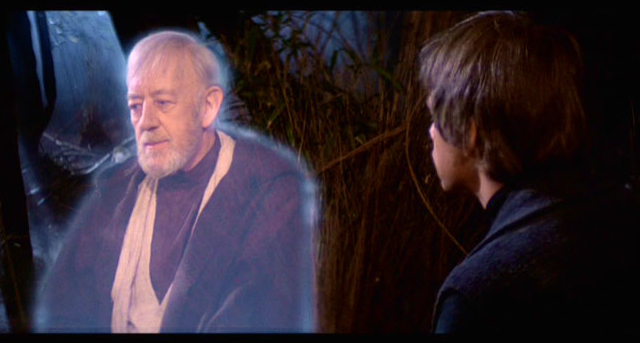
[Luke pensively leaves Yoda for the last time, distraught at the confirmation that Vader is his father. He steps out of Yoda’s hovel, and surveys the swamp that surrounds it. R2-D2 is outside, soldering some loose wiring on Luke’s X-Wing.]

Luke: It’s unbelievable, R2. Vader really is my dad. And now I’ve got to fight him again! Talk about déjà vu. Next they’ll be saying there’s another Death Star to blow up. I wouldn’t mind fighting Vader again, but remember what happened last time – he cut off my hand! It was my favourite hand too, the one I used for switching the TV channel and for… and for other cool stuff.

R2-D2: Bleep-beep-whistle (translates as: “Stop complaining, they gave you a brilliant new robotic hand. What’s wrong with being part-robot? I’m all robot, you stinking chauvinistic roboticist! And if they could give you a hand, why didn’t they give me hands? Do you think it’s easy fixing spaceships when you can’t hold anything properly? I’ve got two dozen appendages but I couldn’t even hold a cup of coffee without spilling it. Did you see the mess I made, serving drinks on Jabba’s barge?”)

Luke: I’d rather have my old hand back. I don’t like to complain, but I always get these really bad rashes just here (he lifts up his glove to show to R2) at the point where the robot hand is joined to my arm.

R2-D2: Beep-whistle-bleep-bleep… (“You don’t like to complain? Pull the other one. Then how about: ‘If there’s a bright centre to the universe, you’re on the planet that it’s farthest from’? Or how about telling C-3PO he couldn’t help unless he could ‘alter time, speed up the harvest or teleport you off this rock’? Or crying when they killed your uncle Owen? Or all that hollering when they killed Obi-Wan Kenobi? Or how about that time you told Yoda that he was asking for the impossible? Or what you said…”)

Luke: …okay, okay. Now who’s complaining? (Grumpy) You just stay here. I’m going for a walk. (Luke walks away from Yoda’s hovel, whilst R2-D2 remains.)

R2-D2: Beep-toot-bleep (“You’re going for a walk in a swamp? Stupid wanker.”)

[Luke walks around the swamp, trying to keep his feet on dry ground wherever possible.]

Luke: (Talking to himself) Deep breath. (He takes a deep breath.) Walking through a swamp sure gives you a good workout, and it really strengthens the calf muscles. (He takes another deep breath.) Phew. I better stop smoking those death sticks – I’m pooped. Better head back home… now which way was it?

[Luke walks around in circles for half an hour, unable to find the route back.]

Luke: Darn it! I can’t find my way in this blasted swamp. Without Yoda in my backpack, I haven’t got a clue which way to walk. (Stops and looks around.) I can’t do it. I can’t go on alone…

[A spectral figure emerges from the swamp.]

Obi-Wan: Yoda will always be with you.

Luke: That’s a stupid thing to say. He’s not here now. (Pauses, and suddenly starts to doubt himself.) Wait, this can’t be right – I’m having a hallucination from all this swamp gas…

Obi-Wan: This is no hallucination. I’m real. Well, I’m not exactly real, but I’m real enough. And now Yoda is dead, he’s real too. I mean, he’s like me, now.

Luke: Yoda’s dead? I left him sleeping.

Obi-Wan: Yes. He died peacefully in his sleep. He didn’t die fighting. There was nobody there to witness his passing. And there were no famous last words. That’s an unusual state of affairs for a Jedi. We’re almost always fighting and speechifying at the very end. I know I was.

Luke: How do you know Yoda’s dead?

Obi-Wan: Because he told me. Look, he’s just coming now.

[The spectral image of Yoda comes towards Luke and Obi-Wan, slowing making his way through the swamp.]

Obi-Wan: Come on Yoda, do try to keep up! (To Luke) It’s not just you – he’ll always be with me too. It seems like I’m going to be stuck with Yoda for eternity.

Yoda: Old, I am. So old am I, that dead I am! (Chuckles to himself.) Hard exercise this swamp is, on the calf muscles especially. Would make you carry me, I would, if disembodied, I was not.

Luke: Yoda, is that really you? We were just talking half an hour ago, and you were alive…

Yoda: When 800 years old you are, think you will time your death for the perfect dramatic moment? I think not. Anyway, with all your questions, tired me out, you did.

Luke: So now you’re both going to follow me around, wherever I go?

Yoda: Right, that is.

Obi-Wan: Uh-huh.

Luke: Even when I’m sleeping?

Yoda: Yes.

Obi-Wan: Of course.

Luke: Even when I’m taking a crap?

Yoda: Always be with you, we will.

Obi-Wan: We’re watching out for you.

Luke: You’ll be watching even if I’m grinding out a long slow shag with a big booty girl from Orion 7?

Yoda: Especially then.

Obi-Wan: We wouldn’t want to miss that.

Luke: Great. Just great. (Aside) I’ll never masturbate again.

Obi-Wan: Don’t you have some more important questions to ask?

Luke: What, like why did you lie to me? You told me Vader betrayed and murdered my father.

Obi-Wan: Your father was seduced by the dark side of the force. He ceased to be Anakin Skywalker and became Darth Vader. When that happened, the good man who was your father was destroyed. So what I told you was true, from a certain point of view.

Luke: From a certain point of view??? You should have had a career in politics.

Obi-Wan: Luke, you’re going to find that many of the truths we cling to, depend greatly on our own point of view.

Luke: So, in a manner of speaking, the Emperor is a good man who is just bringing order back to the galaxy.

Obi-Wan: No, he’s an evil tyrant.

Luke: And I should take the job offered to me by Darth Vader, my dad, to be Vice-Emperor and to rule the galaxy with him. I’ll have my own office and a secretary too.

Obi-Wan: No, that’s not the right point of view either.

Luke: So what is the right point of view?

Obi-Wan: Mine. My point of view is right.

Yoda: No, your view, right it is not. Too sure of yourself you are. I always said that being sure of yourself was a flaw more and more common among Jedi. I told you not to train the boy! Agree with taking Anakin as your Padawan learner, I did not! I told you: grave danger, I feared in his training.

Obi-Wan: Who are you to lecture me? You were the most arrogant Jedi of them all. You said I wasn’t strong enough to fight the Emperor, so you confronted him yourself. How did that work out? You’ve been living in a swamp ever since.

Yoda: Perhaps right, you are. Maybe the job with the big office, the boy should take. The Emperor won, already has.

Obi-Wan: I don’t think so. Luke should kill his dad, then kill the Emperor. You did say he’d passed the Jedi qualification course.

Yoda: Entry-level exam only – not the advanced course.

Luke: I can’t do it, Ben.

Obi-Wan: You cannot escape your destiny. You must face Darth Vader again.

Luke: Yoda spoke of another. Why don’t you pester him to do it?

Yoda: Not him, but her. The other I spoke of, your twin sister is. Want your sister to do your fighting for you, you do?

Luke: But I have no sister.

Obi-Wan: Hmmm. To protect you both from the Emperor, you were hidden from your father when you were born.

Luke: I wasn’t hidden. I moved in with my uncle.

Obi-Wan: You were hidden in plain sight, from a certain point of view.

Luke: A certain point of view, eh? And in comparison, where was my sister hidden?

Obi-Wan: Oh, we set her up with an extremely powerful and rich family. We changed her name and she moved a long way away from your desert home planet. No, she lived in glittering palaces and wanted for nothing, surrounded by servants and tutors who attended to her every need and provided her with the finest education. She grew up to become a member of the Imperial Senate, and one day she’ll rule over her planet.

Luke: (Sarcastic) That’s great. And you let me be raised on a moisture farm. Thanks a bundle.

Obi-Wan: The Emperor knew, as I did, that if Anakin was to have any offspring, they would be a threat to him. So we split you up, using you as bait for our trap, whilst we kept your sister in reserve with the intention she’d be our top assassin. You looked like a real wuss, so it was a logical choice – we Jedi aren’t sexist, even if it seems like most of us are men. But it turned out your sister was unruly, always getting into rows with her hairdresser and spending lots of time fighting with boys she fancied. With lots of boys she fancied. Bad boys with fast hovercycles and fast spaceships, if you know what I mean. And nobody ever came to kill you, much to our surprise. So now you can teach them a lesson, by killing them instead.

Luke: Fantastic. You leave me doing farm chores on a desert planet, in the hopes of luring your enemies with the prospect of killing me? And now I have to repay you by giving up the chance to be Vice Emperor of the galaxy, and killing the two toughest guys that neither of you could kill?

Yoda: Actually, the chance to kill your father, Obi-Wan already had. Chopped his legs off, he did. Unarmed, your father was. In unbearable pain, covered in burns, he was. But too soft, Obi-Wan was. Just walked away, Obi-Wan did, leaving your father to die slowly from his burns. But die, he did not.

Obi-Wan: Like I said before, Luke’s father is dead, from a certain point of view.

Yoda: But not so dead that we don’t need to send someone to kill him again.

Luke: (Thinking) Hang on… My twin sister must be my age, and she used to be a senator, and you say she’s going to rule her planet, so she must be some kind of princess… don’t tell me, is it Leia? Leia’s my sister?

Obi-Wan: Your insight serves you well. Bury your feelings deep down, Luke.

Luke: Leia’s my sister (gulp). Bury my feelings? Too right. I’m definitely never masturbating again.

To be continued (whether you like it or not)…

MaV-Eric Reveals the Source of All Stuff

2012 has been an annus horribilis around chez nous. Unable to secure a grant for any of my research projects, and harangued by my wine merchant over the subject of unpaid bills, I was forced to grovel to the Dean of Humanities at the University of Berkhamsted. Luckily for me, the Dean had recently completed renovation of the East wing of his country house, and was looking for a handyman to reroute his cables and install an additional Sky Tivo Doubleplusgood box in his chauffeur’s apartment. Apparently the chauffeur, a Frenchman by the name of Jean-Pierre D’Egoïste (JPDE to his friends) is not a genuine chauffeur, but is hiding from a large tax bill in his home country. The Dean and JPDE are distant cousins, and the Dean took pity on his kin after he did a bunk following Sarkozy’s defeat in the Presidential election. It transpires JFDE needs up-to-the-minute news feeds if he is to recoup his day trading losses, and hence why he wanted additional televisual cabling. I know nothing about such practical technology, so I volunteered the services of my clone, PeriPh-Eric, as he never seems to be doing anything of any great significance. That was three months ago, and we have not seen PeriPh-Eric since. It is possible that PeriPh-Eric has since returned chez nous, but if he has, we have not noticed.

Anyhow, the Dean had no spare funds for my research, but he did give me the chance to restart my on-off part-time lecturing career. He had need of somebody to fill a gap on one of his courses, after the Professor of Modern Artistic Gravitas suggested a tryst with one of his PhD’s, which in turn required prolonged treatment for STD’s, and prompted rumours that the Prof was AC/DC, (not that I understand the connection to Australian hard rock). As a consequence, I was signed up for a semester of the third years doing their BA in Global Cultural Studies. Inspired by the potential within such a broad remit, I dusted off the lecture notes for my seminal module entitled ‘From Black Flag to Big Black: the Palette of the Punk Movement’. I eagerly set to work, determined to enlighten young minds full of the big questions, like why Captain Sensible’s beret is red, why Poly Styrene’s clothes were so bright, and why nobody strangled Plastic Bertrand. However, this came to a surprising halt during my second lecture, halfway through an analysis of whether it would be pro- or anti-establishment for The Skids to wear tartan. Several uniformed policemen burst in, demanding that I stop. At first I thought this was a prank, so I threw my blackboard rubber at them, and launched into an impromptu chorus of a Clash classic…

You can crush us
You can bruise us
But you’ll have to answer to
Oh, the Guns of Berkhamstead

Unamused, the police wrestled me to the floor and cuffed me behind my back. Apparently they wanted to do a spot check of every student in the hall. The story was that the Dean had been taking bribes in exchange for approving visas for dodgy foreign students from the Middle East, the Far East, the West, and also some places to the South and even the North. However, they soon apologized and released me, realizing I could not be implicated as there were no actual students in my lecture theatre. As the police looked at me bemused, I felt the need to explain. I pointed at the webcam on my lectern, and explained it was providing a live stream to the subscribers of StayAtHomeStudent.com. The chief bobby then pointed at the webcam’s USB cable, which was not plugged in. I normally rely on PeriPh-Eric to sort out details like that. Though I was a free man, I went to the Bursar’s office and found I had been denied my pay. It seems there were no actual students still signed up for my module, once the authorities had rescinded all the dodgy visas.

Returning to chez nous that evening, I discovered my wine merchant had not delivered the usual crate of Veuve Clicquot, but had instead left me a single bottle of very flat Asti Spumante, with a note saying I should expect worse if I did not pay up. Not daring to imagine what could be worse, I resolved there was nothing left to do but to raise some funds through the rapid disposal of assets. With that in mind, I headed straight up to the attic lair of my favourite clone, MaV-Eric…

Eric: [Climbing up into the loft] MaV-Eric! Are you here?

MaV-Eric: [Staring blankly at the screen of a laptop computer whilst lying front down on his bed. He is watching a YouTube anthology of Mitt Romney arguing both for and against every political position imaginable.] Don’t you believe in knocking?

Eric: I would knock, but there’s no actual door as such.

MaV-Eric: Just bang on a rafter, then.

Eric: Okay [Eric raps his knuckle against a rafter.]

MaV-Eric: Come in!

Eric: I need to search through the boxes of my old stuff. I’m going to a car boot sale tomorrow.

MaV-Eric: Why would you want to sell the boot of your car?

Eric: No, that’s not what you do at a car boot sale. You put stuff in the boot, and you offer it for sale.

MaV-Eric: They should offer you tables. That would make it easier for people to examine the stuff you’re offering.

Eric: Well, they do. The car boot is just another metaphor.

MaV-Eric: Next you’ll be telling me you don’t actually sell things at this ‘sale’.

Eric: No, no. We’re definitely going to sell things.

MaV-Eric: Are we? You might. It’s cold and I have work to do. Perkins and Parker have given me a special mission to get inside Mitt Romney’s head. If he becomes US President he’ll have to attend the Rio Olympics, and we want to give him advice on how not to offend the Brazilians when he shows up. Things like not saying how it’d be a much better Olympics if he was in charge, or how much he admires the local women for their pioneering work on depilation.

Eric: Why doesn’t Romney use an American marketing agency, instead of your firm?

MaV-Eric: Secrecy. Apparently there are some Americans who don’t know he’s an awkward charmless doofus. I guess it’s all relative.

Eric: Alright. Well, I don’t mind if you don’t want to help, so long you don’t mind me going through my stuff.

MaV-Eric: You mean those boxes over there? [MaV-Eric points towards a towering pile of boxes, vaguely in the shape of an Aztec pyramid.] What’s in them?

Eric: You know, stuff.

MaV-Eric: No. What stuff?

Eric: Let’s have a look. [Eric opens a box, and pulls out a heavy brass object.] Like this, it’s a door knocker.

MaV-Eric: We have a bell.

Eric: I know. This is the door knocker from my old house.

MaV-Eric: Why didn’t you leave it attached to your old house?

Eric: Because it’ll be worth something, that’s why. I’ll try to sell it tomorrow.

MaV-Eric: You left it in a box for ten years, just to sell it to some random browser tomorrow? Wouldn’t it have been better to rent out this attic space during those ten years?

Eric: Well, I could increase your rent, if that’s what you mean.

MaV-Eric: That’s not what I mean. I mean: why didn’t you sell all that junk years ago?

Eric: I was too busy.

MaV-Eric: Too busy doing what?

Eric: I don’t know. Working.

MaV-Eric: And why were you busy working?

Eric: Because I need to make money.

MaV-Eric: And why do you need money?

Eric: To buy stuff.

MaV-Eric: Exactly. You work and work and work and buy more and more stuff, and then stick it into boxes, put them out of the way and make space for more stuff. Wouldn’t it make more sense to just settle for the stuff you already have?

Eric: Oh, you always need more stuff. Take this saw, for instance [Eric holds up an old wood saw.] Do you know what I last used this for? To make the shelves in the study.

MaV-Eric: So you could put stuff on them.

Eric: So I could put stuff on them… no, well, yes, but you’re missing the point.

MaV-Eric: Obviously.

Eric: Look at this, it’s one of the poles for my gazebo.

MaV-Eric: A gazebo? What’s a gazebo?

Eric: It’s a pavilion you put in the garden, to shade you from the sun.

MaV-Eric: Okay, I can understand why that ended up in the loft. But I don’t know why you’d buy it in the first place.

Eric: Because I invited people over for a barbecue, and I wanted everyone to have a good time.

MaV-Eric: You mean, you wanted to get laid?

Eric: No.

MaV-Eric: So who did you invite to the barbecue? Any single women?

Eric: Err…

MaV-Eric: Exactly. All of this stuff just represents your many failed attempts to satisfy your evolutionary programming. You buy junk in order to meet and impress women, and the junk ends up getting dusty because it’s never used…

Eric: When you say ‘junk’, you do mean the stuff in these boxes, don’t you.

MaV-Eric: Boxes, pants. What goes in, stays in. That’s why you cloned yourself, wasn’t it? Because you’re not reproducing the normal way?

Eric: What do you suggest I do, then?

MaV-Eric: Do what I do, and turn reproduction into a win-win. Cut out the middle-woman, have lots of babies and make money in the process. Go down the sperm bank and make a donation.

Eric: Do they pay well?

MaV-Eric: They give you thirty-five quid a pop. That’s pretty good for something you habitually do for free. Considering that they provide the porn, it turns a recurring cost into a revenue stream.

Eric: Well, that does sound like I’ll make more money than with a car boot sale. But I think you’re missing the point about the ‘middle-woman’, as you call her. The woman is what makes it so much fun.

MaV-Eric: So what you’re saying is that evolution is playing a trick on you, exchanging thirty seconds of fun for a lifetime of raising kids.

Eric: You don’t make it sound like a very good deal. Are you sure you work in marketing?

MaV-Eric: Of course! That’s why I know that the only motivation for buying stuff is to get laid. It’s all got something to do with sex in the end. Electric toothbrushes – sex. Cars – sex. Gore-tex water resistant jacket – sex with that cute girl who likes rambling. Return train ticket to Pontypridd – sex with that cute girl who wants to go shopping in Pontypridd. B&Q electric screwdriver – sex with the cute girl who reads books by the same novelist who sits on the shelves that you put up with the B&Q electric screwdriver. All stuff gets sold because of the desire for sex. Or the desire to avoid death, but as sex is nature’s ultimate answer to death, death doesn’t count for so much.

Eric: I don’t know if I’m depressed or enlightened. But if you know so much about how to get laid, then why do let me waste my money buying all this junk.

MaV-Eric: I said I know how to use sexual desire in order to sell stuff. I didn’t say I know how to sell your merits to a woman. Big difference. I’m a marketeer, not a magician. Anyway, today’s my day off.

What Did Obama Say About Benghazi?

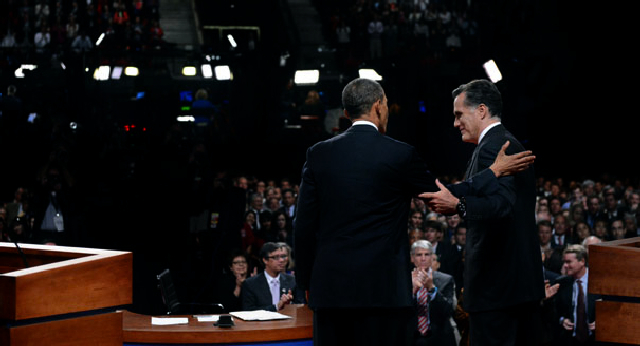
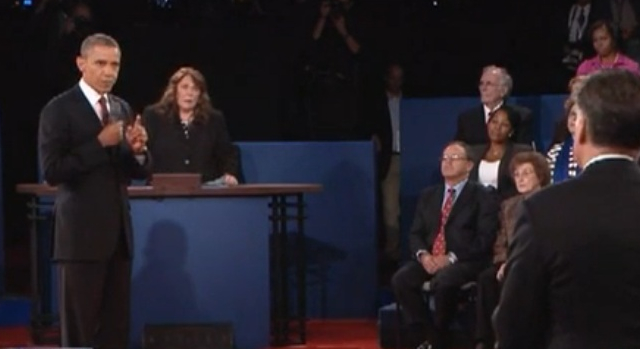
If you like politics, then the second debate between President Barack Obama and his challenger, Mitt Romney, was a real humdinger. Both men argued passionately and persuasively. If you despise politics, then the debate exemplified all the things you loathe. Both men repeatedly interrupted, squabbled, pointed fingers and complained about not getting enough time, or enough say, or enough easy questions that were blatantly set up by their supporters. (Actually, they did not complain about the last one. Those complaints must have come from me, whilst I was shouting at my TV screen.) Worst of all, both men said a lot of things that, you must hope, neither really believed. In itself, that reveals a lot about democracy. To win an election, the candidate’s goal is to tell voters what they want to believe, but not to share their beliefs.

There were many times where the candidates said things they could not possibly want to believe, though they might want voters to believe them. For example, Romney insisted that the failure of Obama’s energy policy was proven by the high prices that Americans pay when fuelling their cars. In reality, those prices have consistently mirrored the price of crude oil. Anyone with an ounce of economic sense will understand why that is. Crude oil is sold on a global free market, and prices on that market tend to be influenced by the most obvious of economic factors: supply and demand. So if Mitt “I understand business” Romney intends to lower fuel prices for Americans, he is going to do it by interfering in the free market (unlikely) or by pumping so much oil that it significantly increases total global production (even less likely). We are also forced to assume that Romney is not so keen on lowering prices that he would reverse the sanctions that have reduced Iran’s oil production to its lowest level in 23 years. On the other hand, Obama kept explaining how it was the fault of the Republicans that he had failed to do so many of the things he promised voters in 2008. It seemingly slipped his mind that the Democrats controlled Congress until 2010. So there was very little to like about the debate, unless you watched it as a partisan. As a partisan, you could enjoy the spectacle of blows being landed to the left and to the right. Anyone with a genuine interest in what the candidates believe, or what they might do, was forced to shrug their shoulders and wonder if they will risk another ninety minutes by tuning into the third and final debate.

Although political debates are often sadly devoid of fact, this particular debate reached a nadir that even politicians generally avoid. The very lowest ring in political hell is dedicated to the most extreme form of political torture: the wrangle over who-said, he-said, she-said, you-said. Most schoolchildren go through a phase of pointing fingers and telling tales about who said what, and what they meant. Most schoolchildren grow out of it. The ones who do not grow out of it may grow up to be a world leader.

There was an ominous herald for the descent into farce. He rose from the audience. He introduced himself, and talked about the ‘brain trust’ he shared with his colleagues at work. Upon checking the name of his employer, it turns out he works for a supplier of phone equipment to small businesses in New York. And what did he ask about? What causes sleepless nights for the brain trust at Global Telecom Supply, a clearly non-global business? Is it the American economy? Or stifling government regulation? Might it be the unauthorized use of wire taps? Or maybe the need to depend on immigration for highly skilled workers? No. None of these are of interest to this American business, with its American employees and American customers. The greatest concern of this NY phone supplier is… the situation in Libya, and the attack on the US Embassy in Benghazi. Libya. I kid you not. Hence, before he even asked the question, we knew two things about this particular audience member. First, he is so shameless that he uses a Presidential debate as an opportunity for a free TV advert. Second, he is so stupid that it does not occur to him he may have been annoying the 50% of Global Telecom Supply customers who are Democrats. Presumably none of the owners are Democrats, or else they might ask their own questions about what the brain trust does during working hours. And nobody died in Benghazi just so this chump could appear on national television. Nevertheless, the brain trust had spoken, and the candidates had to respond. This is what they said:

To reiterate, the answer quickly descended into a farcical inquisition about whether Obama had described the attack in Benghazi as an act of terror on the day after it occurred. Obama said he did. Romney said that it took Obama fourteen days to admit the attack was terrorist in nature. Both insisted they knew what Obama had said, when giving his speech in the Whitehouse Rose Garden on the following day.

Romney: I think it’s interesting the President just said something which is the day after the attack he went to the Rose Garden, and said it was an act of terror.

Obama: That’s what I said.

Romney: You said, in the Rose Garden, the day after the attack, it was an act of terror? (Raises eyebrows)

Romney: I wanna make sure we get that for the record, because it took the President fourteen days before he called the attack in Benghazi an act of terror.

Obama: Get the transcript.

To call this argument ridiculous is to do a disservice to ridiculous arguments. This argument is sub-moronic. It would be too demeaning for a pair of twelve year olds in a playground. As Obama states, this argument can easily be settled by checking the transcript. The debate moderator, Candy Crowley, then intervened to clarify who was right. In short, she said that Obama “did in fact” describe the attack as an act of terror. But after the debate was over, when you might think intelligent people would simply pull out a manuscript and end the stupidity, they do the opposite. They keep on debating as if the facts cannot be checked. For example, consider this observation by Charles Krauthammer on Fox News:

…we’ve got Candy Crowley’s intervention, which is essentially incorrect, supporting Obama on the transcript. He did not call it a terror incident.

So who was right? We have Obama and the debate moderator on one side, Romney and various pundits on the other. Some of these people are wrong, and we can look at the transcript of Obama’s speech and reach a simple conclusion. Note that it is possible that there were many other contradictory statements by Obama or by the Whitehouse, either made around the time or afterwards. But that was not the question that arose in the debate. In the debate, there is a simple one-off fact that can be checked. There is no need to balloon this into a wider discussion, because Obama made a specific claim and Romney disputed that specific claim. And by keeping this specific, we can disentangle the silliness and work against the tactics that assume lies can be stated during a debate because nobody will check them. So I went back to the video and transcript of Obama’s speech in the Rose Garden.

In his Rose Garden speech, Obama never uses the words “act of terror” and “Benghazi” in the same sentence, although that would be the most natural inference the audience could have drawn from Obama’s statement during the debate. This observation is insufficient to brand Obama as a bare-faced liar. Obama does refer to the “terrible act” in Benghazi. The question is hence whether the speaker, and the audience, would have understood that this “terrible act” is also an act of terror.

In his Rose Garden speech, Obama routinely used the word “attack” to describe the events in Benghazi. This is relevant, because Romney also used the word “attack” during the Presidential debate, and used it with emphasis in order to imply a difference to the language that Obama had used. Obama’s use of the word “attack” is relevant to gauging the general tone and meaning of his words during his Rose Garden speech. The overall tone of Obama’s speech was quite different from how Romney characterized it. Romney mentioned “spontaneous demonstrations”. Obama did not use words like that. In the speech, it is clear that Obama is describing an attack on the embassy, not a demonstration. He talks about an attack three times in the first eleven sentences:

Yesterday, four of these extraordinary Americans were killed in an attack on our diplomatic post in Benghazi…

The United States condemns in the strongest terms this outrageous and shocking attack.

And make no mistake, we will work with the Libyan government to bring to justice the killers who attacked our people.

Throughout the rest of the speech, Obama keeps referring to the killing in this vein, as an “attack”, with its perpetrators described as “attackers”. Obama did briefly talk about religious tolerance, but it would be a strange mental leap to get from reasserting the importance of religious tolerance to suggesting that events in Benghazi were a somewhat understandable demonstration which was prompted by a filmmaker’s intolerance. Obama talked very singularly about an “attack”, so Romney’s implied confusion is not bedded in the Rose Garden speech. If there is a hint of confusion in Obama’s speech, the confusion is about what kind of “attack” took place, not about the spontaneity of a demonstration or anything as soft-headed as that. And, to reiterate, maybe Obama was confused about whether to describe the events as demonstrations or attacks in other speeches, but he showed no confusion of that type in this particular speech, which is the one that Romney disputes because it threatens to undermine his assertion that “it took the President fourteen days before he called the attack in Benghazi an act of terror”.

During the speech, there is no single sentence containing a simple atomistic statement to the effect that the act in Benghazi was motivated by the desire to terrorize. But Obama did talk about “acts” and “terror” in sufficiently close conjunction that there is a viable interpretation where Obama means to use the phrase “acts of terror” as inclusive of the “terrible act” in Benghazi. The most precise question is hence to determine if, when Obama used the word “terror”, he was using it to refer to the attack in Benghazi, to the 9/11 attacks, or to both. In that respect, Obama’s language is ambiguous. The wording does not conclusively prove that Obama intended to describe the Benghazi attack as terrorist in nature. But nor does it condemn Obama as saying or even implying the opposite. At worst, Obama was silent on the nature of the acts in Benghazi, saying neither that they were or were not terrorist. However, that is the least favourable interpretation possible. So when Charles Krauthammer said Candy Crowley’s intervention was “essentially incorrect”, he forgot to mention the essence of his own argument – that a partisan knows, a priori, to take the dimmest possible view of any person with contrary political views.

The real key to Obama’s speech occurs when he said:

Of course, yesterday was already a painful day for our nation as we marked the solemn memory of the 9/11 attacks.

Before this point, he had often referred to the “attack” on Benghazi, but this was the first time he mentioned a second, different attack. After a couple of sentences, Obama then followed up with:

And then last night, we learned the news of this attack in Benghazi.

Here we have the heart of the potential ambiguity. Unless he is very precise, anything that Obama says after this point may refer to the 9/11 attacks, or may refer to the attack in Benghazi, or may refer to both. A few sentences later on, Obama said:

No acts of terror will ever shake the resolve of this great nation, alter that character, or eclipse the light of the values that we stand for. Today we mourn four more Americans who represent the very best of the United States of America. We will not waver in our commitment to see that justice is done for this terrible act.

This is the only time in the speech where Obama uses the word “terror”. When he says “no acts of terror”, is he referring solely to 9/11, or possibly to Benghazi as well? At this point, I cannot agree with anyone who claims that Obama definitely did not intend to use the phrase “acts of terror” to cover both those events. They cannot possibly know that from the text, and it is willfully obtuse to insist that the “acts” only refer to 9/11 and cannot refer to anything else. Even the logical form of the statement goes against that interpretation. Obama is using a negation to construct a universal assertion; his statement about terror is about all acts of terror, whether past, present or future. It is not just about 9/11. Apply this maxim to the Oklahoma City bombing, or to some hypothetical threat of a terrorist attack, and you still reach the desired conclusion: the nation’s resolve will not be shaken, its character will not be altered and its values will not be eclipsed.

In discussing the ambiguity of interpretation, I do not think this is just a matter of political (i.e. unnatural) wordplay. One can arrive at a natural reading of a man’s words without recourse to his (or your own) partisan political beliefs about healthcare, the military, taxes or whatever. It strikes me that both possible readings of Obama’s speech are natural, but that one is less natural than the other. The fact that Obama refers to “acts” in the plural helps to keep the door open to a wider scope for reference. Whilst it is possible to think of 9/11 as several terrorist acts, this is less elegant than thinking that the ‘acts’ include both 9/11 and the Benghazi attack.

I am swung towards the interpretation Obama gives for himself during the debate, for two reasons. First and foremost, Obama offered an interpretation of his own words. He says he meant to describe the Benghazi attack as a terrorist act. I am sure that many people feel they can peer into the contents of Barack Obama’s soul. They are wrong. Only one man can do that. If there were two equally likely interpretations of a man’s words, I would accept the speaker’s professed and preferred interpretation. This would be my ultimate tie-breaker. In this case, Obama has broken the tie and told us what he meant; we should not call him a liar if the evidence sits perfectly balanced within the scales. Second, and crucially, the two possible interpretations are not equally likely. One is slightly more likely than the other. This is because of what Obama said in the sentences immediately after he mentioned “acts of terror”. He immediately brings the speech back to the subject of the four people who died in Benghazi. This would be jarring and crass if the desired interpretation is to talk about one topic, stop, then talk about a second unrelated topic. Few people talk like that. Consider the following, simple construction:

My dog died. I was feeling very depressed. I lost my job.

It is possible that the speaker only felt depressed about his or her dog dying. Perhaps they are overjoyed at being freed from a hated job. But this limited context suggests that the speaker’s theme covers both the death of the dog and the loss of employment. That would be the most natural reading, in the absence of any additional sentences which provide evidence that the speaker has different feelings about the two events.

Obama might have mentioned 9/11 in passing, like it was a matter of coincidence with the Benghazi killings. But if 9/11 is just a coincidence, then why mention it all? The speech is ostensibly about the events in Benghazi, not a thousand other, unrelated, things that also happened ‘on this day in history’. By bringing up 9/11, Obama is choosing to create an association between 9/11 and the events in Benghazi. An unfavourable reading of the speech must assume that this association was accidental and unintended. I doubt that Whitehouse speeches are written as carelessly as that. If Obama wanted to deliberately avoid an association between the Benghazi attack and terror, then he could have simply avoided any mention of terror or any terrorist acts. The association is very natural just because of how one sentence followed the other. Even so, one might still possibly believe in the intentional separation of these concepts, if there was a long and deliberate pause in Obama’s delivery. Such a pause would create a separation between the ideas being conveyed by the two sentences. There was no pause when Obama spoke.

Crucially, Obama then says that justice will be done “for this terrible act”, meaning the attack in Benghazi. I think it is implausibly strained to assert that when Obama talks about “acts of terror” he solely refers to 9/11, and then he coincidentally chose to use the word “act” to refer to the Benghazi attack. If Obama did not mean for the latter “act” to be understood as one of the “acts of terror”, this would not only have been a very lazily written speech. With the benefit of hindsight, this would also have been an extraordinarily lucky piece of speechwriting. That is because it now suits Obama to find a speech where he linked the Benghazi attack to terrorism. What a piece of fortune this ambiguity would be, if Obama had meant to say that the “terrible act” in Benghazi was a terrible non-terrorist act, but that he accidentally left himself the option to claim it was terrorism after all. It would be as if Obama meant to say something stupidly offensive and unnecessary, and he did such a bad job of saying it that he inadvertently said something that also had the potential for a pretty reasonable interpretation as well.

In the midst of political competition, with both rivals landing blows on every unguarded cheek, a debate moderator has no time to indulge in the kind of detailed analysis I have just performed. It is to the benefit of the viewer if she calls out facts that put an end to childish squabbles. That is what Candy Crowley did. And contrary to what Charles Krauthammer said, she was essentially correct. (This incident also taught us something else about language and interpretation – that Charles Krauthammer does not know the meaning of the word “essential”.)

Of course, there is another, truly cynical interpretation of Obama’s ambiguity. Rather than deliberately associating the Benghazi violence with terror, or stupidly discussing them both whilst intending them to be thought separate, there is a third way to interpret Obama’s intentions, though there is no third way to interpret his words. Perhaps Obama deliberately chose to be ambiguous. Perhaps he was undecided about how to describe the attack. He hence selected words that created an association with terrorism without being so explicit that he could easily be quoted. Unquotability might be the most potent defense that a politician can deploy, when facing a potential barrage of attack ads. Ambiguity was hence Obama’s way of giving himself a future option to make favourable claims about what he said in the immediate aftermath of the Benghazi attack, without being definitively tied down to one position or another. This would require us to believe Obama has a truly diabolical mastery of language. I cannot rule it out. If this is the correct interpretation of Obama’s mind, I would greatly admire Obama’s skill whilst despising his motives. But as noted above, I cannot look into Obama’s soul. This is where the analysis of his words must end.

4am Besides

0

And when the night passes over,
Windows shuttered, curtains drawn,
And we’re all in the great shadow of the world,
There’s still a glimmer of light
In the corner of your eye.

At 4am, there’s a hush within the city,
And our half-world dozes,
When we’re done with all the talking,
There’s a hum of love
Mixed into your sleep.

When the sun drops and the earth is cold
When time runs slow and I’m not wound
There’s still a fire that lingers on
Within me, embers that last until the dawn
Waiting to wake
Beside you.

Ten in the Morning

0

It’s ten in the morning
The cat is pregnant
The pubs are shut
The car won’t start
My husband’s a slut

It’s ten in the evening
My TV ain’t working
My boss is a monkey
My daughter’s a whore
My son’s a junkie

Get in my way, scum
And it’s game over
There’s a clock in my head
In my hand, a revolver

My house is my castle
Not safe in these walls
Get back to the gutter you came from
It’s all starting to fall
And I’d rather die, than lose it all
I’d rather die, than lose it all

The Firmest Embrace

1

I fought the firmest embrace
And lost.
No brethren left to share my burden,
The yoke’s mark rests on my back alone.
Released from an overlong cell,
So afraid to leave,
The sun dazzles.

The path is unlaid, bare.
Milestones are absent.
Dirt bites.
Lying still, the heart skips involuntary.
Clouds come to kiss me, icy-tongued.

The similar is unfamiliar.
All is stealthy indifference.
Fire smells and crackles.
My history is burning, without illumination, nor warmth.
My music box wound down.
My key warped.

Discord surmounts ambition,
And the final treasure is plundered.
But nobody won.
The former embrace
Now lags open.
Blown asunder by the wind,
Love’s song is sung.