

| Sugar falls | Relief comes | Time strains | Skies lighten | Wonder palls | Passion drums | Heart drains | Eyes brighten | Virtues sleep | Heroes wake | Lies slicken | Wise listen | Statues weep | Rivals brake | Clouds thicken | Teeth glisten | Hollow rises | Gaggles rest | Space ends | Waves applaud | Evil sizes | Comrades jest | Truth offends | Hopes afford | Laughter clogs | Troubles ease | Kings reckon | Air sweetens | Recall fogs | Memories please | Graves beckon | Time seasons | Never enough | Bursting with life | To feed the appetite | Like a new-born baby | Always too much | Seeing the truth | To focus on the right | With no if’s or maybe’s | Allure too great | Holding the peace | So enthralled by the might | And doing so daily | Go on this way | Such is our task | And say goodbye to light. | We perform most ably. |
Downs and Ups

The Streets of Lundern

After their peculiar encounter with the Dowager Duchess D’Nunzio, Karen and Cecilia make their way across town on foot. They walk to where Cecilia will make her delivery of new-born kittens, and where Karen will rest for the night…
Cecilia had doubly good reason to hurry, as she was well aware. The journey was not too far as the stork flies, but negotiating the streets of this part of town was like navigating a maze. Cecilia needed no directions, but their zigs and zags would demand many an extra step to compensate for indirectness. They would need to make haste to arrive before the beginning of the 9 o’clock curfew. Not only that, but the kittens in her box needed their mother, and their mother would be anxious to greet her little ones. Cecilia walked quickly, and Karen followed close behind, but the pace discouraged neither of them from making conversation. Karen had many questions to ask. The first of these related to the very possibility of conversing with a stork.
Cecilia could speak without needing to open or close her bill, which was fortunate, as it held the hammock which in turn held the precious cargo of newborns. But Cecilia’s linguistic abilities left Karen rather baffled. “How can you talk?” she asked simply.
“What do you mean,” answered Cecilia, not really knowing what to think of Karen’s question.
“I thought storks were mute,” mused Karen.
“Oh, it’s true that we can’t call or sing like other birds,” agreed Cecilia, “but we can clap our bills very well, which I’d demonstrate if wasn’t carrying the mites in this box.”
“But you can talk.”
“If I couldn’t talk, this wouldn’t be much of a conversation.”
“What I mean to say is,” and here Karen paused, as she tried to determine exactly what she meant to say, “is that whilst animals might grunt or bark or otherwise call to each other, they don’t generally speak English. And, if you don’t mind me saying, you talk without needing to move your bill.”
“I can’t comment on the languages spoken by animals elsewhere, but in this country we speak Inglish and not much else, and that’s fine by me.”
“But where I come from, animals don’t speak any language.”
“Oh, I’m sure you must be wrong. They probably just speak a language you don’t recognize, like Mergan, or Tudch, or Chrenf, or Hicnese.”
“Or Aspnish?”
“I’ve never heard of that language,” and to be fair to Cecilia, nobody else had.
“But animals don’t talk to people,” said Karen.
“Why not?” enquired Cecilia, “are animals in your homeland so haughty that won’t talk to a human?”
“That’s not the reason,” and Karen was quite frustrated that she was not making herself understood.
Cecilia’s pace quickened a little, and she looked about her a little bit more, as if she was disconcerted by some of Karen’s questions. After a long pause when neither spoke, Cecilia finally said: “we animals think that humans are strange, as they need to open their mouths to communicate. They are rather like young’uns reading a book, unable to do so without moving their lips.”
This really was not an answer, but Karen put up with it. It seemed Cecilia might not be able to explain how a stork talks, any more than Karen could explain how she talked.
All of Lundern’s streets were poorly lit. There was no moon, though the night sky was clear and starry. The shadows on the street sometimes obscured a wonky or missing cobble, and Karen would take a false step more often than she liked. She was very aware of how much she was depending on Cecilia, though they had only just met. Lundern’s labyrinthine avenues weaved in and out of each other like a tangle of string in a cat’s cradle gone wrong, which was apt, as cats were the most common creature to be found. Their eyes reflected the streetlights, as they slinked around corners or stealthed atop walls. Without Cecilia, Karen would be quite lost. In fact, Karen was quite lost either way, and there were precious few signs or landmarks. Some of Lundern’s human denizens were guided around by boys carrying burning torches. Cecilia explained they the torch-bearers were called ‘link-boys’.
“Why link-boys?”
“The link is the name of the wick they use in the torch. Don’t they use torches where you come from?”
“Yes, although the torches have batteries in them.” Try as she might, Karen could not explain to Cecilia about electricity, or the things it could power. Judging by the gas lanterns and Cecilia’s reaction, electricity was as unfamiliar in Lundern as talking animals would be in London. This was a strange place indeed, but not in every respect.
Sometimes people told Karen that she talked too loudly. She could get very animated. When there was a pause in their conversation, Cecilia encouraged Karen to keep talking, as if to ward off the dark recesses around them, or whatever might be lurking within them. Karen sometimes glimpsed animals or people peering from the shadows, looking strangely at her, but she was unsure of herself. Those faces might have been come from the depths of her imagination. Whatever she saw, when she saw something scary, Karen just talked a little more loudly afterward, not letting the fear get the better of her. The pair turned a corner, as they often did, and Karen wondered aloud how Cecilia knew her way around. Karen would have been lost long ago. In fact, she was lost, without even the slightest instinct about which way was the station, or which was North, South, East or West.
As the two tramped down the street, they noticed a rustling coming from the darkened entrance to a fishmonger’s shop. Beneath a pile of newspapers, a figure stirred. A shaft of light framed the vagrant’s head. The face was wizened; the hair was straggly. They belonged to a man of indeterminate years. He might have been in his thirties, but aged prematurely. Cecilia, who had set an unrelenting pace since the incident with the Duchess, now faltered momentarily. Cecilia spoke to the stranger in the doorway. “I don’t know what time it is,” she said, “but I know curfew starts soon. You’d better get inside.”
“I might, if I knew of an inside that I’d be let inside,” responded the figure in the shadows. He coughed, but the voice was strong.
Cecilia’s voice was filled with concern: “you know what happens to those that stay outside beyond curfew.”
“I know, but it won’t happen to me. I’m working, don’t ya know? I’m guarding this here fishy shop,” and with this, he banged its door with his fist.
“That’s not much of an excuse.”
“It serves me good enough. My feet are off the street,” which was true, as they rested on the doorstep. “I have a letter from the monger, saying I stop here with his permission. And this entrance way is an alcove, private property, and with a roof overhead, making me inside, not outside, by the law of the land. Most importantly, my friends, the cats, seem to agree with all this.”
Cecilia seemed to shudder. “Have it your way then. I was only giving a word of advice.”
“Then take one too. Hurry along, before you’re caught after curfew.”
Cecilia did hurry along, this time in silence. As she did, she seemed to bend her head a little more forward, as if more protective of the bundle that she carried.
After a few hundred yards, and several more twists and turns around Lundern’s streets, Karen eventually felt brave enough to restart their conversation. “What did he mean when he said ‘his friends, the cats’?”
“I know the mother of these here kittens. I’ll not have anything said against cats in general.” Cecilia was upset; her answer made no sense to Karen. She pressed Cecilia to elaborate. For a long time Cecilia refused, despite Karen’s stubborn line of questioning. Instead Cecilia would answer a question with a question, about Karen’s family, or what London was like, but most often she asked the time. Cecilia had become increasingly agitated as 9pm, the time of curfew, approached.
“What happens if they catch you after curfew?” asked Karen.
“It’s best not to know such things,” replied Cecilia, and her answer was final. After that, they walked along in silence for a long while, except for the frequent occasions when Cecilia asked the time again. Eventually Karen thought to ask Cecilia: “don’t you need your own watch, or how would you avoid being caught by curfew yourself?”
“Oh,” Cecilia gave a kind of chuckle to herself, “you really aren’t familiar with things around here, are you? I’m a bird. Birds in flight aren’t subject to curfew. It would be too difficult and too silly to enforce a curfew on birds. Because of that, they’re not too bothered if they catch you on the ground. You could always take-off again, quick enough. Though, I admit, I don’t tend to come down to street level when curfew is coming up. It’s safer to stick to the rooftops after dark.”
As they walked, the streets had become straighter, but fewer of the buildings stretched above a storey or two. As the pair turned yet another corner, they saw a man, and a dog, walking towards them. “I have a dog, in London,” said Karen.
“Shut up,” said Cecilia.
The dog, an Alsatian, pricked its ears up. It walked alongside the man, who wore a long black coat of wool. There was no lead, nor muzzle. Neither the dog nor the man spoke.
“I only said,” said Karen, but Cecilia stopped her again.
“Shut up,” said Cecilia, in a voice that sounded like she spoke under her breath, except that Cecilia did not need breath to speak.
The Alsatian moved a little ahead of the man. As it came towards the girl and the stork, it spoke to Karen: “have you far to go?”
Karen, unaware of the distance to their destination, turned toward Cecilia. “Not far now,” said Cecilia. “We’ll be there in ten minutes.”
“Be sure you are,” said the dog, which now stood and waited for the man to catch up. As he did, Karen saw a badge on the man’s lapel, twinkling in the light from the nearest lantern.
“Hello officer,” said Karen to the man. She correctly surmised he was a policeman.
“Officers,” replied the man.
Cecilia cast a glance at Karen, but Karen did not notice, or could not interpret it.
“Officers,” said the man again. Karen was silent, and then replied, “officers,” without understanding why. Then she hesitated, and said, in a faltering tone: “yes, officers.” She looked to the dog and finally recognized the object hanging from its collar; it was a police badge too, and not the name tag she had first thought. Realizing her mistake, Karen continued, more confidently: “good evening to you both, officers.”
“Don’t mind her speech impediment,” said Cecilia, “she often struggles to say her s’s.” At this, the dog laughed, and the man harrumphed. “Come on sir, these two aren’t worth it,” said the man to the dog.
After the policemen were gone, Cecilia finally allowed her bottled-up emotion to pour out.
“How can you talk like that, about ‘owning’ an animal?”
“All I mean is that our dog lives with us.”
“I know what you meant. Nobody owns animals here, in Lundern. We don’t have slaves anymore. The citizens of our city-state are civiliized, not like those who live elsewhere.”
Karen was silent, feeling ashamed of herself. “You’re right,” she said for want of something better to utter. It had dawned on Karen that here, in Lundern, animals might be equals to people. They might outrank people, like the police dog that outranked the man. They might expect the same courtesy as people. She had better watch her insensitive tongue before it got her into trouble. “You’re right,” repeated Karen, “don’t mind me. I’m just tired, and not thinking straight.”
“Very well,” said Cecilia. The tone of her voice was less angry than before. “I suppose you’ve had a rough day, and you must be missing your parents.”
“My father, yes,” said Karen, and then she stopped herself. “I miss them both.”
“We’re here.” Cecilia nodded at a building as they rounded one more corner.
“Which is it?” asked Karen, unsure which building had been indicated from the long terrace line.
“The tall narrow house in the middle, Cobbler and Cobbler.”
Lit by a draped window from above, Karen could dimly make out a sign. It read: ‘Cobbler & Cobbler’, and they crossed the cobbled streets to its front door.
Six Unbankably Versatile Actors
Films stink. They really do. Especially films made by Hollywood.
It must have something to do with money. It costs a lot of money to make a film, and then a lot of money to promote it, so funding a film is like taking two big gambles before you see either pay off. As a consequence, the people with the money try to make the safest bets. Which is why Seth Rogen appears in so many films. You know there must be something wrong with a world where Seth Rogen is rich and famous.
Somehow, for reasons that I would rather not understand, Seth Rogen is bankable. To be bankable, it is good to be consistent. Consistency means the audience gets what they wanted, and will know what they get next time. Seth Rogen has been the same in every film he appeared in, since he fluked that minor part as the stockroom guy in 40 Year Old Virgin. He has played the same useless boring lump in every film since, including the ones he wrote, which tells you something about both his writing and acting range. When Seth Rogen plays an alien, or a cop, a gelatinous mutant, or a comedian, his performances are identical, and equally unfunny. But Seth Rogan is bankable.
I guess some American teens in nowhere towns, high on weed or aerosol cheese, like to watch Seth Rogen because he is a useless goon made good. Or maybe Rogen is sufficiently middle of the road that men do not mind taking women to date movies that feature him. Sometimes ordinary people like stars because they are attainably attractive. Not only is Seth Rogen attainably attractive, he is attainably funny. Anyone can imagine themselves as witty and as good-looking as Seth Rogen, which says everything you need to know about the man’s comedy-based career.
Whilst Seth Rogen is bankable, and hence appears in lots of films as exactly what the audience expect him to be, you sometimes see films which contain a completely different kind of performer. They are called actors and they are noticeably different because they can act. Or rather, they are unnoticeably different, because audiences may not notice them. The actors are so busy acting, that the audience cannot recognize them from one film to another, and will not pay to see them. Even if they do recognize the actor, they are not sure what the actor will do from one movie to the next. Such unpredictability makes the actors unbankable, whilst untouchable. Think of Mark Wahlberg, and Anne Hathaway, and Jamie Foxx, and Tom Cruise. Then think of people who are the opposite of them, if you can. The ones who acted them off the screen, but maybe do not look as good. The people who were in that really good film you saw, but who you do not know the name of, and you do not recognize. They are the actors I am talking about. And if you could not think of any of them, here is a list of six of the best from Hollywood. Look out for them, coming to a movie screen near you soon…
1. Colm Meaney
 On the big screen, this Irish actor has played Benjamin Franklin, H.L. Mencken, and Leeds United Manager Don Revie. He has played London mobsters, American mayors, and Welsh busy-bodies. He was a plumy English pilot in Die Hard 2, was consumed with hate in How Harry Became a Tree and was the azz-kicking DEA agent in Con Air. With five of his films currently in post-production, expect to see plenty more of Colm Meaney in future.
2. Franka Potente
 This German actress first attained some international prominence for playing the lead in Lola Rennt a crafty film in which Potente literally runs through three different versions of the same story. She entered the English-speaking mainstream with appearances alongside Johnny Depp in Blow and playing the love interest for Matt Damon in The Bourne Identity. Though often stunning to watch, Potente is in a different class to the eye candy that clutter so many films. She was exceptional when playing the female lead in Australian film Romulus, My Father and her supporting role in Che: Part 2 demanded attention for its nuanced subtlety, as well as demonstrating that language is no barrier to Potente’s acting. If her acting career was not enough, Potente is also a published author. This fascinating woman is bound to engage audiences for many years to come.
3. Chris Cooper
 Cooper is another Bourne alumnus, making a name for himself through gritty roles in spy drama Breach and playing a homophobic ex-soldier in American Beauty. Often content to be secondary to the movie stars, Cooper got deserved recognition for Adaptation, a film that almost fell apart through its excessive cleverness, but was held together by its strong performances. However, I most enjoyed Cooper for one of his rare leading performances, as Sheriff Sam Deeds in Lone Star. This masterful ensemble piece sees Cooper stitching together both clues and characters in a mystery that straddles the border of Mexico and the US. Cooper makes Sheriff Deeds personable, down to earth and humane, which is a sharp contrast to many of the other roles Cooper has played. Hollywood’s obsession with looks and stereotypes may sometimes have held Cooper back. With some luck, there will be more roles to stretch Cooper’s range in future.
4. Forest Whitaker
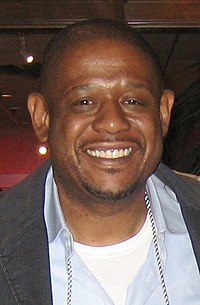
Perhaps Whitaker is too well known to belong in this list, but his un-Hollywood looks and talent for transformation set Whitaker apart. His drooping eyelid seems to transcend his face, and somehow becomes intrinsic to his characters. However he is cast, Whitaker has had the ability to immerse himself in his part, and hence discover and present a whole new person to the audience. Whether he is playing jazz great Charlie Parker in Bird, a samurai hitman in Ghost Dog or Idi Amin in The Last King of Scotland, it is impossible to tell where the character ends and Whitaker begins.
5. Toni Collette

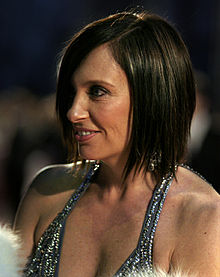
Even more than Whitaker, Toni Collette has the ability to utterly transform herself from one role to the next, making this chameleon actress’ talents almost invisible to the ignorant eye. Like Whitaker, Collette transcends Hollywood’s obsession with looks, and is able to inject an irresistible believability into her characters. Her best known roles have been in Muriel’s Wedding, The Sixth Sense, About a Boy and Little Miss Sunshine. Whatever part she plays, Collette is never less than excellent, and always raises the standard of the film.
6. Vincent D’Onofrio
 With his extraordinary ability to mutate from one part to the next, Vincent D’Onofrio is the absolute opposite of a Hollywood star. Even when you know who he is, it is hard to believe some of his characters were played by the same man. As Private Pyle in Full Metal Jacket, he was utterly convincing as a character that goes from mommy’s boy-cum-retard to deeply scary killer in less than a third of the film. In The Player he gave a wonderful and convincing turn as the angry and paranoid screenwriter murdered by Tim Robbins’ lead character. D’Onofrio then went on to appear alien, comic and scary, whilst playing the flesh-wearing nemesis to the Men in Black. He then amped up the duality he delivered in Full Metal Jacket, playing a laid-back geek taken over by the consciousness of a homicidal 20’s barman in the under-appreciated The Thirteenth Floor. Whilst film fame eluded him, D’Onofrio has attained mainstream television success in the US, through his leading role in one of the Law & Order stable. TV’s gain is film’s loss, though D’Onofrio continues to appear in big screen oddities and bit parts from time to time. But maybe the best of D’Onofrio is yet to come. His television popularity has helped D’Onofrio to land some interesting roles in some very interesting new films. Keep a look out for this ultimate actor’s actor, who may yet become a fan favourite.
The Pitiful, Lyrical, and Least of the Political
Everybody loves a winner, or so the saying goes. Little affectionate attention is left for those who come last, and this is especially true of the great political race that lies at the heart of modern representative democracies. These democracies could not function without losers. When voters complain that their government is full of liars, or cheats, or morons, then they should look to each other. In a democracy, any one of us can stand, and win, though most will lose. People rarely stand in order to lose, though some do. To understand democracy, perhaps we need to occasionally pay some thought to who those losers are. In a previous blog, I wrote about the political parties that came rock bottom in the 2010 UK General Election. However, vote counts do not tell the whole story. So I went to one public resource where every British political party not only can, but must make a statement: the statements of accounts as required by the Electoral Commission. As with any accounting reports, nothing prohibits the party from divulging more than is needed, or giving extra commentary, or just using the opportunity to provide any explanation of the year’s events that they think appropriate. By now, any party should have submitted their 2010 accounts, though the most lax will inevitably fail to meet their obligations. I went through the returns to find stories from those political parties whose stories are rarely heard, and arguably do not deserve to be. This is what I found…
This Dutch party defies description, so I will let their annual filing speak (at length) for itself. This is how they reviewed their political activities during the year:
When the PLC Party was formed in March 1983, the Founder focused on the year 2010 as the year that MIRACLE would descend on the Houses of Parliament and so, when some MPs were caught dancing on banana skins, members of the Party’s Planning and Development Committee saw an opportunity to field some 425 Candidates. Then, we had to look for money.
The Leader of the Party has always recognised himself as a Reluctant Representative of God on earth. He was looking for an amount in the region of £13,750,000.
…
Seven officers of the Rotterdam-Rijnmond Regional Police force gained unlawful entry into the registered address of the Party.
…
On 24/25 March 2010 the Leader was taken to a prison ship, known as “DE KALMER” in South Holland. The ship housed some 1200 Blacks. There were no blondes, blonds or peroxides. They were all Black.
For 3 months the Leader was fed on bread and tea for breakfase, bread and tea for lunch and more snacks for evening meal.
On the 6 May 2010, the day of the General Election in the UK, the leader was taken to Den Haag, to the Police HQ. In a small office on the ground floor, he was introduced to a black woman, wearing a Sharapova Trade mark ear ring – one of the ear rings was missing, presumably in a bed somewhere on the way to work!
Her name is MARGARET I. IGBINABARO. She turned out to be a Nigerian diplomat. Her diplomatic mission in Europe was to issue bogus EMERGENCY CERTIFICATES in respect of any Black person, introduced to her by the Dutch “foreign police”.
The leader was introduced to Miss M.I.I. As a result of that introduction, the Leader was bundled on to Flight KL 587 – Amsterdam Schiphol to a destination unknown, until, of course, the plane landed at Murtala Mohammed International Airport, Lagos, Nigeria.
So, 51 years after he left Nigeria, the Leader of the PLC found himself in the Wilderness, his political ambition in a shredder. But the old man will bounce back
Decide for yourself what that was all about. However, I can convey one pertinent fact. The PLC’s fund raising fell exactly £13,750,000 short of their £13,750,000 target.
The True English (Poetry) Party
This party seems to consist of exactly one member, Michael George Gibson, a poet who seems to be upset that other people write ‘word-things’ that lack rhymes and metre, and that they then call them ‘poems’. This has turned political, as explained in the annual report:
Trying to stir things up generally in the ‘poetry world’ and present a simple technical definition of poetry as an art of measure and rhythm. A letter was sent to the Rt. Hon. Jeremy Hunt MP.
Women have a voice, but this is not it. They failed to update the reporting template, which means their overview reads as follows:
Insert Party’s Name
This should include a brief report of the main political activities undertaken and how the party has responded to any important events during the year.
To be fair, the party did not spend much money. Its expenditure was £25 on registering to be a political party… and nothing else.
In contrast to the silent women, British Jobs First had the decency to explain that they were ‘dormant’. The prospects for British jobs must very bleak if it depends on the political campaigning of this party, because, as they explained in the statement signed 6th March 2011:
… we are both away till the New Year.
Are they working overseas?
The Anti-Political Political Party
It is possible to take a joke, or apathy, too far. The Anti-Politicals were another group who had nothing to say for themselves. In fact, their accounts said they raised and spent no money whatsoever – not even the mandatory fee for registering a party… so why bother filing an annual report?
ENG: The English National Group
This party did not do much, but they did it with a sense of humour:
The party has responded to important events with a combination of frustration and incomprehension at the activity of others.
Despite the silly name, this party is very clear about its objectives and how to realize them in a way consistent with their principles:
At the election on 6th May, we polled fewer votes than expected and came last of all six contenders at Dartford. The rest of the year was spent fund raising to re-fill the Partys depleted Purse. At Christmas Alan Munro was voted best Dame for the second year.
Unpopular, a Claim Attempted
Cecilia the stork, carrying her precious package of kittens, leads Karen from Lundern Central Station.
The street outside the station was narrow and crooked. Dimly lit by gas lanterns, the odd angles of the adjoining walls seemed to change with each flicker. From what little Karen could see, the station was enmeshed in a nest of minor alleyways. The buildings here were more squat than those found in London; they rarely rose more than three stories high. What they lacked in height they made up for in proximity; all seemed to huddle close to one another, whether homes, or shops or other buildings whose purpose was difficult to discern. Some of the windows were lit up, but most were dark. The commercial businesses were all closed. Inhabitants of this part of town mostly lived above the place where they worked; sometimes Karen saw silhouettes moving behind their curtains. The gas lanterns sat in sturdy glass boxes, most of them hung from the eaves of the buildings that lined the street, though some were fixed atop black poles made of cast iron. Karen, who was always keen to look at everything around her, gazed up at these flickering lights, and at the slanted shadows cast across the irregular walls.
“We had better hurry along,” said Cecilia, “it’s not so far to fly, but a long enough walk. Curfew begins in less than two hours.”
“Oh, I won’t slow you down,” insisted Karen, who then bounded into the middle of the road, intent on demonstrating her speedy-heely-wheely abilities. She landed securely, rolled for a moment, then unintentionally jammed a heel-wheel into the gap between two stones. In the gloom, Karen had not noticed that the road was cobbled, and hence not suited to her heelys. Thrown off balance, Karen crumpled to the floor, falling to one side. She fell in the path of a severe-looking woman of straight gait and advancing years. Caught in mid-stride, the heel of the woman’s leather boot remained suspended above Karen’s face for a moment, and then was withdrawn. The woman, who wore an extravagantly billowing dress of a plush deep red material, leaned over Karen, holding her wide-brimmed hat to her head as she did. She asked Karen how she was.
“I’m fine,” said Karen, who was unhurt but embarrassed. She propped herself up on her elbows, and was about to rise to her feet, when the woman in red pressed the tip of her walking stick to Karen’s chest, gently pressing her down again.
“Don’t get up too quickly,” the woman commanded, “you might have injured your spine.”
“I’m sure I’m fine,” said Karen, but the woman’s walking stick still pushed her down.
“Nonsense, we must do this properly,” said the woman.
Karen turned and looked pleadingly at Cecilia, hoping her stork escort might come to her aid again. Cecilia had sidled up to the centre of events, and was perched by Karen’s feet, still holding the package of kittens suspended from her bill. However, Cecilia remained silent whilst the chatter of others blurred into an incomprehensible din. Karen looked from Cecilia to the ring of other faces that encircled her from above. Apart from the woman in red, the closest faces belonged to young women wearing white bonnets. Two of these young women looked of a similar age to Karen, whilst another two looked a few years older. Three of the four wore squarish dark sunglasses, just like those worn by some of the commuters in the station. Seeing them this close, Karen realized they were not conventional eyeglasses; they had no frame. The lenses were somehow attached directly to the face…
“You seem a little dazed, dear. Let me go first. I am the Dowager Duchess D’Nunzio, and these are my daughters, Darcy, Dierdre, Delilah and Maude,” the Duchess pointed at each daughter as she announced her name. In turn, they each nodded their head in response.
Some time passed. The Duchess and daughters looked at Karen. Karen looked back.
“Ahem,” the Duchess was not coughing, but prompting Karen to speak.
“Pleased to meet you,” said Karen. She was not sure what to say in this situation, but by now she was frustrated that the Duchess’ stick prevented her from getting off the cold and uncomfortable cobbles.
“It’s your turn to introduce yourself,” said the Duchess.
“Oh, forgive me. I am Karen Zipslicer and this is my acquaintance, Cecilia Down, the obstetrician,” Karen gestured toward Cecilia, who lowered her head in the Duchess’ direction.
“Good, now we are getting somewhere. I have undergone some psychological trauma as a result of this incident at 7.22pm in the evening, and I will instruct my insurers, Whittam, Whattle and Co., to contact your insurers accordingly.”
With this last statement, the Duchess reached into one gloved hand and pulled out a card. Meanwhile, one of the elder daughters, Dierdre, kept nodding excitedly at everything the Duchess said, almost as if she made a mental note of every word. Karen was confused; the Duchess described every detail of the scene and listed who was stood about. As she did, the Duchess extended her arm and held her card under Karen’s nose. When Karen did not immediately take it in hand, the Duchess waved the card frantically. Karen reluctantly took it whilst still in her recumbent position. Dierdre, meanwhile, had taken hold of Karen’s right foot, and was holding up the sole for all to examine.
“It has a wheel embedded within it,” proclaimed Dierdre, and her headed nodded again and again whilst looking intently at the sole of Karen’s heely, as if she was repeatedly confirming the truth of her own observation.
“That’s most unsuitable footwear,” said Delilah.
“These shoes are childish,” sneared Darcy. “It’s such a shame, as you’d be quite a pretty girl if your clothes weren’t so ridiculous. These shoes look like they belong on a silly five year old boy, and not on a young lady.”
What observation Maude might have made is unknown. She was the only D’Nunzio daughter devoid of dark glasses. Maude had a sensitive face and bright eyes, not unlike Karen’s. Though Maude was about to speak, her mother interjected: “please would you all be quiet? I’m waiting to hear Miss Zipslicer’s details.”
“My details?” asked Karen, anxiously.
“Yes, your insurance details. Please give me your card,” and with this, the Duchess held out her gloved hand, clearly expecting a card to be deposited there in return. At long last, Cecilia spoke up: “I don’t think that’s really necessary. Nobody has been hurt here.”
“How ridiculous! I’m in a positive state of shock. The psychological trauma could have lasting consequences. It’s not everyday that you witness a bizarrely-dressed girl literally breaking her back in front of you. I suppose I should consider myself lucky; I was fleet enough of foot to avoid being fettered by her self-fulfilling fracas.”
“Well said,” commented Darcy.
“Thank you, my darling. Now, what was I saying? Oh yes, anyone can see I’m barely able to hold on to my senses,” and as the Duchess said this, she looked to her daughters for confirmation. They each eagerly nodded their assent, except Maude, who glared back at her mother. “And this girl,” the Duchess pointed at Karen, “may have broken her spinal column, which adds to my distress.” At this, Karen wriggled, as if checking her back was still whole. The Duchess continued, “and it is all her fault, and her fault alone, for leaping out in the dark, wearing unsafe and garish footwear, and nearly causing me to trip and fall on this public right of way!”
“Mother,” began Maude testily, only to be shushed by the Duchess.
“Please Maude, don’t interfere,” and the Duchess turned back to Karen, “…well? Your details, now, please.” The Duchess leaned a little bit heavier on her stick as she said “please”. Feeling herself crushed, Karen raised her hands to the Duchess’ walking stick and pushed it aside, so she could roll out from underneath. Freed from the cane, Karen was as zippedy-quick as her name would make you think. She bobbed back to her feet in an instant, but with the Duchess’ stick pulled out from under her, the unbalanced old woman lurched forward. She would have fallen, had she not engulfed Karen in a ludicrous half-embrace that spared the Duchess some blushes, but only at the cost of other blushes.
“Excuse me!” trumpeted the Duchess.
“No problem,” responded Karen, who helped the Duchess to regain her equilibrium.
“I mean, how dare you!”
“How dare I what?” replied Karen, who felt surrounded by the Duchess and her daughters, except for Maude, who tugged at the back of the Duchess’ skirts.
“Mother,” said Maude, “let the poor girl be. She’s done nothing to hurt you.” The other daughters were now howling at Karen, and the mother carried on regardless, ignoring Maude’s protestations.
“I want your insurance details!” barked the Duchess, “you nearly sent me head over heels… for a second time.”
“You want my what?” said Karen.
“Your insurance, your insurance, your insurance!”
“She has no pedestrian insurance,” chipped in Cecilia. The mother and daughters D’Nunzio looked aghast, save for Maude, who just smiled. They each took a half-step of incredulity backwards, and were stunned into a moment of silence.
“No pedestrian insurance?” asked the Duchess.
“No pedestrian insurance?” asked her daughters Delilah, Darcy and Dierdre.
“Then how can she walk about the streets?” asked the Duchess.
“Fine enough,” replied Karen, who alternately shaked each leg, as if it demonstrate their inherent power for locomotion.
“Nor any other insurance,” stated Cecilia.
“Outrageous!” said the Duchess, “I don’t believe it. How can that be legal?”
“It’s true,” and Karen ran around to Cecilia to pull out the waiver which the Ticket Inspector had signed, and which was still nestled under Cecilia’s wing. Reaching for it, Karen accidentally tickled Cecilia, who could not suppress a little giggle, but the rest of the crowd was silent and serious. Karen unfolded the paper form and showed it to the amassed throng.
The Duchess perceptibly straightened still straighter, if such a thing was possible. From where she stood, she coolly surveyed the writing on the waiver held in Karen’s hands. Having read it, the Duchess turned and marched away, whilst bidding her daughters to follow. They all responded immediately, except for Maude. Maude hung back a little, giving Karen a broad smile before she turned and followed the rest of her family.
“What was that all about?” asked Karen of Cecilia. She could relax a little; with the D’Nunzios gone, the rest of the oddball crowd that had formed around Karen were now rapidly dissipating.
“She was probably going to file a false insurance claim. She would have said you nearly tripped her and that your behaviour had caused her emotional distress. It’s people like her that cause the insurance premiums to be so high,” explained Cecilia. “Come on, we really must go now,” she implored.
“But she’s a Duchess?”
“Hard times can come to all of us,” replied Cecilia, who was stretching her long stork legs to make good progress down the rickety backstreets surrounding the back of Lundern Central Station. “It’s late, and now we’ll have to make our way through some rougher neighbourhoods if we’re to arrive before curfew. Please hurry, and no more falling over!” Cecilia turned away and headed down a street, the parcel hanging from her bill swaying as she did. Karen blinked, and looked after Cecilia, and then hurried to catch up.
The Market Personified

A friend of mine asked me a question: “if the free market is a person, what would the person be like?” Here is my answer.
The market is the embodiment of everybody, in aggregate. The market is everyman, the most precisely calculated mean average of humanity.
I know you will probably hate my answer. Being nearly forty years old, my answer is part of my weltanschauung, and the only way to counter it would be the same way those US Navy SEALS countered Osama Bin Laden’s weltanschauung. I have no choice but to share my weltanschauung honestly.
I like that word, by the way. Welt-an-schau-ung. The Nazis had a weltanschauung. That is not a reason to like weltanschauungs, but it proves that weltanschauungs are serious. They are far more serious than mere worldviews. Worldviews are ten a penny. But I digress.
I am a lefty who is disaffected with the left, or as I prefer to see it, I am like Rick Blaine, Humphrey Bogart’s character in Casablanca. Rick knew how he wanted the world to be. He kept on helping the rebels, supplying them with weapons, so they could go on fighting for justice and freedom, even though they did not pay as well as the (victorious) other side. Okay, that does not sound very moral, but it is better than taking the bigger of the two pay packets. Rick also wanted to bed the hot Swede but she was married to another guy, so he helped them to escape the Nazis and their weltanschauung, which differed from his own.
Like Rick, I like to think that I do a bit here and a bit there, in the hopes of making the world very slightly better than it was before my bit was done. But, like Rick, I am inclined to see myself as just one man in the throng. Often the great mass of humanity seems to be pushing in the wrong directions, for reasons that they do not appreciate and hence cannot consciously change. It is within this context that we can personify the hydra-headed market.
The market is the old woman receiving her modest pension, oblivious to how it was fattened through productivity improvements in a Cambodian sweat shop. The market is the life assurance policy paid for by the doting family man, which in turn is invested in gensakis which provide finance to the Scotch whisky distilleries so beloved of Japanese salarymen who get drunk and beat their wives. The market is George Clooney, grinning away as he sips a Nespresso whilst filming a TV ad, not caring if Nestle’s advertising of baby milk really does encourage the needless death of one and half million children each year.
The market is a man in the airport. He is stopped by a journalist, and asked if he minds about security checks (and by implication, the tax he pays for them). His answer is: “no I don’t mind, because it’s better to be safe than sorry”. But nobody asks him if that money would have been better spent on mosquito nets, because every day the number of under five’s dying from malaria equals the total number of people killed by 9-11.
The market is the woman who buys a pre-packed salad from Tesco’s because it is healthy and convenient, and then rides home on their bike because it is better for the environment. She does not know that the salad was transported by truck from central Europe because that makes better economic sense for Tesco’s supply chain, meaning that every calorie the shopper burns riding their bike required the burning of 1000 calories of diesel to bring the salad to her.
And the market is that kid from Alabama who joined the military because of a lack of better job alternatives, and who went on to get selected as a Navy SEAL.
The market is any man, or woman, who sees into the future like men and women see the future. They might have poor eyesight, or they might be looking in the wrong direction, or they might have closed their eyes, or it might be night, and their torch might be broken. Maybe something is in the way, or they need a new prescription for their glasses. Or maybe the future is seen by an optimistic young man with 20/20 vision, sat upon a mountaintop on a clear and sunny day, whilst holding a pair of binoculars”¦ but even he can only see so far. The market suffers a lack of vision like we all suffer a lack of vision. And by now, given the length of this post, the average kid would have noted tl;dr whilst most other people just stopped reading without knowing what tl;dr stands for. So even if I am correct, it does not mean I could ever effectively communicate this idea to others. That is my personification of the market, which is the personification of people in aggregate.
The people see what they see, they hear what they hear. Their actions have consequences, but they may not be able to tell what those consequences are. The market is just the cumulative agent of their individual actions, in the same way that a person’s personality is represented by the clothes that they wear, their jewelery, the books on their shelves, their car, their holiday destination and their ringtone, all of which were acquired through the market. The consequences of their choices ripple on across time and space, across borders, changing the lives of people in faraway places. Those consequences may pollute the planet for future generations, or kill their children with second-hand smoke. They may acquire nuclear reactors designed to withstand catastrophes that occur once in a thousand years, and then be surprised when just such a catastrophe happens tomorrow.
Consequences may travel on indefinitely, but the eyes and ears and minds of the market can only travel so far. The market is no more Hitler than it is the man on the Clapham omnibus. At least one of Hitler’s paintings must have been bought by somebody nice. The average Joe, Uncle Jo Stalin, Joe the Plumber”¦ they are all part of the market, no matter how much they pretend otherwise. It may be comforting to see the world in terms of heroes and villains, but if the market is a villain, then it can only be because people are generally villainous, or at best that they are generally negligent of the consequences of their choices.
Sorry about that. Like I said, the answer is part of my weltanschauung. A weltanschauung is for life, not just for Christmas. But it does not take much to see that the problems of [insert number here] little people do not amount to a hill of beans in this crazy world. The market will never be truly reformed unless we all learn to work together in our best collective interests. On that day, there would be no more buyers and sellers, only a single family of mankind, seeing clearly, and not needing a marketplace in order to exchange what they can give for what they want and need.
It is true that the free market is often despicable. The free market despises us back, valuing us only according to what we can supply, and who wants it. But as the character of Ugarte says to Rick in Casablanca:
You know, Rick, I have many a friend in Casablanca, but somehow, just because you despise me, you are the only one I trust.
And that is the market personified.
Angry Teachers Make Easy Pray… I mean “Prey”

The British government recently announced their intention to cut the guidelines for school trips from 140 pages to 8 pages. I, like a lot of teachers, was surprised to find this move might be unpopular with teacher’s unions. Did the unions intend the startling inference drawn by most of the public – that the unions represent teachers who must be dullards? It is difficult to imagine the kind of person who would rather read another 132 pages of guidance in preference to exercising their own judgment. Thankfully, a lot of teachers publicly pooh-poohed the unions. Sadly, other teachers defended the inanity of the unions. Both sides made their arguments by posting comments to the BBC’s news site; see here. However, in this debate, there was only one clear winner. The teachers conspired to cunningly reinforce the beliefs of everyone who thinks teachers really are dunderheads who barely scraped through their own education. Their atrocious English spoke more loudly about the faults of the education system than their ill-constructed arguments ever will.
From around 140 comments posted to the BBC’s site, maybe a third came from people identifying themselves as teachers. Of the comments from teachers, these are the four worst howlers:
I just checked and I spent 10 weekends this academic year taking my students on visits. This means I am unable to spend time with my wife, my children and after seen the comments posted by parents…
That teacher also needs to spend more time with his dictionary.
I have run many school trips in my time. H&S has never stopped me beacuse i use common sense to assess the suitibility for taking 60+ children. However cost has. Extra curricular enrichment is the first to go when budgets are being squeezed but these often provide the richest learning oppertunities and are the best platform for learning because they inspire & excite. however no money= less trips
Oh dear. As well as terrible spelling, this teacher missed the commas that must come after “however”. I well remember learning that at school.
Tony Fisher, no. 18, I can only assume you’re either a member of the slow writers club or you work at the most stupid school in the land. This is certainly not indicative of the four school’s I’ve worked in.
It is a real shame this idiot did not name the four schools that employ teachers who do not know when to use apostrophes.
As a teacher I run 4 or 5 trips a year to museums and other ventues. From the behaviour and attitude of most people I meet as a teacher I can say that most are not able to supervise there own children in a socially correct manner. Before anyone else “has a go at winging teacers” I advise you to organise a trip for 60 children. Think about the diabet child, the deaf child, the partially signed, etc
You may give the benefit of the doubt to errors that could be typographical, but there is no excusing the confusion of “there” with “their”.
It is very easy to mock teachers for their poor English. Not just easy, but also a lot of fun. The best part is that they thoroughly deserve to be mocked. Quite a lot of the comments noted how hard teachers work. Obviously people need to work extra hard if their talents are so limited that they make fools of themselves when trying to construct a few simple sentences. One can only imagine how many teachers choose not to post to websites, for fear it will lead to humiliation and embarrassment… I mean embarressment, of course.
EsoT-Eric Finds His Calling
This month I had more bad news from the University of Berkhamsted. They flatly rejected my latest research proposal: a study of whether bad news comes in threes. The University was not convinced by my exploratory work, although it conclusively demonstrated that 33% of BBC News at Ten bulletins feature a number of bad news items that is divisible by three. However, I may have hurt my chances because of how I categorized some of the news stories. For example, I thought it was good that most new jobs in Britain are taken up by immigrants, though perhaps I am overly influenced by the loss of my hard-working and very undemanding Macedonian housemaid, Elena. She returned to her homeland after she was offered a role promoting the Macedonian stock exchange. Thankfully, she promised to ask her younger cousin, Violeta, to give up her job playing first violin for the Skopje Philharmonic, and keep house for me in Elena’s place. I do hope Violeta will come, as not one of my clones will help with cleaning the toilets or peeling the spuds.
And last week, I had more bad news. ECPC Comics rejected my proposal for a new eco-political comic book hero. If you ask me, “Shale” was bound to be an enormous hit. The character is the disembodied intelligence of a 40,000 year old neanderthal chieftain, viciously slain by his Homo sapiens rivals. Dumped in a fast-flowing river, his body was washed out to sea, finally sinking to the sea floor where it was compressed into sedimentary rock over a period of millennia. At those great pressures, his organic remains were completely transformed into shale gas. Disturbed by exploratory drilling in the modern-day Vale of Glamorgan, the hero is sucked up to ground level, where he escapes confinement after causing a massive explosion. Then his gaseous presence wafts to Barry Island Pleasure Park where he tries to educate families about why human profligacy leads to global warming and how shale gas extraction might cause earthquakes.
Thankfully, that was the end of the bad news, although the end of the bad news might be bad news for my theory about bad news. In fact, the next bit of news was pretty good. After Elena’s departure, I wanted to cut back on household bills and spare myself the trouble of cooking and cleaning for all my clones, so I asked relatives and friends to take some of them in for the summer. Aunt Hilda has been greatly entertained by the poetry readings of Lim-Eric, whilst νM-Eric joined MaV-Eric at a big marketing convention in Las Vegas, and then both stayed on to exercise their card counting skills. I hope that proves to be a profitable venture. But the most surprising success came from sending my most confusing clone, EsoT-Eric, to stay with my good friend, Prince Karl Zeis of the royal house of Delthfia. This is the letter I received from Prince Karl yesterday…
Dear Eric,
I write to share some excellent news about your clone, EsoT-Eric. It seems we have discovered his niche in life.
When you first suggested EsoT-Eric’s visit, I recall you were rather apologetic about his manner. You described it as ‘peculiar’, and I agree that he has some eccentricities. EsoT-Eric is last to rise in the morning, and first to sit at the dinner table. At dinner he helped himself to the largest portions of food, and on the rare occasions he spoke it was to complain that the rations were still too meagre. However, I write not to complain, but to commend your clone. On one evening, over cognac and cigars, with my friend Major Thomas Jones in attendance, we proceeded to ask the often taciturn EsoT-Eric about his views on life. What a revelation that was! He beautifully burst upon us, like cherry blossom in a Springtime Japanese garden. Tom and I began by joshing EsoT-Eric about his not having a job or contributing towards your expenses. He responded thus:
“Work turns children into adults because it gets in the way of what we really want to do. We slowly kill our childlike passions in order to accommodate the adult’s need of work as the source of sustenance.”
It was such an extraordinary answer, that both of us were silent for a good half-minute. Then Tom finally regained his senses, and chirruped that because EsoT-Eric proclaimed the advantages of a youthful outlook, he could not simultaneously play the part of the teacher. EsoT-Eric gave as good as he got, saying that:
“Learning from mistakes is the most common form of education. Not learning from other people’s mistakes is the most common form of tragedy.”
I was dumbfounded by the perceptive insight. Are you entirely sure that EsoT-Eric is your clone? Perhaps there was a little residue of Solomon or Confucius lying at the bottom of the test tube from which he was born. Tom was unabashed, laughed hard at EsoT-Eric’s scintillating reply, and drew the reasonable conclusion that, given his talent for rhetoric, your clone might pursue a career in politics. EsoT-Eric snorted, and batted away that suggestion.
“Politics is the ultimate rationalization of competition between those who have power and wealth and wish to retain them, and those who lack power and wealth and want more.”
At long last I sparked into life, and asked EsoT-Eric whether he might pick a side in this grandest of contests. He demurred, saying that
“There are no winners in a rat race, because the finish line is an arbitrary demarcation.”
I was unsure whether he implied a subtle second meaning to running the course of life’s race, and I asked him accordingly. His reply was indirect:
“Death is scary only because we cannot imagine a world we don’t inhabit.”
In response I pondered if love was the opposite of death. EsoT-Eric was dismissive, and clarified the real opposites.
“Romantic love is the mind’s corruption of the instinct to reproduce.”
With this, Tom, who has been divorced three times, thundered “bravo!” and warmly applauded EsoT-Eric’s sagacity. He then insisted that EsoT-Eric’s genius must find a proper outlet. EsoT-Eric’s answer was grave, and brooked no further interrogation on the matter.
“Many a life that seemed important whilst lived is revealed to be trivial in hindsight. Some lives attain significance only after they end. But what matters to me is not what matters to others, whether those others live now or later. What matters to me is what matters to me alone, and in the present. Ruthlessly living by that standard, I cannot seek to improve on what I currently do.”
Silence descended upon us, as Tom and I ruminated on EsoT-Eric’s meaning. Eventually, I think I fathomed it. EsoT-Eric’s purpose is nothing more or less than to please himself. I then asked him if his logic might be circular. EsoT-Eric took a last puff on his cigar, and stubbed it out. He drained his glass, and rose to his feet.
“I’m off to bed now, and shall rise tomorrow. I did the same yesterday, and hope to do the same tomorrow. This circularity will end only when I never rise again. If my life is circular, that suits me fine.”
After saying that, he turned on his heel and shuffled off to bed, behaving halfway between inebriated and nonchalant. After such an encounter, I am unsure what advice to give you, as I doubt that EsoT-Eric will ever live a conventional life, and he may hence prove to be a permanent drain on your resources. All I can promise is that I will be glad to relieve you of the burden, by having EsoT-Eric as my guest, whenever you and your clone find that to be amenable. Though EsoT-Eric may never prove his worth, I am sure his life will be worthwhile, at least by his own measure.
Yours &c.
Prince Karl Zeis of the Royal House of Delfthia
AltRomCom: Opening Scene
Romantic comedies, or romcoms as they are also known, tend to be so… mainstream. In many ways, they are the safest of all story formats, not least because the audience knows how the story will end. We can anticipate both comic and dramatic bumps in the road. Twists and turns will not curb the true nature of the central characters, and will not prevent their arriving in each other’s arms. Girl meets boy, often in circumstances that are less than ideal. Obstacles get in the way, often from the very outset. Attraction flourishes haltingly, the possibility of love is hinted at, more accidents happen. The boy and girl part, then chance upon each other again. More obstacles are overcome, sometimes culminating with a heroic last gasp gamble, most often by the boy, though sometimes by the girl. And all ends as it should. Ho hum. Would it be possible to write a genuinely alternative romantic comedy, one where the characters are so set against both romance and comedy that we might believe their story is romantic, funny, and real also? The kind of real as understood by those who only ever watch a romcom in order to please their (sentimental) other half? Could a romcom be a story so grounded in a recognizably uneasy, compromise-laden and barrier-littered reality that the viewer genuinely despairs at the chances of the would-be lovers forming the forebode (or forbidden) union? And which still prompts some laughs along the way? I do not know. But here is a study for an opening scene (and a bit) aiming to introduce a quintessentially alternative character to the genre. Forget men that still live at home with their parents, or are about to marry someone else, or who suffer under a gypsy curse that prevents them ever finding love. Marcus Bolton could never be the subject of a light-hearted romantic adventure (and one set at Christmas too, for added Scroogeability). Or could he?
The camera opens on a still photograph, a close-up of a beautiful and smiling woman. It is snowing. The camera pulls back and pans down, revealing that the woman’s face is plastered on a billboard twelve feet high, above a busy street in an outlying district of New York. She advertises washing powder. The camera continues to pan down to show a man, Marcus, in a shabby brown business suit, and brown overcoat, walking away from the camera and toward the billboard. It is cold; he flicks up the collar of his coat to keep his neck warm, though the front of his coat is not buttoned. We follow Marcus as he makes his way across town during his morning commute.
Marcus (v.o.): Love is like Santa Claus. (beat) There’s no such thing. (beat) Love is the perfect ideal for a consumer world. Money can’t buy love. Love makes the world go round. All you need is love, plus the car with the satnav and the cupholders, and the moisturizing face cream with the anti-wrinkle agent X, and the detergent that washes brilliant white. That’s all you need. And Santa, who delivers them to your home. For free. (beat) In a world that wants to receive, love is giving. It’s all giving and giving and giving. That’s why it’s so great. People love to receive. Love is like a credit card that you never need to settle. You get what you want and”¦ somebody who loves you pays the bill. That’s how you know it’s true love. You give what you want, when you want. You receive what you want, whenever you want it, and sometimes more. And you never worry about balancing the books, because it’s true love, without limits, and not book-keeping. True lovers don’t need to keep count.
Marcus steps down to the subway station.
Marcus (v.o.): Santa Claus gives, and all he wants in return is some milk and cookies. This fat guy in a red coat hands out 200 hundred million video game consoles in an evening, and all he wants is milk and cookies in return. A billion gallons of milk worldwide. That’s a lot of dairy. But it’s no wonder he overeats. Santa obviously suffers from depression; eating must be his only source of comfort. All that stress he creates for himself, spending the whole year making toys, keeping lists of where everyone lives, making all those deliveries in just one evening, and what does he get in return? A glass of milk and cheap store-bought cookies. And then what does he get to look forward to? The exact same thing next year. He doesn’t even get to look forward to retirement. We’re gonna work that fat guy until his great big jolly heart gives out, clogged full of cholesterol and processed chocolate chips. And then where will we be? Contemplating suicide on Christmas Eve because we’re unloved and alone, whilst watching Will Ferrell play Santa Claus in a film on TV because watching Will Ferrell play Santa Claus is better than dealing with real life. Real life sucks. If you want real life, look out the window. That’s why they invented television, to save us from the misery of looking out of the window. Great big plasma screen high definition televisions with three dimensional pictures and stereo sound and the memory that records your favourite shows – the kind of gift you really want for Christmas. And then they put romantic comedies on that screen. Now that’s true love.
Marcus gets on to the subway. He stands back and lets others rush to grab a seat. As he turns, he sees a pretty young woman get on further down the carriage. She shuffles her way between people, looking for space to stand.
Marcus (v.o.): Take a look at that woman. She’s pretty. Ten men are going to fall in love with her today. They’ll see her, not know a thing about her, and fall in love with her. Ten grown men, inventing reasons why this pretty girl is not just pretty but also really kind, and caring and wonderful, and will be a great lay and a really good mother, all at the same time. All because she’s got straight teeth and long eyelashes and the kind of flawless skin that doesn’t need the anti-wrinkle moisturizer (pause) yet. Ten men living a fantasy based on this girl’s looks. Yeah, I know, 80% of statistics are made up. Trust me, I know about these things. And not one of those ten men actually knows a thing about that girl.
The woman is slightly jostled by a male commuter, who then tries to strike up a conversation. At a distance, it seems like she is politely trying to humour the man, without encouraging him.
Marcus (v.o.): First impressions. People do that. Delude themselves. Get a stupid erroneous first impression and spend the next decade trying to persuade themselves that the first impression was right and that every impression afterwards was wrong. That’s love. That’s why it’s so powerful. It’s so powerful that nine of those ten men are going to end up jacking off whilst thinking about that woman.
Marcus turns to the camera and talks.
Marcus: The tenth guy would do the same, but instead he’ll think about her whilst making love to his wife.
Because Marcus spoke aloud, he grabs the attention of another passenger standing alongside him.
Other Passenger: What’s that?
Marcus: I’m just saying 80% of statistics are made up. This is my stop – good day!
The other passenger looks bemused as Marcus leaves the subway train amidst a pushy, impatient crowd. After he walks through the ticket barrier, he passes a man in a Santa Claus outfit, ringing a bell and collecting money for charity. Marcus steps out of frame, then steps back, and puts a few coins in Santa’s tin.
Man in Santa Claus Outfit: Merry Christmas to you!
Marcus: Peace on Earth, Captain Nick.
Marcus raises his right hand to his brow, his fingers in the shape of a peace sign, and gives the Santa a mock salute. He talks to camera for the rest of his journey into work.
Marcus: Don’t get me wrong. I just hate carrying loose change. I calculate it’s cheaper to give it away then fix the holes it makes in your pocket lining. (beat) What was I talking about? (beat) Oh yeah, love. The thing about love is that everybody wants to be on the receiving end. They all want to receive a lot, and give a little, whilst imagining they give a lot. It’s basic economics. Buy low, sell high. Get the bigger, better deal. Trade up. Get a good return on your investment. That kind of thing.
Marcus has climbed up the subway steps and is walking along a street in Manhattan. The snow is blowing into his face, reddening it and making him squint. The flakes glisten as they melt upon his cheeks and brow.
Marcus: Internet dating sites? eBay for lonely people and those wanting more sexual partners. Speed dating? Window shopping for those with time to kill, panic buying for the rest. Singles cruises? High-pressure business conventions on a boat. It’s the capitalism of love. Love loves a free market and the free market loves love. And there’s nothing people love more in a capitalist system than a crazy communist who is easy to exploit because he doesn’t know how the free market works. Like the guy who spends 39.99 on the book that explains how to get rich. You get rich by selling the book, not buying it, dummy. Like Santa Claus, a guy who gives away billions of dollars of perfume and electronics, and drinks a vat of cow juice in return. Santa’s a commie – why do you think he wears red? Like lovers. Lovers with big red bleeding hearts. The kind of lovers that people dream about loving them, kidding themselves that when they finally find ‘the one’ then they’ll start to give as much as they get. Yeah, capitalist lovers all love a communist lovesick fool. In every outstanding business deal, one party has to be the sucker. That’s love for you.
Marcus walks into his office building. He gets into the elevator.
Marcus: So you’re still listening? Good. In situations like these, people don’t want to hear what I’ve got to say. When it comes to love, people mostly want to hear that they’re Meg Ryan and they are about to meet their very own George Clooney, or that they’re Will Smith and they’re about to meet their very own J-Lo, or some fantasy like that. You’re not J-Lo and you’re not George Clooney. Even George Clooney isn’t George Clooney. He’s just some hack actor who did nothing for the longest time, then got cast as a nice, smiley, caring doctor on TV and he’s been playing that nice smiley caring doctor ever since. Except sometimes he’s not a doctor, but you get my point. Most women want a nice caring smiling doctor. Doctors make lots of money and they know about anatomy and they make the sick well and they swore the Hippocratic oath so they’re good honest people. Actors aren’t good honest people. They spend their whole life lying, telling you lies that will make you feel good for a little while but miserable in the long run. Lies like you can find love, and that drinking the right brand of coffee makes you happy, when really it just makes you tense and gives you sleepless nights. Love also makes you tense and gives you sleepless nights, but coffee stains your teeth too. But what do you drink in the morning after you had a sleepless night, spent worrying about having love, or not having love, or whether you can trust your love? Coffee, that’s what you drink. And nobody wants a lover with dark rings under their eyes, or coffee stains on their teeth, so you’ve blown it just by wanting it so bad.
Marcus walks out of the elevator, down a corridor leading to the door of his office.
Marcus: Okay, I don’t actually know George Clooney, so maybe he’s an okay guy, but you take my point. I don’t know Meg Ryan either, but they cast her because she’s pretty, but not so pretty that people can’t relate to her. Or she was pretty, before she started getting too old for those parts and the plastic surgery destroyed her natural wholesome look. Sarah Jessica Parker is the same except she was never that pretty even when she was young. Beauty that you can afford; that’s what the market wants. But even the best brands become unfashionable over time. Now the only people who relate to Meg Ryan are older women who’ve also had facelifts. And I don’t want to imagine who relates to Sarah Jessica Parker. So by now you must be thinking: “Why the hell am I listening to this guy?” Because it’s best to get my advice sooner, instead of later, that’s why.
Marcus closes the door on his office. It reads “Marcus Bolton: Marriage and Relationship Counselor”.
***
Interior of a seedy grungy bar, where alternative rock music is playing in the background (“Video Killed the Radio Star” as covered by The Presidents of the United States of America). Marcus is sat at the bar, then turns and talks to the camera. The music is loud, so he shouts to make himself heard.
Marcus: You see? I told you not to trust first impressions. What did you think I was, a lawyer or something? The owner of a publishing company? Give me a break. What kind of cliché would that be? And who says I shouldn’t come to this punk bar on an evening? I’m middle-aged, not dead. And who says teenagers should have all the fun? They’re too young to appreciate it anyway. I’m not married and I don’t have kids, so I can enjoy an evening without relying on a TV or a babysitter. Youth is wasted on the young-at-heart. (pause) See that girl from earlier?
Marcus points the camera towards someone serving drinks from behind the bar. She is the same pretty young woman seen on the subway. She is made up in heavy goth make-up and incongruously wears a pointed red Christmas hat.
Marcus: She doesn’t wear all that make-up at college, but on an evening she dresses up, or dresses down, depending on your point of view, because life’s easier that way. She’s not pitching to the mass market, which is tough luck for those ten guys who feel in love with her. Her marketing is aimed at a niche. And trust me, she isn’t the falling-in-love type anyways. Too busy studying and working to pay her bills. No time for romance. Smart girl.
Failing That…
I need a nap. Failing that, a powernap. Failing that, a coffee. Failing that, a smoke. Failing that, some sugar. Failing that, a holiday. Failing that, a new job. Failing that, early retirement. Failing that, a moan, which now I’ve had.
I need a haircut. Failing that, lots of gel. Failing that, a hat. Failing that, low light. Failing that, no light. Failing that, blind friends. Failing that, a beautiful and understanding girlfriend. Failing that, a blind girlfriend. Failing that, to stay in the house, which I did.
I need more time. Failing that, more time management. Failing that, a time machine. Failing that, more time-saving gadgets. Failing that, less to do. Failing that, servants. Failing that, trained animals. Failing that, to get up early. Failing that, to stay up late, which I did, and is why I need a nap.
I need new purpose in life. Failing that, a new life. Failing that, a new love interest. Failing that, a pet. Failing that, a pot plant. Failing that, to move. Failing that, to redecorate. Failing that, more TV channels. Failing that, to change the channel, and I might as well, as I stayed in anyway.
I need to win the lottery. Failing that, a rich relative to die. Failing that, a pay raise. Failing that, a new job. No wait, I failed that already. I need to stop thinking like this. Failing that, I should think this faster. That way, it will finish sooner. And now it has.