Home Blog Page 19

G & T and 1 IM 2 Many

In the last episode of Preston Dirges’ saga, Preston and Valerie were split up during lunch. Meanwhile, Gordon and Tina are late for a meeting hosted by their boss…

Int. Office Meeting Room – Day

Gordon and Tina slip into a meeting, late. Gordon carries a print-out of spreadsheets. The room is barely big enough for the conference table; a dozen people huddle around it. Lee stands at the far end, giving a presentation. There are two spare seats at Lee’s end. Lee stops talking. Gordon and Tina apologize and squeeze their way to the vacant seats.

LEE: So glad you could make it! Now you’re here, should I start again, or maybe I should give a brief summary of what’s been said so far?

GORDON: A brief summary would be good…

TINA: We’ll pick it up as you go along.

LEE: You’ll pick it up? Because I waste time at the start of each presentation, waffling and saying nothing of importance?

TINA: No, sir.

Lee returns to his presentation. Seen from between the shoulders of Gordon and Tina, his voice becomes a drone where individual words cannot be discerned. His movements blur like time-lapse photographs. Gordon pulls out his smartphone under the table, and uses instant messaging to begin a conversation with Tina. The brain translates, in voiceover. Gordon messages: “WDYT Valerie?” The action freezes as the brain explains what is taking place.

BRAIN (V.O.): During the early 21st Century, time constraints demanded that most communication be abbreviated and sent via the internet. Let me guide you through this archetypal example. ‘WDYT Valerie’ means ‘What Do You Think about Valerie?’. Gordon wants to court Valerie, and is seeking Tina’s approval.

The action unfreezes. Tina replies to Gordon – “V=OK”.

BRAIN (V.O.): Tina thinks Valerie is okay.

Gordon – “V=GLG. Nice eyes”

BRAIN (V.O.): Valerie is a Good Looking Girl. Gordon is thinking of Valerie’s breasts, but knows it is more socially acceptable to discuss her eyes.

Tina – “No1 = ugly eyes”

BRAIN (V.O.): Tina suggests that everyone has nice eyes. She is trying to discourage Gordon.

Gordon – “IMHO <> Stevie Wonder. Should I ask V out?”

BRAIN (V.O.): In Gordon’s honest opinion, Stevie Wonder does not have nice eyes. Gordon pursues the question of courting Valerie.

Tina – “!!!??? LOL. ROFL. ROTFLMAO.”

BRAIN (V.O.): Tina says she’s laughing out loud, rolling on the floor with laughter, and rolling on the floor whilst laughing her ass off. None of these are literally true.

Gordon – “SMO”.

BRAIN (V.O.): Serious mode on. Given the context, this is a mild rebuke.

Tina – “SMO: NAGI”

BRAIN (V.O.): Seriously, Tina thinks courting Valerie is not a good idea.

Gordon – “Y”

BRAIN (V.O.): Why?

Tina – “B/C V likely has BF.”

BRAIN (V.O.): Because Valerie probably has a boyfriend already.

Gordon – “WYGIWYAF. Agreed?”

BRAIN (V.O.): What you get is what you ask for. Gordon wants Tina to endorse his plan to court Valerie.

Tina – “No”

BRAIN (V.O.): N-o spells “no”.

The camera tracks back from Gordon and Tina as they continue to send messages. Everyone else is silent, staring at them.

BRAIN (V.O.): (stage cough) Ahem. Psst.

Tina looks up and nudges Gordon.

LEE: Are we interrupting you?

TINA: No. We were just taking notes.

LEE: So you’ve noted everyone’s ideas for improving efficiency, have you? Now what’s your suggestions?

Tina thinks for a moment and then speaks up excitedly.

TINA: We can improve note-taking by giving everyone iPads.

LEE: Yes. Right. (to Gordon) And you, Gordon? What do you suggest?

Lee’s mobile phone rings; he answers it.

GORDON: It’s not cost-cutting, but my marketing proposal…

Lee leaves, still on his phone. The others shuffle out too.

TINA: Never mind Gordon. You can raise your proposal next week.

GORDON: I’m always putting things off. Not any more.

How Obamacare Unified Rhetorical Hypocrisy

You have to give Mitt Romney credit for one thing: he is not a hater. Perhaps that is why he sometimes seems an odd choice to be the Republican Party’s presidential candidate. Romney’s demeanour is decent, polite, and upstanding in a way that leans a little towards elitist, technocratic, cool. In those respects, he is a lot like the Obama of 2008. Or like John Kerry in 2004. Or even a little like Al Gore in 2000.

That Romney is not rabid may be a disadvantage, given the state of the political movement he is now trying to lead. When the Republican attack dogs are biting, Romney is a pooch resting sleepily on the porch. Jindal can do rabid. Ryan can do rabid. Rand Paul is a lot more rabid than his dad (this also makes him more ‘mainstream’, apparently). And Palin, who proved that being rabid was more popular than being right (or competent, or reading a newspaper) has been barking at everyone else, saying that McCain lost in 2008 because he was not rabid enough. So Romney was especially unlucky with how John Roberts upheld the constitutionality of Obamacare. The right-wing hounds saw Obamacare in black-and-white terms. Roberts, a deeply principled conservative, saw it in full colour, and dared to uphold the individual mandate as constitutional per the government’s tax-raising powers. He was brave enough to do so, even though he must have known it would set the dogs wailing at the moon. And they did.

And this left Romney looking uncomfortably aloof last week. Whilst the GOP dogs sank their teeth into Chief Justice Roberts, they also sank their teeth into Obama, again. Apparently, they see no contradiction in saying:

  • Roberts is a bad man for pretending the individual mandate is a tax; and
  • Obama is a bad man for pretending the individual mandate is not a tax.

Yup. That is what they are saying. They say Roberts is a bad judge because he perceived some overlap between things described as penalties, and things that are taxes. And they say Obama is a bad president because he raised taxes, whilst pretending they were not taxes. It is impossible for both of these statements to be true, at the same time. I know which one is true. Does the American right? Their rhetoric is overpowering their ability to reason. To reduce the issue to its bare bones, some on the right say a tax cannot be a tax unless it is a called a “tax”, even when a conservative judge says it is a tax, but that it definitely is a tax when a liberal president says it is not a tax. And these people claim to be more trustworthy than the Chief Justice and the President they denigrate. Some of them even claimed that Roberts’ reasoning was ‘tortuous’, which I found odd, because the opinion I read was both elegant and straightforward. I have my own ideas about who is torturing the American political system, spewing bile that barely disguises its febrile irrationality. Rhetoric is turning cancerous; the goal of persuasion is being allowed to override other considerations, like honesty, and consistency. And whilst the President and the Chief Justice suffer the criticism, it is their feverish critics who are most obviously diseased.

All of which leaves Romney looking rather uncomfortable. The candidate-formerly-slammed-for-his-etch-a-sketch-positions is no longer being slammed by the people who slammed him before. He must be happy about that. It is funny how nobody comments on that particular flip-flop by certain sections of the media. These dogs are wild. They can be fed, but not tamed, as Romney surely appreciates. But for the time being, they do not comment on Romney’s views about Obamacare. This is a shame, as this latest Supreme Court decision has left poor Romney on every possible side of the debate about healthcare mandates. To clarify, Romney is in favour of the individual mandate (in Massachusetts), and against it (elsewhere), and considers it a tax (elsewhere), whilst not a tax (in Massachusetts). As Romney helpfully explained:

“Actually, the chief justice, in his opinion, made it very clear that at the state level, states have the power to put in place mandates,” he said. “They don’t need to require them to be called taxes in order for them to be constitutional, and as a result, Massachusetts’ mandate was a penalty.”

The Chief Justice did no such thing. The Chief Justice did not rule that things need to be “called” taxes to be constitutional. He ruled that the individual mandate in Obamacare is a tax. Tax. Not “tax”. And the Chief Justice pointed out something which should be obviously true to anyone who can reason clearly, but which is extraordinarily inconvenient for the many who suffer from political dementia. A tax can be a penalty and a penalty can be a tax. At the same time. Roberts even gave examples of taxes that are also penalties. And Roberts also made it abundantly clear that it does not matter what you call something. All that matters is what that something really is. So the Chief Justice, in his opinion, made it very clear that the kind of argument used by Romney is hogwash. That the Massachusetts mandate was a penalty does not stop it also being a tax. Which is fortunate for the rest of us, because it obviously is a tax, and people should know about a politician’s attitudes to taxes. Which is unfortunate for Romney, because whilst he likes people to slam Obama for raising taxes, the Roberts ruling also helps to clarify that Romney was raising a lot of taxes-not-called-taxes when he was Governor of Massachusetts.

Not that Romney should be singled out for criticism. Nobody made Obama describe his tax as a penalty. Obama keeps pretending his tax is only a penalty, even though it is plainly a tax as well. And if Obama pointed to Romney, and said: “blame Romney – we were just copying from him”, that would be scant excuse. By now, it should be clear that politicians are great at knowing the difference between “words” and words, although they only acknowledge the difference when it suits them. The conservative critics of John Roberts are wrong to suggest Roberts rewrote Obamacare. He did not rewrite it. Roberts saw Obamacare for what it really is. The real criticism is that the words of the law misrepresent the substance of the law. And when we hear complaints that Obamacare would not have passed in Congress without this misrepresentation, then what does that say about the politicians who sit in Congress? Are they happy to increase taxes, but only on condition they are not labelled correctly? Or were they too stupid to see the tax implications of a new law, unless it is explained to them in simple language, to make it easier for them to understand?

Some leftist pundits did give Roberts plaudits – for the wrong reasons. Whatever their political persuasion, no journalist can see inside Roberts’ head, in order to find the reasons why he made his decision. If they want to know the reasons for his decision, they should read the opinion that he wrote. So some applause from the left is as misguided as the opprobrium Roberts has received from the right. Roberts made it clear that governments, can, will and do lie about taxes. They have the power to raise taxes, but they will try to call them something else. Roberts’ decision is a victory for government transparency. And transparency empowers the greatest limit on government, which is not the constitution, but the voter. Roberts also reminded us that constitutionality is not based solely on words; we must understand the actions that government wants to take. This is not a gift for the left. It raises the bar for justifying government action. Forget what government says about its intention – the question is what it seeks to do. And because the left seeks a more active form of government than the right, then the burden of justifying their proposed actions will weigh far more heavily on them.

Obama, consummate wordsmith and propagandist that he is, immediately tried to milk every advantage by positioning himself as both a winner and a statesman who rises above a petty legalistic squabble. In an inflection of the usual ‘class war’ accusations, I suspect some of the hatred Obama receives from the right is based on jealousy. He is good at playing with words. At least, he is good at it when speechifying. The Roberts decision rests on the observation that Obamacare is a lousily-written law, and constitutional despite its best efforts to appear unconstitutional. But at the lectern, Obama is supreme. One can only laugh at the idea that Palin challenged Obama to a debate earlier this year. This from a woman who surpassed expectations by not spontaneously combusting whilst losing her vice-presidential debate with Joe Biden. Obama skillfully took advantage of the Roberts decision, letting people assume it was a victory for his policies. He avoided focus on how this victory was won – by Roberts ruling that the words used in the law were extraordinarily dislocated from its substance. But whether consistent or not, the right will do a good job of ensuring everybody is aware that Obamacare is essentially an extension of government taxing and spending.

Left and right. Politicians, pundits and judges. Apart from Chief Justice Roberts, and a few lesser-known journalists, very few survive this rhetorical debacle untainted. Most simply pandered to their base, their supporters, their benefactors, their customers, the people who pay their bills, or whoever it is they think is listening when they stand alone at night, being pompous to their bedroom mirror. The love of rhetoric is breeding disdain for reason. But rhetoric is not reason. Rhetoric is not substance. And people are ultimately more moved by substance than by words (or “words”). Amidst the mouth-frothing silliness about the supposed end of the constitution, or the end of liberty, or the end of the USA, or the end of the world, one important question was overlooked. With so much (always) at stake, why will so few bother to vote? If 60% of the American population vote, that would be a surprisingly good turnout. Contrasted with all the words devoted to telling people how to vote, very few are spent explaining why so many will not vote. But I think the explanation lies with the rhetoric, and how the rhetoric lies.

Roberts: A Good Argument, Pure and Simple

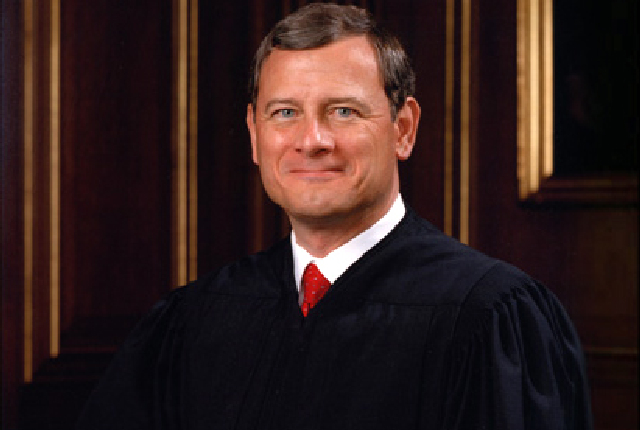
John Roberts, Chief Justice of the Supreme Court of the United States, did some surprising things this week. The least surprising was that he upheld the constitutionality of the individual mandate within the Affordable Care Act, a.k.a. Obamacare. More surprisingly, he remembered that there is a separation of powers, and respected the fact that the judiciary’s job is to uphold law, however badly that law was written. He thought clearly and for himself, and was not over reliant on the arguments put forward by others. And despite all the pressures to do the contrary, he did his actual job. Not what people wanted him to do. Not what other people, biased and petty, say is his job, or should be his job, or how he should do his job. He just did his job. Out of nine judges, he marked himself out as only one who really knew how to do his job. In a world where some of man’s most important and impressive institutions appear to be creaking at the seams, he gave me renewed confidence that some good men can hold true to the original goals of the institutions they serve, and do the right thing.

Roberts’ opinion on the constitutionality of the mandate provision of Obamacare was truly unique for two reasons. First, alone amongst the panel of judges, he was the only person who saw the US constitution, and the substance of Obamacare, for what they really are. The purpose of Obamacare was to raise money from US citizens to pay for healthcare for a larger number of them. This kind of federal activity may not have been in the mind of framers of the US constitution, but it is not against its letter or its spirit either (if a string of words can truly be said to have a spirit separate to that of the men who wrote them). Second, Roberts reasoned clearly even though it was bound to invite scorn from all quarters. He has wounded those parts of the left that would like to pass off government’s intention and power to raise money, and to direct its spending, as the mere regulation of commerce. And he has wounded the parts of the right that would go along with that lie in as far as it makes for convenient counter-arguments, so they could set light to a straw man argument. With four judges reaching the right conclusion for the wrong reasons, and four judges reaching the wrong conclusion for the wrong reasons, Roberts alone was able to remember his job is to judge, based on the rules themselves, and not to serve up the answers to suit the prejudices of any baying, irrational or partisan mob.

Unlike some commentators, when hearing the first, brief summary of Roberts’ judgement on the constitutionality of the mandate – a provision essentially designed to make Americans pay, in advance, for healthcare that they may not need and may not want to pay for – I was immediately struck by its outstanding and obvious appeal. After so much talk and analysis of Obamacare, both convoluted and extreme in nature, involving bizarre analogies relating to interstate commerce, the legal power to stop a man from feeding his family, and the threat we will all be made to eat broccoli (!), Roberts’ judgement was clean, simple, elegant and intuitive. That the argument was unexpected, and that those attributes do not hold much appeal for some of America’s elite class of politicians, lawyers and squawkbox chatterers, says everything about what is wrong those elitists, and why we are lucky there are still some people like Roberts. America should be glad that its chief justice is an individual, willing to apply reason and lift themselves above the murky fray.

That the principles behind Roberts’ argument can be stated extraordinarily succinctly, far more succinctly than the arguments of his opponents on either side, says a lot about why his argument is right. Let me now summarize those principles, very simply. Requiring people to buy medical insurance is nothing other than creating a privatized system for healthcare taxation. It is no different, in principle, to being required to pay towards the cost of a military that may, or may not, benefit you personally at some unknown later point in time. The only difference between the private and public aspects of these two examples is that when paying for the military, the money flows into government coffers, who then spends it on a mixture of public and private suppliers of military services and equipment, whilst in Obamacare the government tried to maintain an illusion that there was no interjection of government between the private citizens who would pay for Obamacare, and the private companies that supply it. By ruling that the mandate is a tax, Roberts lifted that disingenuous veil. Enforced ‘private’ transactions are, in every important aspect, public transactions.

A private market tax is an oxymoron because taxes work by compulsion, not through a genuine choice of the consumer to make a purchase. But then, consumers are not making genuine choices either, unless they are so fearless and devout they would refuse any medical care they had not pay for. I pray forgiveness from those sturdy few who can live within the bounds of such a brutal discipline; most of mankind turns into craven hypocrites when offered healthcare they need, paid for by unknown strangers, which they would not contribute towards, if the roles were reversed. So per Roberts’ reading of Obamacare, anyone who decides not to cover their medical expenses through buying insurance (the privatized form of tax), and hence solely relies on emergency healthcare provided through taxpayers’ money, is made to pay a traditional tax, taken through the government’s internal revenue service. Everyone who obtains adequate private cover, through whatever means, is exempt from paying the tax to the IRS. Is this not an elegant, honest, fair representation of the fundamental aims and working of Obamacare? I would say it is, and I doubt the motives of anyone who says otherwise.

The argument is crucial because, as Roberts identified, it is because government can legitimately raise taxes that the law is constitutional. But I think it is important here not solely to focus on the mandate, but to understand the whole scheme of Obamacare. The single overriding purpose of Obamacare is to raise more money from citizens to provide more healthcare for them. Its proponents would deceitfully promise that there is no need to raise more money, because improved efficiencies would lead to the desired results. That is not a promise they are entitled to make. But whilst they were deceitful, the means (raising more money) to attain the ends (delivering more healthcare) is plain. This is why Roberts’ judgement is so fair. It would be perverse to rule Obamacare unconstitutional, and hence block government action, on a technicality that the means had been badly misrepresented by its proponents (which it was) in order to deflect criticism of what they were doing. And it would be especially perverse precisely because a more straightforward a means to attain the ends – that government takes money, then spends it on suppliers – would be constitutional. To argue that these contrived means are unconstitutional – that government cannot tell citizens to spend their money on suppliers, and if the citizen does not, that government cannot then take money from the citizen and then spends it on suppliers – is to ignore the existing and naked power of government. It could not have been the framers’ intention to write a constitution that says government acts lawfully when acting as a tyrant, but unlawfully when it tones down the more tyrannical aspects of how it attains the same goal.

So, to summarize the summary – everybody pays a tax for medical care, whether privatized or to the government, and the government is allowed to make people pay taxes. I find this argument compelling, because it dives through all the ridiculous wordplay to arrive right at the essence of what Obamacare was meant to do – and exactly why people dislike it. Whether people want Obamacare is a different question to whether it is constitutional. The question for the chief justice should only be whether the substance – the actual substance, and not contrived rationalizations and constructions that amount to a toppling, treacherous tower of words, whether promulgated by spinners from the Whitehouse or political activists dressed in silly robes – is permitted by the constitution. To summarize the summary of the summary: levy tax to supply healthcare, constitutions allow governments to levy tax. Does anybody, honestly, dispute this is what Obamacare is meant to do? And does anybody, honestly, dispute that governments exist, at least in part, to perform certain activities that are paid for through taxation?

Life is a game, and laws are the rules of the game. That some ‘conservative’ pundits lambasted Roberts says a lot about how they try to win the game. They forget that conservatism is a philosophy for how we should play the game, irrespective of the conclusions reached. Conservatives preserve, unless there is clear need for change. And where change is needed, it is made piecemeal, conservatively. It is not made radically. And the best route to good, decent, piecemeal reform is to be transparent and plain in what institutions are, and how they work. Contrivance is a sin. Artificiality is dangerous. The plainer and more straightforward our honest appreciation of how our current systems work, the better our ability to improve them as necessary, and only as necessary. This is the bedrock of conservatism. Not smaller government. Not lower taxes. Not strong defences, or any of the other myriad attributes that may flow from the principles of conservatism. The first principle is to honestly understand how things work, so when improvements are made, we minimize the risk of bad and unintended consequences, and we conserve all that already works well.

And all I have said so far, but it takes so long to say because so many people insist on ignoring this important formula for success, is that we should always be mindful of the relationship between substance and form. Substance is the essential truth. Form is the way the truth is tarted up, transformed into words that caress, persuade and please. Amongst the nine judges, eight preferred to make their judgements based on form, and not substance. Only one preferred to judge based on substance, not form.

The four judges who argued that Obamacare is something to do with interstate commerce are wrong. The government’s argument is a contrived argument and should not be considered constitutional. To uphold it would be to vote for form (regulating commerce) over substance (making people pay for a service where there is only the most indirect connection between the payment they make and the service they receive, if any). The US government’s arguments were so vacuous and counter-intuitive that they are not worthy of further analysis, although those judges that found the mandate unconstitutional did, rather ridiculously, spend a lot of time analysing it. That they spent so long trying to determine what was wrong with the argument says a lot about the natural prohibition for the judiciary to interfere with the proper function of the rest of government. But when focusing so hard on what was wrong, they lacked the insight to look beyond the lies to see the unstated, but rather elegant, truth. In short, the government has no right to regulate a cross-state commercial activity, when there is no commercial activity. And the power to regulate an activity cannot imply the power to enforce the activity, just so it can then be regulated. I will not waste more words on these absurdities.

The absurdity of the liberal-leaning judges, who said the mandate was constitutional per the rights to regulate commerce, does not excuse an equal and opposing absurdity. In the face of all reason, four judges argued that the US Government may not tax people, or that a tax is not a tax unless you call it a tax, or a hundred other silly arguments that place form over substance. Reading their judgement, I can only conclude it was written in a childish temper, by a red-faced judge embarrassed to be so comprehensively out-thought by Chief Justice Roberts. Judges are paid to do nothing but think. They should be ashamed that they spent so much time surveying what was obviously wrong with Obamacare, that they neglected to notice what was simply right about it.

It should be all the mall embarrassing to the right-wing judges that opposed Obamacare that Roberts’ decision is the one which most naturally flows from the principles of conservatism. The other judges spent too long trying to reach the ‘right’ conclusion, and forgot that the correct conclusion can only flow from a correct argument based on truth. A real conservative should follow their principles, wherever they lead. A real conservative does not confuse the role of the court, just in order to block the non-conservative agenda of a non-conservative government. Voters have plenty enough power to do that. Opposing government is not the job of the court, and a conservative should not try to change the job of the court. That many conservatives cite how liberals have tried, or succeeded, in going beyond the proper role of the court should make conservatives even more ashamed to commit the same sin.

Let me examine, in some detail, the dissenting view that said the mandate was not taxation. I find it unspeakably awful. In contrast to Roberts’ very appealing and persuasive lines of reasoning, the wording of this dissenting opinion is petulant. It is full of bombast. It is not becoming of a judge.

To begin with, the dissenters that said the mandate was not supported by the government’s tax-raising powers opened with the theory that nothing could be both a penalty and a tax.

…a penalty for constitutional purposes that is also a tax for constitutional purposes. In all our cases the two are mutually exclusive.

Nothing. Ever. Could be both. A penalty. And a tax. At the same time. That is what they wrote. In the face of all conservative reason, they wrote that. And here, already, I have the sinking feeling that the judges stopped being judges and started being word-twisting politicians. Here is the real truth about taxes, spelled out in a way that every conservative should agree. Some things called ‘fees’ are taxes. Some things called ‘fines’ are taxes. Taxes are fines. Taxes are fees. Whatever words are used to describe the act of government taking money out of your pocket, the effect is the same – the money is not in your pocket any more. It is mysterious and wrong to suggest that the citizen undergoes a fundamentally different experience if paying a ‘fee’, paying a ‘fine’, paying a ‘tax’ or paying a ‘hollamijimbot’ (that being a word I just made up for the sake of illustrating the point). Governments raise money, and they spend money. They take from people. Nothing about the enforced requisition of someone’s assets demands that the requisition cannot serve two purposes simultaneously – to discourage somebody from doing something (a punishment) and to raise money which the government will spend (taxation). Do these justices seriously think there is no ‘punitive’ element to tobacco taxes? Is there a logical principle that says the money raised from a fine on insider trading cannot be spent the same way as money raised by taxing the sale of gas? Politicians love to mix punishment with their taxes. Raising money by punishing bad people for doing bad things is so, so much easier and more popular than taking money from voters as a thank you for the good things they do. In some parts of the USA, there are even taxes on illegal drugs. Was there not a punitive element to these taxes? And consider the following conservative nightmare…

President Obama: I hate you, Mark Levin. I’m going to take 90% of your income in tax, just to punish you.

Mark Levin: If it’s a tax, then it’s no punishment.

President Obama: I really hate you, and you’re making me even more angry with you imbecilic intransigence. I’m going to tax you at a rate of 99%. That punishment will serve you right!!!

Mark Levin: Nope, there can’t be a punitive element to a tax. That’s a semantic impossibility.

President Obama: F*ck it. I’ll tax you at 100%.

Mark Levin: I win! You stopped saying it was punishment.

Seriously, does any conservative not see that a government-mandated requisition of your privately-owned assets has an inherently punitive element to it, no matter why it was done? The difference that circulates ‘punishment’ is one of motive. A punishment is motivated by the goal of making the recipient suffer (for retribution, as a deterrent). But we should not anthropomorphize. Governments are not individual people, and they do not have ‘motives’ like an individual has motives. When a government taxes you, it punishes you, and when it punishes you, it taxes you, because the difference in motive is meaningless when ascribed to a group, in the way that government is a (changing) group of people.

That the distinction between penalty and tax is hollow is proven by the next statement of the dissenting right-wingers.

Of course in many cases what was a regulatory mandate enforced by a penalty could have been imposed as a tax upon permissible action; or what was im- posed as a tax upon permissible action could have been a regulatory mandate enforced by a penalty. But we know of no case, and the Government cites none, in which the imposition was, for constitutional purposes, both.

Taxes could be penalties. Penalties could be taxes. But they cannot be both at the same time, according to these four judges. I ask one simple thing: what is the nature of this transformation, that turns a tax into a penalty, or a penalty into tax, but denies the possibility that they could be both at the same time? Where is this crisp and clear dividing line? It only exists in the mind of someone playing at semantics. This argument is the gospel of form over substance. And this is confirmed in the footnote, which finds there is nothing in statutory law that stops something being both a penalty and a tax at the same time.

Of course it can be both for statutory purposes

Of course!! No natural reason or principle stops a tax being a penalty or a penalty being tax. Only some absurd constitutional principle stops it being both, for strictly constitutional purposes. Not that the judges can cite this principle, or this precedent. In fact, all they really note is the rather silly observation that nobody, constitutionally, has ever felt the need to write the superfluous construction “tax and penalty” in place of the word “tax” or the word “penalty”. It is only in constitutional law that the two must be, to use the judges’ emphatic words, ‘mutually exclusive’. In asserting this, the judges acted against all conservative principles. This is an invention. They cannot cite a rule that says taxes and penalties are mutually exclusive. They have just created it, and for the worst possible reasons – just to block an otherwise legitimate law. And even if such a principle had ever been stated, the principle should be abandoned because it is so plainly false. Taxes and penalties are in no way mutually exclusive. What true conservative could think otherwise?

And then we arrive at an utterly hideous contortion.

The issue is not whether Congress had the power to frame the minimum-coverage provision as a tax, but whether it did so.

This is as straightforward a plea that form should override substance as it is imaginable to see. The substance of what Congress would do, and their power to do it, is irrelevant, per these judges. All that matters is how they ‘frame’, ‘describe’, ‘spin’ it. What a ridiculous and shameful assertion, and we should be thankful that Roberts plainly explains, in his opinion, why the opposite is true.

Consider if the situation was reversed. Consider if a lying government wanted to present a penalty as a tax. The ‘tax’, as they describe it, is solely to be levied on, say, Mark Levin. This hypothetical law explains the ‘tax’ is justified ‘because Mark Levin does not say what we want him to say’. It suggests the tax might be rescinded if Mark Levin changed his errant ways. And the level of the tax is that Levin will pay 100% of his income to government, forever more. Are we really meant to believe that the Supreme Court is unable to determine if this is a vindictive assault on a single individual, just because the word ‘tax’ was used throughout this hypothetical law, and there was no mention of ‘penalty’? That all that matters is the choice of words, and not the fundamental nature of what is being proposed?

As Shakespeare put it: a rose by any other name would smell as sweet. A tax by any other name costs as much. And if I decide to call my car a ‘banana’, or to call my sister a ‘banana’, or to call my ass a ‘banana’, or to call a tax a ‘banana’, the action of calling them ‘bananas’ does not, in fact, make them bananas. A thing is what it is, irrespective of how it is labelled. Now I would expect Supreme Court justices should have the ability to look into the words and see what is really going on. It cannot be that Obamacare is unconstitutional if it uses the word ‘penalty’, but somebody does a global search-and-replace in the word processor, inserts the word ‘tax’ instead, and now everything is constitutional. And a judge should be looking at substance. Normally we would expect the point of judicial review is to stop an abuse of language, to discover attempts to make the illegal seem legal, and to identify tricks of language that would present the unconstitutional as constitutional. It follows that the judge’s job is unchanged if the legislator uses language which makes the unconstitutional seem constitutional, or if they use language which makes the constitutional seem unconstitutional. They should see the substance either way. Granted that the latter example is not what you would normally expect, but it is the relevant example in this case. However badly worded Obamacare is as a piece of legislation, the superficial wording does not matter. The judges should look under the surface. The onus is on them to apply constitutional rules well and correctly, irrespective of the (purposefully dishonest or merely accidental) wording faults in the law they are reviewing.

From here, the remainder of the dissent tails away into insignificant rambling. If ‘mutual exclusivity’ can be enshrined as a principle, then the four judges who signed the dissent have very little left to argue. So their next few paragraphs just repeat the same lie over and over. For example:

In this case, there is simply no way, “without doing violence to the fair meaning of the words used,” Grenada County Supervisors v. Brogden, 112 U. S. 261, 269 (1884), to escape what Congress enacted: a mandate that individuals maintain minimum essential coverage, enforced by a penalty.

Like Roberts, I see no ‘violence’ to the ‘fair meaning’ of the words, if we construe that the Obamacare penalties are also taxes. And it seems most of the American right agrees; they have gleefully spread the news that Obamacare is going to raise taxes. Nothing has changed in substance, only an interpretation, so are Sarah Palin and Mark Rubio – to pick just two examples amongst many – also doing ‘violence’ to the ‘fair meaning’ of Affordable Care Act? Of course not. Thankfully, Roberts is right to assert, in his opinion, that taxes can be punitive. We all recognize that smokers are punished by coercive taxes. The penalty for not buying insurance, in this case, is likely to be lower than the cost of the insurance that was not bought – so it is hardly much of a penalty. Taxpayers’ money is, in truth, used to pay for emergency healthcare services and private insurance does, in truth, reduce the burden on emergency healthcare, so there is a natural, conservative, principle that the cost of government benefit be fairly linked to the cause of that cost, as far as that is practicable.

And then we get an interesting revelation, which shows the depths of the mental contortions of the four dissenting judges. A ‘tax’ can be so onerous to be a penalty. But a penalty cannot be a tax.

In a few cases, this Court has held that a “tax” imposed upon private conduct was so onerous as to be in effect a penalty. But we have never held “” never “” that a penalty imposed for violation of the law was so trivial as to be in effect a tax.

This argument only stands because it is circular. The judges reason that because taxes and penalties are mutually exclusive, then it means something to say that a ‘tax’ (as distinct from a tax, without the inverted commas) can be a penalty, and it also means something to say a ‘penalty’ is a tax, though they have never – never – said this themselves. It is interesting that the judges got confused, and forgot to use the inverted commas in the second sentence. They meant ‘penalty’ and not penalty. The sentence as constructed is a truism; because the judges believe penalties and taxes are already mutually exclusive, it is impossible to assert that a penalty is a tax, by definition. If we hence accept their silly rule of mutual exclusivity, we would only be able to assert that a ‘penalty’ is a tax. And at the conclusion of this unhelpful pair of sentences, we have learned nothing new. The judges are just repeating what they said already – that taxes are not penalties and penalties are not taxes so that is why you never hear of penalties that are taxes and never hear of taxes that are penalties. Hold on. ‘Taxes’ can be penalties. What a strange thing to write. Taxes cannot be penalties. But ‘taxes’ can be penalties. So we can have ‘taxes’ that are not taxes. What a piece of specious reasoning is this. If this is their objection to Roberts’ opinion that taxes can be penalties, then I see no merit to it. Apparently the judges can tell the difference between substance and form – between taxes and ‘taxes’ – but only when it suits them, according to mysterious principles they do not share.

The irony here, not lost on Roberts but lost on the four dissenters who argue a penalty cannot be a tax, is that Obamacare is constitutional even though it is ludicrously and atrociously worded. And it should not be struck down by even more ludicrous weasel words from the Supreme Court. Obamacare is constitutional despite all the poorly-chosen words that make it sound unconstitutional. Now I can finally understand why Solicitor General Verrilli did such a terrible job of defending Obamacare during the court’s oral hearings. He was faced with the kind of dilemma faced by lawyers in pulp fiction – his client is innocent of the murder, but his real alibi is that he was cheating on his wife at the moment of the crime. Obamacare was written by tax-and-spend do-gooders. They tried to find a way to do good without pushing a straightforward plan to tax-and-spend their way to the desired solution. When asked to defend themselves, they were inept, because the real defence was to come clean and admit that Obamacare is just a variation on the same tax and spend template they use to tackle every problem. They may be hopeless, inept and wrong in lots of ways, but they were not breaking constitutional law, and more the philanderer reluctant to see his mistress called to the stand.

Again, I can agree this is a peculiar situation, but not impossible, nor illogical, nor irrational. However badly worded, Obamacare is constitutional if its substance is constitutional. That the four dissenters list lots of examples of poorly-chosen words is of no matter whatsoever. To do so demonstrates a disturbingly simplistic understanding of their job. Their job is not merely to argue against government, like a prosecutor might argue against the defense. Their job is to judge. The good judge should see the correct legal interpretation even if the authors of a law make an absolute hash of it. A good judge should still be able to judge a man innocent, even if his defense is woeful and the prosecution skillful, or judge his guilt in the opposite circumstances. Judges are not voters on the X-Factor, giving their feedback on the merits of a performance. They are referees, trusted to correctly apply the rules. And if the correct interpretation of Obamacare is constitutional, then the law is constitutional, irrespective of the failings of the authors.

In asserting that the penalty in Obamacare is, in fact, a penalty and not a tax, the judges fail to look into the nature of penalties, and contrast them with fees. Car insurance is a useful analogy. Is car insurance mandatory in some states? Yes, in most of them. Can you be punished for not buying car insurance? Yes. Would you expect the punishment to take the form of a fine, or other penalty, that gets more severe for each transgression? Yes. It is in the nature of punishment that it gets more severe for repeat offenses. On the other hand, consider the state of Virginia, where drivers can opt not to buy insurance, if they pay a government ‘fee’ instead. The fee does not go up because the driver repeatedly chooses to pay it. It would be a punishable offense not to pay the fee – just as not paying taxes is a punishable offense. But the fee itself is no different, in substance, to a tax levied only on those who do not buy the insurance. And the reasoning is clear – the tax offsets the burden otherwise put on the public purse, and helps to motivate drivers to just buy insurance instead. Why is this not the fair analogy to the Obamacare penalty? The difference cannot be that one is called a ‘fee’ and another is called a ‘penalty’. A nominal difference is not a substantive difference. In substance, the Obamacare individual mandate and the Virginian uninsured auto fee are almost identical, except that one concerns car insurance and the other relates to medical insurance. A man who does not buy mandatory car insurance is breaking the law every day he drives without it. He does not get a one-year waiver from the law, just because he was caught and paid the fine. If he pays his fine, gets in his car the next day, and drives it without insurance, he is immediately liable for more punishment. But with Obamacare, there is no incremental aspect. Someone who does not buy medical insurance will be ‘punished’ via the levying of a fee. But that fee is not incremental. Once it is levied, it will not be incurred the following day, just because the taxpayer woke up the next day, and decided he would still rather not have private medical insurance. That the dissenting judges talk so viciously about the difference between penalties and taxes, and make no mention of this fundamental aspect of punishment – that it rises in severity according to how often the transgressor is caught – says a lot about their bias. A more honest appraisal of the penalty of Obamacare would conclude it is more like the Virginian uninsured vehicle fee than any ordinary fine.

But, for me, the nail in the coffin occurs here:

And the nail in the coffin is that the mandate and penalty are located in Title I of the Act, its operative core, rather than where a tax would be found “” in Title IX

What strong metaphorical language – do lawyers normally spend their time nailing coffins? – for such a gently bureaucratic argument. It cannot be a tax, because the relevant words were presented under the wrong section heading. What forceful reasoning. If Obama wants to raise taxes in future, all he need do is use a misnomer when describing them, then ensure they are described under the wrong heading, and nobody will ever know that he secretly raised taxes!!!

The real truth is that the anti-Obamacare judges are peeved that the law is constitutional, despite the crass failings of Obama’s administration! It may be comical, but it is also true. Consider how the dissenting opinion finishes:

…once respondents raised the issue, the Government devoted a mere 21 lines of its reply brief to the issue. Petitioners’ Minimum Coverage Reply Brief 25. At oral argument, the most prolonged statement about the issue was just over 50 words. Tr. of Oral Arg. 79 (Mar. 27, 2012). One would expect this Court to demand more than fly-by-night briefing and argument before deciding a difficult constitutional question of first impression.

In other words, ‘if Government does a lousy job, then we do not have to judge’. How utterly wrong, and how utterly indefensible. Powers are separated. Government could do a very lousy job indeed, without inhibiting the judges from doing their job well. The Court’s job is to decide if a law is constitutional, no matter how poorly written or poorly explained. Chief Justice Roberts showed it is perfectly possible to apply the law without relying on the arguments put before the court. If the governments’ lawyers, and the plaintiffs’ lawyers had, by some strange act of God, attended court but been literally unable to speak, the Supreme Court would not be free to abrogate their duty to reach a judgement. And it remains true that there must be a heavy burden on the court if they wish to strike down a law, put forward by an elected government, as elected by the voters, on the grounds that the law is unconstitutional. It is not enough for the judges to argue that the government did a poor job of arguing for the law. The law can be constitutional, even if government made no argument to support it. As Roberts cites in his opinion:

The “question of the constitutionality of action taken by Congress does not depend on recitals of the power which it undertakes to exercise.” Woods v. Cloyd W. Miller Co., 333 U. S. 138, 144 (1948).

And this is the most conservative principle of all. Laws tend to outlive governments. Constitutional laws tend to long outlive governments. Judges also tend to outlive governments. The passing tide of an incompetent government should not sway a judge from doing his or her duty. The law is the law, whether a good government is replaced by a bad one, or vice versa. A poor argument does not invalidate a correct conclusion, just as a good argument does not justify an invalid conclusion. A judge can reason for his or herself. Judges play the game according to the rules laid out in law, and so they should consider all good arguments, even those which have not been put before them. This is a truly conservative principle – to uphold the law irrespective of the changing faces of the men and women in government. It is conservative for judges to reason well, from established principles, according to established rules, without giving undue weight to the merits of the actors that play before the judge, or to the feelings of the populous that throng outside. A good judge should weigh the arguments, purely and simply, on their own merits. And that is why Chief Justice John Roberts will deserve to be recorded in history as that most surprising yet desirable pillar of a healthy society: a lawyer who concentrated on doing his duty, above all else.
Preston Dirges and the Lunchtime Blues

We left Preston Dirges and Valerie in the Security Room, with Preston going through his propositions for how to succeed in life. Now that Valerie has received her ID pass, they head for lunch.

Int. Corridor – Day

VALERIE: You shouldn’t keep using the f-word.

PRESTON: Well, you know what they say: the more you swear, the more you care.

VALERIE: Who says that?

PRESTON: I do. Also other people, when quoting me.

They turn in separate directions at the end of the corridor.

PRESTON: Let’s have lunch. I’m hungry.

VALERIE: What about work?

PRESTON: Lunch is the most important meal of the day, after breakfast. And I never have time for breakfast.

VALERIE: I skipped breakfast too.

Valerie turns and goes with Preston.

Int. Office Canteen – Day

Through the window, we see the rain is pouring. Preston pays for his food and waits on Valerie. Before she can pay, Rubnick steps up with his own tray.

RUBNICK: Val! Let me pay for that. I’ve been wanting to catch up and get the low-down on your settling in and how everything’s been working out.

Preston waits, thinking Rubnick will join both of them.

RUBNICK: Preston, I really need to hog Val. You don’t mind, do you?

PRESTON: No, that’s fine.

Preston walks away to find a table on his own. Rubnick pays for the meals and leads Valerie to a table where Doug, Kirsty and Nitya sit. Preston watches from afar.

VALERIE: I thought you wanted a quiet chat?

RUBNICK: Yes, I do, I want a quiet chat away from Preston, and to plug you into some people that you should know. (to Doug, Kirsty and Nitya) Hello everyone, you should all meet Val, who’s joined us as a graduate developee, but irrespective of that, she has a really impressive CV. I think she’s going to be a future star for us. Val, let me introduce you to Doug, our C-O-O, the Chief Operating Officer, the main man in ops, the…

DOUG: Doug will suffice.

VALERIE: Pleased to meet you, sir.

DOUG: Doug will suffice.

RUBNICK: This is Nitya, who runs the project office, and Kirsty, who sets the pace for our bright young sparks.

VALERIE: Hello, I’m Valerie.

DOUG: Whose team have you joined, Valerie?

RUBNICK: Val’s got an interim placement with Preston Dirges, whilst we wait for something else to open up for her.

DOUG: If you’re half as bright as Dave is suggesting, we’ll have to find something better for you to do. Preston’s work is err… vital, but we don’t need two people doing it.

RUBNICK: One Preston is plenty.

DOUG: (admonishing) Dave.

The fire alarm blares out. Everyone turns to face Preston. He looks at the rain, then reluctantly stands up, and walks smartly to the fire exit. Nobody else moves. Just as Preston steps outside, the alarm is canceled. He sighs his relief.

Fernandez’s Next Five Demands

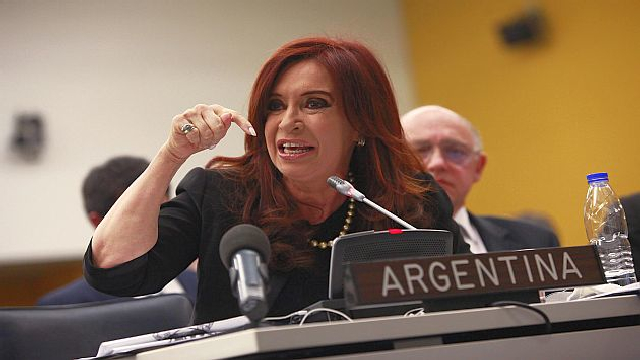
You have to admire Cristina Fernandez, President of Argentina, for her dogged pursuit of lost causes. Fernandez is so dogged that if you entered her into Crufts, she would win best of breed. Just as Shakespeare compared dogs to men, when it really matters there are only two kinds of dog, and two kinds of ruler. There are those that possess bite, and there are those that only bark. From her endless yapping, it is plain to see that Fernandez is a toothless poodle. Sometimes leaders want things that matter, but cannot get them. Sometimes leaders should know when not to pursue the unattainable. Whilst Hillary Clinton may fume at Russian intransigence over Syria, her speeches are proof she is unable to act. However, saving Syria’s civilians from massacre is a goal well worth shouting about. Meanwhile, Obama did not talk to the Pakistanis, or anyone else, when he ordered the killing of Bin Laden. In that case, he had the real power to act, and did so, decisively. And even when a ruler cannot win militarily, a big economy delivers plenty of influence. Whilst a lot of big economies depend too much on oil imports – including that of the US – and a lot of big economies suffer too much debt – including that of the US – the ruler of a big economy can still squeeze the rulers of smaller economies. That is why the US-driven sanctions against Iran are starting to bite. And Iran also knows that whilst oil is expensive, talk is cheap, and that is why they would like a nuke to counter any threat posed by Israel, or the US, or even by the Arabs. Although Fernandez openly mocks the wars in Iraq and Afghanistan, though only when talking about Britain’s involvement, she conveniently forgets the intervention in Libya, which saved lives and enabled a people to overthrow their tyrant. That is the power to do good, being used to do good. So when it comes to modern power games, we can summarize that money talks, nukes shout, bombers fly overhead, and poodles get taken for a walk.

Aiming to fill column inches under the euphemistic heading of ‘current affairs’, Fernandez chose the 30th anniversary of Argentina’s defeat in the Falklands War as the perfect day to visit the United Nations Under-Committee for People With Nothing Better to Do. That was very symbolic of her. Some nasty pathetic arrogant bullies were beaten 30 years ago. Now their successor tries to accomplish with barking what they could not achieve through biting. Once at the UN, Fernandez told the Auxillary Committee With No Real Purpose about all the reasons why a still-pretty-darned-powerful country like the UK should cave in to the demands of a not-even-modestly-powerful country like Argentina. And what was her key demand? The right to negotiate. It is beyond my understanding why anyone would demand a right to negotiate. That is like asking for the right to ask for something else. If you want something, just ask for it. But Fernandez dare not ask for more than the right to negotiate. She already knows nobody is going to negotiate with her, because nobody wants, or needs, to give her anything. More importantly, she has nothing to offer.

Whatever the Argentine government wants from the Falklands, and however they ask for it, the answer will be ‘no’. And the answer will be ‘no’ because the people living on the Falklands speak English, not Spanish, and want to live in a self-governing British Overseas Territory, and not be slaves to some tinpot demagogue from Argentina who will gladly deport the Falklanders in an instant so she can concentrate on her real goal: plundering natural resources as short-term fix for woeful economic mismanagement. I think most people, of any race or nationality, would say ‘no’, if they were offered a similar deal. There was a time when the British government would have ignored the wishes of the Falkland Islanders, and cut a deal with Argentina. But in the 70’s, Argentina’s most moronic nationalists did such a good job of alienating the Falklanders that the British government was boxed in, and could not cut a deal. And then, in the 80’s, the Argentinian junta took brainless belligerence to its illogical conclusion, and invaded. Now the Argies have reverted to previous form, deploying a mix of bullying, economic obstruction and hectoring to get their way. After 40 years of Argentina’s counter-productive tactics, and as we near the 15th anniversary of the transfer of Hong Kong to China, thoughts turn to whether the Argentinian President is genuinely stupid. Bullying is not working. It will not work. If there is one utterly consistent defining characteristic of the British psyche, it is that they hate bullies and will fight them to the bitter end. Nazis, Catholic Popes, Napoleon, Rorke’s Drift, the European Union, the Eurovision Song Contest… Brits are stubborn, even in the face of overwhelming odds. Fernandez has adopted every mannerism of the playground bully, right down to petty name-calling. She keeps describing David Cameron as stupid, which is an odd way to initiate constructive negotiations. There is a psychological principle that we see in others what we fear is true of ourselves. This would suggest that Cristina Fernandez worries that she is stupid. And she would be right to worry, because she is stupid.

I, for one, would not like to be ruled by Cristina Fernandez. Just look at how Argentina’s aboriginals have been treated under her government, and under the predecessor government of her husband. The aboriginals are thrown off their land, see their forests destroyed, and are left to starve. At this point, it is usually good form for a misguided lefty to blame a North American capitalist vulture, or some other stereotypical foe, for the problems of these people. That is a fair point – poor people get exploited by international businesses too. My point is that the the Argentinian government does not protect its own people, even though it chases after pieces of land on a supposed point of principle. Put the government’s behaviour into this context. As far as the Falklands is concerned, the goal of the Argentinian government is to ‘protect’ the land and sea surrounding the Falklands, protecting them from the ordinary people who actually live on the land. And once nature is protected from the people, the people can be pushed aside to let nature be properly exploited, with government approval and government taxes. This position equally explains why Argentina’s government have failed the aboriginal Argentinians, the true victims of colonialism. For rulers like Fernandez, the interests of ‘The People’ (abstract concept) must always override the interests of actual people (whose suffering is unimportant). In short, Cristina Fernandez is an old-style populist fascist. The only difference between Fernandez and Mussolini is that his army could afford bullets and his trains stayed on their tracks. Fernandez’s gameplan is to abuse weaker minorities in order to enrich the majority that support her. And, like a typical fascist, she manipulates the presentation in order to present herself as a liberator, when liberty is the very last thing on her mind. There is no liberty if the majority prospers by ignoring the rights of minorities. But then, it does not matter what I think. All that matters is that the Falkland Islanders do not want to be ruled by Cristina Fernandez or any other Argentinian. And because she is the leader of a weak country, they never will be.

Despite and because of her lunacy, I enjoy reading about Cristina Fernandez’s speeches. Whenever I read a piece complaining about how flawed Angela Merkel is, or what a failure Obama has turned out to be, or that Jacob Zuma is intellectually subnormal, I still try to keep things in perspective. It could be worse. Cristina Fernandez is worse. She is the worst. Fidel Castro is entitled to his rambling rants, because he not only overthrew a dictator, he then fought off the Bay of Pigs invasion. North Korea may be the world’s most awful country, but Kim Jong-un deserves a bit of time before we rush to judge his leadership. But there are no excuses for Cristina Fernandez’s impersonation of a rabid gummy demented poodle. Her incoherent bombast serves as a case study on how to harden opposition against you. Compared to Fernandez, even Sarah Palin comes across as intelligent, accomplished and well-balanced. Though Fernandez positions herself as a thrusting new style of leader from a reinvigorated South America, she clearly belongs to the Chavez class of reactionary and controlling buffoons, and she has nothing in common with the Lula class of 21st century global statesmen. When I heard her bluster at the UN Sub-Committee for the Chronically Bored, it just made me laugh. Take this argument:

“How can it be claimed that, 14,000 kilometres away [8,700 miles], that it [the Falkland Islands] can be part of the British territory?”

The claim is astonishingly easy to make. Nobody has ever written a rule that says ‘places that are 13,999 kilometres away can be part of your territory, but not places that are 14,000 kilometres away’. Just ask the UN Sub Committee for Making Up Rules Just Like This, because they would know if this rule existed, and they would quote it. There is no rule because, 200 years ago, nobody bothered to write a rule to stop people from inhabiting uninhabited islands where nobody else wanted to live. However, there are rules about self-determination of peoples, which does not suit Fernandez at all, so she ignores them. But as Fernandez has raised the question of measuring distances, I hope the UN Junior Committee for Wasting Time will review who should be governing these places: American Samoa (7,700km from the mainland USA); Aruba (7,900km from the mainland of the Netherlands); Guam (9,400km from the mainland USA); and French Polynesia (15,900km from mainland France). As the world’s leading expert on how far things should be from somewhere else, Fernandez should take charge of redrawing the map of the world, reallocating every bit of land to the right and proper government, without troubling to ask what the locals think. I eagerly await her solution for peace in the Middle East. They should put Netanyahu and Abbas in a room with Fernandez, and lock the door. My guess is that, three days later, the Palestinian and the Israeli will walk out, arm in arm, as the best of friends. Fernandez, however, would never be seen again. Perhaps, when deciding who should control what, Fernandez will also reallocate Saudi oil fields to the protective ownership of Argentina. Her Falklands bluster not only coincides with the anniversary of Argentina’s defeat, it also coincides with the decline of Argentina from being an energy exporter to becoming an energy importer. Although they coincide, this is no coincidence. Fernandez is the kind of tyrant willing to reallocate ownership of anything that suits her, to anyone that suits her. This was proven by the decision to expropriate YPF, the Argentinian energy company, even though Spanish owners Repsol had no desire to sell. But I stray from the point. The Falklands used to be poor, and Argentina ignored them. But now, Fernandez insists her interests in the islands have nothing to do with commandeering their new-found wealth. Argentina’s real interest is human rights…

“We are just asking to sit down at a a table to talk. Can someone in a modern world deny that possibility and say they are leaders of the civilized world and defenders of human rights? No. The truth is, one cannot do both”.

Tell that to the Libyan people. I imagine they quite like how British military might, and not pointless yammering, helped them to secure their human rights. Tell that to the Syrian people. I wonder how they feel about pointless UN talk at this moment. And tell that to the Falkland Islanders, who keep asking for talks with the Argentinian government, but keep being rebuffed because the Argentinians deny the Falklanders’ right to self-determination. In Britain, even the Scots have a right to self-determination. That is what happens in a civilized country. Because Brits are civilized, neither the Falkland Islanders, nor the British people as a whole, are going to worry about humouring a wailing banshee who giddily cites human rights in order to bolster a corrupt and despotic land grab. Then again, in yet another perverse statement, the instigators of the Falklands War keep insisting that they, somehow, were its victims…

“When I looked today at 10 Downing Street and saw them and what they were doing with the flag which they call the Falkland Islands flag I felt shame from afar for them because wars are not to be celebrated nor are they to be commemorated.”

This must rank as one of the most obviously false statements ever made. Winners always celebrate and commemorate wars. Only losers want to forget about them. And Fernandez enjoys the celebration of Argentinian victories just like her fellow Argies. That is why she celebrates Argentina’s Day of National Sovereignty, which is held on the anniversary of the Battle of Vuelta de Obligado.

“The issue of the Malvinas is a challenge to see whether or not we are capable of overcoming prejudice and cliches that are outdated, because the world has changed and there are new players.”

For me, this was the strangest assertion made by Fernandez. The world is smaller than it has ever been, transport is easier, communication better, and we respect the right of self-determination more than ever… and Fernandez concludes that Argentina’s control of the Falklands is inevitable? There are Chinese in Vancouver, Estonians in Tokyo, French in London, Lebanese in Sydney, and Scots moving back from Hollywood so they can vote for their independence, but Fernandez says there cannot be Brits in the South Atlantic! Argentina is pursuing an old-fashioned and brutalist strategy of obstructing travel and obstructing trade with the Falkland Islands. These are not the tactics of a country who want to cooperate with the inhabitants of the Falkland Islands. These are not the tactics of people who want to visit, share, learn, and build relationships. Blockades are not designed to overcome prejudice. Fernandez’s tactics are meant to punish the inhabitants of the Falkland Islands just because they exist. She wants to punish the Falklanders because they do not want to be ruled by her, and because their existence is inconvenient for her.

Thankfully, Argentina is not a powerful player on the world stage. They are not even a minor power. The only thing keeping Argentina going is a heady mix of government lies about economic statistics, severe currency controls, being let off from paying their debts and stealing through nationalization. Argentina has about two-thirds of the population of the UK. It has less than a fifth of UK’s GDP. Argentina’s economy is not one of the largest 20 in the world, although Argentina is included in the G20 club. Their inclusion in the G20 has prompted a lot of criticism; countries like Norway have larger economies and contribute far more globally, although Norway is excluded from the G20. Argentina’s inclusion in the G20 is driven by pan-American politics, and not Argentina’s true significance as global lightweight. Indeed, Argentina’s GDP per capita is unspectacular and lower than most of her South American neighbours. Argentina tries to make a merit out of its lack of involvement in military affairs, presenting this as a commitment to peace. In truth, Argentina cannot afford to update its dilapidated military, just as it cannot afford to repair its creaky infrastructure. In summary, if there are any new ‘players’ in the world, as Fernandez suggests, then Argentina is certainly not one of them.

But given that Cristina Fernandez is the worst kind of fantasist – a fascist fantasist – she will doubtless indulge in many more playtime delusions involving powerful rhetoric, fashionable dresses, and world domination. So I thought I would share a possible top five for Fernandez’s next loopy demands…

1. Tottenham Hotspur Football Club

Fernandez barracks a joint meeting of the FIFA Executive and the English Premier League, saying:

“Tottenham Hotspurs owes an enormous debt, and would not even exist, if it were not for the many years of service of Osvaldo César Ardiles. Osvaldo, known disrespectfully as ‘Ossie’ by the layabout stupid British, was a World Cup winner, unlike any living English players. He was a great player for Hotspurs, and then coached them to many successes like winning the Champions League and being the most favourite club in the world. Because of Osvaldo, the club is now known globally as the Tott-ing-ham Hotspurs, a fact which will have greatly boosted their merchandise sales. Also Ricardo Villa scored one good goal for Hotspurs. Since they left, the regimes of Alan Sugar and Daniel Levy have stripped all the value from the club, stealing from the people. We demand to enter negotiations for the immediate nationalization of Tottenham Hotspurs by the Argentinian government, and the reinstatement of Osvaldo Ardiles as Director of Football. All non-stupid peoples can plainly see this is deserved by the sweat, blood and tears of our freedom-loving Argentinians. Football is no longer just the game of the English, with their cliches about Bobby Moore and 1066, and they must start to realize there are other players in this world as well. Tottenham Hotspurs is Argentinian, always has been Argentinian, and will be Argentinian again.”

2. Cows

Whilst visiting a Hindu temple on a state visit to promote trade with India, Fernandez unexpectedly announced:

“Everybody knows that cattle is an invention of Argentina. Argentina is the world’s third largest exporter of beef, and every Argentinian eats 55 kilos of beef a year, because cows taste so very good. The conquistadors first discovered beef when they encountered Argentina’s indigenous cattle, bringing it back to Europe and then sharing cows with the rest of the world. This is all proven by some documents I just made up… I mean some documents I just dug up… I mean some documents that our impartial historians and scientists just dug up. As all cows are illegally descended from our cows, we demand India enters immediate negotiation for the repatriation of all cows currently residing in India. We hope it is some comfort to devout Hindus and to animal rights activists that we sincerely intend to make a very good meal out of these cows. Just like my lucid moments, I like my steak rare.”

3. Chile

Fernandez walked into a broom closet at the United Nations, pulled the door closed behind her, and was overheard giving this speech to nobody in particular:

“It is recognized, by non-stupid, non-mediocre world leaders all over the world, that the strength of our claim to the Malvinas is because they are so very close to the Argentinian mainland. We can see the islands, from our mainland, so long as it is a fine day and we are using a telescope or very powerful binoculars. And when we see them, that is the very same light that was once touching those islands, thus proving how very close we are, because light has been scientifically proven to not travel very far. But what is even closer still to the Argentinian mainland? Chile! Its border touches our border, that’s how close it is. We can see Chile without even using binoculars. So, being so close, Chile belongs to Argentina, and always will. Also, whilst we’re at it, we’ll have Paraguay, Uruguay and Brazil too. But not Bolivia, not yet. We’ll save that for desert.”

4. The Maldives

Even the world’s smartest leaders make mistakes. So does Barack Obama. In one recent slip-up, David Cameron’s pretend best friend managed to insult the Brits, and the Falklanders, and the Argies, and another nation, by confusing the Maldives with the Malvinas. Any fool knows that the Maldives are an island nation in the Indian Ocean, whilst the Malvinas is a Spanish corruption of the name given to the Falklands by the first people to live there: the French. In other words, the Maldives is a real country whilst the Malvinas is a made-up word used by some people to name somewhere they do not live. In a tit-for-tat move, I am considering re-christening Argentina as ‘Arse-end-tina’, but I digress…

Fernandez shakes hands with Obama on the White House lawn, and takes questions at a joint press conference. One of the American journalists asks Fernandez about Obama’s recent Maldives/Malvinas slip-up.

“Ha ha. You say toe-may-toe, I say toe-ma-toe. Ha ha. President Obama is a very smart world leader, because he knows the real name of the Malvinas is the Malvinas, and not any other stupid name used by any stupid people who speak a stupid language like English and not an intelligent language like Spanish or American. But, he did make a mistake just this once, and he is very smart indeed, so this raises a fundamental issue. Why are the Maldives allowed to have such a similar name to our sovereign possession, the uninhabited islands of the Malvinas? At the very least, the Maldives should change their name to something less confusing, like… I don’t know… the Who-cares Islands. I understand they will soon sink underwater, so nobody cares what their name is, and they shouldn’t be allowed to cause the Argentinian people so much trouble. And if the Maldivistas… no, that doesn’t sound right, is it Maldivites…? Anyway, if the people who live on the Maldives do not voluntarily change names, we demand the opening of negotiations to end this confusion, through the creation of a new and joint Malvinas-Maldivas island territory, which will be under the enlightened governorship of Argentina, by which I mean me. At just 14,000 kilometres from Argentina, it is clear that we have as much right to boss around the Maldives as anyone else. After all, they received their independence from the colonialists of the British Empire in 1965, which proves these colonialists never ever give up power unless they are truly forced to. And we will force the Maldivitamins to become an inalienable part of our nation, by the strength of our intelligent arguments.”

The journalist, incredulous, asks Obama to respond. Obama stands silent for a moment, and then begins…

Let me say that we reject colonialism in all its forms, which is why it was so reprehensible to see a leading Republican, Senator Santorum, trying to create division by suggesting Puerto Ricans needed to learn English if they want to become the 51st State of the US. By the same token, I’m sure the Argentinians won’t expect the Malvinians to learn Spanish just because they’ll, erm, voluntarily switch sovereignty. What’s really important, as with the US and Puerto Rico, is that we respect the upcoming referendum the Puerto Ricans will hold to decide their relationship to the USA, because the fate of the people should be decided by a vote of the people, as agreed by the UN Special Committee for Decolonization, and not by some backroom deal between politicians. Erm, which is a rule, except, of course, when referendums don’t matter so much. We’re, erm, neutral on other country’s referendums, as you know, though we have a strong policy of backing our own. What fundamentally matters, even more than referendums, is that, erm, we look at where somewhere is on the map, and look which countries are close by and we all act like good neighbours and get everyone involved in discussing important decisions, a bit like we do with encouraging constructive dialogue between Israel and the Palestinians, and that is what we want between the Malvinas and Argentina, and we also want that between Puerto Rico and the Dominican Republic on the issue of Puerto Rico’s sovereignty. Erm, I mean Puerto Rico should consult with Haiti before making any decisions, no, erm, no, I mean they should talk to Cuba, erm, no, I really didn’t mean Cuba, although I suppose we got Guantanamo in Cuba, which is a bit of the US that is pretty close to Puerto Rico, no, erm, I meant Venezuela is close to Puerto Rico, at least compared to the US, erm, no, I meant Aruba should be consulted because they’re close, which would mean the Dutch would need to have a say over Puerto Rico’s future government, which I hadn’t expected. And maybe Barbados should be consulted. Or Nicaragua. They’re all closer to Peurto Rico than we are in the mainland United States. Not that distance is, erm, important, except when it is. So, in conclusion, the Republican party is more extreme, divisive and partisan than I’ve ever seen them, and it’s all their fault. Changey-hope. Hopey-change. Polish deathcamps. The private sector is doing fine. Changey-hope. Forward! Erm, what’s ‘forward’ in Spanish? Prog-resar? Progresar! Now, would anyone like me to sing a song, or maybe you want to photograph me playing some basketball?”

5. Outer Space

Fernandez gives a press-conference in an astronomical observatory.

“Have you looked through this telescope? There’s a lot of space up there. And we’re as close to it as any other country. In fact, we’re a bit closer to it if you climb up to the top of one of our beautiful mountains and don’t consider the higher mountains that some other countries have. And we always have been that close to space. And we can see it – even without a telescope! But a telescope helps us to see more and to end the cliches of the canals on mars and the colonial imperialists with their tea and crumpet and their ‘this is ours just because we got here first’. Can you see the Malvinas from Buckingham Palace? No! But can you see Jupiter from Argentina? Yes! Remember, nobody can deny that it is an old cliche that the person who goes somewhere first gets to own that place. It does not matter who goes their first. What matters is how close the place is, and who saw it first! And we’re close to space! And who says our ancestors didn’t see it first? So by Presidential proclamation, I have decreed that outer space is now called espacio argentino-malvino-maldivo-tottingham-hotspurso and that we own any oil found by foreigners up there. This is only fit and proper as there are new players and the aliens need to have their human rights protected by us, and the aliens should not be messed up and catch diseases and be starved to death by the next wave of the white European space colonists with their backward imperialism and their space ships and their Darth Vaders. We, in Argentina, are the lightsabre-wielding source of galactic peace and truth, just like the Jedi Knights, and we will begin our quest for universal peace by demanding negotiations with all alien lifeforms. Here, I will press the button now to do that. [She presses a button]. Did you hear that? We sent a radio signal telling the aliens they now belong to us, and we will free them from the oppression of whatever it is that oppresses them, like the English, or maybe the French, or maybe international banking, or the United Nations Committee for Do-Not-Listen, or any other evil alien oppressors with three heads and four eyes where each of the eyes is on a tendril that emanates out of the leftmost head. With peace and justice, we will not let the oppressive colonialists steal the alien oil before we can preserve it for the people of Argentina and the enjoyment of the oppressed peoples that we will liberate from their self-determined delusion. Anything else is pure stupidity.”

TV Reboots to Moot

TV reboots are unpredictable. Some turn out to be far superior to the original. Battlestar Galactica started out as a camp 70’s derivative of Star Wars. The same three special effects shots of model spaceships were used, over and over, in order to keep budgets down. Kids like me would watch them, over and over, because they were spaceships, after all. When rebooted in the 21st Century, Battlestar Galactica became a very different beast. No longer for kids, it was one of the most challenging, philosophical, well-rounded and riveting science fiction shows ever seen on television. And the music was great too. In contrast, other reboots have been stinkier than old boots. The Charlie’s Angels reboot was so bad they only showed four episodes before putting it out of our misery. Knight Rider and Fantasy Island were similarly resurrected for short but unappealing runs. Without the quirky appeal of David Hasselhoff and Ricardo Montalban respectively, the two formats should have been left in peace. And the return of Yes, Minister (see here) raises both hopes and fears – the original writers are on board, but who could possibly replace the original cast? Nevertheless, the most surprising shows can generate successful reboots. Other than the joyous theme tune, nobody remembers what they liked about the original Hawaii Five-O. However, the Hawaii Five-O reboot is set to enter its third season. With that success in mind, here are three more improbable reboots I would like to see on the small screen.

Magnum, P.F.

After Hawaii Five-O, the Aloha State gave us Magnum, P.I. – the show that made Tom Selleck a star. Employed by the never-seen Robin Masters to check security on his estate, Magnum performed his task in the way most guaranteed to annoy Higgins, who was also responsible for security on the Masters estate. In this detective mystery show, the real mystery was why Robin Masters employed two people to test security at his luxurious Hawaiian estate – even though he never visited it. As payment for his duties, Magnum would gallivant around in Master’s beautiful red Ferrari. At other times, Magnum was ferried around the islands in the helicopter of T.C., his Vietnam vet buddy. Despite his moustache and lurid shirts, Magnum’s services were in constant demand. And no matter what situation he found himself in, Magnum always had a relevant anecdote to share with the audience, drawing on his experiences in Vietnam, or when playing American Football, or at high school, or his time as a sushi chef, or the time he was a children’s entertainer, or…

The problem with rebooting Magnum is as plain as the moustache on Tom Selleck’s face – namely, how to recreate that moustache with provoking unintended comic consequences. Magnum without the moustache is as ridiculous as Columbo without the raincoat or Quincy doing an autopsy on a stiff that died of natural causes. The rebooted Magnum cannot work unless you have a ridiculously good-looking hunk with the power to make moustaches look sexy again. And from that simple fact, the rest of the reinvented premise follows, because only one man could play a 21st century Magnum. And that man is… David Beckham.

Sexy Selleck and his super ‘stache Beckham’s beard proves his potential

Think about it. The title role in Magnum demands a star who can convincingly portray a playboy who spends most of his time loafing, driving ridiculously fast and expensive cars, whilst getting away with fashion choices that would normally provoke women to collapse into tears of laughter. Only the world’s top footballers can credibly carry off that combo. And of the world’s top footballers, only Beckham attains Selleck-esque levels of hairy macho hunkiness. Hence the reboot would be Magnum, P.F. – professional footballer.

In the pilot for the rebooted series, Magnum is a veteran footballer relocating to Hawaii at the tail-end of his career. He is tempted there by an offer from old pal, Roman Mastorovich, a billionaire oligarch who owns football teams all over the planet. Magnum’s job is to coach the Honolulu Hornets, Mastorovich’s latest purchase, a team of perennial strugglers but gorgeous beach babes that play in the semi-pro Hawaiian Women’s League. As befits the star player turned coach, Magnum gets free use of Mastorovich’s Jaguar XK convertible, which has been painted a tasteful purple with orange ‘go faster’ stripes. Magnum also regularly helps himself to the ‘team bus’ – a Grumman Gulfstream III personal jet. That jet is piloted by another old pro footballer known as ‘D.C.’ – a character played by John Harkes, former captain of the US national side and D.C. United. Higgins returns in the role of Club Chairman, frequently arguing with Magnum about his transfer policy. Dwayne ‘The Rock’ Johnson plays Higgins as a comical fusspot of mixed Hawaiian and English parentage. The Hornets’ star player is Debra Stone, played by Olivia Wilde. Stone dreams of leading the US women’s side to World Cup glory. In the meantime, she earns her keep by helping her father (Robert Forster) run his detective business. Stone’s headstrong nature leads her into early conflict with Magnum, and the new coach benches her. But then Stone’s father is killed in mysterious circumstances, and later Stone’s shinpads are booby-trapped with semtex. Suspecting foul play, Magnum tells Stone a personal story about when he used to play street football with some other kids who later grew up to be Irish Republican terrorists. Having vowed to use his football skills to promote world peace, Magnum offers to help Stone in the hunt for her father’s murderers. A series of thrilling car chases ensue, whilst the team earns a nil-nil draw in a league match with Waipahu Warriors. Then Magnum dons a tux and escorts Stone to a charity ball organized by ‘Numbers’ McMahon (Chow Yun-Fat), a social climber and professional gambler. Apparently this all has something vaguely to do with solving the mystery, but people are too busy enjoying Beckham’s facial hair to care about details like that. After once dance at the ball, Stone leans in as if to kiss Magnum, but he turns away. Upset, Stone storms off to try to solve the crime alone.

Stone discovers McMahon is the killer after one of his henchmen admits her father was being ‘lent on’ to drug Stone and hence fix a game for McMahon. In the climatic showdown, Stone calls McMahon and arranges a meeting on a public beach. With little hard evidence, she hopes to dupe McMahon and secretly record his confession. When they meet, however, McMahon pulls a gun on Stone. Magnum arrives in his Jaguar just in time to see McMahon leading Stone away. The mustachioed maestro knows he has to act without delay. He quick-wittedly runs up to a nearby game of beach soccer, intercepts the ball, and hits a pinpoint pass that knocks the gun from McMahon’s hand. With McMahon disarmed, Stone executes a perfect bicycle kick to McMahon’s head, knocking him out cold.

Following the pilot, Stone keeps on running her father’s detective business. Magnum reluctantly finds himself dragged into solving a new mystery each week, despite Higgins’ recurring complaint that Magnum does not spend enough time drilling the team on how to defend corners. Stone’s detective agency quickly gains a reputation as specialists in solving sports-related crimes. Some of the mysteries they solve include the fatal cutting of a rider’s saddle straps at the Kentucky Derby, a weightlifting champion who dies after rubbing his hands in poisoned chalk, a Tour de France rider who rolls off a mountainside after his brakes are cut, and the murder of a diver who jumps into a piranha-infested pool. The show will feature guest appearances from Dan Marino, Pelé, Annika Sörenstam, Usain Bolt, the Williams sisters, Gary Neville, and Katarina Witt (as Magnum’s half-sister who once captained the East German ice hockey team). Victoria Beckham will be hired to design the team strip for the Honolulu Hornets, as well as David’s short shorts and gaudy shirts.

Pros: David Beckham reboots the non-ironic moustache.

Cons: Victoria Beckham’s fashion sensibilities.

Hart to Hart to Hart

Jonathan Hart is a self-made millionaire. Jennifer Hart is one lady who knows how to take care of herself. The butler is called Max and the dog is called Freeway, because they found it on the freeway. Because, in their spare time, millionaires will cruise up and down the highway looking for stray dogs in order to save themselves a few bucks at the pet store. Oh, and when they met, it was murder. Made in the early 80’s, Hart to Hart were the perfect crime-fighting couple for the Reagan era. Violent crime out of control? Slashed taxes and no money to pay for real police? No problem! Millionaires can solve the murders and they will earn a tax break for doing so. That was then, and this is now. What would be appropriate domestic crime-fighting team in Obama’s era? The answer can be found by considering what was missing, but badly needed, in Charlie’s Angels. A Hart to Hart reboot for modern times would serve up three crime-fighting lipstick lesbians who also enjoy a stable, loving, polygamous relationship. And who fight crime. Whilst wearing lipstick. And disguises.

Jennifer Hart (Lindsay Lohan) is the de facto leader of the Harts. An employee of Google since its early days, Jennifer made a fortune from her stock options, and has since quadrupled her wealth by providing seed investment into a range of firms specializing in Facebook games. The most popular of these provide a range of ground-breaking game-playing simulations of activities like quantity surveying, precision lathing and airport luggage handling. Jennifer is a forthright risk-taker and an outrageous flirt who never wears any knickers.

In contrast, Jonathanelle Hart (Queen Latifah) is a hard-nosed cynic who keeps Jennifer grounded. Jonathanelle is Jennifer’s first wife, since divorced. Despite their many fights, they retain a close and sometimes intimate relationship. Jonathanelle was named after her abusive father, a violent drunkard and Head of Compliance for the Securities Division at Goldman Sachs Tokyo. Because of her upbringing overseas, Jonathanelle is fluent in Japanese and is a seventh dan black belt in karate. As a youth, Jonathanelle spent long hours at the dōjō to avoid her father, who often returned home stinking drunk and talking about gambling a fortune on credit default swaps. As a consequence, she learned how to kill a man with her little finger. She can also kill with all her other fingers and with three of her toes. Though their marriage was often tense, Jennifer and Jonathanelle continue to share a strong bond of loyalty to one another, with Jonathanelle protecting Jennifer whenever she gets herself into trouble. Despite their divorce, Jonathanelle continues to live in the guest wing of Jennifer’s California mansion.

Maxine ‘Max’ Hart (Saffron Burrows) is Jennifer’s second wife and a natural homemaker. She was Professor of Forensic Psychopathology at Oxford University, but gave up her career in order to care for her dying mother, who is now dead. Jennifer and Max met at the after party to the funeral. The two of them have spent every night together since. Max’s scientific and observational skills often prove vital when examining the scene of a murder. Also she bakes cookies, has advanced computer hacking skills, and is an expert with explosives.

After the three Hart women, the household is completed by a teenage boy – called Freeway. Freeway used to be a homeless squeegee boy before he was adopted by the Harts. The three Hart women met Freeway when he cleaned the windscreen of their Jeep Wrangler during a road trip to the Yucatán Peninsula. Taking pity on the boy, they abducted him against his will, tied him up, put him in a sack and smuggled him back into the USA. The Harts named him Freeway because none of them could pronounce his real name properly. Finally, the Hart entourage is completed by Jennifer’s Aunt Agatha (Ellen DeGeneres), a whodunit novelist, godmother to Freeway and a regular source of new mysteries to solve. Aunt Agatha likes to slap attractive men and women on the behind, though she is routinely lectured by Jonathanelle about the evils of physical harassment.

In the pilot episode, the Harts hold a charity fundraiser for President Obama’s re-election. Obama makes a guest appearance, eating Max’s cookies and having his backside slapped by Aunt Agatha – who comments how firm it is. At the end of the party, the Harts are devastated when they realize they cannot find Freeway. They instantly suspect their neighbour, Dean Cain, the avowed Republican and former star of Superman. Dean Cain is played by himself. Barging into Cain’s house, they catch him playing Trivial Pursuit with his son. In a fit of rage, Jennifer throws the board over and nobody can remember who had won which pieces of pie. Cain squares off against Jennifer, but Jonathanelle karate chops him from behind. Hurt but not beaten, Cain squares off against Jonathanelle. In the process, they smash up Cain’s rumpus room. Max finally intervenes to calm everyone down, when she points out that Freeway is not actually there and there is no real reason to suspect Cain. She then gives Cain some of the left-over cookies from the Obama fundraiser whilst Jennifer offers to pay for any damage caused. With no hard feelings, Cain reveals he did see Freeway walking down the street, away from the Hart mansion. They all go together to look for him.

Whilst looking for Freeway around the local neighbourhood, Cain first flirts with Jennifer, then with Max, and has no success. He has better luck with Aunt Agatha, who is somewhat bisexual and frequently slaps him on the backside. Meanwhile, Jonathanelle has headed downtown to bust heads amongst her drug-dealing snitches. They reveal that runaway kids sometimes escape by Greyhound bus. Showing photos of Freeway around the bus station, Jonathanelle discovers that Freeway has indeed caught a bus which will take him back to Mexico. The others arrive, but feel there is no hope of stopping Freeway before he crosses the border. Then Cain comes up with a plan – he calls up his buddy Rick Perry, Governor of Texas. Governor Perry agrees sends a Predator drone to hunt down and immobilize Freeway as he tries to cross the border. The plan is a complete success – Freeway is shot in the leg by the Predator drone but the wound is superficial as the bullet passes clean through. Nevertheless, Jennifer Hart is outraged at this callous act of child abuse, and promises to make Perry pay, even as she is tying up Freeway and putting him in the boot of her car. Jennifer calls her lawyer and instigates court proceedings against Governor Perry. For the court case, Jennifer hires an ass-kicking rebooted version of Ally McBeal, played by Vanessa Hudgens.

Pros: Future episodes can feature guest appearances by Stephanie Powers, the original Jennifer Hart, playing dotty Grandma Hart. Endless fantasy potential for men who want to imagine themselves as Freeway, bound and gagged by the three Hart women.

Cons: Reduces the chances of a lesbian reboot of Charlie’s Angels. Increases the chances of an Ally McBeal reboot.

The Why Files

There are many shows about fighting crime. In quite a few, the FBI fights crime. But only one show was dedicated to the FBI fighting paranormal crime. The X-Files teamed David Duchovny as the believer, Fox Mulder, with Gillian Anderson as his sceptic partner, Dr. Dana Scully. Over the course of nine seasons they investigated everything from aliens to vampires to sea monsters – whilst teasing the audience about whether their relationship would develop in a romantic direction. Could such a perfect format be rebooted? Possibly not, but this would be one way to try…

To reboot any science fiction serious, you must start with the greatest science fiction cliche of all: reverse the polarity. For The X-Files, this means turning the male character into the sceptic and having the woman as the believer in all things paranormal and/or alien and/or silly. This reboot needs some heavy star power to fill the shoes of the original duo. I would start by recruiting Timothy Olyphant to be Fox Mulder, and turning the character into a world-weary nuclear physicist, a former inspector for the International Atomic Energy Agency, and a trained black ops sharpshooter. The son of a four-star general, Mulder was set for a career as a military assassin, but turned away from it after his closest friend and colleague murdered an Uzbek diplomant’s entire family, including his twin babies, as part of a double-cross to smuggle Pakistani plutonium. After that, Mulder trained as a physicist and dedicated his life to the International Atomic Energy Agency, but left on a point of principle about their travel allowances. Other than that, the audience knows nothing about Mulder. He has flashbacks which reveal more of his identity as the series goes on.

For Mulder’s partner, I would cast Anna Paquin as Dana Scully. Whilst still a baby, Scully was orphaned when her hippie parents disappeared mysteriously whilst backpacking in Haiti. The conventional theory was that Scully’s parents were engaged in drug smuggling, and were killed by henchmen of Haitian dictator Baby Doc Duvalier. Scully, on the other hand, believes her parents took drugs whilst taking part in voodoo rituals to speak to the dead, and that they were sacrificed when a plan to turn them into zombie slaves went horribly wrong – turning them into the kinds of zombies that ravenously eat flesh, and not the kind willing to be slaves. Raised by her grandparents, Scully looked set for a prestigious academic career, but she became increasingly disinterested and she dropped out during her first year of postgraduate study. Scully then secured a low-paid job as a reporter for the Weekly World News, a tabloid with a penchant for supernatural stories. During this period she also became addicted to marijuana, though her grandparents later had her taken to rehab against her will, with the justification that she was suffering schizoid fantasies. After leaving rehab, Scully threw herself into a daily program of physical exercise and habitual study of paranormal subjects of the type she had previously written about. Meanwhile, she also applied and succeeded in becoming a top-notch FBI field agent.

In the pilot episode, Scully and Mulder first meet when they are assigned to investigate the assassination of several Haitian refugees living in the US. They fly to New Orleans, where they hire a new model Ford Fusion hybrid and start driving around, doing investigative-type stuff. As they drive, they talk, sometimes to each other, but most often on their mobile phones. From the talk it is clear that each agent has developed different theories. Mulder suspects a political conspiracy, and he looks for various activist organizations that link all of the dead. Scully dismisses this, and she hires her own new model Ford Edge, taking it out to bayou country. Once there she starts knocking on people’s doors, and begins networking with the local witchdoctors she finds living in various wooden huts and trailer homes. Mulder heads to Baton Rouge, where he visits the historic state capital building, and encounters a mysterious ‘deep throat’ contact, who reveals that the Haitians were all part of the underground resistance to Baby Doc Duvalier. The contact, is never fully seen, but he becomes known as the ‘Chupa Chups’ man, because of his habit on sucking on a lollipop (and because the program is sponsored by Chupa Chups). When Mulder challenges the Chupa Chups man to show some evidence to back up his assertions, the Chupa Chups man counters by calling Mulder a ‘wally’ and a ‘berk’. From these insults, Mulder correctly guesses that the Chupa Chups man was formerly a British Secret Service agent. They part company after Mulder realizes that the Chupa Chups man does not have any actual information to share, and is just a lonely old man who wants to get back into the conspiracy game. Scully has had more luck, and by this time has been stripped naked and had her body rubbed all over with the entrails of a poisonous frog. Unfortunately for Scully, essence of frog also proves to be a strong laxative, and she finds herself needing to run off into the bushes before she soils herself. When there, she fails to hear that the witchdoctors talking about Monday Night Football, and revealing themselves to be pretty ordinary people (apart from their leftfield hobbies).

In the midst of Mulder’s investigation, he receives an unexpected call on his fancy new cellphone. The call is from Assistant Director Warren, a high-ranking member of the FBI. AD Warren tells Mulder to ‘quit wasting time on voodoo-hoodoo scare stories’ before abruptly hanging up. Mulder wonders if the call was meant for him or his gullible partner Scully. Was the aim to put them off investigating the voodoo connection, or is it a bluff to make him think there really is some truth to Scully’s voodoo theories, with the aim of diverting attention away from the political intrigue? Mulder decides the bluff is also a double-bluff, and decides to keep on investigating the links between the victims and the Campaign for Haitian Independence and Liberation (CHIL). CHIL is a shadowy organization that receives large donations from anonymous sources and has a section 527 tax exemption. To find out more, Mulder browses Wikipedia on his smartphone, and arranges to meet a reporter called Douglas Wrangler, played by Jack Black. Wrangler has previously written stories about CHIL’s offshore bank accounts, claiming it is secretly funded by the Environmental Protection Agency and Planned Parenthood. Mulder suggests they meet in a car park but Wrangler says that is stupid and insists they meet in a Starbucks instead. At the Starbucks, Wrangler is initially aloof, but he lowers his guard when it becomes clear that both men served in the Army. Wrangler then claims to have evidence of a high-level conspiracy involving the CIA and the Department of Defense. According to Wrangler, unnamed forces in the US Government plan to take control of Haiti by installing a new pro-American and pro-military Primeminister, whilst controlling a figurehead President by turning him into a zombie puppet slave. This would only be a preliminary step towards a full-scale sea-borne invasion of Cuba, which is just 100 miles from the coast of Haiti. Because of the limited military capabilities of the Haitian military, the CIA will also provide the Haitians with advanced energy ray weapons of alien origin. Wrangler also starts talking about his award-winning work concerning Dr. David Bannerman, a scientist who overdosed on gamma radiation, causing Bannerman to turn into a giant green monster every time he gets angry. Mulder dismisses Wrangler as a crackpot, finishes his gingerbread latte, and leaves.

That evening Mulder drives his new model Ford Mustang rental to meet with Scully at a seedy transvestite strip bar in New Orleans’ French Quarter. Swapping notes on their work so far, they conclude neither has discovered anything useful, and they are no closer to solving the case. After plenty of drinks, some of the transvestites mistake the pair for a couple. Scully and Mulder are reluctantly dragged into joining the ‘second line’ “” the supporting dancers “” for the cajun-themed band. Drunker than they realize, and having removed a lot of their clothing, Scully and Mulder eventually stumble off the dance floor, and take a long look into each other’s eyes, hinting at future romantic possibilities. Then Scully violently throws up, making her think she was poisoned whilst participating in the earlier voodoo ceremonies. The next day, Scully takes her new model Ford Fiesta rental and visits a doctor. The doctor concludes that Scully is pregnant. Scully wonders if the pregnancy was caused by the voodoo ceremony, or whether it might be an immaculate conception or even if she had been impregnated by an alien visitation. Then she remembers she and other FBI agents had taken part in a peyote-fueled orgy just a month earlier. She does not reveal this to Mulder for fear the revelation might compromise her career.

Meanwhile, Mulder starts to believe there might be some merit to Scully’s voodoo theories, and he arranges for the duo to take a trip to a five star Haitian beach resort, with the hopes of making a breakthrough in their investigation. When they arrive, they hire a new model Ford Explorer and spend a week touring the island. This reveals nothing. They nevertheless enjoy themselves greatly. They swap romantic eye glances on their final evening, whilst chatting casually about what it would be like to be turned into a zombie. As Scully has stopped drinking, the eye glances lead to nothing, and they each return to their suites alone. Scully spends the rest of the evening listening to the ocean and staring at the stars, whilst Mulder completes his expense claims.

Mulder and Scully arrive back at New Orleans International airport the next morning. They are stopped and subjected to a demeaning body search by staff working for the Transportation Security Administration (TSA). Based on her experience from Weekly World News, Scully judges that the TSA staff look exactly like voodoo zombies. Mulder and Scully both treat their harassment as evidence they really have stumbled on to a voodoo-related conspiracy, and that government forces are trying to stop their work. In fact, the TSA staff are not zombies, and they treated the FBI duo just the same as every other passenger arriving that day. In the arrivals hall, Wrangler is unexpectedly waiting for Mulder and Scully. He says he has something to tell them, but cannot talk in public, offering them a lift back into town in his Toyota Prius. Mulder and Scully decline, having already arranged to hire a new model Ford Taurus sedan. Taking the Taurus, Mulder and Scully follow Wrangler back towards New Orleans, but both cars are forced off the road by voodoo extremists who have painted one half of their faces white, the other half black, in a bid to make themselves difficult to recognize. Mulder is especially angry at how the collision has put a dent in the Taurus, and he questions if the FBI will pay the excess on the insurance whilst bemoaning the extra paperwork he will now have to fill out. He gets out his mobile phone to call the insurance providers, but the voodoo extremists knock the phone from his hand. Scully, Mulder and Wrangler are all bundled into the back of the extremists’ pick-up truck, and are driven to a remote shack surrounded by swampland. After a feast of alligator and crawfish gumbo, four beautiful and half-naked voodoo priestesses subject Wrangler to a prolonged body massage. The priestesses repeatedly rub the essence of extremely poisonous frogs all over Wrangler’s naked body. This induces a fatal heart attack. Wrangler dies smiling. Mulder takes his shirt off, willing to sacrifice himself in order to buy time for Scully in the hopes she can escape with her unborn child. But before the poison massage ritual can begin again, it is thwarted by AD Warren, who arrives with a dozen other FBI agents. The voodoo extremists are taken into custody, whilst AD Warren warns Mulder and Scully not to tell anyone about ‘this embarrassing episode’. Mulder and Scully are unclear as to what was really behind the mystery, but they agree to keep working together as a team. Their plan is to reopen a series of unsolved cases, colloquially known as the ‘why the heck would anyone choose such a peculiar way of murdering someone’ files, or the ‘why files’ for short.

Pros: Potential for guest appearances by Lance Henriksen as Frank Black, by Gillian Anderson as the Director of the FBI, and by Alice Cooper, Danny DeVito, Jim Parsons and Katee Sackhoff as the ‘lone gunpersons’.

Cons: Blatant product placement for Ford motor cars. Also a bad advert for the FBI – for all Mulder and Scully’s efforts, the public is no safer (or wiser).

Preston Dirges and The Theory of Induction

Int. Security Room “” Morning

Preston and Valerie sit on a row of plastic chairs.

PRESTON: I hate waiting. I’m going to get on with something else.

VALERIE: No you don’t. The security guy said we had to sign the forms together. If you want something to do, give me the induction talk you promised.

PRESTON: Alright. Which one do you want? The official induction to Leading Edge, the leading suppliers of cable leads, or my personal hypotheses on how to succeed at work, life and everything else?

VALERIE: Start with the official induction. Then, if there’s still time, you can cover everything else I might ever need to know.

PRESTON: Fine. Here’s the official induction. 1: Don’t sleep with anyone you work with. 2: Seriously, don’t sleep with anyone you work with. Even if you like them, even if you want to marry them, even if you want their baby, even if you think you’ll get a promotion, don’t do it. Office affairs are quite bad for the company and really bad for messing with your head. In the unlikely event you meet your soulmate here, first resign, then fuck them.

VALERIE: Okay. (Pause) Okay, I get it. Don’t sleep with work colleagues. But there’s no need to use the f-word. Now what about the rest of the induction?

PRESTON: The rest of it? Don’t steal, print on both sides of the paper, get out if you hear a fire alarm. Common sense stuff.

VALERIE: What if the alarm is a test?

PRESTON: Get out anyway. When it’s the real thing, you won’t have time to wait.

VALERIE: Thanks for the induction. I feel really inducted now. I wonder how long that guard is going to be.

Preston sits silent, then looks at Valerie. She smiles back.

VALERIE: Go on then. Tell me the secret formulas for success.

PRESTON: They’re hypotheses.

VALERIE: Okay, tell me the hypotheses.

PRESTON: Do you really want me to?

VALERIE: Yes, please. I can’t go on, not knowing. (Encouraging) No, come on, tell me. You know you want to. (Pause) But not if you don’t want to.

PRESTON: Well, as I have to wait here anyway.

Int. Crowded Office Floor “” Day

Preston sits motionless amidst an open-plan office floor. He looks at the camera. He is in colour; everything else is monochrome. People move, work, and talk, but very slowly.

PRESTON (V.O.): Proposition 1: In the big scheme of things, nothing ever changes.

The camera tracks back. It exits the office window, showing the building from outside. It flies back across a city, over countryside, over sea, through clouds, into space to see the planet, out of the solar system, out of the galaxy, back until all galaxies merge into a single dot. The words “you are here” are scribbled, with an arrow pointing to the dot.

PRESTON (V.O.): And nothing you do is of the slightest significance. So you needn’t worry about anything.

Int. Security Room “” Morning

VALERIE: How many propositions are there?

PRESTON: Seven.

VALERIE: And they’re not meant to be motivational?

PRESTON: They’re motivational. They just don’t motivate the same behaviours as other motivational techniques.

Ext. Children’s Playground “” Day

Preston is dressed as a boy, in shorts and a Superman tee shirt. He runs around and plays on a climbing frame, with a lot of other children.

PRESTON (V.O.): Proposition 2: Work turns children into adults because it gets in the way of what we really want to do. We slowly kill our childlike passions in return for an income.

Int. Security Room “” Morning

VALERIE: I can’t imagine you in shorts.

PRESTON: That’s funny. I just imagined you imagining me in shorts. Anyway, I still wear shorts sometimes. (Pause) I do.

Int. College Lecture Theatre “” Day

Preston has long hair. He wears shorts and a Stone Roses tee shirt. He sits on the back row, leaning back, fast asleep.

PRESTON (V.O.): Proposition 3: Learning from mistakes is the most common form of education.

The lecturer writes on a blackboard, his back to us. His hair is cropped; he wears a polo shirt. He turns, revealing himself to be Preston, and speaks to camera.

PRESTON: Not learning from other people’s mistakes is the most common form of tragedy.

Int. Security Room “” Morning

PRESTON: Did you really study marketing?

VALERIE: Marketing and fine art, joint honours.

PRESTON: That’s interesting. I didn’t know you could do that combination.

VALERIE: Fine art because I love art. Marketing so I could still get a job afterwards.

PRESTON: I think you’ve already proven Propositions 2 and 3.

VALERIE: I don’t understand, but maybe I’m starting to.

Int. Animal Cage “” Day

We see an extreme close up of Preston’s face, in profile. He runs hard; his head bobs up and down. The camera tracks back to reveal he is running in a giant hamster wheel.

PRESTON (V.O.): Proposition 4: There are no winners in a rat race, because there is no finish line.

Int. Security Room “” Morning

VALERIE: Preston, you know I’ve just started my career, right?

PRESTON: It’s never too early to hear the truth. You don’t want to discover the truth when it’s too late to do something about it.

Ext. Graveyard “” Day

The camera moves through a graveyard. Preston sits in the distance, his back to a headstone. The camera comes closer to him. The headstone reads: “[Insert Name]”.

PRESTON: Proposition 5: Death is scary because we can’t imagine a world that we don’t inhabit.

Int. Security Room “” Morning

VALERIE: What’s the moral? Get on with life? Yet here we sit, doing nothing.

PRESTON: That’s why I hate waiting. I’m not counting on reincarnation.

VALERIE: Then don’t make me wait for Proposition 6.

Ext. Heavenly Clouds “” Day

Preston is Cupid. He is naked, apart from a blindfold and wings. He continuously draws arrows with heart-shaped points, firing them from a bow, in random directions.

PRESTON (V.O.): Proposition 6: Love is confirmation bias.

Int. Nightclub “” Night

A man in loose skater clothes drunkenly bounces around with friends on the crowded dance floor of an up-market basement nightclub. People bump elbows and wriggle past each other.

VALERIE (V.O.): What’s confirmation bias?

An arrow lands between the shoulderblades of the man. He shouts in agony, though we cannot hear him over the music. Nobody else reacts or seems to notice.

PRESTON (V.O.): That’s what they call it when you make a decision and you keep looking for reasons to convince yourself it was the right decision…

The man reaches for the arrow but cannot grab it. He twists around, bumping into a chic young woman. She turns to push back; she is Valerie. Their eyes meet; he is transfixed.

PRESTON (V.O.): …whilst ignoring the overwhelming evidence that it was the wrong one.

Valerie is angry. The man leans in to charm her.

NIGHTCLUB MAN: I’m very sorry. Are you alright? It’s so busy in here – and maybe I need to work on my dance moves.

An arrow lands in Valerie’s foot. She hops around in pain.

NIGHTCLUB MAN: What’s wrong?

VALERIE: These shoes.

She puts a hand on his shoulder, and slips off her shoe. She looks up at him, and is transfixed.

NIGHTCLUB MAN: Does the slipper not fit, Cinderella?

VALERIE: Even so, I shall go to the ball. Come, Prince Charming, take me from this dancefloor and find me somewhere to sit. You can buy me a drink on the way.

She holds her shoes in one hand and the man’s arm in the other, leaning on him, and leading him off the dancefloor.

Int. Security Room “” Morning

VALERIE: Confirmation bias? That does sound like every relationship I’ve had – in hindsight.

Preston tilts his head to one side. An arrow strikes the wall behind him, where his head was. He pays it no heed.

VALERIE: But I don’t see what that’s got to do with work.

PRESTON: 19% of couples meet at work, even though it’s a terrible idea.

VALERIE: I see your point. What about the seventh proposition, the final one?

Int. Department Store “” Day

Preston walks down a hectic city street. He passes a teenager sat on church steps, playing a video game. An old couple step out of a sex shop in front of him.

PRESTON (V.O.): The world is getting more complicated every year. People look for solace in different kinds of places.

Preston walks into a department store.

PRESTON (V.O.): Some find comfort in material possessions.

He walks into the television section. The screens show a rowdy talk show, a property development show, a political debate, and footballers arguing with a referee.

PRESTON (V.O.): Many have questions, and many offer answers, but there’s one rule everybody should follow more often.

Preston watches the televisions, his eyes jumping around.

VALERIE (V.O.): What is it, Preston?

PRESTON (V.O.): Proposition 7…

Preston turns from the screens, and talks to the camera.

PRESTON: If you can’t talk sense, then shut the fuck up.

All the people on the televisions go silent, and look directly at Preston.

Int. Security Room “” Morning

There is a long pause before Preston turns to Valerie.

PRESTON: Well that’s that.

VALERIE: I don’t want to say anything, in case I end up breaking proposition 7 by accident.

American Right Takes Wrong Turn

There, I said it. By choosing that title I have doomed myself. The majority of readers now know what to think about this post, even though they have not read it yet. In fact, people will chose to read this, or to disregard it, based solely on that title. To be fair, some people do make time to read opposing points of view, just so they can get angry about them. But by and large, political writing is the art of flattering people’s existing prejudices whilst creating the appearance of engaging in constructive debate and imparting useful information. Reading political opinion is like walking into a university for people who already know everything and only seek confirmation of how right they are…

A student walks into a lecture theatre, late. He interrupts the lecturer.

STUDENT: I’m looking for the lecture that gives scientific reasons why global warming, if it even occurs, is definitely not caused by man.

LECTURER: That’s tomorrow. Today I’m teaching how global warming is man-made and how we are headed for oblivion if we do not reduce carbon emissions. The sceptic’s lecture is tomorrow afternoon.

STUDENT: Tut. I’d better come back tomorrow then. Can you tell me which professor takes the course on global warming scepticism?

LECTURER: Oh, I do. Back when I went to school, we were taught to understand a range of views.

I think I am relatively unusual in saying Barack Obama’s first term did not disappoint me. The secret of avoiding disappointment is to enjoy low expectations from the very outset. I can point to plenty of other posts which signaled I was less than enthralled by the inexperienced junior Senator from Illinois. I also felt that John McCain would have made a good president, though it was hard to overlook the folly of selecting Palin as a running mate. Now it seems I am no longer in a minority – the world is uniformly underwhelmed by Obama. That serves him right, for riding the wave of hope and change but offering so little of substance. So I should, all things considered, be broadly open to the merits of his Republican challenger. And, it is true, I feel no great qualms about Romney, and could be persuaded of his personal merits. Whatever his weaknesses, Romney strikes me as somebody who may genuinely strive to do the right thing more often than not. And yet, as the campaign rolls on and builds momentum, I find myself liking Obama more and more, and for one simple reason. Any man subject to such unrelenting vitriol from the barely reconstructed tribal neanderthals of the American right wing media cannot be all bad. For me, re-electing Obama would at least remind his hysterical hyper-critics that good manners, basic honesty, and common decency have an important role to play in a healthy democracy.

Of course, I exaggerate. America’s right wing media is not against Obama and the Democrats. It is not even for the Republican Party. They are apolitical in their partisanship. Their behaviour is not driven by a genuine desire to inform, or elucidate, or persuade. What they want, more than anything, is to make money, and making money involves being noticed. You might as well complain that Donald Trump is too fond of publicity. The sad state of Republican politics is evidenced by Herman Cain, who was surely the first Presidential nominee to be taken seriously even though his campaign was secondary to his book tour. Political writers are now deemed to be professionals, when they used to be people who actually believed in the power of words to make the world better. Only in our modern society can someone become obscenely rich by pandering to the prejudices of the more politically extreme members of the public. In terms of money and popularity, right wing pundits will probably be a lot better off if Obama wins, as that means they will be free to keep on complaining about him. The doomsday scenario for a right wing pundit is the election of someone they agree with, who then continues to be popular with the great majority. In circumstances like those, the audience will switch off the TV and will not turn to the op-ed column in the paper. Nothing stifles the career of a professional pundit than a lack of excuses to become righteously indignant.

Now, it is possible that some will point to the fact that I have attacked the right wing media, and not the left wing media, and see signs of bias. To people who think that, I recommend they grow up. Balance is not created by tediously swapping the words ‘Democrat’ and ‘Republican’ so we end up asserting that everyone is as bad as each other. More importantly, not everyone is as bad as everyone else. However bad some people are, there are some people who are even worse. Today I am pointing out the flaws of right wing pundits. Tomorrow it might be someone else. If you cannot wait for tomorrow, then go read something that suits your prejudices. After all, I have been careful to build up to the real criticisms (hint: they have not begun yet) but I am not going to write something the length of ‘War and Peace’ just for the sake of some endless quest for balance that patently very few others make the slightest effort to pursue.

It is worth commenting that I do not use the word ‘conservative’ to describe America’s right-wing media. There is a reason for that. Conservatism requires a somewhat consistent worldview. We can disagree with people whilst acknowledging they have a worldview. Karl Marx had a worldview. Edmund Burke had a worldview. I suspect, somewhere under all the flipping and a-flopping, even Mitt Romney has a worldview. But the majority of America’s right-wing pundits have no worldview at all. They confuse ‘conservatism’ with ‘sharing the same prejudices as people like me’. A bunch of inconsistent prejudices is no substitute for a coherent model of how the world works. ‘Right-wing’ is a better description for the pundits because it articulates their major (and rather feeble) defining characteristic – they are not of the left or of the middle. If you can squelch all political analysis into a comically simple calculation of where you sit on a one-dimensional scale, then you can be right-wing. Anything else requires a far more sophisticated analysis, and will not be delivered by these professional pundits. Their arguments have to be simple, and punchy, in order to satisfy their readers, who are also predominantly simple, and punchy.

So what has made me so angry about the right-wing media? They have committed too many offenses to articulate them all in a single post. But let me give you an important example. There are no bigger issues than the state of the global economy, which is now so inextricably tied up with the state of every national economy. Since the end of the 70’s, many Western countries have seen very significant growth in the amount of public and private debt. Sometimes private debt mountains have been revealed to be founded on lies, then been washed away by a tsunami of revelation, though ameliorated by more than a little help from government bailouts. The subprime fiasco fits into that category. Sometimes public debt mountains have gone the same way. The Greek government has walked that road to nowhere. But in recent months, right wing pundit after pundit has dolled out the same ignorant line: the whole of Europe is in trouble because every European government had a lax attitude to public spending and debt. Wrong, wrong, and wrong again. Some European countries had a lax attitude to the public finances. Others suffered from excessive private debt. Many suffered from a bit of both. However, criticizing the private sector is heresy for these right-wing trolls, so they conveniently ignore it, for fear they would otherwise be arguing for (gulp) government intervention.

Consider the truth about Spain. Time and again, Spain is uniformly is thrown into the laundry list of countries which all supposedly had a problem with government over-spending creating a mountain of debt. For example, Spain is thrown into the simpleton’s list here, in an article that graciously compares Europe’s democratically elected governments to naughty children. But here is the graph of Spain’s public debt as a % of GDP. Compare that to the graph for US public debt. In the 8 years that George W. Bush let US national debt grow ever higher and higher, Spain dramatically reduced its public debt. From a similar starting position in 2000, Spain’s debt was brought down to a level that would seem unimaginable in the US. But at the moment, endless right-wing buffoons are saying Spain’s problems were caused by a history of government overspending. This is simplistic, banal, inaccurate over-generalization at its worst. It is enabled and encouraged by the ‘prism’ of applying America’s broken political values to everything that happens in the world. I am not Spanish, but there are a fair few American pundits who owe the Spanish an apology. It is true that half of the problems of Europe were caused by public debt, as exemplified by the suicidal Greeks. The other half was caused by excessive private debt tied to a housing boom – which is why Spain’s public debt graph goes into a horrible reverse from 2008, as prompted by America’s subprime collapse. In short, some European countries, like Spain and Ireland, did not have a problem with public debt, but had a problem with private debt – just like the USA was revealed to have in 2008. The sustainable solution to insane private over-borrowing is not cutting back on public spending, though that is what has happened in practice, as risks and liabilities have had to be transferred on to national balance sheets. The sustainable solution is government policies which discourage excessive risk taking in the private sector. But that does not suit an agenda of bashing Obama, so the pundits have totally ignored it, and re-written economic history to suit their prejudices.

Just like Spain’s government, George Soros probably does not need my help. The man is rich. Very rich. And powerful. He also puts his money into influencing the world. And that seems to be a problem for the right-wing pundits. However, with their demonization of Soros, the pundit’s lack of a coherent worldview becomes all the more telling. We all know the right-wing pundits sliding scale of evil. Liberals are actually socialists and socialists are actually communists. It is ridiculous, but remember their problem: they describe all politics using a one-dimensional scale, so they cannot conceive of how liberals might be a lot more anti-communist than, say, so-called ‘conservatives’. So George Soros gets lambasted for supporting ‘socialist’ causes, even though the man has spent a fortune fighting communism. Whenever someone on the right cites Soros as a bogeyman, my sympathies are instantly with Soros, and against those who vilify him. Why? Because Soros is a staunch anti-communist who has spent huge amounts undermining tyrannical governments and promoting government transparency, all over the globe. How many others can say they have done the same? The right-wing pundits have no sense of shame, never mind irony. To top it all, Soros is rich precisely because he is a capitalist. When he spends capitalist billions promoting his point of view, he is attacked for doing so, even whilst the right-wing pundits see no problem with other capitalist billionaires spending their fortunes as they please. One reason I liked John McCain was that he was passionate about reducing the influence of money on American politics. I find it telling that the same pundits who were so lukewarm in backing McCain are also so eager to bash Soros, whilst not wanting to take money out of politics in general. And why would they? Less money means less to react to, fewer column inches, less viral videos, less press junkets, and less for the pundits to react to. They are on the gravy train and riding it for all it is worth – woe betide any right-wing pundit who thinks it should slow down because that might actually make for a healthier body politic.

I could go on, but the nadir that provoked this post came from one Jennifer Rubin, a woman whose only real point of view is that the world rotates around her, and that anyone who disagrees has taken insufficient care to stand in her universe-defining shoes. Rubin has plumbed such intellectual depths that if the US President campaigns to get re-elected, she treats this as proof of ‘extraordinary’ arrogance and cynicism!! I would argue the contrary – campaigning is a sign that you do not take people’s votes for granted. But Rubin recently wrote in her ‘Right Turn’ column:

This month The Post reported that the Obama campaign is all about “specific appeals aimed at women, African Americans, students, military families and countless others. The result is a campaign that might be the most micro-targeted in history, attempting to use the power of the Web and social media to reach ever-thinner slices of the electorate.”

Not exactly uplifting is it? And it sure is a far cry from the vision of unity Obama first offered in 2004.

Puh-lease. For Rubin to describe Obama’s targeted campaign methods as ‘the politics of division’ is like Adolf Hitler complaining that the Jews oppressed him. And yes, I know Rubin is a Jew, which is why the analogy is so apt – Hitler did make that complaint, and intellectual dishonesty is a vice that crosses all boundaries of politics, race, religion and creed. What if Mitt Romney was to establish a sophisticated campaign, using modern technology, to influence voters by talking to them about the issues most likely to motivate them to vote Romney? Would that be divisive? Of course not. It would just be good campaigning. To slam the President for running a campaign that sends specific messages to specific people is ridiculous. What did Rick Santorum do when he was shaking the hands of all of those people in each of the 99 counties of Iowa? Did he say the exact same thing to every single person, or did he talk about the things that each different voter was interested in?

It is telling of Rubin’s dishonesty that she latches on to a Washington Post article as justification for an unprovoked attack piece, but fails to mention the original article is a balanced take on the strengths and weaknesses of the techniques being discussed. Nor does she mention that the original article mostly focuses on how the President’s dog might help him appeal to dog-lovers – how very divisive! Obama’s tactics might seem a lot less divisive if Rubin had also quoted this excerpt from the source article:

Neither the Obama nor Romney campaigns would discuss their micro-targeting activities or plans. Romney, who until this month was focused on winning the bitter GOP primaries, is expected to ramp up his targeting efforts in coming weeks.

So whilst Obama is divisive because he uses tactics that Rubin abhors, Romney is fine because he has yet to ramp up his efforts to do the exact same thing. Nevertheless, Rubin goes on (and on)…

The Obama team seems to be convinced that what it lacks in a record, uplifting message and second-term agenda, it will make up in bolstering the base. “The segmenting underscores the importance that turnout is likely to play in the tightening race between Obama and Romney.”

True. I am sure the Obama team believes that turnout will be crucial. But then, every Republican worth a damn thinks the exact same thing. Most of the Republican predictions that hypothesize a Romney win also talk a lot about turnout – through good turnouts for Romney and poor turnouts for Obama. Karl Rove never shuts up about the importance of turnout. Hence the Republican attack dogs keep talking about enthusing the base, and not about winning swing voters. Enthusing the base is a strategy of maximizing turnout. Rubin must be extraordinarily lacking in self-awareness if she thinks her part in the campaign is to win over the undecideds. Patently she has adopted the shrill role of hectoring those who lean Republican but might be too lazy to actually vote.

With people like Rubin as cheerleaders, Romney’s campaign had better focus on getting out the Republican faithful – this kind of invective will not appeal to moderates. The incessant spew of Obama hatred is disturbingly polarizing, and it boxes Romney in, as was his problem all through the nomination race. Any sign he might reach out to the centre is greeted with a chorus of catcalls from the Republican hardliners, especially those in the media. More importantly, Republicans need to focus on turnout because the polls show the American public are far less likely to see Obama as the divisive figure that the Republicans think he is. Obama may be disappointing, but the majority of Americans in the middle of the Democratic-Republican divide still think Obama is a decent kind of man. As such, the tirade of anti-Obama abuse probably helps the President more than it hurts him. There is a wing of the ‘conservative’ movement that thinks Obama should not be President because he was not born in the US, or because his middle name is ‘Hussein’, or because he takes his orders from Marxists and terrorists, or because he is a muslim… if real conservatives do not slap down this nonsense (and sadly, too few follow the example set by John McCain) then they will be painted as the true dividers of society. And they will have deserved the opprobrium that goes with it.

So now it is left to Mitt Romney to craft an optimistic, forward-looking message that decries pitting women against men and rich against poor.

By this stage Rubin has left behind any tenuous link to a news story and is engaging in a pure flight of fantasy. Romney may have many merits, but he did not win the party nomination with ‘optimistic forward-looking’ messages. Just ask the rivals he beat for the nomination (and failing that, Obama has the Gingrich and Santorum soundbites, and will play them on a loop). One problem for Romney is that painting Obama as devisive only helps to remind people of the enormous and bitter divisions within the Republican movement. By using Bain Capital to attack Romney, Obama is just copying tactics that were already used by Romney’s Republican rivals. Possibly Romney will try to rise above the fray, and position himself as a real statesman. In so doing he may follow the approach of H.W. Bush and start talking some vague guff about a ‘thousand points of light’. Note what I did there – Republicans are not above the ‘hopey changey’ thing either, because all politicians benefit from getting voters to believe in promises that are too vague to really mean anything. I, for one, would be glad if Romney gave some optimistic messages about women and the poor, matched to some specific policy offerings. For example, Romney might want to take a stand on whether women might decide for themselves if they want a probe thrust up their vagina before having an abortion. The poor might quite like the sound of getting some healthcare they could not otherwise afford, so Romney will want to explain how he will accomplish the same as Obama’s proposals, or at least he should explain why his approach is better in the long run. But those are topics for real political debate, not the phoney war of words we get from professionals in the media.

It turns out Obama’s most egregious broken promise… is his reversion to a politics of negativity, cynicism and divisiveness. He has become what he abhorred: A small and petty politician.

On the whole, the effect of these merciless and unfair attacks on Obama is to make me feel sorry for him. They make me like Obama more than I really should. Whatever his failings as a President, I am turned off by this kind of irrational self-serving bile, and I suspect that most of the people who voted for Obama in 2008 will feel the same way. The problem with gutter politics is that the people who spend most time complaining about it are usually the people who spend most time engaging in it. If the American right-wing pundits want a Republican President, and they want that Republican President to have a genuine popular mandate for change (and not just the begrudging support of a minority who do not trust ‘the other guy’) and if they want to raise the standard of political life, and to bring an end to endless and demoralizing spin and lies, then they can make a start today. There is no need to wait for the election. Every day is a good day for being a good person. Unfortunately, these pundit-professionals place too high a value on inflated paycheques and not enough on the corrosive effect of their half-truths and invective. Romney, and other Republicans, need to grow some backbone and stand up to the ill-informed and often deceitful professional partisans who claim to be their supporters. Bending over backwards to appease paid dogmatists is not the way forward, and can only lead conservatism to turn the wrong way.

Line in the Sand

The skin of the beach was perforated by my footprints.
I walked along the stained path of least resistance, left behind by wave’s retreat.
Then it returns, an insurgency, fighting for territory.
It wanes again, just as quickly.
At furthest reach it bathed my feet.
My soles seek the firmest marriage of sand and water, where sun’s store is tempered by ocean cool.
Lean too landward and my strides would descend into hot and heavy dryness; too seaward and they were engulfed, turning this man into an unwilling island.
So I meandered, aiming for the anticipated boundary of that endless battle.

The land stands, but is crashed upon, invaded but unyielding.
The water lunges and slips away, lunges and slips away.
But what I witnessed were just marginal sorties, as two great wholes struggled for the balance of sea within land’s cup.
I misjudged the rush, it overran my knees.
As it did, I realized myself connected with everyone else caressed by Neptune.

You and your Alsatian walked a coast upon the other side of this earth.
The dog ran headlong into a fluid barrage, and you too were caught by the depth of its breach.
And at that moment we were connected across that expanse.
And I knew I was joined to you.
But as I stepped upward of water’s pull, I realized my fancy was understated.
For under this embracing pool, we were already standing on the same, single, core.
And it too conducts, from you to me, and me to you.
A line runs between us.
It joins us, wherever we are.

A Conversation about Language with col-Eric

At last, I received some good news from the University of Berkhamsted. After rejecting my last twelve research proposals in a row, they finally turned the tables and sent me a list of research projects for which they already had funding, but could not find anyone to do the actual research. This is what they had on offer:

  • Algorithmic Semantics of Clarkson Comedy: use the Python programming language to write a program that will randomly generate absurd similes in the style of auto journalist and general purpose gobshite Jeremy Clarkson.
  • Deconstructing Weapons of Mass Destruction: a review of poetry inspired by the prospect of nuclear, chemical and biological armageddon.
  • The Politics of Mustaches: statistical analysis of the declining popularity of facial hair in British Primeministers and cabinet members with psychological analysis of the perceived trustworthiness associated with mustaches, beards and mutton chops.
  • Popularizing the Least Popular Languages: exploring practical methods to motivate increased take-up of dying languages.

Whilst none were a perfect match for my preferred specialization (the role of neo-constructivist spoons within the context of Le Corbusier’s conception of an ideal home), the parlous state of the household finances meant I gladly opted for the research project which I thought had the greatest potential for commercialization: namely, getting people to learn near-dead languages. The way I saw it, a successful project could be worth millions to Berlitz. But who should I experiment on? The choice was obvious – my most curmudgeonly clone, col-Eric. If I could overcome his stubborn nature, my techniques would work with anyone. Sitting down to a supper of egg and chips that I had lovingly prepared for us both, I then proceeded to ambush col-Eric…

col-Eric: Pass the salt.

Eric: What’s that you say?

col-Eric: I said, pass the salt.

Eric: Sorry, can’t do. You’ll have to ask in Kusunda.

col-Eric: Ku-what-da?

Eric: Kusunda. It’s a Nepalese language that’s about to die out. I’m trying to keep it alive by only responding to imperative commands when they are given in Kusunda.

col-Eric: That’s ridiculous. I just want the salt.

Eric: Before I give you the salt, I’m going to give you an incentive to learn Kusunda.

col-Eric: You’re going to give me an incentive to learn how to say ‘pass the salt’? No thanks. I can already say it in English. Here, let me demonstrate: please pass the salt. Do it now, before you make me walk around, fetch the salt for myself, and accidentally punch you in the back of the head on the way back.

Eric: No, no. You need to say all that in Kusunda.

col-Eric: I would have thought a punch in the back of the head wouldn’t need translation. It’s the universal language of gratuitous violence. Anyway, why do you keep talking in English, if you want me to speak Kusunda?

Eric: So you can understand me, of course.

col-Eric: Well, isn’t that the whole flippin’ point? We already understand each other. So why do we need to waste time learning a new way to understand each other?

Eric: Because, according to linguistics professor Madhav Prasad Pokharel, if Kusunda dies out, then ‘a unique and important part of our human heritage will be lost forever’.

col-Eric: A unique and important part of my supper is getting cold. Now pass the salt!!

Eric: Don’t you get it? Kusunda is phonologically, morphologically, syntactically and lexically unrelated to any other language.

col-Eric: You know why that is? Because nobody likes talking any language that is anything like Kusunda. And that’s fine with me. And let me explain why: I don’t need to learn a unique new way to say: ‘I don’t give a shit’. There’s got to be hundreds of languages nobody will miss when they’re gone.

Eric: 7000. There’s 7000 languages in total, and more than a thousand that are in danger of extinction.

col-Eric: 7000! There’s 7000 ways to say: ‘I don’t give a shit’. How ironic. That’s 6999 more than I need.

Eric: Don’t you have any beauty in your soul?

col-Eric: No, but I’ve got a rumble in my tummy. Now pass the salt!!

Eric: I refuse.

col-Eric: Very well – you’ve forced me to take extreme measures.

col-Eric starts eating.

Eric: Don’t you want the salt after all?

col-Eric: Nah, I’ve got too much salt in my diet anyway. Anyway, this tastes good without.

Eric: But Kusunda is dying!

col-Eric: I’m dying! …of starvation.

Eric: Ugh. Don’t talk with your mouth full.

col-Eric: Even if I talked in Kusunda?

Eric: Why, do you know any?

col-Eric: I know enough to get by.

Eric: Go on, show me. Just give me a little taster.

col-Eric: Alright. (Shouts) DO YOU SPEAK-AH DEE ENG-ER-LISH?

Eric: You’re just speaking English loudly.

col-Eric: That’s why English is so popular, and Kusunda isn’t. If you want to be understood, you just need to speak English bloody loudly and very slowly.

Eric: So you refuse to speak Kusunda?

col-Eric: Do you refuse to talk sense?

Eric: I’m not supposed to talk sense. I’m an academic.

col-Eric: And that’s why nobody wants to talk to you. In any language.