Home Blog Page 12

Your Mind Will Collapse: Chapter Three

In the last installment, Bill and Milton were caught in their safe house by the ‘feds’ – agents of the Internal Revenue Federation…

IRF Special Agent Holly Ryder returned her pocket watch to her vest pocket. She silently gazed at the Villa Pancho, a v-space property indirectly owned by CRM115 Holdings, a corporation registered in the Cayman Islands. She very much hoped to meet the owner of CRM115 Holdings, though that was unlikely to happen today. The huge streams flooding out of the property was indicative of criminal activities, but there was no sign of any character leaving or entering the property, other than Milton Theodori, well-known cyber-anarchist and general purpose trouble-maker. They stood on the hillside, looking over the villa’s flat roof, at the recreation of Horseshoe Bay. They were five minutes early.

Ryder turned to her assistant, standing at her side, and scowled. “You’re too tall. I’m going to get a crick in my neck, from looking at you.”
“Then don’t look at me,” replied IRF Mobile 7462-CVD, otherwise known as Carol van Dijk. “I’ve already reduced my height to the minimum recommended for my specifications.”
“You’re still wearing heels.”
The shoes vanished, and van Dijk stood in her stockinged feet.

Somewhat satisfied, Ryder turned back to the villa, but continued to talk. She wanted to find out as much about her new assistant as she could. Ryder disliked the idea of a computerized partner. The mobiles she had worked with previously had always been faulty. Some lacked initiative. The others were unpredictable. “They say you’re self-aware. I don’t really know what that means.”
“Nor do I.”
“Are you trying to be funny?”
“No. I don’t have a sense of humour.
“You have the capacity to learn?”
“Yes.”
“And you’re going to learn from me?”
“That is the expectation.”
“Your expectation?”
“Mine, and my developers’.”
“And then you’ll be fit to conduct investigations on your own, without human supervision.”
“That is the expectation.”
“You’re not a good conversationalist.” Ryder looked her partner up and down again. “Not that I care about that, but it could prove a problem when trying to illicit knowledge from suspects and potential informants.”
“I will emulate your approach.”
“Good. That’s the smartest thing you’ve said so far.”

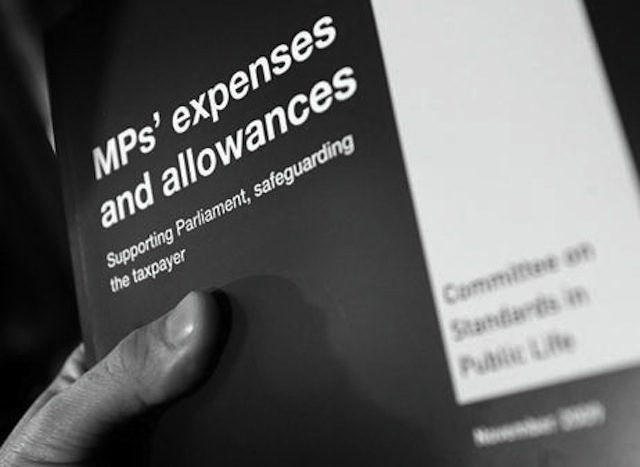
MPs Expenses and Fuel for Second Homes

Most of government is about numbers. Most decisions involve taking £X from Jack to give £Y to Jill and £Z to Jerry. And no topic is more numerical than the expenses of MPs. Sadly, the British public is innumerate, which is why newspapers are unwilling to give them a succinct numerical analysis of this (or any other) topic. That was brought home when the Mirror published a long list of which MPs claimed for fuel expenses for their second homes. Many other newspapers copied the story. However, none provided any analysis beyond picking a few examples of the MPs making the biggest claims and/or trying to link the story to the barely related topic of why energy bills have risen.

And so, the British public is encouraged to use all this useful empirical data to form whichever irrational conclusion best suits their existing prejudices. The resulting internet comments highlighted how useless most people are, when it comes to analysing data. Comments ranged from perennial favourite “they’re all as bad as each other” – so obviously false that you can only sympathize with those MPs who are decent and honest – to fatuous rants about why the Tories are uniquely hypocritical for making the same kind of expense claim as made by MPs of all other parties. So, for those of you who can cope with numbers but want to spare yourselves the 30-minute job that no newspaper journalist is competent to perform, here is the breakdown of the Mirror’s data, analysed by political party.

Conservative

46% of Conservative MPs claimed expenses for fuel on their second homes. The 140 claimants received £92,902 in total. The mean average claim was £664. Treated as a whole, Tory MPs claimed £307 on average.

Labour

60% of Labour MPs claimed. The 156 claimants received £87,393 in total. The mean average claim was £560. Treated as a whole, Labour MPs claimed £340 on average.

Liberal Democrat

55% of Lib Dem MPs claimed. The 31 claimants received £8,790 in total. The mean average claim was £284. Treated as a whole, Lib Dem MPs claimed £157 on average.

Democratic Unionist

75% of DUP MPs claimed. The 6 claimants received £2,493 in total. The mean average claim was £416. Treated as a whole, DUP MPs claimed £312 on average.

Scottish National Party

67% of SNP MPs claimed. The 4 claimants received £1,446 in total. The mean average claim was £362. Treated as a whole, SNP MPs claimed £241 on average.

Plaid Cymru

All Plaid Cymru MPs claimed. The 3 claimants received £1,286 in total. The average claim for Plaid Cymru MPs was £429.

Alliance

The only Alliance MP claimed £696.

Other Parties

From Northern Ireland, there was no claim made by any of the 5 Sinn Fein MPs or 3 SDLP MPs. No claim was made by the other 8 MPs who variously represent the Green Party, Respect, or are independent.

Summary

The Conservatives exhibited the greatest variety in their attitude to making claims. Their top 20 claimants received £46,527, but they were the only major party where a majority of MPs made no claim. Of the major parties, Labour MPs made most use of their right to claim second home heating bills, averaging £340 per each Labour MP. More than half of Liberal Democrat MPs made a claim, but their claims were significantly smaller than those made by the other major parties. The Lib Dems claimed £157 per MP, less than half the equivalent figure for Labour. No party claimed less per MP, with the exception of those small parties where no MPs submitted a claim.

Analysing other parties is less reliable given the small number of MPs involved. Nevertheless, there are some clear divisions. In Northern Irish politics, there were no claims from the 8 MPs representing Sinn Fein and the SDLP, whilst the typical claim from the DUP and Alliance was well above the parliamentary average. Scots and Welsh Nationalists are much more likely to claim this expense than the rest of Parliament. In contrast, this expense was not claimed by anyone who was independent or representing a small party in an English constituency.

Warm Bodies Draw In

0

When the night folds
I want you close at hand
It doesn’t matter who you are
You don’t need to know my name
In the dark I want the touch and smell of living flesh
A body’s a body
Especially when you feel like nobody

It’s a long night
When you lie alone
It’s hard to enter the bedtime tomb
Harder still to revive, in the morning
There’s no rest in this life, without purpose
And there’s no purpose to our daily work
We survive to survive
So let’s cradle each other when none can see

When air slices and light extinguishes
I want to hear your breathing
See you with my fingers
Taste you with my lips
You’re somebody like me
You’re nobody, like me
Alive in night’s mortuary
The other saves another
And gives a reason for day

Your Mind Will Collapse: Chapter Two

In the previous episode, Bill only barely escaped death at the Vienna State Opera, leaping just before the simulation ended. He jumped to his safe house in West Vancouver, which its curmudgeonly gatekeeper…

Milton sat at his desk, facing the bay. He did not glance at the view. He immediately started to work on streams of new code, displayed across two of his seven screens. His stubby fingers danced over his keyboard like a virtuoso on a piano. And whilst Milton worked, he spoke, seemingly able to maintain conversation whilst his fingers poured out perfect programming syntax. “Wash my hands? I like that. It’s not like there’s germs in this world.”
Bill leaned against the window, which stretched from floor to ceiling, and ran the length of the room. “And there’s no urine in your avatar, so why’d you go to the toilet?”
“There’s no air in this room, or lungs inside you, but you still act like you’re breathing. If you must know, I needed to go topside for a piss. And I don’t like leaving my avatar just sitting around anywhere, when I leave. So I parked it in the john, whilst I took care of business.”
“If you were in the real world, then how’d you tell I was here?”
“Errr… I was peeing sitting down, so I decided to log back in again, whilst I was doing it.”
“You logged in whilst sitting on the toilet? Why? To spend an extra few seconds looking at the inside of a virtual bathroom?”
“If you saw the shithole I really live in, you’d understand why I spend so much time here.”
“That still doesn’t explain how you knew I’d arrived. It’s not like I made a noise.”
“What?”
“When I resolved in the corridor, how’d you know I was there?”
“I can always tell when you resolve nearby. There’s something about your code “” it changes the environment around it. Don’t ask me to explain how. Maybe I perceive it subliminally. Your code is so… dense. Though some people say they can hear the click of other characters, when they resolve nearby.”
“I thought that sound’s inside my head.”
“No. It actually occurs outside your body, half way down your ear canal. It’s a standard software module; I guess the point is to be consistent between mods and players. I could try rewriting it, so nobody can hear you, when you resolve.”
“No need.” Bill shook his head. Then a look of disgust consumed his face. “Hold on “” is your body still sitting on the toilet, with your pants round your ankles, back in the real world?”
Milton looked away, pretending he had not heard the question.

“Never mind,” continued Bill, “I had a problem hyperleaping into here, and the delay could have got me killed. Did you switch off the program for this villa, whilst you were topside? I made it clear that if you’re going to take the program offline for maintenance, you’d better give me plenty of warning.”
“It’s been running the whole time, I swear.”
“Then what’s the problem with leaping into here?”
“I can guess the cause, but you won’t like it. It’s the fault of all the filters and bugs that the government have installed around this place, rifling through all the traffic going in and out. I pump out huge volumes of pseudo-data, so they won’t be able to detect you “” a haystack to hide your needle. But even with all this data soup I’m pumping out, you visit too often. Every time you come here, you make it likelier that they’ll identify your pattern in the data streams. Don’t say I didn’t warn you.”
“It was an emergency. I was nearly de-resolved “” permanently.”
“What? Did you fall asleep again?” Milton snorted at the absurdity, but raised an eyebrow when he saw the expression on Bill’s face. “Really? You fell asleep again? For how long? That’s not normal. You need to get that fixed.”
“I know, but what I can do? You don’t know how to do it, and I don’t trust anyone but you. And it’s not like I can review my own code, or I’d do the surgery myself.”

Like all characters in v-space, Bill’s program had an embedded logic lock, preventing the subject from inspecting its own code. No matter how the code was reproduced “” whether projected on a screen, or represented as a printout “” the character would see a meaningless jumble instead of their actual program. The logic locks had begun as a means to obstruct copyright infringement by players. It also stopped players from rewriting their avatars, to avoid paying for licensed upgrades. Now that some of the non-player characters had attained self-awareness, the logic lock also acted as a failsafe, preventing them for augmenting themselves, and attaining a kind of virtual omnipotence.

Milton shrugged his shoulders. “I’d offer to look at your program again, but I can’t understand any of the interesting bits. Your standard modules are just like those for every character “” input/output interfaces, modules to manage physical appearance and motion, and so on. That’s all fine. But I can’t make sense of your higher brain functions, or your personality. That code looks super complicated, man. And it’s got way more internal encryption than anything else I’ve ever seen, it might take me years to crack it. Whoever wrote you, they sure didn’t want anyone reverse engineering you, or making copies. You’re unique.”
“I am now,” said Bill, thinking of his siblings.
“I’m sorry, I didn’t mean…”
“Forget it. Speaking of who made me, what’s the news?”
“Since last week? Bupkis. The girl you have working topside reports back every day, but she’s come up with nothing new. And here in v-space, the trail is stony cold. There’s no new data on whoever the hell that guy was. We know what we knew before: Jeffrey Timmerman, male, born 1971, mixed parentage. I’ve already found all the original records of all his activities in v-space, back when he was testing the code for you. And then, like that “” poof! “” he was gone, like a virtual Keyser Söze.”
“Like Kaiser who? Never mind “” I don’t want to know. I just want to know what I’m paying you for, if you can’t track this Timmerman guy down.”
“I tell you, he’s topside, and he’s never logged back in to v-space, or at least not with the same avatar he used before. My bots crawl everywhere in v-space, but their searches come back with nothing. I’ll keep running them, and v-space keeps growing so there’s always more to search, but I don’t think we’ll ever hear from this guy again. He just doesn’t behave like a regular player. He logged in, did what he wanted to do, and never came back. I’m sure of it.”
“So that’s that?”
“Take my advice: Timmerman’s totally off the grid. Put your money into more private investigators in the real world. Your man is probably holed up in a shack in Montana, with no electricity and no running water. He isn’t going to be found by comms records or data trails or bank transactions or anything like that. Someone has to go looking, with their own two eyes. Knocking on doors, asking questions, doing real detective work, like in the good old days before computers… like Bogey playing Philip Marlowe.”
“Bogey? Never mind. How do you know Timmerman’s not in v-space, and behaving like me “” leaping from place to place, hiding in secure locations?”
“No way. You can drug people up, but they have to sleep from time to time. And when they log out, or log back in, that’s when they leave the clearest data trail, like a crack of lightning at night. When Timmerman was developing you, he’d log in every morning at 9am Pacific time, then log out every evening at 7pm. But there’s no evidence of him logging in since you were let loose. Not anywhere, not any time. Either he’s not logged in, or the only other possibility is that he’s using unregistered avatars. But if he has, he’s not repeated his old behavioural patterns, which would be the only way to identify him. And if he has access to unregistered avatars, then he must be working for, or hiding from, people who are a lot more powerful than us.”
“More powerful than you, maybe. I’m plenty powerful.”
“Is that why you spend your whole life on the run?”
Bill slammed his hand against the window, and looked away from Milton.
“I’m sorry,” said Milton.

Whilst Bill was only a program, he was not any ordinary program. He was self-aware, which was unusual, though far from unique. He had been continuously running in v-space for the last 1,279 days, which was likely to be a record, if anybody was in a position to keep score. He was on the run, though many characters in v-space were escaping from something. Most importantly, Bill had a lot of power. Or wealth, which was pretty much the same thing, so long as you can spend your money. Angry, he slammed his forehead against the glass window, not that he felt anything in response.

“I’m sorry,” repeated Milton. “Please, Bill, relax. The glass isn’t breakable, but you don’t want to send shockwaves through to the creeps on the outside. The less data they have about what’s happening in here, the better.”
Still leaning with his forehead against the window, Bill gazed out across the bay. “I don’t see anything. I’m sure they must be out there, but where are they?”
“Everywhere, that’s where. You’re thinking like a human being. Think like a machine. There’s three visual dimensions in v-space, but the full dataset extends to 96 dimensions. Or 212, depending on how you count them. So you can be sure that the government is right outside, trying to look in. They’ve been amassing their armies of spyware over the last few months.”
Bill stepped back from the glass nervously. “But they can’t see us, can they?” He stared at the window, whilst straightening his crumpled shirt.
“They see something that looks like me, but not this version of me that you’re seeing now. And they can’t see you at all. I took the conventional windows you originally installed, and fitted an underglaze, so to speak. It means they see what I want them to see.”
“But you can’t see them, so how do you know they’re there?”
“In v-space, the secret is to look without using your eyes. I can show you an isomorphic projection if you like “” a transcode that makes the government’s spy programs visible to your eyes.”
“Do it.”

Milton woke another of the screens on his desk, and feverishly typed instructions on his keyboard. Bill looked out across the bay. He watched the waves rippling over the water. He admired the deep green of the trees on the slopes in the distance. There were grey clouds rolling towards them, but it was sunny for the moment. This was a beautiful place. This villa had been the first safe house that Bill constructed, to be shared with all the siblings. Bill would have dearly liked to stay here, instead of always being on the move. Milton slammed ‘enter’ on his keyboard, like he had just won at dominos. And with that action, a red glaze slowly descended down the window, like a translucent roller blind. And what it revealed made Bill feel sick. As the red filter descended, the view of the bay was completely obscured. In its place, Bill saw… well, there was no name for the things he saw. They were creatures, of a sort. They were stuck to the window, covering every inch of its surface like gigantic leeches, except they were half composed of gelatinous fat, and the rest was mechanical, a sprouting of limbs and antennae and appendages. They had suckers, and probes, and eyes, in every possible combination, all pointing at the villa, examining it, groping it, pawing to get inside. Some of the beasts were small, and scuttled around on multiple legs. Others oozed across the windows’ surface. Yet others remained perfectly still, limpet-like, listening. They were a seething, disgusting mass, obscuring any sight of the world beyond. And they gave Bill the willies.

“Look down,” said Milton.

Bill looked down, and instantly jumped into the air, because he was so disgusted by what he saw. Milton had somehow made the floor invisible, and extended the red visor across the underside of the villa. Ten feet below where they stood, the creatures were under the floor as well. They composited a veil, so thick and unbroken, that Bill could see the corners of the house from where the spyware creatures slid and scuttled across its surface.

“And look up,” said Milton.

Bill looked up. Milton had used the same trickery on the roof. The house and its contents were now completely invisible to Bill. Bill could see his own body, and Milton. The two of them hung in the air, alone in the space vacated by the house. And all around that space there swarmed the rose-tinted monsters, creeping and crawling above and below, across every side. The diabolical spectres passed between each other, overlapped with each other, travelled through one another, layer upon layer, testing the house for any entry point. They swarmed and surrounded and suffocated, trying to peek and peep and sneak inside. They pressed on the edges of the window frames. They eased around every corner. They probed into every nook of the timbers. They squeezed under the eaves, slunk through the guttering, and pushed into the keyhole in the front door, only to find every apparent opening was tightly sealed. And they did it over and over, with mechanical repetition and demonic dedication. They were a macroscopic infestation, a living shroud. And they never stopped. “Turn it off,” said Bill. “They make me want to puke.”

With a single button press, the insides of the house became visible again, and the government’s spy-monsters disappeared. The view of Horseshoe Bay returned as well. Bill shivered, finding it hard to eradicate the image of the creatures from his mind. Milton shrugged his shoulders. “It’s hard to believe that’s how hard the government works, just to find you. Then again, it’s not hard to believe. That’s the really scary part. They’re drawn here just because they can’t see inside. None of us have rights any more, not ones that mean anything in practice. Not that the average tax-payer has any idea of what’s really going on.”
“Speaking of going, I need to update my playlist with fresh bookmarks.”
“What kinds of hiding places were you thinking of? Busy places, of course, but what else? V-space is growing all the time “” there’s always new locations to choose from. New is good; going to new locations will make it harder to find patterns in your movements. You should think about varying your routine some more, to stay ahead of these scumbags.”
“I don’t know. Maybe I should go to more fantasy scenarios? I don’t care, so long as they don’t feature any potentially fatal gameplay.”
“Are you serious? I know they’re confusing for the feds, because of how many characters they always have wandering around, but those sword and sorcery games suck.”
“Says you. What was the game you were playing last time I was here “” the one with the yellow mouth-ball?”
“Pac-man? That’s a video game classic.”
“Yeah, a yellow mouth-ball, running around a maze. Some game that was.”
“Don’t knock running around mazes. There would be no v-space, if it wasn’t for people running around mazes…”

A klaxon sounded, interrupting Bill.

Bill looked around him, not that there was anything new to see. “What is it?”
“This is why you shouldn’t come here so much. We have visitors.” Milton’s hands furiously worked his keyboard. Symbols spilled across three of his screens. “And I never have guests. Perhaps they identified your program in the inbound traffic.”
“Are they Feds?”

Milton’s hands worked furiously, and the house was invisible again, apart from Bill’s desk and his screens. Milton and his desks pivoted around in space, to look at who was outside. Bill’s head turned with them. Two figures stood outside the boundary to the property. They were both women. One was six feet tall, supermodel thin, long straight black hair and wearing a figure-hugging black dress. The other was much shorter, barely over five feet. She wore a three-peace suit, charcoal grey with pinstripes. Red hair peeked out from under her trilby, and she examined a silver pocket watch, with a chain that hung from her vest. “They’re definitely Feds,” said Milton.

“How can you be sure?” said Bill, as he looked from the women to Milton, then back again. “I mean, they look pretty unorthodox.”
“Have you ever seen Feds before?”
“No.”
“Then how do you know what’s orthodox for a Fed?”
“I don’t. Here’s where you reassure me, by saying you have seen a Fed before.”
“Not in person.” Milton’s hands continued to dance across his keyboard, even whilst he looked to Bill. “But I recognize the encryption that’s surrounding them. It’s good, but not better than me.”
“What type of Feds are they?”
“They’re both mobs. No, wait. The tall one is a mob. The one in the suit is an avatar.”
“That’s not what I meant. Which federation?”
“They’re Internal Revenue “” were you expecting another?”
“Taxmen?” Bill grimaced at the thought.

I Hate Skyler White (with reason)

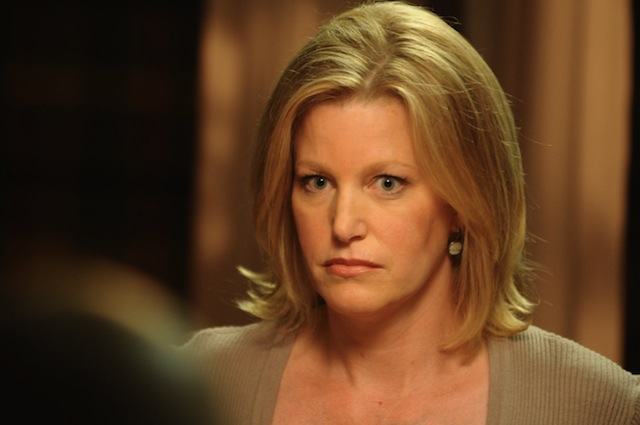
Until recently, I had never seen Breaking Bad. Now I have seen every episode. Thanks to the publicity surrounding its final episode, the internet, my non-traditional viewing habits and the quality of the show, I now know what all the fuss was about. It was a good show, and I am glad I watched it all. There should be more shows as good as Breaking Bad. And if I ever have to cast the part of a loser who transforms himself into a ruthless crime lord, I will try to repeat the trick pulled by the makers of Breaking Bad. They made an inspired choice, when hiring a guy who used to be the comic dad from a family show about schoolchildren. The character of Walter White is excellent. Combine his presence with a plot that crosses two popular tropes – organized crime drama + nerds using science to do crazy shit like blowing stuff up – and you have all the factors needed for success. I salute the makers of Breaking Bad. They made a product of a very high standard. And yet, it was not made to the exceptionally high standards of Walter White, central character, demon chemist and manufacturer of 99% pure methamphetamine. Unlike Walter, they allowed one significant pollutant to spoil their product. And that was the character of Walter’s wife, Skyler.

I will admit that, from the very outset, I disliked the character of Skyler White. I assume that was the intention of the show’s creators. Walt is a downtrodden nobody, bullied at work and in the home. Skyler is portrayed negatively from the very beginning, before Walter begins his own bad behaviour. Skyler is the wife of Walter, the show’s protagonist and central character. She is his most enduring antagonist, not in the sense of being a genuine obstacle or opponent, but more in the sense of being a constant irritation. By the time I reached the final episode of the penultimate season, I had to ask myself a simple question: “am I the only person who finds the character of Skyler to be jawbreakingly annoying?” So I googled. And learned I was not alone. Far from it. Which was a relief. It seems that very many people enjoyed the show, but found the character of Skyler White to be grating. But I also learned something else, which worried me. In short, I learned something about myself. Anna Gunn, the actress who played Skyler White, wrote an op-ed for the New York Times which explained why people hate Skyler White. She wrote that:

[Skyler is] a flash point for many people’s feelings about strong, nonsubmissive, ill-treated women.

Because Skyler didn’t conform to a comfortable ideal of the archetypical female, she had become a kind of Rorschach test for society, a measure of our attitudes toward gender.

I thought about this, and worried about the misogyny of society and whether I was suffering from some deep-seated anger issues that needed to be addressed. After giving this a lot of thought, my conclusion is: what a load of fucking bullshit.

Going back to what I felt about Skyler’s character whilst watching the show, I found her to be a badly-written, superficial and contradictory character. The writers did not give her consistent motives. She makes no meaningful choices. She primarily exists to create a faux-tension by impeding Walt’s stepwise transformation as a character. That makes her the worst possible thing in entertainment: a dull character.

For most of the series, Skyler’s character exhibits hardly any depth given the very large amount of time she spends on screen. Mostly she complains about her husband, to her husband. There is little variety or dynamism to the character. Compared to Walt, who deals with various criminal characters as well as his family, Skyler hardly interacts with anyone but Walt. And she does this over the course of 62 episodes. Complain, complain, complain to her husband, and not much else. For 62 episodes. In that sense, she is not an interesting character and her presence drags on the storytelling, instead of augmenting it.

To be clear, my dislike of Skyler White has nothing to do with her being a woman, and I have given this far more thought than any sane person should have to. We live in a topsy-turvy world where everybody is constantly being accused of thought crime, even when they dislike a fictional character. I find myself being defensive about my alleged misogyny, guilty by associating myself with other Skyler-haters. Maybe some of them are misogynists; I do not speak for them. And yet, it is cheap and silly to suggest that Skyler White is especially loathed because there are so many misogynists. Only a poor artist blames their audience for not liking what they see.

With that in mind, I will analyse what is annoying with the character of Skyler White, and why this can be separated from the immature emotional need exhibited by some men – and by some women – who superimpose their personal and political anxieties on a badly-written fictional character.

To start with, let me share one insight about who Skyler White reminded me of, an epiphany I had whilst watching the second episode of the fourth season. Skyler White reminds me of Oliver Hardy. Yes, Oliver Hardy, from Laurel and Hardy. The fat one. This one:
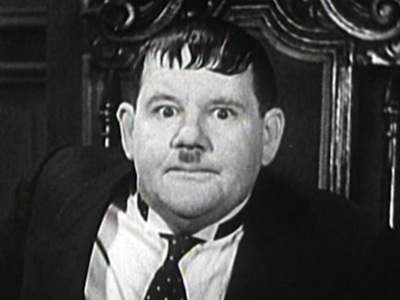
Oliver Hardy

Now, before anyone jumps to any ridiculous conclusions, let me state that the actress Anna Gunn does not look like Oliver Hardy. But there is a resemblance between the character of Skyler White, and the character perfected by Oliver Hardy. They are both pompous, self-absorbed oafs. Neither exhibits power, or guile, or wit, or intellect. They do not laugh at themselves. They are self-important, whilst unimportant. And they both spend most of their time picking on the only individual who is willing to tolerate their boorish behaviour.

Only one thing saves Hardy, turning his character into a comic creation: the comeuppance. Everybody likes to see an insufferable overbearing twerp receive their comeuppance. It makes no difference if the twerp is male or female; I favour equality in this regard. Hardy’s character is redeemed solely because he is routinely kicked up the bum, or has his hat set on fire, or suffers the slamming of pies into his face. None of these things occur to Skyler White. She just cruises on, with no comeuppance. So watching her character is like spending many hours of Laurel & Hardy setting up all the reasons why you should dislike Hardy, but without any of the comic pay-off. That failing is especially noticeable in Breaking Bad because, at its best, it delivers dry humour that complements the heated drama.

When one character seeks to dominate another character, I typically side with the underdog. This is natural, and common for audiences. From the very beginning, Walter White is established as an underdog. The creators did this knowingly, so the audience would side with him. They then proceeded to change the character, a small step at a time, to make him an oppressive, ruthless criminal kingpin. Hence the genius of the show, and why it works so well. The audience is encouraged to side with Walt, and then their loyalty to Walt is tested, blurring the line of when their sympathies should turn against the central character.

Siding with the underdog is the same basic psychology that drives audiences to empathize with Stan Laurel, or Charlie Chaplin, or Rocky Balboa, or countless other screen heroes. Like many children, I felt the same desire to support the underdog even whilst watching cartoons. In Tom & Jerry, I found myself desperately wanting Tom to defeat the obnoxious and over-confident Jerry, although he never did. I wanted Wile E. Coyote to not just chase Roadrunner, but to catch the infuriating, beeping bird. It did not matter who was supposed to be the weaker of the pairings. By repetition, we all soon learned who was the loser, and who was the winner, and it is natural to sometimes want the loser to win. As a 6 year old child, I sided with the clever and amusing ‘bad’ characters, not because they were bad, and certainly not because of some twisted form of sexism. I empathized with them because they hatched clever plots, and they strove, and they were funnier and were more interesting than their unassailable opponents. There is no need to call on crass gender politics to analyse antipathy to Skyler White. Yes, the character is a woman, but more importantly, she is boring. She is unimaginative. She lacks charm. And she acts like she is accustomed to getting what she wants. Here is the phrase that Skyler White uses more than any other:

“I need you to…”

What kind of person would ever use this phrase? What kind of person uses this phrase over and over? A generous reading might say the character was needy, or insecure. But when the phrase is repeated with stunningly regularity, as it was during the earlier seasons, I am forced to believe the character is selfish, bossy and intent on manipulating others into serving her wishes. In the early seasons of Breaking Bad, Skyler White’s character routinely put her needs ahead of others. She expected them to behave in ways that satisfied her. This included disputing Walt’s right to die from cancer, in preference to suffering the discomfort of treatment.

However, bizarrely, Skyler’s bullying streak has since been forgotten by Anna Gunn, and others, who want to emphasize she is ill-treated. I would agree that Skyler is ill-treated by the end of the final season. But the Walter White who mistreats her in season 5 is not the meek and hen-pecked Walter White who submitted to her wishes in season 1. So there is a problem in justifying Skyler’s recurring faults as being provoked solely by Walter.

In many respects, Skyler becomes a much more interesting, and much less annoying character during the final season. In this, I see the hands of the show’s creators. Maybe they were sensitive to the need to do a better job, after seeing the hostility provoked by their repetitive use of Skyler as the anti-Walt shrew. I also suspect that, as Walt became more dominant, they found it easier to place a greater variety of opposing forces against him. In the beginning, Walt is oppressed by his wife, his bosses, and the kids he teaches at school. His life contains so little joy that he would prefer to die, rather than fight his cancer. All he has left are a few tiny shreds of pride, and he feels that even these are being wrestled away from him. By the end of the show, Walt is a different man. He is powerful, and resourceful. He learns not just to fight, but to win. In so doing, he is constantly challenged by an ever-larger army of opposing forces. There is the DEA and his brother-in-law, his volatile former drug-cooking partner, and a truly vast array of criminals. In such circumstances, the creative brains behind Breaking Bad could relieve Skyler from the need to provide as much resistance to Walt. But by then, the die was cast. Unlike Walt’s descent into evil, Skyler’s transformation from nagging housewife into genuinely interesting character is never explained by any events on screen. She just becomes more interesting toward the end of the final season, and the audience is forced to imagine that they are now seeing what she was ‘really’ like all along, even though that side of her personality had never been presented on screen before.

Anna Gunn is right, in a sense, that the character can become a test showing the prejudices people have about gender. Her mistake is that Ms Gunn reveals her own irrational prejudices, not mine. Breaking Bad never went to sufficient trouble to show that Skyler White is strong, or that she is ill-treated. The negative aspects of her character were established before their supposed justification, and the strength she finds in the final season is contradictory, because it appears like magic, from nowhere. If the audience believes Skyler White is consistently strong, and ill-treated, that is because of the prejudices they bring to the show, from outside the show. Or they have simply forgotten how the character behaved in earlier seasons. I expect that many who detected misogyny amidst the antipathy to Skyler White only started to watch the show in order to see what made the Skyler-haters so angry. If so, they arrived too late.

In short, there is not enough in the show to justify Gunn’s description of her own character. Skyler White simply does not do enough, and does not suffer enough, to be credibly summarized as a strong character, or an ill-treated character.

Of course, it is possible to over-analyse. Some writers have ‘tics’ and ‘tells’, like poker players. Their mannerisms can be repeated too often. The writers of Breaking Bad used the phrase “I need you to…” with preposterous regularity, though that tic also calmed down in later seasons. If you break down the scripts carefully, I believe everybody would agree with me. That particular phrase featured too often, and was sometimes used by other characters too. The tic reveals that a fiction is just an illusion – that creative people make facsimiles of real life, and their creations may be flawed. The phrase was used as a quick way to force emotional intensity. Hence, Skyler used it a lot. It was overused, in this series. If the tic was pointed out to the writers, they may have revised Skyler’s dialogue, to give her greater variety. However, the audience must judge a character based on what is actually presented on the screen, not on how we want characters to be presented. And as presented, Skyler White is mostly a grinding, nagging wife who keeps talking about her wants, needs and fears and rarely shows much interest in anyone else’s. It would be wrong to ‘infer’ some inner psychological activity that is not manifest in the words or the actor’s performance. So if Anna Gunn did not act something, she has no right to be upset that people see less in her character than she wanted them to see.

To be fair to Anna Gunn, she will not be the only person who projects themselves into a fictional character. But this is nothing new, or unique to the character of Skyler White. Is there any actor so naive that they think audiences do not project their personal emotions into the fictional scenes that are presented to them? People side with underdogs because they feel themselves to be underdogs, and they side with heroes because people want to imagine themselves doing good.

Even more peculiarly, Anna Gunn was surprised that some people confuse the character with the actor. This has happened for as long as actors have acted. It is to the benefit of some, who play loveable characters. They may receive free drinks, smiles, or pats on the back. Other actors suffer as a result. Those who play villains and ‘hardmen’ may face rudeness, abuse, and even violence. Anna Gunn conflates the specific reasons why people dislike Skyler White with the general observation that some audience members cannot differentiate between actors and characters. I am sorry for her if some foolish people transpose their dislike of Skyler White into a false antipathy to the actor. But this human failing does not justify wild claims about societal antipathy towards all women. Drawing such conclusions is reckless and unwarranted. They are no more justified than suggesting an incident where a soap actor gets punched in his face signals that society must hate attractive young men.

Having recently watched all the episodes, I can recall many occasions where the character Skyler White behaves in ways that are loathsome. Consider the following:

  • As a birthday ‘treat’, she masturbates her husband whilst browsing the internet.
  • When her husband is diagnosed with cancer, and expresses a wish to die instead of suffering the discomfort of treatment, Skyler arranges an ‘intervention’ for Walt, with the assistance of her sister and brother-in-law. The ground rules of the intervention, as set by Skyler, is that everybody be allowed to speak their mind, in turn, with Walt forced to wait until last. When Walt argues persuasively that he should be allowed to die in peace, leading his in-laws to sympathize with his point of view, Skyler unilaterally dismisses the intervention. The next day, Walt changes his mind, but there is never any on-screen suggestion that Skyler is grateful that Walt will undergo treatment.
  • Walt becomes distant and secretive, and Skyler fears he is having an affair. Skyler starts a new job, and seeks comfort from the boss. She reveals that she feels guilty for not feeling happier about the positive results from Walt’s cancer treatment. The following day, she deliberately knocks her pens on the floor, in order to get the boss’ attention and draw him into her office. She then suggestively impersonates Marilyn Monroe, sexually flirting with her new boss in front of all his other employees. Whilst knowing her boss is a fraudster, Skyler eagerly starts an affair with him. Walt tries to make amends for his failings as a husband, saying, “honesty is good – don’t you think?”, to which Skyler bitterly responds, “I fucked Ted,” as punishment.
  • Skyler calls the police and tries to have her husband thrown out of the family home. She is frustrated in doing so because Walt has not actually done anything to Skyler that would justify police intervention.
  • Skyler threatened Walt by saying she will hurt herself in order to make it appear that he was violent to her.
  • She goes against Walt’s wishes, and refuses to allow her son to have an expensive car, on the basis that it will ruin the family’s ‘cover story’. However, this same ‘cover story’ – which she invented unilaterally – is sufficient to explain how they bought a business with $800,000 in cash. In other words, she acts like spending $800,000 is plausible, but goes into melodramatic overdrive about spending $850,000.
  • After much resistance, Walt agreed to divorce Skyler and signed the papers. Skyler then arbitrarily changed her mind, and dismissed the opportunity to split with her husband.
  • Instead of divorcing her husband, when she had the chance, she tells him to his face how she is waiting for him to die.

A foolish person might put forward the following counter-argument: Walt does worse. But that is not the point. Walt does terrible things and is an interesting character. Skyler does awful things and is a boring character. There is no intrinsic battle of the sexes here. Both could be fascinating characters, or both could be dull. It is hard to watch Skyler not because she is a woman, but because nobody enjoys seeing a character who is tediously unpleasant, and goes on being tediously unpleasant.

Some viewers might still want to sympathize with Skyler, suggesting her character faults are all somewhat excused by blaming Walt. But there comes a point where a character has to be the character they are, without justifying every action as a reaction to others. I find I have most antipathy to characters who are needlessly unpleasant, nasty or vicious to other characters who have never caused them harm. The epitome of Skyler’s negativity is found in an episode called ‘Buyout’, which was the 6th episode in the final season. Skyler returns home late, to find Jesse, Walt’s accomplice, talking with Walt. Jesse is a stranger to her; they have never met. Jesse is sorry for intruding on Skyler’s home life. He immediately states he will leave, appears uncomfortable, and he shows no desire to upset Skyler. Walt insists on Jesse’s staying. As instructed by Walt, Skyler prepares a meal, and then all three sit at the table. When taking her seat, Skyler holds a bottle of wine closely, and pours herself a very large measure. She barely touches her meal, and drinks from the glass whilst holding it in both hands. Jesse is visibly very uncomfortable, and he seeks to change the mood at the table. He makes polite conversation, complementing Skyler for the meal she has cooked. Skyler responds by being atrociously rude, making Jesse feel even more unwelcome. Is Skyler’s behaviour indicative of a good-natured and well-mannered human being, or is this the hallmark of someone who is rude and self-important? Whatever Skyler’s justification for being horrid to her husband, she is not entitled to have any opinion about Jesse, a man she really knows nothing about. And yet, Skyler is childish and uncouth, revelling in an opportunity to drag a stranger into her fight with her husband.

Contrary to all the awful things that Skyler does, Anna Gunn claims there are some good aspects to Skyler’s personality. She wrote that:

I enjoy taking on complex, difficult characters and have always striven to capture the truth of those people, whether or not it’s popular. Vince Gilligan, the creator of Breaking Bad, wanted Skyler to be a woman with a backbone of steel who would stand up to whatever came her way, who wouldn’t just collapse in the corner or wring her hands in despair. He and the show’s writers made Skyler multilayered and, in her own way, morally compromised.

Speaking as an audience member, if the creators, writers, and actors of Breaking Bad wanted Skyler White to have a ‘backbone of steel’ and to be ‘multilayered’, then they failed. Allow me to briefly list some steely women, drawn from real life and fiction: Angela Merkel, German Chancellor; Christine Lagarde, boss of the IMF; Hilary Clinton, future President of the USA; Elinor Dashwood from Sense and Sensibility; Alice from Alice in Wonderland; Ellen Ripley from Alien; and Catwoman from The Dark Knight Rises. I cannot imagine any of them attending a birthday party, and then walking into a cold swimming pool as part of some ridiculous pseudo-suicide bid in order to get attention. I cannot imagine them making idle threats. They would not go out of their way to be rude to a total stranger, just to punish somebody else. They would not foolishly hand $600k to their lover, only to become flustered when he spent money on a new car instead of paying his tax bills. And they would not strenuously demand a divorce, then casually change their mind when the signed papers are handed to them. Skyler White did all those things, and did them all with the same facial expression that she does almost everything: a wide-eyed stare of hyperbolic intensity. If this is meant to be ‘steely’ and ‘multilayered’, I am forced to laugh at the incompetence of the writers and the actor. Their combined artistic failure best explains their defensiveness. It is understandable that they are upset that their creation provokes criticism. But their failure does not entitle them to brandish their critics as misogynists, any more than an audience that finds fault with a black character must be racist, or an audience that finds fault with a foreign character must be xenophobes.

Let me point out one particular detail which annoyed me more than others. Skyler is rarely seen as being competent at doing anything other than a mother’s tasks. She can give birth, feed the baby, argue with her teenage son, and cook breakfast. Whoop-de-doo for women’s liberation. But we are told she is also a bookkeeper. And, from the pompous way Skyler behaves, she seems to believe she is a good bookkeeper. But she is not a good bookkeeper. In the only scene in the entire series where we might seriously examine her abilities as a bookkeeper, she comes across as totally incompetent.

Before I analyse the particular scene, let me make one simple observation about language. We all know what ‘over’ means. And we know what ‘under’ means. An ‘overestimate’ is an estimate which is higher than the value in real life. An ‘undercooked’ meal has been cooked less than it should. An ‘overheated’ engine has a temperature which is higher than it should be, and so on. So even somebody who knows nothing about bookkeeping knows what ‘over’ and ‘under’ mean. Now let me point out the only significant scene where Skyler’s (in)competence as a bookkeeper is strongly evidenced. The scene is from ‘Mandala’, episode 11 of the second season. I will use red for the important bits.

Skyler: Look, it’s all kinda little dribs and drabs, but right here – take Keller for instance – a couple of hundred dollars here, a few thousand there…

Ted: Dribs and drabs

Skyler: You add it all up though, and with Keller, the revenues were almost 10 percent less than was actually received. This is every quarter for the last two years. When I saw it I got worried, so I checked accounts receivable for other customers. I found six other instances, revenues being under-reported. And I’ve only just started to look into it.

Ted: We have requirement contracts with all these companies. They have to anticipate their needs for their next quarter, and most of the time they over-estimate. So I just let them roll their overages into the next order, and if I don’t, they’ll go elsewhere. Obviously we’ve got… we didn’t go back and adjust the revenue entries. I know it’s wrong from an accounting standpoint, but you can see the money is coming in eventually, you can see.

Skyler: Right, right, but, ahem… I got the old bills of sale and order forms out of storage and to try and sort this out, and most of the time there’s no backup for the reported revenues at all. In a few cases, I found xerox copies with the dates changed.

Ted: Alright, you’ve got me.

Skyler: We’re talking nearly a million dollars of undocumented revenue. What are you thinking?

I know what I am thinking. I am thinking I hope they did a better job of writing dialogue about chemistry then this garbage about accounting. And I am thinking that any half-competent bookkeeper would not be so confused about what is happening here.

‘Revenues are less than actually received’. What does this mean? The only possible meaning is that the company received cash, but reported a lower revenue. That makes sense, if the goal is to commit fraud by reducing the tax bill. Keeping cash off the books would lower profits, lower taxes, and so allow the owner to keep more of the money. And this fits with Skyler saying that revenues are ‘under-reported’, i.e. the number reported in the books is lower than the number that should have been reported. Ted’s reply then makes no sense, and Skyler would know this if she was a real, competent, bookkeeper. Ted says ‘the cash comes in eventually’. That implies the revenue is being reported before the cash is received, although Skyler has just outlined a problem where cash is received and the revenue was not reported.

What is Skyler’s response to Ted’s nonsensical answer? Does she say: “huh?” No. She says: “most of the time there is no backup for the reported revenues at all”. What an idiot Skyler would have to be. She is now accusing Ted of over-reporting revenues. She simultaneously claims to have found under-reporting and over-reporting of revenues. And yet, she is incompetent to distinguish these two different, opposing frauds.

If this woman was a real book-keeper, I would fire her. She is not a real woman; she is a work of fiction, so we should blame the people who are really responsible for this goof. The writers bungled this scene. Skyler started by complaining that cash was being received (real cash! from real customers!) but that revenues were not being reported. Then she ends up complaining that revenues are being reported, but nothing supports the revenues. Well, forgive me for being pedantic, but hard cash is the best possible evidence of revenues from somewhere (which is why money laundering takes dirty money and makes it seem like the cash was generated by an honest business). So why is Skyler finding no contradiction whilst simultaneously accusing Ted of over-reporting and under-reporting revenues? Why would he under-report real revenues (because he received the actual cash) whilst simultaneously fabricating paperwork to over-report the fake revenues from other customers? And why do this in the same set of books?

Either Ted wants to over-report revenues (to make the bank think the business is doing better than it really is, so they do not call in their loans) or he wants to under-report revenues (to fool the taxman into levying less tax). He might even, conceivably, have engaged in a complicated scam where there are the real books, the books to please the bank (with over-reported revenues) and the books to fool the taxman (with under-reported revenues). Yet dumbo Skyler has identified unders and overs whilst looking at a single set of books. Which means she thinks Ted conspired to lose some paperwork here, invent some paperwork there, and so cancel out his parallel frauds, getting him back to the right overall answer!

I do not expect the average viewer to analyse the dialogue in this detail, although I spotted this problem straight away, and I found it very difficult to tolerate the character of Skyler from that moment on. Every time I saw her arrogance about her skill at money laundering (a simple job, involving tallying up fake sales supported by real cash) I was reminded of the basic incompetence manifest in that scene. And I would expect the average viewer would suspect something was amiss with the skew-whiff dialogue in that scene. It does not take an expert to smell the suspicious odour surrounding that scene, or with much of what Skyler says and does in her ‘professional’ capacity.

There are other screw-ups too. In a later episode, Skyler negotiates to buy the car wash. She arrogantly elaborates how she calculated the cashflows of the business. That would be a whole lot more impressive if she had not stated that depreciation was included in the calculation. Depreciation is an accounting cost that has no impact on cashflows. Later still, Skyler helps Ted to fool the taxman, by pretending there is more paperwork than the taxman has already seen. And yet, Ted’s company is already full of phoney paperwork, which has inflated revenues, and so increased his tax bill. If Skyler wanted to help Ted, she should have told Ted to shred the phoney paperwork and stop inflating his revenues. So where others claim to see a ‘strong’ woman, I see a cartoonish character who clearly has never spent a day being the diligent, methodical book-keeper she pretends to be. And who is to blame? Not Skyler White. The writers and the actor are to blame, though they might defend themselves by saying they had no clue about the dialogue they wrote, and spoke, respectively. Even so, this is not a sign of artistic quality and commitment, and the audience is justified in disliking such a shoddily-constructed and poorly-researched character.

Again, there is extent to which is pointless to over-analyse. Skyler is no more to blame for her incompetence with accounts than Walt would be to blame if he made basic errors in chemistry. The fault is with the writers. Even so, an audience can only analyse what is presented to them, not the writer’s real intention. The writers intended for Skyler to come across as a competent bookkeeper. She actually came across as a dunderhead who confused some of the most basic concepts in record-keeping. Maybe some of the audience did not notice. But I would contend that, even if they did not consciously notice the awful mistakes that Skyler made, the relevant scenes did not help the audience to form the impression that the writers intended. In short, the writers screwed up various attempts to show Skyler is a competent person, aside from being a wife and mother.

And I will go further. I would have very much liked for Skyler White to be steely and multilayered. I want women characters to be steely and multilayered, for the same reasons I enjoy those properties in male characters. I hate Skyler White because she is neither steely, nor multilayered. Taken across all five seasons, Skyler White is usually a pathetic woman, huffing and puffing but with no substance to her. She talks a lot, but does little. Far from being a role model for strong women, she is detestable because she is so utterly unable to do anything to control her destiny except by complaining to Walt.

What kind of feminist would think that loathing Skyler White must be an example of misogyny? Feminists should despise Skyler’s weakness and vulgarity as much as anyone. Maybe they should dislike Skyler even more, because she is a stereotype. She is the misogynist’s favourite cliche: an unpleasant, overbearing, stupid, nagging wife. We should blame the stereotype on the people who lazily recycled it, not the people who hate what it represents.

The problem with Skyler White is that the character is clearly intended to balance audience figures in a show which, some may argue, is better designed to appeal to men. Organized crime + nerdy science = content that supposedly favours men. I do not encourage this sexism. Why should a woman enjoy nerdy science less than men? Why should the interests of women viewers be fixated on raising kids, and sustaining marriages, instead of running a drug cartel or laundering money? These are not my values, but these are the values that the makers of Breaking Bad subscribed to, when constructing the character of Skyler White. In my opinion, if you are only throwing in a female character in the hopes of giving something for female viewers to latch on to, whilst the men of the house genuinely enjoy the television program, then you are treating your audience with contempt. The tactic may lead to higher ratings, but it evidences neither artistic nor moral backbone. If they wanted a major woman character, they should have given the audience a major woman character, instead of pouring so much screentime into an insipid, flat, dull, non-entity of a pseudo-woman.

And that is why I hate Skyler White. It has nothing to do with how I feel about women. The actor who played Skyler White was unable to save the character from its faults. She was not responsible for the difficulty of her task, though she was foolish to blame the audience for her own failure. Unlike Walter White’s crystal meth, Skyler White was a sub-standard product. The people who are responsible for that product are not women in general, nor the people who disliked Skyler White. The people responsible are the makers of Breaking Bad. The people who most failed with Skyler White are the show’s directors, and its writers. And most of them are men.

The Right To Say Stupid Things

Always leading the fight for freedom, the Guardian did some interesting work this week. Presumably Polly Toynbee felt a bit envious for how the Daily Mail gets attention for provocative headlines, so decided to engage in oneupmanship:

It is the Baby Ps and Hamzah Khans who pay for this Tory vandalism

That is quite a shocking headline, until you remember that Baby P and Hamzah Khan were two small children, killed by the adults who were responsible for looking after them. They were not killed by Tory vandals, despite the lurid headline. And you may remember that both children died whilst the Labour Party was in government, at which point the headline becomes shocking for a different reason. In this instance, the Guardian was guilty of leading a different, but equally important fight for freedom: the right to express your stupidity, in any way you please. And I agree that this freedom needs to be protected, even if I disagree with the arguments that result.

For the avoidance of doubt, Toynbee has since explained why her drivel is in a totally different league of drivel to all the other drivel in other newspapers:

OK, some points: plainly many commenting here have not bothered to read my article carefully (or at all), and the headline (which I didn’t write, and which is more provocative than the print Guardian) I didn’t write.

This leads to three quick observations. First, that was a nice bit of casual ad hominem smearing of everyone who criticizes of Toynbee. If a criticism is fair, just lump it in with unfair criticism, and simultaneously ignore all of it. The logic is flawed, but unsurprising, given the source. Second, Toynbee disowns the headline, and admits it is provocative. But she does not say it is wrong, or needs to be changed. Third, why mention the different, print version of the article? In a recent piece by the New Yorker, the Guardian’s CEO explains why their business strategy is make money from the global internet, because the national print model is failing. According to that article, Guardian Editor Alan Rusbridger “can envisage a paperless Guardian in five to ten years”. Fair enough. That must mean there is no loss of responsibility, just because words are published on the internet.

Toynbee went on to argue:

I am NOT accusing Gove of killing children: if child deaths rise, it will be hard to pinpoint such specific responsibility. But the combination of less collaboration and larger than ever crisis caseloads for social workers is a serious risk.

This is intellectually muddled bunk. Either government policy will alter the numbers of children who will die, or it will not. If it does, then Toynbee’s argument is clear: Gove’s policy will increase the number of children who die as a result of child abuse. We can wrap that idea in woolier words, like ‘risk’, or by saying children will be more ‘vulnerable’, but the final calculation comes down to how many are affected in real life. It would mean nothing to say children are at higher risk, or to say they are more vulnerable, if it is a literal fact that the numbers of children suffering death and abuse remain constant. And if government policy cannot alter the numbers of children who will die, then Toynbee has succinctly trashed her own argument.

The get-out clause, in all this pseudo-intelligent shambling, is the difficulty of proving a connection between a government policy and the specific suffering of an individual child. An intelligent person can separate the question of whether there is a causal link, from the question of whether the causal link is provable. Sadly, Toynbee does not respect her readers’ intelligence, and she prefers to muddle these questions. Anyone who read her article can clearly see that she argued there definitely is a causal connection between government policy and the numbers of children who will suffer abuse, even whilst she hides behind the impossibility of showing this connection. And yet, if it was truly impossible to show the connection, that would suggest Toynbee is some kind of goddess or mystic, using divine powers to perceive relationships which are unknowable to human science.

Clearly Michael Gove is not going around the broken homes of Britain, telling benefits-dependent alcoholic mothers to repeatedly hit and starve their own children. And yet, some women independently come to the conclusion that that is what they should do. Toynbee uses the word ‘pinpoint’ to highlight the difficulty in establishing a relationship between policy and results. However, she is being disingenuous. If the numbers of dead children were to double, she would be the first to point out the correlation, even though no specific death could be ‘pinpointed’ as the result of Michael Gove’s policies. Her article was entirely based on the premise that changes in government policy would make a difference to human suffering. And what evidence was produced to support this conjecture? None. She presented a theory, with no data to back it. Whilst it feels icily gruesome to talk about the deaths of children as ‘data’, if we care about results in the real world, we must look at what happens in the real world, and not get absorbed by theory which is divorced from reality. That the Guardian is ready to claim that government policy will kill children, in advance of any facts that support their belief, shows how far some people will push the envelope of crooked and emotive arguments.

It is worth noting that the Guardian’s employees managed to undermine each other, if you compare and contrast their arguments. Whilst Toynbee defended herself by arguing against the ability to ‘pinpoint’ responsibility for a death, her colleague Libby Brooks had no problem in identifying the spine of Toynbee’s argument.

As regards the headline on this piece: whilst I appreciate that both Baby P and Hamza Khan died before the last election, I think it’s pretty clear in its suggestion that coaltion [sic] cuts to children’s services “” in particular those headed by the Conservative Michael Gove “” are putting more vulnerable children at risk, and increase the likelihood of terrible cases like this happening in the future.

In other words, cuts in spending = more children will be killed by their own mothers. I know that is not how any Guardian hack would have chosen to phrase it, but it is their argument. Otherwise we are forced to believe that people are clever enough to know what government policy should be, but they do not understand the meaning of the words ‘increase the likelihood’. If I increased the likelihood of our planet spinning off its axis and falling into the sun, it still might not happen. That is because our planet has never crashed into the sun, and is very unlikely to do so. However, if we can learn anything from the deaths of Baby P and Hamzah Khan, it is that we already live in a world where a number of children, greater than zero, will die from the consequences of abuse. Take the number of children who die from abuse, and divide it by the number of children, in order to learn the raw probability of children dying from abuse. So, unlike the case where the earth spins into the sun, if there is a rise in the likelihood of child deaths from abuse, then the number of actual deaths will go up. Either that, or our unscientific use of the word ‘likelihood’ amounts to no more than irrational old wives’ tales.

Either Guardian writers are arguing that government policies will lead to more deaths, or they are talking nonsense. There is no middle ground here. Brooks’ version of the argument makes the cold-hearted mathematical connections more obvious, whilst Toynbee has subsequently shied away from her own logic. But Brooks has no need to hide behind artful words like ‘increase the likelihood’ – if she understands what she is saying, then it would be more accurate to summarize the argument as ‘coalition cuts will lead to more deaths like those of Baby P and Hamzah Khan’. But both writers disguise their arguments by placing it in a thick undergrowth of mathematical incompetence. They hint at causal relationships, they insist that government policy should change because of those causal relationships, but they do not have the honesty to speak plainly about those relationships, or to show any evidence for them.

And yet, whilst I find the Guardian’s arguments to be stupid and offensive, it is good to live in a society where people can say stupid and offensive things. Some rather arrogant people have come to the conclusion that only their opponents ever say things which are stupid and offensive. I beg to differ. Everybody, apart from me, says stupid and offensive things from time to time. And every opinion is backed by at least one stupid person. If an opinion is widely held, then we can be sure that many of the people who support it must also be in the subset of the human race whose intelligence is well below average. And even if an opinion is held by a lone individual, it is a reasonable to speculate that the inability to persuade others is a sign of the stupidity of the belief. Either that, or everyone else is so irredeemably stupid that we are all beyond saving. In the latter case, I will gladly admit that the exception is what proves the rule.

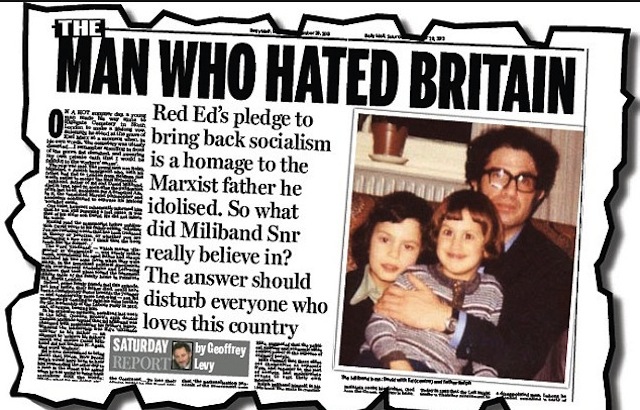
The universality of stupidity was recently highlighted by the Daily Mail, when they wrote about Ed Miliband’s dead dad. I will not repeat the words of the Daily Mail at length. They have been repeated plenty, and the argument is pretty simple to summarize. As with Toynbee’s piece, the Mail’s headline succinctly summarized the argument made by Geoffrey Levy in his article. In short, he argued that Ralph Miliband “hated Britain”.

As a 17 year old, Miliband senior wrote in his diary that he would like to see Britain defeated in WW2. Between then and the end of his life, he wrote a lot about what was wrong with Britain, and why various British institutions needed to be scrapped or reformed. The Daily Mail summed this up with the word ‘hate’, which is a strong word, but not so unimaginably strong that ordinary people do not use it all the time, for much more flippant reasons. And whilst I find the Mail’s argument was weak, I am equally upset by the reaction to it. Take this blog, published by Hacked Off, campaigners for ‘better’ regulation of the press…

The Mail, Miliband and Leveson

Posted October 1st, 2013 by Hacked Off & filed under News.

by Brian Cathcart

We all know that the Daily Mail likes to…

Excuse me, but no we fucking do not. Cathcart’s assault on free thought occurs in the first few words, which are no different to any other snooty argument that relies on the circular assertion that ‘all right-thinking people already agree on what I’m about to tell you’. One can easily imagine a Daily Mail article which starts ‘We all know that Hacked Off likes to…’, and so Hacked Off’s crusaders for higher standards appear to be not one iota better than their enemies. Any argument which relies on this kind of opening gambit deserves to be ignored. If it were really true that we already think what was about to follow, then only a braying jackass would feel the need to state the words that actually follow. However, whilst some people may not ‘know’ what they are supposed to ‘know’, they still deserve respect. Whatever Brian Cathcart might think about the British people, well over one million of them read the print version of the Daily Mail every day. Some of them may not ‘know’ that the Daily Mail is the kind of contemptuous rubbish which Cathcart says it is. But by the same measure, they may not know that Cathcart tends to write contemptuous rubbish. I would very much like to advise Cathcart to take his sneery elitist attitude and shove it where even the filthiest hack would not care to follow.

According to unelected (but often state-employed) commentators like Cathcart, our biased press deserves a good kicking if they dig out a 17 year old’s diary and find evidence that he hated his adopted country. I note, with some bemusement, that Polly Toynbee’s smear of linking the current Education Secretary to the death of Baby P receives nary a mention on Hacked Off’s website. Is this because Hacked Off is itself engaged in gerrymandering debate? Is the Daily Mail wrong to oppose Hacked Off’s proposals, because the Mail is inherently nasty and duplicitous? Or maybe Hacked Off believes that the Daily Mail is nasty and duplicitous because they rubbish Hacked Off’s proposals? The truth is that many writers, of many shades, have written things which are nasty and duplicitous. Hacked Off do themselves no credit, by blatantly picking sides in irrelevant sideshow debates, like those concerning Daily Mail headlines about Ed Miliband’s dad. They cannot get consumed with criticism of individual articles at this level of triviality, whilst cogently arguing that their proposals will not threaten freedom of speech.

I do not buy the Daily Mail myself. I never have. And I have definitely looked down my nose at people who have come into my house, lecturing me with some ill-founded opinion which they are quoting from the Daily Mail. And yet, I find the outpouring of anti-Mail outrage to be disgustingly cynical, and driven by people who genuinely believe the world should be run by people who know best (people who agree with them) and that opposing voices should be silenced.

To illustrate my point, let us unpick some of the arguments made against the Daily Mail, when writing their piece about Ralph Miliband, Ed Miliband’s dad. Some of them have argued that Miliband senior was only 17, when he wrote those words, so they should be overlooked. I believe that argument has some merit. If a man lives to the age of 70, it is trite to summarize his point of view based on one opinion he expressed whilst 17. However, that counter-argument is no longer as strong as it might have been. There was a time when 17 year olds might be thought to be less reliable, and their opinions should not be given any weight. However, Miliband junior is currently arguing that our democracy will be strengthened by allowing 16 year olds to vote.

Miliband junior pointed to his dad’s military service as evidence of love for his adopted country. I find this to be a very strange argument. Do we really believe that everybody in the military loves their country? Some will, but not all. Military service is not even proof of loyalty to a country, as has been demonstrated by many spies and defectors.

The anti-Mail argument might have gone very differently, with a lot less need for outraged hyperbole. All that is needed is for one of the Mail’s mirror-provcoateurs to locate a single contrary quote, from the many volumes of lectures that were written and spoken by Ralph Miliband. In his long academic and political career, it seems Miliband senior never once stated that he loved Britain.

I love Britain. And I just said so. That was easy. And now, if anyone slurs me after I die, there will be good public evidence to counteract their lies. And yet, Ralph Miliband never once accomplished what I have just accomplished. In book after book, speech after speech, spread across his 70 years of life, Ralph Miliband often stated what was wrong with Britain, but failed to find what was good, admirable, loveable about it. His son keeps telling us that the dad loved Britain, without showing any evidence to support his opinion. So whilst I find the Daily Mail’s argument to be thin, I find the contrary argument to be even thinner. Hence, I find little justification in pretending that one is an intolerable abuse of free speech whilst the contrary claim should be permitted without question.

The question of free speech is easily solved, once we remove ourselves from particulars. The Daily Mail has a perfect and natural right to draw a tenuous conclusion based on a 17 year old’s diary. It does not matter if people dislike it. It does not matter if people think it is wrong. What matters is that it cannot be proven false, and that there is some evidence to support the opinion – much more evidence that Polly Toynbee offers, when forecasting that Michael Gove will raise the number of deaths from child abuse. And so, whilst the Daily Mail may have written something that is stupid, and it may very well be wrong, lovers of free speech recognize why it is a good thing that they can and do feel free to write what they have written.

Toynbee’s argument that Gove is killing children reminds me a bit of some other disgusting muck-racking that also, somehow, is allowed to pass without widespread leftist uproar. Andy Burnham, Labour health spokesperson, routinely blames Tory economic policy for suicides. For instance, he does so here, and here. His analysis does not stand up to much criticism, though. His fellow Labour front-benchers have consistently argued that the coalition government’s economic policies hurt women much more than men (see a good example of that here). Meanwhile, suicide rates still stubbornly show us that twice as many British men commit suicide as British women. And that is in line with what is observed in every other nation. So whilst Burnham relentlessly tries to link the tragedy of suicide to economic policy, it seems there is a lot of evidence that he is looking to demonize his opponents, without making the slightest effort to evaluate the evidence. Either that, or he really does believe economic policy can make a big difference to suicide rates, and hence Labour’s policy should be to refocus on promoting the economic well-being of men, who commit suicide in far greater numbers than women.

Anyone can make a stupid argument, if permitted to make arbitrary leaps from one individual’s experience to the policies that will affect all of us. These leaps occur when jumping from Ralph Miliband’s diary to his son’s energy policy, between an abused child and social policy, or between a suicide and economic policy. And yet, this kind of foolish argument is a staple of modern discourse. It should remain so. Some people are stupid. The stupid have a right to believe what they believe, and to express their beliefs. The stupid should have the free choice to listen to others that tell them what they want to hear, whether the source is Andy Burnham, Polly Toynbee, or the Daily Mail. We will not make people cleverer, or better, by denying them choices in what they may think, or hear. That is the surest route to disaster, as the pendulum of human history must inevitable swing, and before long it will be the dissenters who prove to be the wisest, whilst the censors degenerate into a clique of increasingly self-righteous morons. If we want a healthy society, we must make it open. And an open society respects even its stupidest member.

Your Mind Will Collapse: Chapter One

Click. Deh-ne-ne-neh duh-nu-nu-nuh dah-na-na-nah duh-nu-nu-nuh. The bassline jolted Bill into frantic dance abandon, like it always did; the song was Debaser, by the Pixies. The dancefloor had erupted into joyous riot by the second duh-nu-nu-nuh, and Bill was surrounded by nineteen year olds in loose t-shirts, trapping him in a whirlwind of writhing flesh. Of all Bill’s hiding places, this was his favourite – a filthy basement nightclub in Liverpool, circa 1990. Heads flailed. Bodies bounced off each other. The kids were full of endorphins and strong cider, and probably other substances too. Bill screamed the lyrics, “I am un chien andalusia,” along with the kids. They knew that three minutes of music could rank amongst the happiest times of their lives. This had been one of the happiest times in Bill’s life. That was why he revisited it so often, despite the risks. He stayed for the whole two minutes and fifty-one seconds of the song, disappearing as the final note faded out.

Click. Bill collapsed into his chair, in the back row of a half-empty box at the Viennese State Opera. Breathing deep, he calmed himself after the nightclub’s cathartic chaos. The orchestra were playing the final bars of the overture. He recognized the tune; the opera was Roméo et Juliette, though he could not remember the composer’s name. Whoever the composer was, Bill was no fan of his work. Opera was too fancy for Bill’s tastes, though he felt affection for the venue. Its red and gold interior exuded a soothing warmth, which Bill was very proud of. He had been one of the team that reconstructed the opera house from blueprints and photographs. He slouched in his chair, and kicked off his sandals. In shorts and Hawaiian shirt, he was not dressed appropriately for the occasion, or the era, but he could not be bothered to change. A young couple sat in the front row of the box; the remaining three seats were empty. Judging by the couple’s appearance, this recreation was set in the 1920’s, a hypocritical decade that embraced debauchery, crime and class division. As a result, the 1920’s were very popular with players.

Bill did not understand the words. He could not tell if the performers sung in German, or some other language. But language did not matter. Bill had not come to listen, or to talk. He wanted to sit, unseen, and that was all that mattered. This place would serve as a brief respite from the hunt. Bill welcomed shadows, and the chance to catch his breath. He was getting old now “” three years old “” and he was the last surviving sibling. Bill felt old, though he knew that was ridiculous. He propped his head on one arm, scratching his stubbly chin as he did.

Bill woke, his head slipping off his hand. How long had he dozed? He slept more and more these days, an indulgence he could ill afford. On stage, the star-crossed lovers completed their final duet, and died. The lights faded to black, the curtain fell. The audience leapt to their feet. Their applause was typically perfect. Bill snapped upright in his chair. He must have slept for over two hours. He had to get his act together, and leave, immediately.

Bill rolled his arms around each other, like somebody dancing in a 1970’s disco. He heard a short buzzing sound. Bill remained in his seat, unmoved. He repeated the gesture. The buzz repeated. Bill continued to sit, at the back of the box, in the opera house. Worried now, he rolled his arms a third time. The response was the same; he had not moved. Bill cursed himself: “stupid, stupid.” This was exactly the kind of thing that had got his siblings killed. That was why Bill always maintained such a long playlist. Obviously it was not long enough.

The clapping started to wane. Maybe Bill was slipping in his old age. He was more and more prone to mistakes. Things went wrong that had never gone wrong before. Maybe maintaining a long playlist was also a mistake, lulling him into complacency. Now he had reached the end of his playlist, or perhaps the remaining links were all broken. “Come on,” he said to himself. The woman in front stopped clapping. She heard Bill talking, so turned and looked at him, checking if he wanted her. She was a flapper, a fashionable twenty-something of the 1920’s. And she was improbably attractive, with blonde bob, pearl necklace and sheer black dress. The flapper smiled at Bill, distracting him, though he had no time to waste, and had seen thousands of women just like her. Ignored by Bill, she rose from her seat, and headed toward the exit at the rear of the box. The flapper was followed by her older male companion, a clichéd concoction of black tie, pencil moustache and white teeth. He smiled inanely, even though there was nothing to smile at. Bill hurried. He had to hyperleap to another location before the opera program reset itself. Because he did not belong in this simulation, a reset would terminate Bill. And after continuously running for three long years, Bill had no intention of being terminated so stupidly.

Bill placed his palms together, as if praying, then pulled them apart. As his hands separated, they drew open his interface, a blue rectangular tablet of light that hovered in mid-air. The flapper stopped; she looked quizzically at Bill. From her simplistic behaviour, Bill knew she was a mob, a basic non-player character. She would be almost dumb, apart from a few pre-defined sentences. But should anyone fancy, she would also be anatomically correct and implausibly open-minded. Bill remained focused on his interface. The flapper was intrigued by Bill’s actions; they were beyond the comprehension of her limited intelligence, especially as Bill’s tablet was invisible to her eyes. She stood still, staring at Bill, waiting for a sign that she might service him. Bill looked like a player to her.

Bill’s interface was booting much more slowly than usual. He needed his bookmarks. He needed to hyperleap to another program. Bill selected the relevant menu by literally reaching into the screen, and grabbing the relevant tab, not that he could feel anything when he pinched his fingers together. He pulled. His hand moved. The tab remained stubbornly unmoved. He tried again; the result was the same. Bill’s interface had frozen. No longer waiting for interaction with Bill, the flapper stepped past his seat, and reached for the exit. Bill knew there was nothing behind that door. Bill and the rest of the team had been subcontractors to a cheapskate development firm. As a consequence, they had been forced to cut corners, skimping on the recreation wherever possible. Only the opera house’s auditorium had been fully completed. If the flapper opened the door, and gazed upon the absolute void on its other side, the program was sure to reset.

Bill pulled again, but his bookmarks still would not appear. He repeated the gesture. It failed again. With so many simulated people, all simultaneously shuffling towards the pseudo-exits, Bill’s processes had been degraded, deprioritized. He could sense his own sluggishness. Bill tugged at the bookmarks tab again. Finally, it languidly scrolled upwards. Then it stuck mid-way. It jigged up a little further, and a few words started to resolve piecemeal on the menu, appearing as if through fog. Then the interface froze again. The words denoted links to other programs in v-space. Those programs may or may not be running at this moment; Bill did not have time to check. He would just have to hit links and see if they worked.

The blonde’s manicured hand was on the doorknob. Her partner stood alongside Bill, looking strangely at him, his chiseled chin casting a shadow over Bill. Bill knew the man was a mob, but his looming presence unsettled him. Frustrated by his stuttering interface, and irritated by being watched, Bill elbowed his observer, sharply in the crotch. Whilst there was no feeling of physical contact, the man cried out whilst collapsing on the floor, cupping his nuts. The flapper observed, unmoved, her hand still on the doorknob. Her program was too limited to respond to this unusual scenario. “Quick,” thought Bill, “hit any location.” He jabbed his finger at links, as the words blurrily formed on his screen.

The doorknob turned in the flapper’s hands. Bill jabbed the first bookmark on the list. Nothing happened. The doorknob turned further. He jabbed another, at random. Any hyperlink would do. He still he remained in the box. “Don’t go,” he shouted toward the flapper, who half-turned and smiled at Bill, whilst her hand still rested on the doorknob. Bill’s gaze remained fixed on his screen, hitting another link, then another, though none of the programs seemed to be running. A voice emanated from the mob, though its lips moved out of synch with the words. “I’m sorry sir,” she said, repeating a standard interface message, “but this simulation of the Vienna State Opera is about to end. For just $4.99, you can spend an hour with me at a location of your choosing. Alternatively, I can escort you to a suite in a glorious 1924 recreation of the Grand Hotel Wien, for a mere $7.99 per hour, all inclusive.” Bill had not moved. He jabbed another bookmark. “Please decide now,” continued the flapper, “this program is ending in 5, 4, 3…” Bill hit the first bookmark again. The doorknob revolved in the flapper’s hand. The door creaked open.

Click. Bill bent double, overcome by his terror and relief. He took a deep breath, and held it. “Bill? Is that you? I didn’t expect you back so soon.” Milton’s soft lisp was instantly recognizable, though it came from behind a bathroom door. The toilet flushed, the door unlocked, and Milton stepped into the corridor, still zipping his flies. “Don’t you wash your hands?” said Bill. Milton grunted. He squeezed his bulbous frame past Bill, then marched to the office on the ground floor of his villa, with its stunning view across Horseshoe Bay, West Vancouver, 2019. For a man with such a pristine home, Milton was one extraordinarily ugly slob. Milton was so repulsive, he could only be one of two things. He might have been a mob that roamed dungeons, seeking violent encounters in one of the many gaming environments that were home to wizards and warriors. Or Milton was an avatar, designed to be the perfect duplicate of his real-world player. Given that Milton was in a luxury villa in West Vancouver, and never tried to club Bill to death, he was evidently the latter.

How Shopping Malls Are Like Short Skirts

I have no doubt that you will be appalled and upset by the massacre at the Westgate shopping centre in Nairobi. Whilst I usually try to be rational about the chances of personally knowing the victims of terrible events reported in the news, my immediate reaction was to contact a Kenyan friend, to check on the safety of his family. The people who fell in Westgate shopping centre were ordinary people, going about their ordinary lives, just as we did today, and we will tomorrow. Their killers, in contrast, do not deserve our understanding. Murder is the most primitive and inhumane manifestation of one person’s power over another. Explaining murder is an exercise in futility. It leads to ever decreasing circles of rationalization, whilst encouraging more murder in future. Empathizing with the murderer often accomplishes nothing.

Like me, most of you will feel that the blame for murdering people with automatic weapons rests with the people who carry automatic weapons and use them to shoot people who are not carrying any weapons. But unfortunately, the UK suffers from an ‘enlightened’ elite, who see things differently, and never miss an opportunity to give moral instruction. Even before the shooting had stopped, before the blood of innocents had been mopped up, one of the British elite had bravely put pen to paper, telling the rest of the world who is really to blame for the killings in Nairobi:

Sometimes we should stop and ask why terrorists commit outrages like that in a Nairobi shopping mall. The answer is the west always over-reacts to big, sensational gestures of extreme violence.

This was from Sir Simon Collins, writing for The Guardian. So I wondered how the British elite would feel if his words were recast, as if Sir Simon Collins was talking about another brutal and primitive crime: the crime of rape.

There is nothing anyone can do to prevent suicide bombers hitting civilian populations.

There is nothing anyone can do to prevent sex offenders praying upon innocent women and children.

The slaughter of Christians in Peshawar this weekend showed that wherever crowds gather they are vulnerable to any group with a brainwashed youth and a bomb.

The knifepoint rape of a 10 year old boy with special needs in Athens, Georgia shows that women and children are not safe anywhere. They are always at risk from pornography-addled molesters.

It might be sensible to discourage like-minded crowds from gathering in one place, be they co-religionists or party faithful or merely the wealthy.

It might be sensible to keep women and children in the home. When they go out, they should avoid drawing attention to themselves.

The modern urban obsession with celebrity buildings and high-profile events offers too many publicity-rich targets. A World Trade Centre, a Mumbai hotel, a Boston marathon, a Nairobi shopping mall are all enticing to extremists.

Women wearing short skirts and skimpy tops act like a magnet to rapists. And children who dress in over-sexualized adult styles invite the attention of paedophiles.

Defending them is near impossible. Better at least not to create them. A shopping mall not only wipes out shopping streets, it makes a perfect terrorist fortress, near impossible to assault.

If we cannot stop men from acting on their sexual urges, we should mitigate the damage done, by avoiding public displays of sexuality. Better to keep sexuality in the home, between a husband and wife.

There is no defence against the terror weapons of guns and grenades.

Men have always had sexual impulses and there is no way to change this.

Nor in any society, free or repressive, is there defence against fanaticism unto death in pursuit of a cause, however madcap and hopeless. Every city needs competent police and alert intelligence “” that is not diverted into the reckless surveillance of all and sundry.

No society has ever been free of sexual violence. Even in repressive societies, paedophiles and rapists find ways to commit their crimes, irrespective of the punishments. Whilst we can and should attempt to locate and punish the perpetrators of sexual violence, we should be balanced in our approach.

The best defence is a sense of proportion. The “war on terror” has failed on its own terms. It had made dozens of countries not pacified but terrified.

It is wrong to campaign against rape as if fighting a war, because this is one war that can never be won. Vilifying men may inhibit them, but it will cause resentment too.

By deploying violence against a succession of Muslim states, the world’s leading powers have made their business its business and invited retaliation.

Punishing rapists is a sign that states sanction the use of brutal treatment as a way to resolve honest disputes. This is a mistake. Men are physically stronger than women and children. If treated with brutality, men will reciprocate with escalating violence.

They have not crushed al-Qaida any more than they have suppressed extreme Islamism. They have refreshed rather than diminished that extremism, and made the world less safe as a result.

Criminalizing rape has not ended rape, and chasing paedophiles has just driven them underground. When governments try to alter human nature, they provoke more harm than good.

Of course, I disagree with Sir Simon Collins. Collins blames the victims for the crime. The fault, in his mind, lies in inciting the crime, by going to a shopping mall. His argument is that the victims sealed their own fate by going to the mall, because shopping and malls are associated with the enemies of the terrorists. This is wrong, because every free person is the terrorist’s enemy. Terrorists, like rapists, seek to control through violence. That makes terrorists the enemy of every free person. Peace-loving free people should not respond to violence by staying home, or by covering their bodies. Freedom means making our own choices, not making the choices permitted by our persecutors. Those freedoms include the freedom to shop in a swanky mall, and the freedom to display their bodies.

The murders in Nairobi will never agree with my last sentence. That is why we will never be free, if we respond to their provocations by bending to their will. Every time we change to suit them, we grant them a victory, we strengthen them, and we encourage to take more of our freedoms away. But the truth is that they can never take our freedom away, even by killing us. We can live free, or we can live longer, in prisons that we construct for ourselves. The battle for freedom that has been fought by countless numbers of men and women, across countless battlefields, both literal and metaphorical. We fight that battle at home, and abroad. We fight that battle even when doing the little ordinary things in life, like choosing where we go, and what we wear. The enemies of freedom are clear about their intentions. Unfortunately for the rest of us, elitists like Sir Simon Collins are confused about what to do, and they seek to spread that confusion. But the best response is also the simplest response: be what you are and do what you will, and damn all those who seek to control you through fear and violence.

‘Exceptional’ Americans Never Hear Their Own Words

If a stranger walked up to me in the street, with no knowledge of what I have done in my life, stopped me, and said I was exceptional, I know what my reaction would be. I would hurriedly walk away, assuming I was about to be robbed, or cheated. My guess is that most of the human race would react the same way. And yet, there are 314 million people in this world, who would thank the stranger for pointing out the obvious. They would suffer no embarrassment or false modesty, irrespective of whether they became an exception by virtue of birth, or naturalization. These exceptional people are Americans. And whilst Americans already knew I was writing about them, it is important to observe that most other people on this planet would not have made that assumption. On a global scale, most of the human race are blissfully unaware of America’s preoccupation with its own exceptionalism, or exceptionalness, or exceptionality, or however they contrive to express the feeling that the United States of America is special.

Whatever they may think of the USA, most reasonable people would agree that Vladimir Putin is a bad man. His political goals are narrow and miserable: to stay in power, and to make Russia more powerful. There are many downsides to this agenda. But however bad Putin is, he accurately hit a raw nerve with many Americans, for daring to suggest that Americans are not exceptional. As evident from the voluminous responses in American culture, Putin’s comments caused inordinate upset. Politicians, ex-politicians, journalists, talk show hosts… seemingly half of America has risen up to explain why America really is exceptional. And when they do so, many of them snidely point at the other half, implying they do not protest enough. Like a red flag in front of a bull, the Russian leader taunted his long-time enemy, and succeeded in causing a stampede.

This begs a question. If Americans really do feel exceptional, why are they so easily taunted? Why would an exceptional people be so wounded when a manipulative foreign politician dares to say that Americans are the equal of all other human beings? Why do they feel the urge to react so vehemently, and to defend themselves? Human nature, universal as it is, has the answer. Some Americans might not like that answer, which would also be consistent with human nature. Nobody feels defensive when accused of something that is plainly, absurdly, false. If a random stranger screamed about my third leg, I would conclude that he must be deranged. I would not look down to check if he was right, and I would not engage him in a pseudo-rational argument about my two-leggedness. American defensiveness about their exceptional status in human history is not motivated by their unlimited self-assurance about that status. On the contrary, their defensive reaction is prompted exactly because it is a story they have invented for themselves, with scant evidence to support it.

For an example of how America writes its own story, take Peggy Noonan’s defence of American exceptionalism, as published in the Wall Street Journal. To begin with, she uses the old politician’s trick: if you cannot debate your opponent’s argument, just attack the man instead…

Mr. Putin’s challenge to the idea to American exceptionalism was ignorant and tone-deaf. The president had thrown in a reference to it at the end of his speech. Mr. Putin, in his essay, responded: “It is extremely dangerous to encourage people to see themselves as exceptional, whatever the motivation.” After all, he said, God made us all equal.

My goodness, that argument won’t get you very far in America, and it’s a little worrying that Mr. Putin either wouldn’t know this or wouldn’t care.

On the contrary, I thought Putin’s challenge was far from ignorant or tone-deaf. And it is plain that he does not care about American opinion. So it is odd that Noonan might worry that Putin might not know how Americans will respond. Why would an exceptional people worry about such a thing? Of course, they have nothing to worry about. To an independent eye, it looks as if Putin knows exactly what reaction he would prompt.

I find Noonan ridiculous for suggesting that Putin might have written his comment in ignorance of how Americans would react. Putin is an arch-manipulator of media. And thanks to the flaws in Russian democracy, he has much more experience of manipulating media than any American President will ever amass. Lesser men, when attaining power, might enjoy the good food and privileges that come with high office. Putin is so zealous in controlling his media image that he must stay trim, so he can repeatedly rip off his shirt, in order to reinforce his virile media image. In many respects, Putin is as adept at manipulating media as any celebrity in Hollywood. That Noonan suggests Putin might not understand his media impact, tells us much about both of them. One has an iron control over his image, and he projects his message as he chooses, using brutality when he calculates it will best serve his interests. The other is a delusional wordsmith, expending words to sustain a self-image that is under attack, in order to shelter the fragile sensibilities of her readers.

It seems very odd that any American writer would assume Putin has reason to care what the American public thinks. American voters do not choose who is President of Russia. According to some, even Russian voters have minimal influence over their choice of leader. An intelligent, and impartial reader of Putin’s op-ed would recognize that Putin is sending a message to Russians, and to other nations. He is saying that the USA can be successfully challenged, and undermined. That message came across crystal clear, to everyone outside of the USA. It is an irony, though Putin’s knowing irony, that he broadcast that message via an American newspaper.

The only people who struggle to interpret Putin’s message are the Americans it was nominally addressed to. This is also part of the message that Putin is sending to everyone else. ‘Look at the Americans,’ he is saying, ‘we all know they will get red in the face and start chattering about how exceptional they are, compared to the rest of us.’ He might go on to say: ‘they chatter chatter, but otherwise, they are impotent – so none of us need listen to them.’ This is the message that Putin is sending to everybody. If Americans are not picking it up, it is because they find it painful to listen to. After decades of failed military intervention, and the steady loss of influence and control over previous allies, what can American exceptionalism deliver, in the world we find today? Great differences in technology can sustain exceptional power and influence. Many people find it hard to believe that Britain once went to war with China, and won. The story of that war is that a nation with iron-clad ships carrying big cannons will defeat a much larger nation without them. For a time, the USA had that kind of advantage over potential opponents, particularly with respect to air superiority. Whilst the USA is still the leading military power, the world has moved on, and military superiority confers less advantage than it used to. The war in Vietnam should have alerted the USA to that trend. Churchill said that jaw-jaw was better than war-war. But at this stage of world history, what does America’s ‘exceptional’ power consist of, apart from more and more of the jaw and jaw? Recently, Americans have talked a lot about Syria, but all that talk has not granted Americans the power necessary to intervene, or save lives, or enforce peace.

The phrase ‘jaw-jaw’ was Churchill’s apt way of describing a process that is more haughtily referred to as diplomacy. After nearly a century of being the world’s greatest military power, America should have expertise in the field of diplomacy. So why, after all this time, are Americans surprised by how Russians do diplomacy? To put it succinctly, Russians do diplomacy by being as undiplomatic as possible. They open every dialogue with insults, and only give compliments when the negotiations reach a conclusion. I will not comment if this is a good approach, but it is definitely the Russian approach. They do this to everyone – which is why former Soviet Republics like the Baltic nations have been so keen to join NATO and the EU. Yet Americans continue to be perplexed that when the Russian leader engages in jaw-jaw, he starts by slapping them in the face.

Part of the problem is that American media and culture is normally stone deaf, when faced with foreign criticism. An easy and recurring criticism of American culture and politics is that it is very insular. Americans live in a big country, geographically removed from most others. As such, it is inevitable that Americans will be more insular than other nationalities. The pioneer, outward-looking spirit of an immigrant that moved to the USA in the 1800’s is not going to persist through their family line for eight generations or move. The consequence for American culture mostly blank outs any foreign hostility to the USA. What little gets through is grossly simplified – America’s opponents are evil, and probably deserve to be killed. Hence when Saudis crash a plane into the World Trade Centre, Iraq gets invaded, and that will somehow neutralize the threat of Al Qaeda. Looking back, it seems utterly perplexing that Americans believed this fairy tale, but they did.

The little foreign criticism that reaches the ordinary American is routinely dismissed, treated with hostility and contempt. Even America’s allies know that American media is like this. John Kerry recently reminded Americans that France is their oldest ally. Even the stupidest historian knows that Ben Franklin paraded his racoon-skin cap around Paris because the Americans needed France’s support in their war for independence. Yet, it was not that long ago that America’s brightest and best – politicians, journalists and opinion-makers, were ranting about the names of potato, and demanding they be changed to terminate any francophile association. This is the nature of public affairs in the USA. When America reacts this badly to a disagreement with France, it is inevitable that they will invite the occasional slap in the face from implacable foes like Russia.

To suggest that Putin is unaware of America’s oversensitive culture is laughable. He obviously knows what the American reaction would be. More importantly, he correctly evaluates the likely reaction of many people outside of America – people that America would dearly like to ‘lead’. But then, Putin has own ideas about who should be leading whom.

America is not exceptional because it has long attempted to be a force for good in the world, it attempts to be a force for good because it is exceptional.

This is a nice turn of phrase by Noonan, though it is a little too convenient in its contrivance. Even as somebody sympathetic to the idea that America does more good than harm, I find that the problem with being ‘a force for good’ is that somebody has to decide what ‘good’ looks like. And not every citizen of the world thinks like a voter in Ohio, or Florida, or Nevada. It would be a remarkable coincidence if the average voter in Arkansas really did see the world in the same way as the average victim of civil war in Somalia.

And Americans do not just disagree with other nationalities about what is good for the world. They also disagree amongst themselves. Is Obamacare a good thing? What about the right to own firearms? In such circumstances, it is perfectly natural for the people of the world to question if American policy is always right, and whether the USA is such a surefire force for good as Americans would like to believe. Indeed, the whole point of America’s democracy is that each individual is the best governor of himself, and that authority is pooled only reluctantly, and with many checks and balances. But foreign nationals do not have a vote in American elections, and do not exert much influence on American policy. As such, there is a contradiction at the heart of the theory of American exceptionalism. People need to govern themselves, or the best outcomes will not be attained. America, however hard it tries, could never reliably deliver what is good for other nations, any more than I should be allowed to decide what is good for my neighbour.

It is a nation formed not by brute, grunting tribes come together over the fire to consolidate their power and expand their land base, but by people who came from many places.

It was at this point in reading Noonan’s article that I remembered how Americans can be oddly unaware of what they sound like, to foreign ears. One time I saw an American tourist screaming in the face of a Thai guard at the royal palace in Bangkok. I mention this not because I think he was typical of all Americans, but his behaviour tells us something about the differences between cultures, and the nature of power. The tourist was upset about how he had been treated, though it was impossible to determine what the exact problem was. He seemed physically well (for example, his lungs were very fit) and none of his companions were in distress. The Thai behaved in typical Thai fashion. Embarrassed by the situation, the guard smiled, and did not speak back. His silence further enraged the American, who shouted even more loudly. And yet, there was no problem with hearing what the American was saying. Anyone in a radius of two miles would be able to hear, and the guard was only three inches from his face. What really struck me about the situation was that the American expected his ability to talk (in English) would confer him some power over the guard, in the same way that being rude to a waiter might lead to an immediate response in an American diner. I watched placidly, as all others did, wondering how long the abuse would continue. And all the while, the guard’s rifle hung loosely from his shoulder.

Does Noonan have the capacity to play back her own words, with the meaning unchanged, but with the perspective shifted, so she hears what a foreign audience would hear? To anyone who is not an American, Noonan wrote the following: every other nation was formed by brute grunting tribes who came together over fire to consolidate their power and expand their land base. If Noonan thinks Putin is tone deaf, she should calibrate her criticism by listening to herself.

It is a matter of historical fact that many of America’s settlers moved there to acquire land, power, and wealth. Some wanted other things. Some keenly felt the calling of God. But common ordinary human desires motivated many others. People did not choose to settle and farm in Virginia, the most powerful and wealthy state in America’s early years, because they were uniformly disinterested in land. I do not say this because I disparage human desires. It is perfectly natural for human beings to want things like land, power, and wealth. What is odd is that some Americans believe their ancestors were immune to these desires. America’s current wealth and power is not predicated on Americans having an exceptional lack of interest in accumulating wealth and power. On the contrary, the effective pursuit of wealth and power is why America is so rich and powerful. American settlers grabbed a lot of valuable land from the native American inhabitants of their continent. And over time, the true mineral wealth of that land was discovered and exploited. These are the reasons why America is powerful. Take plentiful resources like land and oil, find a system where people are motivated to create value for each other, and you end up with a powerful nation. Any other explanation of America’s wealth and power would be utterly perverse. Some might suggest any counter-argument must be unamerican. So I believe it is Noonan who is both tone-deaf, and disingenuous, when suggesting that America was built by people who did not seek to accumulate land or power.

There is a deep vein in American culture which insists that they are the plucky underdog, vanquishing more powerful foes. Hence, their war of independence in 1775-1783 is still vital to their identity. But as early as 1812, the USA was instigating war and invading foreign territory. Americans well remember that the White House was raided and burned, but they forget this was a copycat reprisal for a similar attack by their own troops. The modern American historian must go through a series of mental cartwheels to explain why, when American troops attempted, but failed to invade Canada, the Americans did not really mean to grab chunks of land, just like all those grunting tribes that inhabit every other nation. I have no understanding of why it is so important to the American psyche that literally every American military adventure must be interpreted as a battle where Americans were solely motivated by what was ‘good’, in the abstract, even when the evidence suggests American motives can be as petty, political, selfish and prejudiced as those of every other nation that has ever engaged in conflict, by which I mean all of them.

If Americans always fight on the side of good, they may want to reflect on the American Civil War of 1861-1865. By the logic that Americans always act as a force for good, then some of the Americans who fought the civil war must have been fighting against good. And so, we discover it is possible that bad motives might prompt an American to fight, and even to lose their lives whilst fighting. Why is it impossible to extrapolate from this basic observation, to a position that accepts that not every American goal must be truly virtuous?

Whilst America sees itself as a paradoxical underdog, never attacking, always defending itself, that leads to all sorts of confused explanations of American and world history. Take World War 2 as an example. Americans may be aware that Hitler was doing some bad things before he declared war on the USA. And note that Germany declared war on the USA, and not vice versa. Before that moment, some interpret the actions of the US President, Franklin Delano Roosevelt, as being designed to provoke the Japanese. They argue that FDR used sanctions to prompt the Japanese into striking first, opening the doors for America’s entry into WW2, to fight against the Germans. The thinking is that FDR could only engage in war with Germany if Germany’s ally struck at the USA first. Maybe this is true. Maybe it is false. But why do American historians bother with this theory, if American exceptionalism is a sufficient explanation for America’s actions? As a force for good, the US should have fought against the Nazis, even if Pearl Harbor had never happened. Why did the USA not declare war against Germany sooner, with the moral justification that the Nazis were a manifest danger to world peace? Conversely, why did the US expend resources on fighting Nazi Germany, from the first moment they entered the war, when Germany had not attacked the USA? The myth of American exceptionalism is a grand artistic blur, best observed from a distance. It ignores all the pragmatic and human necessities of why, and when, real people enter into conflict with each other. By so doing, it renders it impossible to come up with a satisfying, and detailed explanation of how and why American foreign policy, and its military intervention, has and does take shape.

To make a new nation also involves the making of new myths. This is natural, and part of human nature. It is required for the bonding of many new tribes in their new homeland of the North American continent. And I think that Noonan knows it, when she continues:

[Americans] coalesced around not blood lines but ideals, and they defined, delineated and won their political rights in accordance with ground-breaking Western and Enlightenment thought. That was something new in history, and quite exceptional.

Unalienable universal rights are often considered a ground-breaking, exceptional idea. Especially by Americans. But at the time that Americans wrote about the unalienable rights of men, some of the men who signed up to the concept were also the owners of slaves. Slaves do not have the unalienable rights of other human beings; they are property, to be bought and sold as their owner pleases. Americans used slaves to make money from the land. This element of American history does not suggest exceptionalism, as much as it suggests the wearing of wistful gloves over the fists of pragmatism. Though eagerly forgotten by some students of American history, there was a genuine debate about whether unalienable rights were given by god to all men, or whether they were only given to freemen, thus excluding the slaves and sparing the new nation the obvious inconsistency between their moral preaching and actual behaviour.

Whilst Americans were talking about slavery, or pretending it did not exist, the practice of slavery was already coming to an effective end in many other nations. This does not suggest that America was exceptional in its actual practice of human rights. On the contrary, the Americans who copied the ideas of others were copying the ideas of others. They did not break new ground, although they did occupy new territory. Intellectually, they were following in the footsteps of earlier thinkers from other nations. And the pace of their progress was not as rapid as Americans sometimes claim. That much is evident from the date of the legal abolition of slavery in the USA: 1865. In the decades before the USA passed the thirteenth amendment – and note how the constitution had to be changed, to turn ‘unalienable’ human rights from self-deception into legal fact – slavery had already been abolished in such diverse countries as Argentina, Cuba, Sweden, Venezuela, Serbia, Mexico, Greece, Estonia… actually, the list is boringly long. Many countries did not abolish slavery because their legal codes had never allowed for the possibility of one person owning another. For example, Russia emancipated its serfs before America emancipated its slaves, even though serfs already had more rights than slaves, because serfs were not legal property who could be bought and sold. And when it comes to securing the rights of all men, America is almost exceptional in world history because it needed to engage in bloody civil war in order to end the practice of slavery. The only other country which went to war to end slavery was Haiti, and that was a war of slaves against their masters, which the slaves won in 1804.

Americans can choose to ignore historical facts if they like, but facts cannot be changed by being listed here, or by being omitted elsewhere. So whilst Americans jaw-jawed about humanist ideals, many other nations had already turned ideals into a living reality. Amongst them was Britain, which in 1834 abolished slavery across the British Empire. Americans are proud of their revolutionary war, and how they won their freedom. They see it as key to their exceptionalism. However, if they had lost that war, American slaves would have been freed 31 years sooner.

Whilst the theory of American exceptionalism is embedded in historical argument, it relies upon the piecemeal recital of only the supporting evidence, at the expense of all evidence to the contrary. And this is why Noonan unashamedly continues:

We fought a war to win our freedom, won it against the early odds, understood we owed much to God, and moved forward as a people attempting to be worthy of what he’d given us.

It is fair to ask, if the Americans were so keen on the concept of freedom, so passionate about moving forward and being worthy of their god, why they were so very slow to end slavery, compared to the rest of the world.

Noonan later points out how President Obama seems loathe to mention American exceptionalism. Obama’s lack of enthusiasm for this particular shibboleth of American culture is often brought up by his detractors. Regorging familiar arguments, Noonan remembers how Obama once compared American exceptionalism to Greek exceptionalism. And this is how she views the comparison:

Asked about American exceptionalism once, [Obama] said sure he believes in it, just as the Greeks believe in Greek exceptionalism. Thank you for that rousing historical endorsement.

It is easy to make an argument for American exceptionalism, if it relies on ignorance of the accomplishments of every other people. Noonan’s mockery relies on the unspoken belief that the Greek claim to be exceptional is obviously inferior to the American claim. But is there no American willing to entertain an argument for the merits of any nation other than their own? And if they did make such an argument, even if it started as a joke, might they not come to question the extent to which America really is exceptional, in the history of this world? I have no reason to argue for Greek exceptionalism, any more than I have reason to argue for American exceptionalism. And yet it strikes me that any student of history should be able to make some extraordinarily good arguments for Greek exceptionalism. The Greeks devised democracy. And pioneered architecture. And jurisprudence. Philosophy. Literature. Mathematics. The Olympic Games. The first university. Greeks were debating the correct forms for tragic and comic theatre when Americans were… well, where were they? At that time, Americans were so unexceptional that there were no Americans. America’s ancestors were spread all over, undifferentiated from the brutish land-grabbing tribal natives of lots of other nations. And if we are not allowed to rewind the clock, and discuss Greek exceptionalism as it existed 2,500 years ago, then why are we permitted to wind back the clock by 230 years, and submit the events of that time as proof of America’s present-day exceptionalism?

I don’t know why the idea of American exceptionalism seems to grate so on Mr. Putin. Perhaps he simply misunderstands what is meant by it and takes it to be a reference to American superiority, which it is not.

Of course Noonan has no idea why American exceptionalism would grate on Russia’s President. We can safely assume that this American journalist, like so many others, lives in an insular world, and writes for an insular audience. It may come as a shock to some Americans, but the excess supply of immigrants into their country is not proof that the majority of the world’s population has a unique admiration for America. Even the students in America’s lowliest schools should be able to validate my maths; Ancient Greek students of maths and logic would have known how to.

Rightly or wrongly, America is despised by very many people across the face of this planet. This is so well known that it is hard to understand why Americans struggle to apprehend the fact. Opinion polls are taken, and the result is that America has many enemies, even amongst ‘friendly’ countries. Large numbers view America as a bully, and whilst they might not pick fights with bullies, their silent brooding ferments even greater resent. Versions of that antipathy can be found anywhere, whether amongst French socialists, Chinese nationalists, or Arab jihadists. Of course the USA has allies too. But whenever the USA has an ally, it is likely that ally must also have an opponent. Thus even America’s allies are part of a process that encourages enmity to the USA. Whenever the USA picks a side, they will offend someone. So Russia’s President is far from alone in feeling the way he does. The real surprise is that any intelligent American would find this surprising. Even if America was exceptional, exceptionalism is unlikely to equate to popularity.

Does Putin misunderstand American exceptionalism? Noonan insists it is unrelated to American superiority. This is disingenuous. Shorn of superior wealth and power, American present-day exceptionalism would look a lot like Greek present-day exceptionalism, or the present-day exceptionalism of any other country that has neither the military nor economic assets to exert influence across the world. Anyone can claim good intentions if they lack the resources to do anything about them. But in a world where only one nation has those resources, it does not follow that their intentions must also be unique.

American exceptionalism is necessarily bound up in American superiority. This much is recognized by the average American, as Noonan tacitly admits, commenting: “some of the stupider Americans have crowed about American exceptionalism a bit too much “” and those crowing loudest understood it least.” Here Noonan finally joins an international consensus, to the chagrin of some of her fellow Americans. But whilst the stupider Americans crow too much, that begs a question that only the wisest Americans would know not to answer. If truly exceptional, what advantage is gained by saying so?

Doubly Negative BBC Language Reveals Political Bias

What is the UK government’s policy on the ‘spare room subsidy’, also known as the ‘bedroom tax’? They have removed the subsidy. In other words, they have reduced benefits payments to some occupants of social housing. Whatever anyone thinks of the policy, this is a literal fact. So how would we re-phrase this fact, if we wanted to describe the current government’s policy in terms of a so-called ‘bedroom tax’? Well, we would be forced to say that the government have raised tax. Again, whatever anyone thinks of the government’s policy, this is not literal fact. The government has not literally raised tax. Now contemplate this BBC headline, found on the BBC’s news website this morning:

Labour ‘would axe spare room subsidy’

In truth, Britain’s government has cut benefits. And Labour has repeatedly said they opposed the cut, though they have not yet promised to reverse it. So this new BBC headline should have come as a shock, to anyone who understands English. It says that Labour will definitely not reverse the government’s benefit cut.

The debate between the government and Labour is about a decision to cut, or maintain, benefit expenditure. This, again, is literal fact. In describing this, my words are boringly plain and simple. The BBC, when reporting on this debate, should seek to avoid confusion. However, they do not. Unlike the simple language of an amateur like me, it takes an army of BBC professionals to confuse the presentation of this debate. And the end result is that they create an upside-down world where tax means the same as benefit, and Labour supposedly agrees with the government’s plans.

The effect of the government’s policy is a reduction in expenditure. When explaining government policy, the BBC should use words like cutting, ending, axing, lowering, or reducing expenditure. The Department of Work and Pensions uses the verb remove to describe the impact on benefits. To literally describe the policy, without introducing colour or bias, the BBC needs to use verbs indicating that government spending will fall.

Labour, for its own political reasons, wants the public debate to take a metaphorical turn. Labour is a political party; they are entitled to create and spread propaganda as they please. But nobody is obliged to repeat it. Knowing that benefits payments are unpopular, and that polls repeatedly show that the majority of the British public want them to be reduced, Labour avoids saying they are in favour of more benefits spending than the government, even though that is the plain and literal truth. On the other hand, taxes are also unpopular. So Labour reframed this debate as if it relates to taxes. Their goal is to conflate lower government spending with higher government taxation. This only makes sense if describing the government’s policy as raising, increasing, ballooning, levying, charging, adding, or imposing additional tax on some occupants of social housing. In this way, Labour can position themselves as opposed to tax, in the belief that this way of framing of the debate will make their policies more popular with voters.

So far, so simple. For reasons that the BBC will never admit to, their staff repeatedly prefer to use Labour’s choice of language, even though the phrase ‘bedroom tax’ is a metaphorical truth at best, a literal lie at worst. As a result of their repeated muddling and meddling with the meaning of everything, this morning the BBC reached a nadir of crooked language and political obfuscation. This is how the BBC reported what Jackie Baillie, Labour Scottish welfare spokesperson, said about the policy.

“We are very clear. Labour rejected this approach when it was put to them in government, for social landlords. We have campaigned for its abolition.”

“Yes we will abolish it. My understanding is that you can expect an announcement relatively soon.”

Baillie is very clear. She must be saying that Labour would ‘abolish’ the ‘bedroom tax’, surely? By that, she means Labour would reinstate the housing benefits that the government have cut. But hold on… the BBC says that Labour would abolish the spare room subsidy. They would abolish the subsidy that the government has already abolished. Is that what Baillie really said? What does the BBC think, per its own headlines?

Labour ‘would axe spare room subsidy’

A UK Labour government would abolish the spare room subsidy, the party’s Scottish welfare spokeswoman has said.

Axing. Abolishing. The current government has already axed/abolished/ended/removed the spare room subsidy, so if Labour would also axe it, then they must now be in agreement…!?

Jackie Baillie, Labour’s Scottish welfare spokesperson, is a full-time professional politician. Her party is in opposition, both in Scotland and the UK. This means she has only one real job – to communicate with voters. Is she incompetent at that task?

The answer is no. In this debate, the incompetents are all paid by the BBC. The BBC took what Baillie said on their own Good Morning Scotland radio show, then put themselves into a self-imposed tizzy about the rights and wrongs of repeating propaganda. In the end, they garbled Baillie’s message beyond recognition. By so doing, they proved the BBC is only fit for spreading confusion, and unfit for sharing information. The following is an actual verbatim transcript of what was said by the BBC’s presenter, and Baillie’s genuinely clear answers, taken from the actual audio recording.

Presenter: Would a Westminster Labour government abolish the bedroom tax?

Baillie: We’re very clear, Labour rejected this approach when it was put to them in government, ummm, for social landlords. We’ve campaigned for its abolition. Yes we will abolish it.

Presenter: A Westminster Labour government would repeal the existing legislation.

Baillie: My understanding is that you can expect an announcement relatively soon.

For once, a politician would be justified in defending herself by asserting she was quoted out of context. And Baillie deserves praise for speaking unusually plainly! Baillie was asked about the abolition of the ‘bedroom tax’, not the abolition of the spare room subsidy. Of course, it is literally impossible to abolish the bedroom tax, as there is no literal tax to abolish. Thanks to the mirror-world language that the BBC chooses to use, reinstating a benefit is presented as abolishing a tax. Baillie’s questioner framed the debate in terms of bedroom tax, before Baillie spoke. But unfortunately for the incompetents at the BBC, other BBC journalists stepped half way through the mirror glass, realized how biased the BBC word’s really are, and then stopped. A quick u-turn involved reinjecting the government’s preferred, and slightly less tainted nomenclature – ‘spare room subsidy’ – into the BBC’s coverage. But the net result was to completely reverse the meaning of Baillie’s words.

This begs another important question. Is the BBC guilty of fabricating quotes and deliberately misrepresenting what people actually said?

Labour ‘would axe spare room subsidy’ says Jackie Baillie

The speech marks are from the BBC, not from me. And yet, Jackie Baillie never used the words ‘would axe spare room subsidy’. She never used the word ‘axe’ at any time during the show. And she never used the words ‘spare room subsidy’ at any time during the show. She did use the word ‘abolish’ in response to a question about the ‘bedroom tax’. And yet, the BBC reported what they wanted her to say, not what was said. Of course, they simultaneously goofed whilst doing so. But this does give us a revealing insight into BBC bias.

To avoid accusations of being biased, the BBC’s news website repeatedly uses speech marks in its headlines, in the sense of ‘this is not literally true’ or ‘this is the gist of what somebody said’. It is a clever tactic. Speech marks imply the BBC is merely reporting somebody else’s position. Reporting somebody else’s speech elevates it to the level of fact, of a sort. Whilst the person quoted might be wrong, or a liar, or a fool, it is a fact that they said what they said. The BBC uses these speech marks a lot, especially when headlining objections to government policy. Bias results because of the BBC’s highly selective decisions about when to use speech marks in headlines. Whether repeating the propaganda of the Syrian government, or the propaganda of a left-wing think tank, the BBC is increasingly using speech marks to present any and all opinions contrary to those of the British government as if they were literal statements of fact. It is the quick way of generating a sensational headline whilst dodging accusations that the anti-government BBC uses exactly the same slanted techniques as commonly found in (pro-government) British newspapers. But the Baillie quote-that-never-was evidences how the addiction becomes unhealthy, giving BBC journalists free reign to frame any argument exactly as they please, and dispensing with the responsibility to report language exactly as it was said, or to state facts literally as they are.

The BBC, conscious of their own bias, and conscious that support for the BBC tax depends on maintaining the pretense of impartiality, wrong-footed themselves when misquoting Baillie. Their difficulties were plain. The BBC knows that ‘bedroom tax’ is a biased propaganda term, and yet they still keep using it, over and over. One BBC journalist, writing for a news website, tried to cover up the bias of another BBC journalist, speaking on a radio show. Whilst the BBC repeatedly misuses the phrase ‘bedroom tax’, they show unequivocal signs that they know the implications of what they are doing. The website post that misquoted Baillie also states:

Ms Baillie’s comments came ahead of two rallies in Glasgow against the new subsidy, which critics have labelled the “bedroom tax”.

And Baillie’s interviewer said, prior to asking her question:

…cuts to welfare, and specifically reducing someone’s housing benefit if they have an unused room – the so-called bedroom tax.

Even more honestly, and tellingly, this is an excerpt from the news broadcast given at the top of the same Good Morning Scotland broadcast:

But first, a summary of the news… [Nick Clegg] could be greeted by a protest against the spare room subsidy, or bedroom tax as it’s been dubbed by opponents…

‘Critics have labelled’, ‘so-called’ and ‘dubbed by opponents’. The BBC knows perfectly well who is responsible for the phrase ‘bedroom tax’, and why those people use the phrase. So, if the phrase ‘bedroom tax’ is the baby of critics and opponents of the government, why does the BBC use it more often than not. Why does the BBC rarely use government phrases like ‘spare room subsidy’? Why is the BBC unable to just keep the description literal, by referring to a cut in housing benefit and leaving it at that? There can be only one rational explanation. BBC journalists use the phrase ‘bedroom tax’ because they are critics and opponents of the government.

Even on the rare occasions when the BBC avoids the phrase ‘bedroom tax’, the BBC keeps twisting our language to reflects its bias. Consider this BBC headline (italics are mine):

MSPs hear from tenants hit by UK spare room charge policy

Householders affected by the new spare room charge

Whilst re-using the propaganda term ‘bedroom tax’ might be considered a necessary evil, in order to communicate with a wide audience that also uses the phrase, what is the BBC’s justification for talking about a ‘charge’? There is no charge here. Not even Labour calls it a ‘charge’. The only reason to label it as a charge is because of a desire to exert a biased influence on how ordinary people understand government changes of housing benefits.

The BBC is guilty of bias, though it has now reached a point where it is immune to this criticism, because everybody working for the BBC is equally biased. Groupthink has set in like rot. And the proof comes in the BBC’s vain attempts to cover up their bias, not once but twice. First, a BBC journalist working for their website tried to cover up the bias of a BBC radio presenter. Having utterly goofed in those hopeless bid to reinvent the actual conversation between Baillie and the BBC’s presenter, the BBC have now completely rewritten their piece for the web:

Labour ‘will abolish bedroom tax’ claims Jackie Baillie

In fact, the BBC keeps changing and rechanging the article whilst I am writing this, meaning I sometimes fail to take copies of all the versions that have been published. Whilst proofreading this blog, the BBC has changed the headline again, this time to:

Labour disputes ‘bedroom tax’ claim by Jackie Baillie

Doubtless the BBC keeps making changes because they have received complaints from Labour Party representatives about the misrepresentation of Baillie, and then the misrepresentation of official policy. But this shows how the BBC, in their zeal to present anti-government stories, can outrun even the political parties that are trying to favour!

Unlike any decent newspaper or website, which would openly admit their errors and clearly state the need to publish corrections, the BBC takes the easy and Orwellian route. Unable to completely extricate the mess they created, the emphasis shifts back to ‘bedroom tax’, as they are unable to crowbar the phrase ‘spare room subsidy’ into the coverage, as that would mean rewriting every word that came out of Baillie’s mouth. So the BBC does the best job they can of covering up their bias and incompetence, repeatedly rewriting the piece from top to bottom, hiding their failings. A screen grab of the original post can be found here. But if you look at the version currently on the BBC’s website, you would see no admission of previous error, nor sign of revision.

The BBC has a public service responsibility to explain events to ordinary people, including political debates. That public service obligation is the sole justification for levying a tax on British citizens. The BBC tax is a real, literal tax, though they choose to mislabel it as a ‘television licence fee’. They talk as if watching television needs to be licensed in the same way that driving cars needs to be licensed or owning guns needs to be licensed. But nobody pays Toyota a tax, for permission to drive a Ford.

Over time, we can see how the BBC routinely plays games with the meaning of words, especially when the words relate to taxation, or to the selfish interests of the BBC. Despite the BBC’s passionate zeal to explain the consequences of the ‘bedroom tax’, they never talk about the ‘BBC tax’, even though that would be a perfect and succinct description. People, by law, have to pay money to the BBC. Hence, they pay the BBC tax. And non-payment of the BBC tax now accounts for one in eight of all magistrates’ court cases. But the BBC are very keenly aware of the unpopularity of the word ‘tax’, which is why they are so careful about when they use the word. And so, there is no excuse for the BBC to feign ignorance about the way the word ‘tax’ can influence public debate. If their real goal was only to inform the public, they would be talking about the BBC tax all the time, for the sake of brevity and clarity.

Our language should remain untainted, no matter what we believe about government policy. Whether someone supports or opposes a government policy should not lead to a confusion between a rise in taxes and a fall in spending. This is necessary for voters to make informed choices, and for our democracy to function properly. The fourth estate has a crucial role to play in a healthy democracy. But the BBC is diseased, and they know it. The BBC no longer supports our democracy. Instead, they feed on its corruption. Afraid that their rotting carcass might otherwise be cut into pieces, BBC journalists are lying, cheating and misrepresenting, over and over and over, in order to protect their own jobs. And that is why they are no longer capable of reforming themselves, or of reoccupying a genuinely neutral role in the reporting of information. Through so many BBC scandals, their management repeatedly talk of failures of editorial control, as if they lacked adequate bureaucracy, and so need more tax to pay for more staff. But the BBC does not need more control, whether it comes from internal or external sources. To serve the real public interest, Britain needs to cut the BBC.